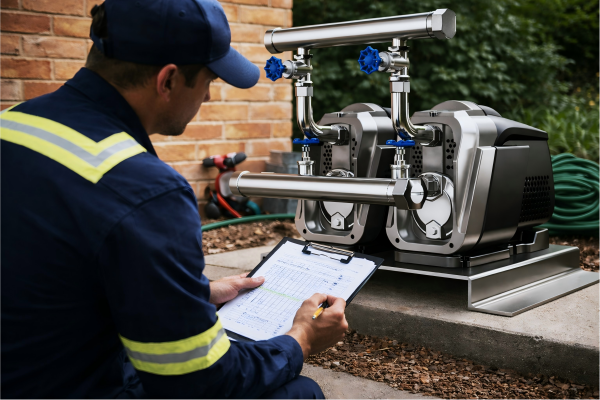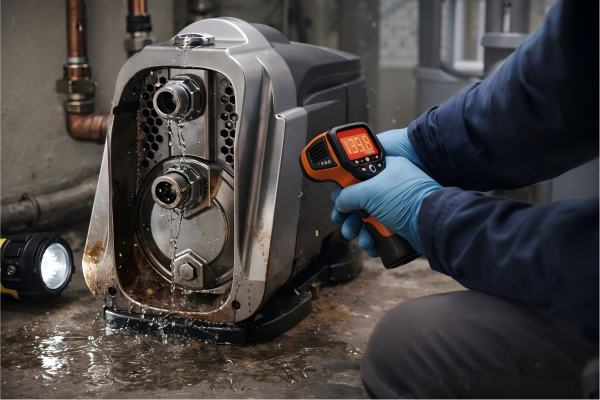
Your water pressure is a trickle.
Your well water sits uselessly.
You need a reliable way to move water where it's needed.
You need a water pump if you experience low water pressure, need to move water from a source like a well or tank, require drainage from a flooded area, or want to boost pressure for irrigation. These are the key signs.
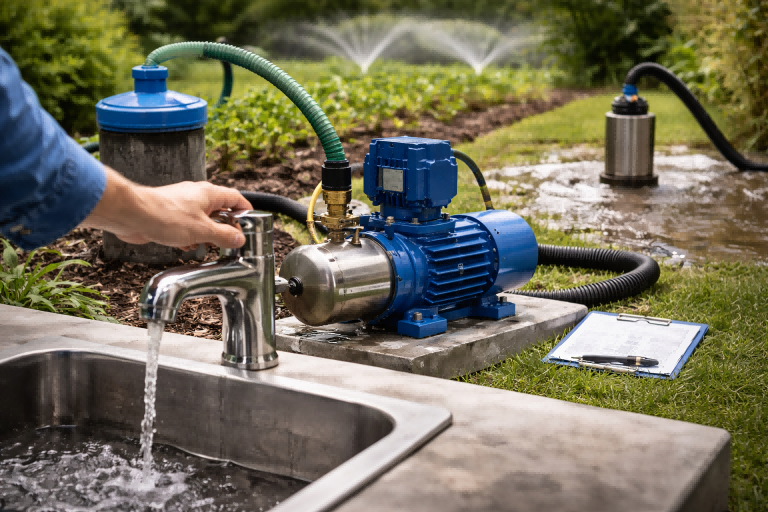
Spotting the signs is the first step.
Understanding which problem you are solving is crucial.
This understanding will point you toward the right type of pump.
A pump is not just a single device but a category of solutions for different water-related challenges.
Let's break down the common scenarios where a water pump becomes essential.
This will help you diagnose your specific need and find the perfect solution.
Boosting Low Municipal Water Pressure | Why Your Taps Sputter
Your shower is weak and sprinklers won't pop up.
You're frustrated with the city's inadequate water pressure.
A booster pump is the simple, effective solution.
If your home's water pressure is consistently below 40 PSI, a booster pump is necessary.
It increases the pressure from the municipal supply, ensuring all your appliances and fixtures function correctly and efficiently.
Many people assume their city water supply should be powerful enough for all their needs.
This is often not true, especially in older neighborhoods or areas far from the municipal pumping station.
When multiple fixtures run at once, the pressure can drop dramatically.
This leaves you with a frustratingly weak shower or an ineffective irrigation system.
A booster pump is a specialized type of pump designed specifically to solve this problem.
It doesn't create water from scratch.
Instead, it grabs the existing water flow from your city line and gives it a powerful "boost" before sending it through your home's plumbing.
It acts as a pressure amplifier, guaranteeing strong and consistent flow on demand.
How to Easily Check Your Water Pressure
You do not need a plumber to diagnose low pressure.
You can do it yourself in five minutes.
You will need a simple water pressure gauge, which is inexpensive and available at most hardware stores.
- Turn off all water: Make sure no taps, washing machines, or dishwashers are running inside or outside your house. This ensures you measure the static pressure.
- Attach the gauge: Find an outdoor hose bibb (faucet) and screw the gauge on tightly.
- Open the tap: Turn the faucet handle all the way to the open position.
- Read the result: The dial will show your home's static water pressure in pounds per square inch (PSI).
If the reading is below 40 PSI, your home is a prime candidate for a booster pump.
Most modern appliances and sprinkler systems are designed to operate best with pressure between 40 and 60 PSI.
Key Indicators for a Booster Pump
Beyond a low PSI reading, other daily frustrations can point to the need for a booster pump.
Look for these common symptoms:
- Weak Showers: The water flow feels more like a drizzle than a spray.
- Slow-Filling Appliances: Your washing machine or toilet tank takes an unusually long time to fill.
- Ineffective Sprinklers: Sprinkler heads don't pop up fully or fail to cover their intended radius.
- Pressure Drops: Turning on a second tap causes the first one to weaken significantly.
A booster pump is installed on your main water line after the meter.
It uses a pressure sensor to detect when the water pressure drops below a set threshold.
When this happens, the pump's motor kicks in automatically to restore strong, consistent pressure throughout your entire property.
It's a set-it-and-forget-it solution for low municipal water pressure.
Moving Water from a Source | Wells, Tanks, and Ponds
You have a well or a rainwater tank full of water.
This valuable resource is just sitting there, completely unusable.
Without a pump, that water has no way to get to your home or garden.
You absolutely need a pump to move water from a non-pressurized source like a well, tank, pond, or river.
These sources have no natural pressure, so a pump is required to lift the water and deliver it where you need it.
Using a private water source is an excellent strategy for self-sufficiency and sustainability.
It can significantly reduce your reliance on municipal water and lower your utility bills.
However, unlike tapping into a city line, this water is not under pressure.
Gravity keeps it in the well or tank.
A pump provides the mechanical force needed to overcome gravity and create both flow and pressure.
The type of pump you choose is critical and depends entirely on the nature of your water source.
The most efficient pumps for this job are powered by the sun, offering an off-grid, cost-effective solution.
Deep Well Applications: Submersible Pumps
For any water source located deep underground in a borehole, a submersible pump is the only correct choice.
These long, thin pumps are designed to be lowered directly into the well casing, fully submerged in the water.
They are incredibly efficient because they push water up the pipe, which requires far less energy than trying to suck it up from the surface.
There are different submersible models tailored to specific well conditions:
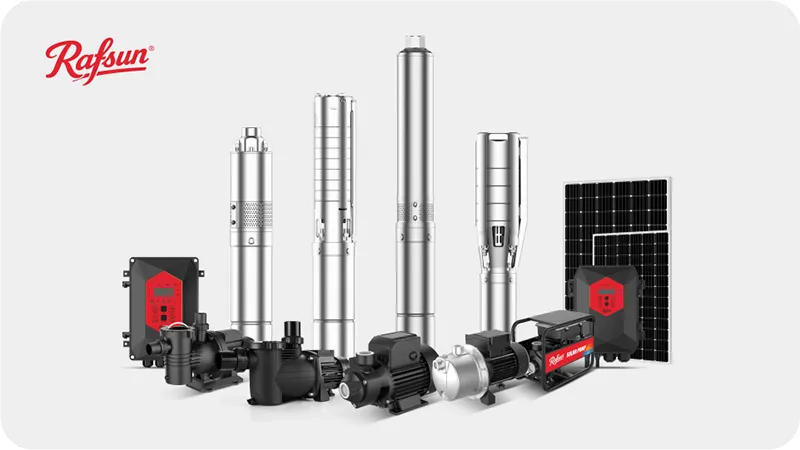
- Solar Screw Pump: This is the specialist for very deep wells (over 80 meters) or wells with low water recovery rates. It uses a helical screw to create very high pressure (high head) but at a lower flow rate. It is perfect for supplying homes and livestock in remote areas and is highly resistant to sandy water.
- Solar Plastic Impeller Pump: This is the versatile workhorse for most farm and residential wells. It uses multiple centrifugal stages to deliver high flow rates at medium pressure. It's an economical and lightweight choice, ideal for irrigation and general water supply in wells less than 80 meters deep.
- Solar Stainless Steel Impeller Pump: This is the premium option for wells with corrosive water. If your water is acidic, alkaline, or has a high salt content, the SS304 stainless steel construction prevents rust and degradation, ensuring a very long service life.
| Pump Type | Best For | Max Depth | Flow Rate | Sand Resistance |
|---|---|---|---|---|
| Screw Pump | Very deep wells, homes | 150m+ | Low | Excellent |
| Plastic Impeller | Farms, irrigation, general use | < 80m | High | Good |
| Stainless Steel | Corrosive water, premium homes | < 100m | High | Good |
Powering Your Pump Efficiently
Modern submersible pumps are powered by highly efficient Brushless DC (BLDC) motors.
These motors achieve over 90% efficiency, meaning they convert more solar energy into water movement.
Compared to older motors, a BLDC motor is up to 47% smaller and 39% lighter, making installation much simpler.
This high efficiency reduces the number of solar panels needed, lowering the initial system cost and providing a faster return on investment.
Solutions for Special Conditions | Corrosion and Constant Supply
Your well water has a strange smell or taste.
It quickly corrodes metal fittings and pipes.
Using a standard pump in these conditions will lead to premature failure and costly replacements.
For harsh water conditions or the need for a 24/7 water supply, you need a specialized pump system.
A stainless steel pump resists corrosion, while a hybrid AC/DC controller guarantees water flow even without sunlight.
Not all water is created equal.
In many regions, groundwater can be acidic, alkaline, or have high salinity.
This is common in coastal areas or regions with specific geological characteristics, like parts of Australia.
Using a standard pump with cast iron or plastic components in this environment is a mistake.
The corrosive water will eat away at the pump's internal parts, leading to a rapid decline in performance and complete failure within a short time.
Similarly, relying solely on solar power can be a challenge if you need a guaranteed water supply around the clock for critical applications like livestock or household use.
Advanced pump systems are designed to solve both of these problems effectively.
Fighting Corrosion with Stainless Steel
The premier solution for aggressive water is a pump constructed from high-grade materials.
A solar stainless steel impeller pump is specifically designed for these environments.
The key components, including the impellers, diffusers, and pump body, are made from SS304 stainless steel.
This material offers exceptional resistance to both acidic and alkaline corrosion.
While the initial cost is higher than a plastic impeller model, the long-term value is significantly greater.
A stainless steel pump can last for many years in conditions that would destroy a standard pump in months.
This makes it the most cost-effective choice for:
- Coastal regions with saltwater intrusion.
- Agricultural areas with alkaline soil and water.
- High-end homes and ranches where reliability and water purity are paramount.
Ensuring 24/7 Water with Hybrid Systems
A standard solar pump works only when the sun is shining.
But what if you need water at night or during a week of cloudy weather?
The answer is an AC/DC hybrid water pump system.
These innovative systems feature a controller with dual power inputs.
You can connect both your solar panels and a backup AC power source (like the main electrical grid or a generator) at the same time.
The intelligent controller automatically manages the power source:
- Full Sun: The pump runs 100% on free solar energy.
- Low Sun/Clouds: The controller uses a "hybrid" function. It draws as much power as possible from the solar panels and blends in just enough AC power to maintain pump operation. This maximizes the use of solar energy.
- No Sun (Night): The system automatically switches over to the AC power source, ensuring you have uninterrupted water flow.
This technology provides the best of both worlds: the cost savings and sustainability of solar, combined with the absolute reliability of grid power.
It gives you complete peace of mind, knowing that water will always be available when you need it.
Conclusion
Knowing if you need a pump means identifying your problem.
It could be low pressure, an off-grid source, or drainage.
Choosing a modern, efficient pump solves it effectively.
Frequently Asked Questions
What are the first signs of a pump failing?
You might notice reduced water pressure, the pump cycling on and off frequently, strange noises from the pump, or a sudden spike in your electricity bill.
How often should a water pump be serviced?
A well-maintained pump should be inspected annually.
This helps catch small issues before they become major, expensive problems and ensures optimal performance.
Can a water pump be repaired?
Yes, many common issues like a faulty pressure switch, a bad capacitor, or a worn-out impeller can be repaired by a qualified technician.
How do I know what size water pump I need?
Sizing depends on your required flow rate (GPM) and pressure (PSI or head).
You must calculate your water needs to choose the right pump.
Why does my water pump keep running?
This usually indicates a leak somewhere in your plumbing system, a faulty pressure switch, or a problem with the check valve.
What causes a water pump to lose pressure?
Common causes include a leak in the system, a clogged filter or impeller, a failing pump motor, or a drop in the water level of your well.
How long does a water pump last?
A quality submersible well pump can last 8-15 years.
A booster pump's lifespan is typically 5-10 years, depending on usage and water quality.