Struggling with water pressure or moving liquids efficiently?
Inefficient water transfer costs time and money, impacting everything from crop irrigation to household comfort and industrial processes.
Electric water pumps provide the reliable, automated solution.
An electric water pump is a device that uses a motor to move water from one location to another. Its primary purpose is to increase water pressure or transfer large volumes of fluid for various applications, including residential water supply, agricultural irrigation, and industrial fluid management.
Understanding the core function of a water pump is just the first step.
These devices are not a one-size-fits-all solution.
Their design, power, and application vary dramatically depending on the specific task they are engineered to perform.
From providing a single home with running water to irrigating vast agricultural fields, the principles remain the same, but the technology differs significantly.
Let's explore the fundamental mechanics, the diverse types available, and how this technology underpins countless daily operations.
This knowledge is crucial for selecting the right equipment to ensure efficiency and reliability for your specific needs.
How Do Electric Water Pumps Fundamentally Work?
Your operations depend on fluid movement, but do you understand the core mechanics?
A mechanical failure can halt production, and a lack of basic knowledge complicates troubleshooting and sourcing.
Electric pumps convert electrical energy into hydraulic energy through a motor and an impeller, creating a pressure differential that moves water.
To truly grasp the purpose of an electric water pump, we must look inside the machine.
The process is a fantastic example of simple physics applied for powerful results.
It all begins when the pump is connected to a power source.
The Role of the Electric Motor
The electric motor is the heart of the pump.
It's responsible for converting electrical energy into the mechanical energy needed for operation.
When activated, the motor turns a shaft at high speed.
This rotational energy is the driving force behind the entire pumping process.
The efficiency of this motor is a major factor in the pump's overall performance and energy consumption, often accounting for over 90% of the pump's lifetime cost.
The Function of the Impeller
Attached to the motor's shaft is an impeller.
An impeller is a rotor with a series of curved vanes or blades.
As the motor spins the shaft, the impeller spins rapidly inside a stationary casing known as a volute.
This high-speed rotation is where the magic happens.
Water is drawn into the center of the spinning impeller, often called the "eye."
The centrifugal force generated by the rotating vanes throws the water outward at high velocity.
Creating Pressure and Flow
The volute, the snail-shaped casing around the impeller, is engineered to manage this high-velocity water.
Its cross-sectional area gradually increases toward the discharge outlet.
This design forces the fast-moving water to slow down.
According to Bernoulli's principle, as the velocity of the fluid decreases, its pressure must increase.
This conversion of kinetic energy (velocity) into potential energy (pressure) is the fundamental principle that allows the pump to push water through pipes, up to higher elevations, or against resistance in a system.
| Component | Function | Key Performance Indicator |
|---|---|---|
| Electric Motor | Converts electrical energy to mechanical rotational energy. | Efficiency (%), Power (kW/HP) |
| Impeller | Transfers mechanical energy to the fluid, creating velocity. | Diameter, Vane Design |
| Volute (Casing) | Converts the fluid's velocity into stable pressure. | Material, Hydraulic Design |
This process creates a low-pressure zone at the impeller's eye, which continuously draws more water into the pump.
Simultaneously, the high-pressure zone at the volute's discharge outlet pushes the water out into the system.
This continuous cycle results in a steady flow of pressurized water.
The specific design of the impeller and volute determines the pump's characteristics, whether it is built for high flow rates or for generating high pressure.
What Are the Main Types of Electric Water Pumps for Different Needs?
Choosing the wrong pump type can lead to inefficiency, premature failure, and unnecessary expenses.
With so many options, how do you select the correct pump for a specific application?
The two main categories are centrifugal pumps, which use a rotating impeller for high flow, and positive displacement pumps, which trap and move fixed amounts of fluid for high-pressure, low-flow tasks.
Selecting the right pump is critical for any system's success.
The choice depends entirely on the application's requirements, such as the required flow rate, pressure (or head), fluid type, and operating conditions.
Let's break down the major pump categories and their common uses to help clarify the selection process.
Centrifugal Pumps
Centrifugal pumps are the most common type of water pump used globally, accounting for over 75% of industrial pump installations.
They operate using the principle we discussed earlier: an impeller spinning at high speed to create fluid flow.
They are known for their simplicity, reliability, and ability to handle high flow rates efficiently.
-
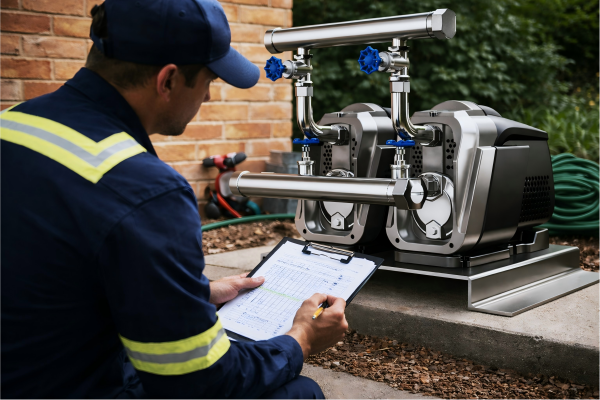
Surface Centrifugal Pumps: These pumps are installed on dry land, with the motor and pump mechanism positioned above the water source. They use a suction hose to pull water from a shallow source like a tank, lake, or shallow well. They are ideal for irrigation, water transfer, and boosting pressure in municipal water systems.
-
Submersible Pumps: As the name suggests, the entire pump assembly, including the hermetically sealed motor, is submerged in the fluid it is meant to pump. This design is highly efficient because it pushes water to the surface rather than pulling it. This eliminates the need for priming and avoids pump cavitation, a common issue with surface pumps. They are the standard for deep wells, boreholes, and sump drainage.
| Sub-Type | Placement | Best For | Common Application |
|---|---|---|---|
| Surface | Above Water | High flow, shallow sources (<7m) | Agricultural irrigation, booster systems |
| Submersible | Under Water | High pressure, deep sources | Deep well water supply, dewatering |
Positive Displacement (PD) Pumps
Unlike centrifugal pumps, positive displacement pumps move fluid by trapping a fixed amount of it and then forcing (displacing) that trapped volume into the discharge pipe.
They deliver a constant flow regardless of the system pressure, making them perfect for specific applications.
-
Rotary Pumps: These use rotating elements like gears, lobes, or screws to move fluid. They are excellent for handling viscous liquids like oils and sludge, as the pumping action is less dependent on fluid properties.
-
Reciprocating Pumps: These use a reciprocating piston, plunger, or diaphragm to displace fluid. Piston pumps, for example, can generate extremely high pressures, making them suitable for high-pressure cleaning and hydraulic systems. Diaphragm pumps are excellent for handling corrosive or abrasive fluids as the pumping mechanism is isolated from the liquid.
Specialized Pump Types
Beyond these main categories, there are many specialized pumps designed for unique tasks.
-
Jet Pumps: Often used for residential wells, these are technically surface-mounted centrifugal pumps assisted by a jet ejector. The ejector creates an additional vacuum to help pull water from depths greater than a standard surface pump can handle.
-
Solar Pumps: These pumps are powered by photovoltaic (PV) panels. They are typically used in off-grid or remote locations for agricultural irrigation and livestock watering, providing a sustainable and cost-effective solution where electricity is unavailable or unreliable. These systems have seen a 30% year-over-year growth in adoption in sun-rich regions.
Understanding these distinctions is the first step toward effective system design and procurement.
Which Industries Rely Most on Electric Water Pumps?
Many believe water pumps are just for wells or pools, overlooking their industrial significance.
This narrow view misses the vast scale of their impact, where pump failures can disrupt supply chains and cost millions.
Electric pumps are the lifeblood of agriculture, manufacturing, and municipal services, essential for irrigation, processing, cooling, and public water supply.
The application of electric water pumps is incredibly broad.
Their role is so fundamental that many modern industries and civil services could not function without them.
From the food we eat to the clean water in our homes, pumps are working silently behind the scenes.
Here's a closer look at their critical role in key sectors.
Agriculture and Irrigation
The agricultural sector is one of the largest consumers of water pumps worldwide.
Efficient irrigation is the key to maximizing crop yields, and pumps make it possible.
They are used to move water from sources like rivers, lakes, canals, and deep wells to the fields.
- Flood Irrigation: Large-volume surface pumps are used to flood entire fields.
- Sprinkler & Drip Irrigation: High-pressure pumps, often multi-stage centrifugal or vertical pumps, are needed to power sprinkler systems and micro-irrigation networks. A well-designed drip irrigation system powered by an efficient pump can reduce water consumption by up to 70% compared to traditional flood methods.
- Livestock Watering: Smaller pumps ensure a constant supply of water for animals on farms and ranches.
Municipal and Residential Water Supply
Public water systems rely on a complex network of massive pumps.
These pumps move treated water from purification plants through a city's main water lines and into homes and businesses.
- Water Treatment: Pumps are used at every stage of the water treatment process, from moving raw water into the facility to dosing chemicals and transferring water between treatment basins.
- Distribution: Large booster pump stations are strategically placed throughout a distribution network to maintain adequate water pressure, especially in high-elevation areas or districts far from the treatment plant. On a smaller scale, household booster pumps are used in individual homes or buildings to increase low municipal water pressure.
Manufacturing and Industrial Processes
In the industrial sector, pumps are indispensable for a multitude of processes.
They handle everything from water to aggressive chemicals and abrasive slurries.
- Cooling Systems: Large facilities and power plants generate immense heat. Pumps circulate water or coolant through heat exchangers and cooling towers to prevent equipment from overheating, a process critical for safety and operational continuity.
- Process Fluid Transfer: In chemical plants, food processing facilities, and manufacturing lines, pumps are used to move raw materials, intermediate products, and finished goods through pipes. The type of pump used (e.g., a hygienic stainless steel pump for food or a corrosion-resistant diaphragm pump for chemicals) is highly specialized.
- Wastewater Management: All industrial facilities generate wastewater. Submersible grinder pumps and effluent pumps are used to collect this wastewater and transfer it to on-site or municipal treatment facilities.
| Industry | Primary Pump Use | Common Pump Types | % of Operational Importance |
|---|---|---|---|
| Agriculture | Irrigation, livestock watering | Surface Centrifugal, Submersible, Solar | 85% |
| Municipal | Water treatment, distribution, boosting | Large Vertical, Booster Pump Sets | 95% |
| Industrial | Cooling, process transfer, wastewater | End-Suction, Diaphragm, Grinder | 90% |
The reliability of these pumps directly translates to the reliability of the entire operation, making pump selection and maintenance a high-stakes decision for facility managers and engineers.
How Does Variable Frequency Drive (VFD) Technology Enhance Pump Performance?
Running a pump at full speed all the time is like driving a car with only the accelerator floored.
This wastes massive amounts of energy, causes excessive wear, and shortens the lifespan of your equipment.
A Variable Frequency Drive (VFD) acts as a smart throttle for the pump's motor, precisely matching its speed to the system's demand, which can reduce energy consumption by 30-50%.
Variable Frequency Drive (VFD) technology represents one of the most significant advancements in pump control in recent decades.
It transforms a standard, fixed-speed pump into a highly intelligent and efficient machine.
Instead of operating in a simple on/off state, a VFD-equipped pump can adjust its performance in real-time.
The Problem with Fixed-Speed Pumps
A traditional pump system is designed to meet the maximum possible demand.
However, most systems operate at less than maximum demand over 90% of the time.
A fixed-speed pump running at 100% speed to meet a 50% demand is incredibly wasteful.
The excess pressure and flow must be dissipated using throttling valves or bypass lines, which is like driving with one foot on the accelerator and the other on the brake.
This not only wastes energy but also puts significant mechanical stress on the pump, pipes, and valves.
How a VFD Solves the Problem
A VFD, also known as an inverter drive, is an electronic controller that adjusts the electrical frequency supplied to the pump's motor.
According to the Pump Affinity Laws, a fundamental set of principles in fluid dynamics, the pump's flow rate is directly proportional to its speed, while its energy consumption is proportional to the cube of its speed.
Key Benefits of VFD Integration
-
Massive Energy Savings: This "cube law" relationship is the key to VFD savings. Reducing a pump's speed by just 20% (from 100% to 80%) can result in an energy reduction of nearly 50% (since 0.8^3 = 0.512). For applications with variable demand, such as residential booster systems or HVAC circulation, the potential for energy savings is enormous. Companies often see a return on investment for a VFD upgrade in under two years.
-
Enhanced Process Control: VFDs allow for precise control of pressure, flow, or liquid level. By integrating a pressure transducer or flow meter, the VFD can automatically adjust the pump's speed to maintain a constant, desired setpoint. This eliminates pressure fluctuations, providing a stable and reliable system. For example, a constant pressure booster system ensures you don't experience a drop in pressure when a second faucet is opened.
-
Reduced Mechanical Stress: A VFD provides a "soft start" for the motor, gradually ramping it up to speed. This avoids the huge inrush of electrical current and the sudden mechanical shock (water hammer) associated with starting a large motor across the line. This gentle operation significantly reduces wear and tear on the motor, bearings, seals, and piping, extending the entire system's lifespan by up to 50%.
| Feature | Fixed-Speed Pump System | VFD-Equipped Pump System |
|---|---|---|
| Speed Control | None (100% or Off) | Variable (e.g., 30-100%) |
| Energy Use | High and Inefficient | Optimized to Demand |
| System Stress | High (Water Hammer, Wear) | Low (Soft Start/Stop) |
| Process Control | Poor (Pressure Fluctuations) | Precise and Stable |
Integrating patented intelligent permanent magnet VFD technology is a core capability that allows manufacturers to deliver pumps that are not only powerful but also smart, efficient, and exceptionally durable.
What Key Factors Should You Consider When Sourcing Electric Water Pumps?
Sourcing pumps based on price alone often leads to high long-term costs.
Cheap, unreliable pumps result in frequent breakdowns, costly downtime, and damage to your reputation as a distributor.
Focus on total cost of ownership, considering material quality, hydraulic efficiency, manufacturer support, and quality control systems like IQC and OQA.
For an importer or distributor, sourcing water pumps is a decision that extends far beyond a single purchase order.
The right partnership with a manufacturer ensures a reliable product line that builds customer trust and a strong brand reputation.
The wrong choice can lead to a cascade of problems.
A strategic approach to sourcing is essential.
Performance and Hydraulic Efficiency
First and foremost, the pump must meet the required performance specifications.
- Flow Rate (Q): Measured in gallons per minute (GPM), liters per second (L/s), or cubic meters per hour (m³/h). This is the volume of water the pump can move in a given amount of time.
- Total Dynamic Head (H): Measured in feet, meters, or pounds per square inch (PSI). This represents the total pressure the pump must overcome, including the vertical lift, friction loss in the pipes, and the final pressure required at the outlet.
Beyond just meeting these points, look at the pump's hydraulic efficiency curve.
A pump that operates close to its Best Efficiency Point (BEP) will consume less energy and have a longer service life.
A pump with a wide efficiency curve is more forgiving of system variations.
Quality of Materials and Construction
The longevity of a pump is directly tied to the materials it's made from.
The choice of materials must be appropriate for the fluid being pumped and the operating environment.
- Casing and Impeller: Cast iron is common for clean water applications due to its durability and cost-effectiveness. For corrosive fluids or hygienic applications, stainless steel (e.g., 304 or 316) is essential. Bronze impellers offer good corrosion resistance.
- Mechanical Seal: This is a critical component that prevents leaks along the motor shaft. High-quality seals made from materials like silicon carbide or tungsten carbide are vital for reliability, especially in continuous-duty applications.
- Motor Quality: Look for motors with a high service factor and a robust insulation class (e.g., Class F), which indicates its ability to withstand high operating temperatures.
Manufacturer's Technical Capabilities and Quality Control
Partnering with a manufacturer is about trusting their process.
A top-tier supplier will have a rigorous quality management system.
-
Structured QC System: A comprehensive quality protocol involves multiple stages:
- IQC (Incoming Quality Control): Inspecting all raw materials and components before they enter the production line.
- PQC (Process Quality Control): Monitoring and testing at various stages of the assembly process.
- LQC (Line Quality Control): Final checks during the production line.
- OQA (Outgoing Quality Assurance): A final, thorough inspection of the finished product before it ships. This should include a 100% performance test where each pump is run and its flow, head, and power consumption are verified against its specifications.
-
Research & Development: A manufacturer with a strong R&D department and a portfolio of technical patents (e.g., in VFD technology) demonstrates a commitment to innovation and product improvement, not just mass production.
-
Durability Testing: Ask for evidence of stringent testing, such as 1000+ hour salt spray tests for corrosion resistance and UV resistance testing for components exposed to sunlight. This proves the product is built to last in harsh real-world conditions.
| Sourcing Factor | Low-Quality Indicator | High-Quality Indicator |
|---|---|---|
| Performance | Inefficient, narrow BEP range | High efficiency, matches system curve |
| Materials | Mismatched for application, cheap seals | Cast iron/Stainless steel, silicon carbide seals |
| Quality Control | Final inspection only, or none | Multi-stage system (IQC, PQC, OQA), 100% testing |
| Certifications | None or unverifiable | CE, IEC, RoHS, etc. |
For a distributor, a reliable supplier with proven quality is more valuable than a low initial price.
It's the foundation for building your own brand on quality and trust.
Why is Proper Installation and Maintenance Crucial for Pump Longevity?
You've sourced a high-quality pump, but its lifespan could be cut in half.
Improper installation and neglect are the leading causes of premature pump failure, leading to unexpected downtime and expensive replacements.
Correct alignment, secure mounting, and a routine maintenance schedule are non-negotiable for maximizing the pump's 10-15 year design life and ensuring reliability.
A water pump's journey doesn't end once it's delivered.
In fact, its long-term performance and reliability are heavily dependent on what happens next.
Even the most technologically advanced pump, built with the highest quality materials, will fail if it is not installed correctly and maintained properly.
Statistics from pump service centers show that over 50% of all pump failures can be traced back to installation errors or a lack of basic maintenance.
The Critical Importance of Proper Installation
A successful installation lays the foundation for a long and trouble-free service life.
Several factors must be addressed meticulously.
-
Solid Foundation: The pump must be mounted on a flat, rigid, and level base. An uneven or vibrating foundation will cause shaft misalignment, leading to rapid bearing and seal failure.
-
Pipework Alignment: The suction and discharge piping must be independently supported and perfectly aligned with the pump's nozzles. If the pipes are used to pull the pump into alignment, it creates significant "pipe strain." This strain distorts the pump casing, causing misalignment and catastrophic failure of internal components.
-
Proper Electrical Connection: The electrical supply must match the motor's specifications for voltage and phase. All connections must be secure, and appropriate motor protection (e.g., overload relays) must be installed to prevent burnout during adverse conditions.
A Proactive Maintenance Schedule
Maintenance should not be a reactive task performed only after a failure.
A proactive, preventative maintenance schedule is the key to maximizing uptime and extending the pump's life.
Routine Checks (Weekly/Monthly)
- Check for Leaks: Visually inspect the mechanical seal and all pipe connections for any signs of leakage.
- Listen for Unusual Noises: A healthy pump has a consistent hum. Grinding, rattling, or high-pitched whining can indicate bearing problems or cavitation.
- Monitor Vibration and Temperature: Using a handheld vibration meter or even just by touch, check for excessive vibration or heat at the bearings and motor housing. A sudden increase in temperature is a red flag.
Periodic Maintenance (Quarterly/Annually)
- Lubrication: For pumps with greaseable bearings, follow the manufacturer's schedule for re-lubrication. Over-greasing can be just as damaging as under-greasing.
- Alignment Check: Periodically re-check the alignment between the pump and motor, especially after the first few hundred hours of operation, as foundations can settle.
- Performance Verification: Check the pump's operating pressure and flow rate to ensure it is still performing as expected. A drop in performance could indicate a clogged impeller or internal wear.
| Task | Frequency | Purpose | Consequence of Neglect |
|---|---|---|---|
| Check for Leaks | Weekly | Prevent fluid loss, protect bearings | Bearing failure, hazardous spills |
| Check Alignment | Annually | Prevent stress on components | Rapid bearing and seal wear, shaft failure |
| Lubricate Bearings | Per Schedule | Reduce friction and wear | Overheating and seizure of bearings |
| Monitor Vibration | Monthly | Early detection of imbalance/wear | Catastrophic failure of rotating assembly |
Proper installation and maintenance are not costs; they are investments.
They protect the larger investment you've made in the equipment and ensure the process it supports remains reliable.
Conclusion
An electric water pump is a vital machine that converts electrical energy into fluid motion, serving countless applications from homes to heavy industry and unlocking operational efficiency everywhere.
FAQs
What is the main function of a water pump?
The main function is to move water from one place to another. This is done by increasing its pressure, allowing it to flow through pipes or to a higher elevation.
What are the two main types of water pumps?
The two main types are centrifugal pumps and positive displacement pumps. Centrifugal pumps are best for high flow, while positive displacement pumps excel at high-pressure applications.
What is the difference between an electric pump and a motor?
The motor is the component that converts electricity into rotation. The pump is the "wet end" (impeller and casing) that uses this rotation to move water.
How long do electric water pumps last?
A well-maintained, high-quality industrial water pump can last 15 to 20 years. Residential pumps typically last 8 to 12 years, depending on usage and water quality.
Can an electric water pump run continuously?
Yes, pumps rated for "continuous duty" are designed to run 24/7. This rating depends on the motor's insulation class and the quality of its bearings and seals.
Do electric water pumps use a lot of electricity?
Energy use depends on the pump's size and run time. Using a Variable Frequency Drive (VFD) can significantly reduce electricity consumption by matching the pump's speed to the actual demand.
What is pump head?
Pump head is the height to which a pump can raise water. It's a measure of the pressure a pump can generate, typically expressed in meters or feet.
What causes a water pump to fail?
Common causes include running the pump dry, improper installation causing misalignment, clogged impellers, and normal wear of bearings and seals over time. Regular maintenance prevents most failures.