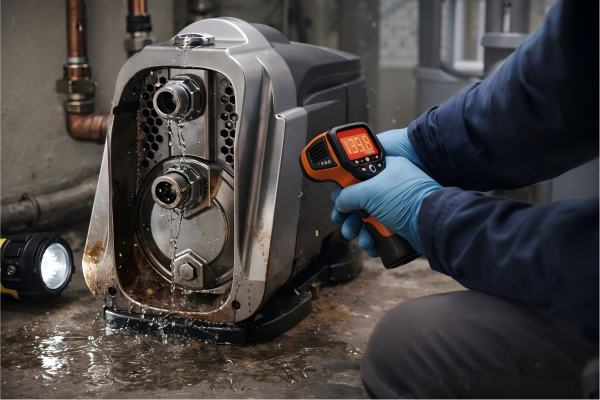
Hear your pump kicking on for no reason?
This constant cycling wastes energy, wears out your pump, and hints at a bigger problem in your water system.
Your pump is coming on because your system is losing pressure.
This is most commonly caused by a leak somewhere in your plumbing, a faulty check valve allowing water to drain back into the well, or an issue with your pressure tank or switch.

This mysterious pump activity, often called "phantom cycling," is a clear signal that something is wrong.
While it might seem like a minor annoyance, ignoring it can lead to a premature pump failure and a hefty replacement bill.
Understanding the components of your water system is the first step to diagnosing the problem.
Let's break down the most common culprits and explore how to pinpoint the source of the pressure loss.
The Prime Suspect: Leaks in Your Plumbing System
That constant cycling could be from a leak you can't even see.
A hidden leak wastes water and electricity, forcing your pump to work overtime just to keep up.
Even a tiny, slow leak from a dripping faucet, running toilet, or underground pipe fitting will cause system pressure to drop.
This drop eventually hits the pump's "cut-in" pressure, forcing it to turn on to repressurize the system, even when no one is using water.
To understand why a small leak has such a big impact, you first need to understand how a standard pressurized water system works.
It's a simple but effective cycle designed to provide on-demand water without the pump running constantly.
How a Pressurized Water System Operates
The system relies on a partnership between three key components: the pump, a pressure tank, and a pressure switch.
- The Pump: Its job is to move water from your source (like a well) into the pressure tank.
- The Pressure Tank: This tank contains a bladder or diaphragm with a cushion of compressed air. As the pump fills the tank with water, this air is compressed, storing potential energy.
- The Pressure Switch: This is the brain of the operation. It's a sensor that monitors the pressure inside the tank. It has two set points: a "cut-in" pressure (e.g., 40 PSI) and a "cut-out" pressure (e.g., 60 PSI).
The cycle works like this: The pump runs, filling the tank until the pressure reaches the 60 PSI cut-out point, and then it shuts off.
When you open a faucet, the compressed air in the tank pushes water out into your pipes.
As water is used, the pressure slowly drops.
Once it hits the 40 PSI cut-in point, the switch signals the pump to turn on again, and the cycle repeats.
Locating the Source of the Leak
When your pump cycles without water use, it means this pressure is bleeding off somewhere.
A leak provides an unintended escape route for that pressurized water.
The most common leak points are often the most overlooked:
- Toilets: A worn-out flapper valve can create a slow, silent leak from the tank into the bowl. This is one of the most frequent causes of phantom cycling.
- Faucets and Showerheads: A slow drip can easily go unnoticed but is enough to trigger the pump every hour or so.
- Outdoor Spigots: These are often left with a slight drip after use.
- Underground Pipes: This is the most difficult leak to find. Look for unexplained wet, mushy spots in your yard.
This issue affects all pump types.
For a farm using a high-flow solar plastic impeller pump for irrigation, a single leaky fitting in a long pipe run can cause the pump to cycle frequently, wasting precious solar energy and water.
The Silent Failure: A Faulty Check Valve
Is your pump fighting a losing battle against gravity?
A failing check valve forces your pump to re-pump the same water over and over, causing extreme wear and wasted power.
A check valve is a one-way gate that stops water in your pipes from flowing back down into the well.
If this valve fails to seal properly, the entire column of water drains back, causing a rapid pressure drop and forcing the pump to immediately cycle again.
The check valve, or foot valve if it's at the very bottom of the pipe in the well, is a small but absolutely critical component.
Its sole purpose is to hold pressure in the system by preventing backflow.
When the pump shuts off, the check valve slams shut, holding the water in the pipe and pressure tank.
If it fails, this seal is broken, and gravity takes over.
Symptoms of a Failing Check Valve
A failing check valve often presents differently than a small plumbing leak.
While a slow leak might cause the pump to cycle every 30-60 minutes, a bad check valve often causes much more frequent cycling, sometimes every few minutes.
The key signs include:
- Rapid Cycling: The pump turns on, runs for a short period to build pressure, shuts off, and then turns back on again just a few minutes later, even with the main valve to the house shut off.
- Fast Pressure Drop: If you have a pressure gauge, you can watch the needle. After the pump cuts out, the pressure should hold steady. If you see it steadily and quickly dropping, the check valve is the likely culprit.
- Delayed Water Delivery: You might notice a longer-than-usual delay for water to start flowing when you first open a faucet.
Check Valve Importance in Different Pump Types
The integrity of the check valve is vital for any submersible pump, but its importance is magnified in certain applications.
- Solar Screw Pumps: These pumps are designed for high-head, low-flow situations, meaning they often push water up from extreme depths of 100 meters or more. A failed check valve in such a deep well means a massive column of water, weighing hundreds of kilograms, rushes back down the pipe. This not only causes immediate cycling but can also create a dangerous backspin that can damage the pump and motor.
- Solar Stainless Steel Impeller Pumps: These are premium pumps used in demanding or corrosive water environments. The check valve must also be made of high-quality, corrosion-resistant materials. A standard brass check valve might fail prematurely in acidic water, becoming the weak link in an otherwise durable system.
The following table outlines how to distinguish between a leak and a faulty check valve.
| Symptom | Leak in Plumbing | Faulty Check Valve |
|---|---|---|
| Pump Cycle Frequency | Slower (e.g., every 30-90 minutes) | Faster (e.g., every 5-15 minutes) |
| Pressure Gauge Behavior | Very slow, gradual pressure drop | Faster, steady pressure drop |
| Sound | May hear a faint hiss or drip at the leak point | No sound of leaking water in the house |
| Initial Test | Shut off water to the house; if cycling stops, leak is in the house | Shut off water to the house; if cycling continues, problem is the valve or underground pipe |
The Brains of the Operation: Controller and Motor Synergy
Is your advanced pump system still cycling unexpectedly?
The problem might not be a simple leak.
Modern intelligent systems offer superior protection but require a holistic diagnostic approach.
Even with a high-efficiency BLDC motor, phantom cycling points to a mechanical issue like a leak.
However, the intelligent controller provides crucial data and protection, logging faults and preventing the motor from overheating due to excessive starts, safeguarding your investment.
At the core of every modern solar water pump is a highly efficient Brushless DC (BLDC) permanent magnet motor.
These motors are marvels of engineering, with efficiencies over 90%, which is a massive improvement over older motor technologies.
This efficiency means they can pump more water with less solar power, reducing the overall cost and footprint of the system.
This powerhouse motor is governed by an intelligent controller, usually featuring Maximum Power Point Tracking (MPPT) to squeeze every last watt from your solar panels.
How Smart Controllers Help Diagnose Problems
While the controller and motor are not the cause of phantom cycling, they are essential tools in diagnosing the issue and protecting the equipment.
Phantom cycling is fundamentally a mechanical problem—water is escaping the pressurized system.
The controller simply reacts to the pressure switch's signal to turn on.
However, a smart controller offers significant advantages:
- Fault Logging: Many advanced controllers log operational data, including the number of starts per hour. An unusually high number of starts is a clear digital footprint of a cycling problem, helping a technician quickly identify the issue.
- Motor Protection: Constant starting and stopping is incredibly hard on a motor. Each start involves a high in-rush of current, which generates heat. An intelligent controller monitors motor temperature and can implement a "lockout" if the starts become too frequent, preventing a thermal burnout. This protection can save a motor that would otherwise be destroyed.
- Performance Data: By monitoring power consumption and flow rates (if a sensor is installed), you can notice deviations from normal performance. A system that is suddenly using more power for the same amount of water could indicate that the pump is working harder due to constant repressurization cycles.
The Holistic View: System Integration
The true advantage of a modern solar pump system is the integration of its components.
The pump head (whether screw, plastic impeller, or stainless steel) is designed for a specific application.
The BLDC motor provides the efficient power.
The controller optimizes that power and protects the system.
When troubleshooting an issue like phantom cycling, you must look at the entire system.
The controller's data can point you in the right direction, but the solution will almost always involve fixing a mechanical component like a leaking pipe, a worn toilet flapper, or a failed check valve.
For distributors, this is a key selling point: you are not just selling a pump; you are providing a complete, intelligent water management solution where each part works in synergy to provide reliable, efficient, and protected operation.
Conclusion
A pump that runs without water use signals a pressure leak.
By systematically checking for plumbing leaks, testing the check valve, and ensuring your pressure tank is working, you can solve the problem.
Frequently Asked Questions
Why would a water pump keep cycling on and off?
This is typically caused by a pressure loss.
The most common reasons are a water leak somewhere in the house or a faulty check valve in the well.
How do I stop my water pump from short cycling?
First, find and fix any water leaks.
If there are no leaks, check the air pressure in your pressure tank; it may be waterlogged and need recharging or replacement.
Can a bad pressure switch cause the pump to cycle?
Yes, a faulty pressure switch with a clogged sensor tube or bad contacts can read pressure incorrectly, causing it to turn the pump on and off at the wrong times.
How do you test a check valve on a well pump?
Shut off the main water valve to your house and watch the pressure gauge.
If the pressure holds steady, the valve is likely good.
If it drops, the check valve is failing.
How often should a well pump cycle?
A properly sized system should run for at least one to two minutes each time it turns on.
If it runs for just a few seconds, this is "short cycling" and indicates a problem.
What are the signs of a bad well pump pressure tank?
Signs include rapid pump cycling, fluctuating water pressure at the faucets, and the tank feeling completely full of water (waterlogged) when you tap on it.
Is it normal for a well pump to run intermittently?
Yes, it's normal for it to run when you are using water.
It is not normal for it to run intermittently when all faucets and water appliances are turned off.
Can a water heater leak cause a well pump to run?
Absolutely.
A leak in the water heater's tank or from its pressure relief valve will cause a steady drop in system pressure, making the well pump cycle.