Investing in a solar pool pump feels risky without knowing its lifespan.
You worry about replacing expensive components just a few years down the line, canceling out any savings.
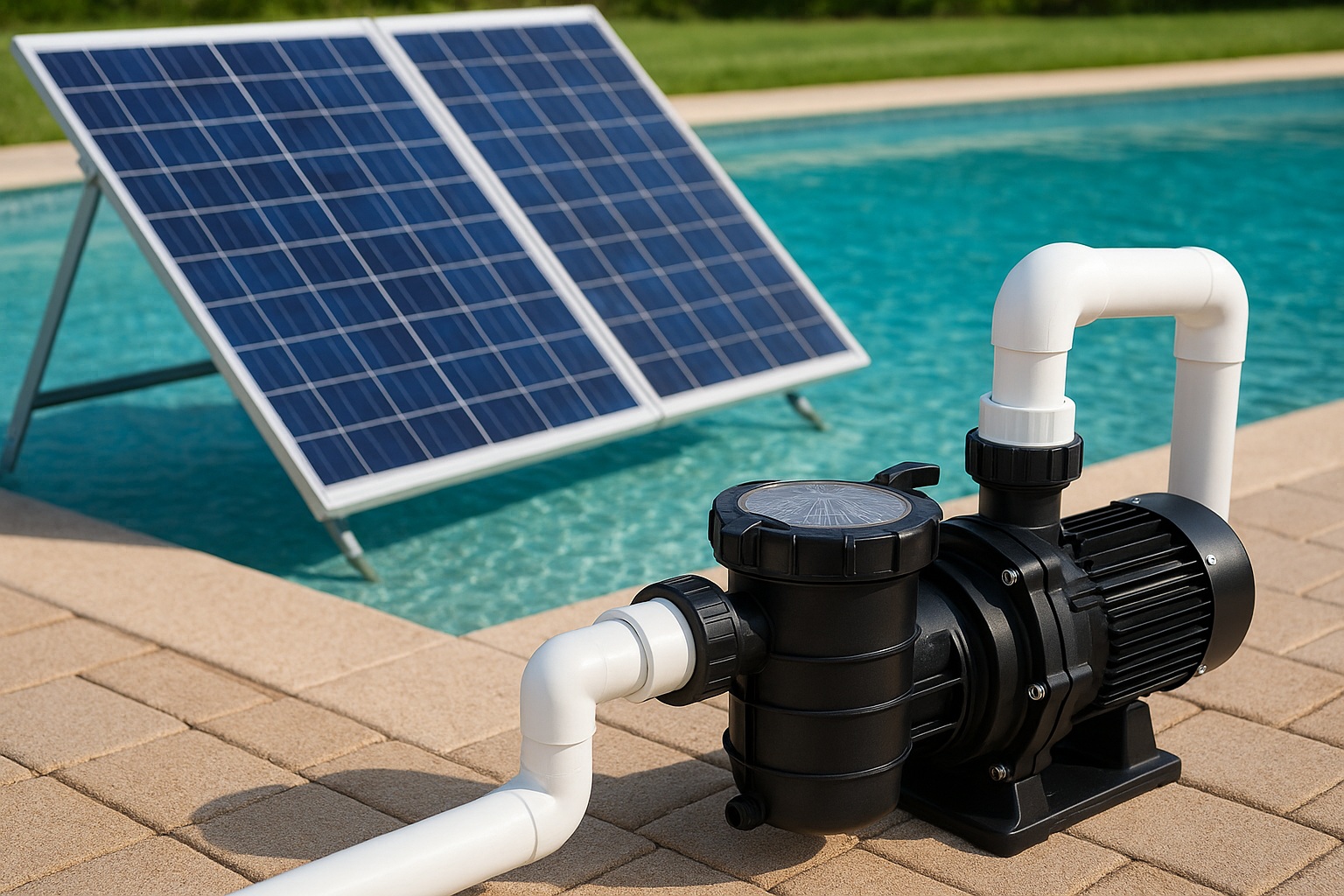
A quality solar pool pump system can last 15 to 25 years.
The solar panels are often warrantied for 25 years, while the durable brushless motor and pump can last over a decade with minimal maintenance, making it a reliable, long-term investment.
The overall lifespan of your system is not determined by a single part.
It is a combination of several high-quality components working together.
Understanding the durability of each individual piece, from the panels on your roof to the motor driving the pump, gives you a clearer picture of your investment.
Let's break down the expected lifespan of each core component.
What are the Lifespans of Key Components?
You know the system can last for decades, but what if one part fails early?
This uncertainty makes it hard to trust the long-term value of the investment.
The system's longevity depends on its three main parts.
Solar panels last 25+ years, the brushless DC motor can run for over 10 years, and the pump's "wet end" lifespan depends on its material, with stainless steel outlasting plastic composites.
A solar pool pump is not just one piece of equipment.
It is a complete system where each part plays a crucial role in its overall durability.
The impressive total lifespan is only possible because each component is engineered for endurance.
From the panels that capture sunlight to the motor that converts it into power, and the pump that circulates water, each has its own expected service life.
Knowing what to expect from each part helps you understand where the real value lies and what maintenance might look like far into the future.
Solar Panels: The 25-Year Powerhouse
The solar panels are the most durable part of the entire system.
They have no moving parts and are built to withstand decades of exposure to harsh weather.
Most Tier 1 manufacturers provide a performance warranty that guarantees their panels will still produce at least 80% of their original output after 25 years.
This slow, predictable degradation means your energy source is secure for the long haul.
The Brushless Motor: A Decade of Reliable Service
The heart of the pump is its motor.
Modern solar pumps use brushless DC (BLDC) permanent magnet motors.
Unlike traditional motors with brushes that wear down and need replacement, a brushless design eliminates this point of failure.
This significantly extends its operational life.
A well-made BLDC motor can easily exceed 10 years of service, providing consistent and efficient power day after day.
The Controller: The System's Brain
The electronic controller manages the flow of energy from the panels to the motor.
It also protects the system from issues like overheating or running dry.
These solid-state electronics are highly reliable.
While their lifespan can be influenced by factors like heat and humidity, a quality controller is designed to last for many years, often matching the lifespan of the motor it controls.
The Pump "Wet End": Material Matters
The "wet end" refers to the part of the pump that handles the water, including the pump body and the impeller.
Its lifespan is directly tied to the materials used and the corrosiveness of your pool water.
| Component | Standard Lifespan | Key Durability Factor |
|---|---|---|
| Solar Panels | 25+ years | Minimal degradation; no moving parts. |
| BLDC Motor | 10+ years | Brushless design eliminates wear parts. |
| Pump Controller | 8-12 years | Solid-state electronics. |
| Pump Wet End | 5-15+ years | Material's resistance to corrosion. |
For pools with standard chlorine levels, a pump with wear-resistant plastic composite impellers can last for many years.
However, for saltwater pools or pools with aggressive chemical treatments, a pump with stainless steel components offers superior corrosion resistance and a much longer service life.
Why is a BLDC Motor Key to a Long-Lasting Pump?
A standard motor seems cheaper upfront.
But you fear its constant wear and tear will lead to early failure and costly repairs, wiping out any initial savings.
The BLDC motor's design is the secret to its long life.
By eliminating brushes, a common point of mechanical failure, it dramatically reduces wear and maintenance.
This efficiency and durability make it the core reason for the pump's decade-plus lifespan.
The motor is the engine of your solar pump system.
It runs for hours every single day, and its reliability directly impacts the entire system's longevity.
This is where the choice of motor technology becomes the most critical factor.
Traditional AC motors or brushed DC motors contain components that are designed to wear out over time.
The innovation behind modern solar pumps is the near-universal adoption of the Brushless DC (BLDC) permanent magnet motor, which is engineered specifically for efficiency and endurance.
The Problem with Brushes
In a traditional motor, carbon brushes are used to transfer electrical current to the spinning part of the motor.
This process creates constant friction.
Over time, these brushes wear down, create carbon dust, and eventually fail completely.
They are a required maintenance item and a predictable point of failure.
A BLDC motor, as the name implies, gets rid of them entirely.
How Brushless Technology Works
Instead of mechanical brushes, a BLDC motor uses an intelligent electronic controller to switch the direction of the electric field.
This creates the rotation without any physical contact, meaning there is virtually no internal friction or wear.
This elegant design offers several advantages that directly contribute to a longer life.
- No Wear Parts: The most obvious benefit is the removal of brushes that need replacing.
- Less Heat: Friction generates heat, and heat is the enemy of electronic components. BLDC motors run cooler, which puts less stress on the motor windings and bearings, extending their life.
- Higher Efficiency: With no energy lost to friction, more of the sun's power is converted into pumping water. An efficient motor doesn't have to work as hard, which reduces long-term strain.
The Power of Permanent Magnets
The other key part of a BLDC motor is its rotor, which is built with powerful rare-earth magnets like neodymium iron boron.
Unlike AC induction motors that use electricity to create a magnetic field in the rotor, a permanent magnet motor's rotor is always "on."
This design is more powerful, compact, and efficient.
It generates high torque without the extra energy consumption or heat buildup of an induction motor, further contributing to its robust, long-lasting nature.
By combining a frictionless electronic design with powerful permanent magnets, the BLDC motor provides the reliable, maintenance-free, and long-lasting performance required for a solar-powered system.
How Do Pump Materials Stand Up to Pool Chemicals?
You worry that your pool's chlorine or salt will corrode a new solar pump.
Buying a pump that cannot handle your water chemistry means a premature, expensive replacement.
The pump's material is crucial for longevity in a pool environment.
Stainless steel models offer maximum resistance to corrosion from salt and chemicals, ensuring a very long life.
High-grade polymer pumps are a cost-effective choice for standard chlorine pools.
A swimming pool is a harsh environment for any piece of equipment.
The constant exposure to sanitizing chemicals like chlorine, or the highly corrosive nature of saltwater systems, can quickly destroy a pump made from the wrong materials.
While the motor's lifespan is about mechanical and electrical endurance, the lifespan of the pump's "wet end" is a battle of chemistry.
The choice between a polymer and a stainless steel pump body and impeller is one of the most important decisions for ensuring durability.
It all comes down to matching the material to your specific pool's water chemistry.
The Economical Choice: Wear-Resistant Polymer
Modern solar pumps often use advanced plastics for their impellers and housings.
This is not the ordinary plastic you might find in household goods.
It is a high-strength, wear-resistant polymer composite engineered to be both durable and chemically resistant.
- Best Use: These pumps are an excellent and economical choice for traditional swimming pools that use standard chlorine sanitation.
- Advantages: They are lightweight, which makes installation easier, and offer a great balance of performance and price. They hold up very well against the typical chemical levels found in a well-maintained chlorine pool.
- Limitations: While durable, they may become brittle over many years of chemical and UV exposure. They are not the ideal choice for saltwater pools or pools that experience aggressive or fluctuating chemical levels.
The Premium Choice: SS304 Stainless Steel
For the ultimate in chemical resistance and longevity, nothing beats stainless steel.
High-end solar pumps use SS304-grade stainless steel for all components that come into contact with water.
This material is specifically chosen for its superior ability to resist corrosion.
- Best Use: This is the top recommendation for saltwater pools, high-end residential pools, or any environment where water chemistry might be more aggressive.
- Advantages: Stainless steel is extremely resistant to the corrosive effects of salt, chlorine, and pH imbalances. It will not become brittle or break down over time, leading to a significantly longer service life.
- Limitations: The primary drawback is a higher upfront cost. These pumps are also heavier than their polymer counterparts.
Making the Right Decision
Choosing the right material is a simple cost-benefit analysis.
| Pump Material | Ideal Pool Type | Lifespan Expectation | Key Benefit |
|---|---|---|---|
| Wear-Resistant Polymer | Standard Chlorine | Good (5-10 years) | Cost-Effective & Lightweight |
| SS304 Stainless Steel | Saltwater / High-End | Excellent (10-15+ years) | Maximum Corrosion Resistance |
Investing in a stainless steel pump for a saltwater pool may cost more initially, but it will easily pay for itself by avoiding the need to replace a corroded polymer pump a few years later.
For a standard chlorine pool, a high-quality polymer pump offers a perfectly durable and more budget-friendly solution.
How Do Modern Controllers Enhance System Longevity?
You are concerned that inconsistent sunlight could damage the pump.
A pump motor struggling with low power or running dry seems like a recipe for a short lifespan.
A smart controller is the pump's guardian.
It protects the motor from damage by preventing dry running and overheating.
By optimizing power from the panels, it ensures the motor runs smoothly without stress, directly contributing to a longer, more reliable life.
The controller is far more than a simple on/off switch.
It is the intelligent brain of the entire solar pump system.
Its primary job is to manage the variable power coming from the solar panels and deliver it to the motor in the most efficient way possible.
But just as importantly, it acts as a comprehensive protection system.
These protective features are critical for preventing the most common causes of pump failure, thereby playing a direct role in extending the life of the motor and the pump itself.
The Importance of MPPT (Maximum Power Point Tracking)
Solar panels produce DC power, but their voltage and current change constantly with the intensity of the sun.
A controller with MPPT technology continuously analyzes the output of the panels and adjusts the electrical load to extract the absolute maximum amount of power available at any given moment.
This means that on cloudy days or early in the morning, the pump can still start and run effectively at a lower speed.
This smooth, optimized power delivery prevents the motor from stalling or struggling under low-light conditions, reducing electrical stress and wear over time.
Critical Protective Functions
A high-quality controller comes with a suite of built-in safety features that guard your investment against damage.
- Dry-Run Protection: This is one of the most important features. If the water level drops and the pump starts sucking in air, it can overheat and destroy itself in minutes. The controller senses the change in motor load and automatically shuts the pump off, saving it from catastrophic failure.
- Over-Voltage and Under-Voltage Protection: It shields the motor from power surges or sudden drops that could damage its sensitive electronics.
- Over-Current and Overload Protection: If the pump gets jammed by debris, the motor will try to draw more and more current, causing it to burn out. The controller detects this overload and stops the motor before any damage occurs.
Hybrid Functionality for 24/7 Reliability
Many modern controllers also offer AC/DC hybrid capability.
This allows the system to automatically switch to grid power (AC) when there is not enough sunlight, such as on rainy days or at night.
This ensures your pool filtration is never interrupted.
While this is primarily a feature for convenience, it also contributes to longevity by ensuring the pump operates in a stable and consistent manner, rather than constantly starting and stopping in fringe sunlight conditions.
By managing power intelligently and protecting against common hazards, the controller is an unsung hero that ensures the entire system runs safely and efficiently for its maximum possible lifespan.
Conclusion
A solar pool pump's long lifespan comes from its durable components.
With panels lasting 25+ years and a robust brushless motor, it is a smart, reliable, and sustainable investment for your pool.
FAQs
What maintenance does a solar pool pump require?
Solar pool pumps require very little maintenance.
You should keep the solar panels clean and check the pump's intake basket for debris, just like a standard pool pump.
Will a solar pump run on cloudy days?
Yes, a solar pump will run on cloudy days, but at a reduced speed.
Hybrid systems can automatically use grid power to supplement solar energy and maintain full speed.
Do solar pool pumps work at night?
No, they do not work at night using solar power alone.
However, a system with a hybrid AC/DC controller can be programmed to run at night using your home's grid electricity.
Can a solar pump handle a saltwater pool?
Yes, but it is crucial to choose a pump made with corrosion-resistant materials.
A pump with a stainless steel body and impeller is the best choice for a saltwater pool.
How much can I save with a solar pool pump?
You can save hundreds of dollars per year on electricity.
Running a pool pump is often one of the highest energy costs for pool owners, and a solar pump can eliminate that expense.
Is a solar pool pump a good investment?
Yes, for most pool owners, it is an excellent investment.
The system often pays for itself in electricity savings within 2 to 4 years and continues to provide free energy for many years after.