Struggling with unreliable water access and high energy bills?
Off-grid areas need a consistent water solution that doesn't depend on a costly, unstable power grid.
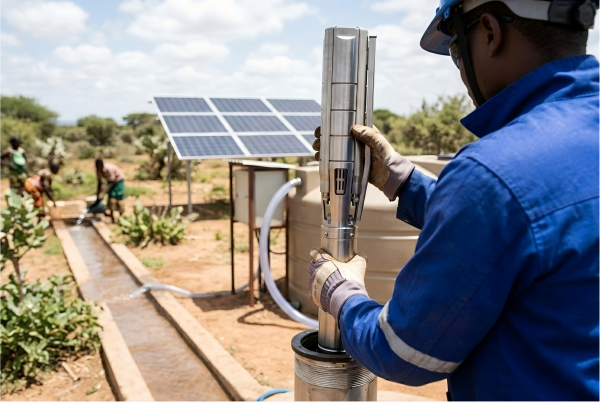
A high-quality solar water pump system can last for over 10 years, with some core components like the brushless motor offering a lifespan of more than a decade. Solar panels themselves often come with a performance warranty of 20-25 years, making the entire system a long-term investment.
The lifespan of a solar water pump isn't just one number.
It's a story told by its different parts.
The pump itself, the motor that drives it, and the controller that manages it all have their own lifespans.
Understanding these parts is key to knowing the true lifetime value of your investment.
Let's explore what makes a solar pump system truly last.
Understanding the Core: The BLDC Motor
Your pump system is failing, causing downtime and lost productivity.
A weak motor is often the culprit, leading to inefficiency and frequent replacements that drain your resources.
The heart of a durable solar pump is its high-efficiency Brushless DC (BLDC) permanent magnet motor.
With an operational efficiency exceeding 90%, this motor is designed for a long service life, often lasting more than 10 years with minimal to no maintenance required.
The motor is the engine of your water supply.
Its quality directly determines the pump's performance and how long it will last.
A superior motor doesn't just work harder; it works smarter and longer, saving you money and effort over time.
The most advanced solar pump systems utilize a specific type of motor prized for its power and endurance: the BLDC permanent magnet brushless motor.
Let's break down why this component is so critical to the system's overall lifespan and value.
The Power of Advanced Motor Technology
The BLDC motor's design is key to its longevity.
Unlike traditional brushed motors, it has no brushes that wear out and need replacing.
This single feature dramatically reduces maintenance needs and extends the motor's operational life.
The rotor is constructed from high-grade materials like 40SH neodymium iron boron, which maintains its magnetic strength over long periods, ensuring consistent power output.
Efficiency That Translates to Savings
High efficiency is not just a technical specification; it's a direct financial benefit.
A motor with over 90% efficiency converts more solar energy into pumping power.
This means you need fewer solar panels to achieve the desired water output.
This reduction in panel requirements lowers the initial system cost by as much as 15-20%.
Over the pump's lifespan, improved efficiency also means lower operational costs and a faster return on investment.
Compact Design, Big Impact
Modern engineering has made these powerful motors surprisingly compact.
They are often significantly smaller and lighter than older motor designs.
For example, some advanced BLDC motors are up to 47% smaller and 39% lighter than their predecessors.
This has practical advantages.
- Easier Installation: A lighter motor is easier to handle and install, especially in remote locations.
- Reduced Shipping Costs: Smaller, lighter units are cheaper to transport, a significant factor for international distributors.
- Wider Application: The compact design allows the motor to be integrated into a variety of pump types without issue.
The Motor's Role in System Longevity
A reliable motor protects the entire system.
Its smooth operation and high torque reduce mechanical stress on the pump body and impellers.
When paired with an intelligent controller, the motor can adjust its speed based on available sunlight, preventing the strain of starting and stopping abruptly.
This synchronized operation ensures every component works in harmony, contributing to the 10+ year lifespan of the complete system.
| Feature | Technical Advantage | End-User Benefit |
|---|---|---|
| Brushless Design | No parts that wear out from friction | Maintenance-free operation, longer service life. |
| >90% Efficiency | Converts more solar power to water | Fewer solar panels needed, lower initial cost. |
| High Torque | Strong starting power | Reliable operation, even in low-light. |
| Permanent Magnet | Consistent power output over time | Dependable performance for years. |
| Compact & Lightweight | Smaller physical footprint | Easier installation and lower shipping costs. |
The Workhorse: Solar Screw Pumps
You need water from a very deep well, but standard pumps can't provide the necessary pressure.
This leaves you without a reliable water source for your home or livestock.
Solar screw pumps are the solution for deep wells, capable of delivering high head (pressure) even with low flow rates.
Their lifespan is excellent, often exceeding 10 years, thanks to a robust design that is highly resistant to sand and harsh water conditions.
When the water you need is hundreds of feet below ground, not just any pump will do.
You need a specialist.
The solar screw pump, also known as a helical rotor or progressing cavity pump, is engineered for exactly these challenging conditions.
It operates on a simple yet powerful principle to push water from depths that other pumps cannot reach.
Let's examine how this design contributes to its long life and makes it indispensable for certain applications.
How a Screw Pump Works
The screw pump works by trapping pockets of water and forcing them upwards.
It consists of two main parts: a stainless steel screw-shaped rotor that spins inside a rubber stator.
As the rotor turns, it creates sealed cavities that move progressively from the inlet to the outlet of the pump.
This mechanism is highly effective at building pressure, making it ideal for high-head applications.
Built for Tough Environments
One of the defining features of a screw pump is its durability in imperfect water.
- High Sand Resistance: The design can handle water with a higher concentration of sand and grit than many centrifugal pumps. The rubber stator provides a degree of flexibility, allowing small particles to pass through without causing major damage. This makes it a perfect fit for newly drilled wells or areas with sandy soil.
- Robust Materials: The use of a stainless steel rotor ensures resistance to abrasion and corrosion, contributing significantly to a long service life.
Applications and Limitations
This pump's unique capabilities make it a go-to choice in specific scenarios.
| Application | Why It's a Good Fit | Ideal Regions |
|---|---|---|
| Domestic Water | Provides steady pressure for homes from deep wells. | Electricity-scarce areas in Africa, Latin America. |
| Livestock Drinking | Reliably waters animals in remote pastures. | Arid and semi-arid regions with deep water tables. |
| Small-Scale Drip Irrigation | Delivers sufficient pressure for efficient irrigation. | Areas where water conservation is critical. |
The primary limitation is its flow rate.
A screw pump is not designed for applications requiring large volumes of water quickly, such as flood irrigation for large farms.
However, for its intended purpose, its longevity and reliability are unmatched.
The combination of a tough pumping mechanism and an efficient BLDC motor creates a system that can provide vital water for over a decade with minimal fuss.
The Sprinter: Solar Plastic Impeller Pumps
Your farm or large garden needs a lot of water, but your current pump can't keep up.
This water shortage threatens your crops and livelihood, especially during dry seasons.
Solar plastic impeller pumps are designed for high flow rates, delivering large volumes of water efficiently.
These pumps are wear-resistant and have a lifespan of 5-8 years, offering an economical and lightweight solution for irrigation and pasture water supply.
When the goal is to move a high volume of water, you need a different kind of pump.
The solar plastic impeller pump is a multi-stage centrifugal pump designed for exactly this task.
It excels at providing high flow at a medium head, making it the workhorse for agricultural and irrigation uses across continents like Africa and the Americas.
Its design prioritizes water output and cost-effectiveness, but how does this impact its lifespan and suitability for your needs?
The Centrifugal Force Principle
Unlike a screw pump that pushes water, a centrifugal pump uses a spinning impeller to throw water outwards.
Water enters the center of the rapidly rotating impeller.
Centrifugal force pushes it to the edges at high velocity.
The water then exits the impeller into the pump casing (volute), where its high velocity is converted into high pressure.
In a multi-stage pump, the water passes through a series of impellers, with each stage adding more pressure.
The Role of the Plastic Impeller
The key component giving this pump its name is the impeller, made from durable, wear-resistant engineered plastic.
This material choice has several implications for the pump's life and performance.
- Excellent Wear Resistance: The specific grade of plastic used is highly resistant to abrasion from fine sand. This is a significant advantage over some metal impellers, which can be worn down quickly by sand particles. This feature extends the pump's life in wells with average water quality.
- Lightweight and Economical: Plastic impellers are much lighter than their stainless steel counterparts. This reduces the overall weight of the pump, making it easier and cheaper to install and transport. It also lowers the manufacturing cost, making the pump more affordable for a wider range of users.
Performance Profile and Trade-offs
This pump's design creates a clear performance profile with distinct advantages and limitations.
| Characteristic | Advantage | Limitation |
|---|---|---|
| High Flow Rate | Moves large volumes of water for irrigation. | Lower maximum head compared to screw pumps. |
| Wear-Resistance | Handles fine sand well, prolonging life in sandy wells. | Not suitable for highly corrosive or acidic water. |
| Lightweight | Easy to install and transport. | Plastic components may degrade in very deep, hot wells. |
| Cost-Effective | Lower initial purchase price. | May have a shorter overall lifespan than all-metal pumps. |
The expected lifespan of 5-8 years is a direct result of these trade-offs.
It offers a fantastic balance of performance and price for applications like farm irrigation, pasture water supply, and filling large reservoirs.
For users in these segments, it provides a reliable and powerful water solution powered by an efficient BLDC motor, ensuring that every ray of sunlight is turned into the maximum amount of water.
The Guardian: Solar Stainless Steel Impeller Pumps
Your water is corrosive, quickly destroying standard pumps and contaminating your supply.
You face constant replacement costs and worry about the quality and reliability of your water.
The solar stainless steel impeller pump is the premium solution for corrosive water, offering high flow and a long lifespan of over 10 years.
Its full SS304 construction ensures maximum corrosion resistance, reliability, and water purity.
Some water sources are aggressive.
They contain high levels of salt, acids, or alkalis that can eat away at standard pump materials in a matter of months.
For these challenging environments, you need more than just a pump; you need a guardian.
The solar stainless steel impeller pump is engineered specifically for this role, providing durability and peace of mind where other pumps fail.
Let's explore why its material and construction command a premium and promise an extended lifespan.
The Power of Stainless Steel
This pump's longevity is rooted in its materials.
The key components, including the impellers, diffusers, and the entire pump body, are typically made from SS304 stainless steel.
This material is chosen for its superior properties.
- High Corrosion Resistance: SS304 stainless steel is highly resistant to a wide range of corrosive agents, including acidic and alkaline water. This prevents the pump from degrading and failing prematurely in harsh water conditions.
- Purity and Hygiene: Stainless steel does not rust or leach harmful substances into the water. This makes it an ideal choice for providing high-quality drinking water for high-end homes and health-conscious applications.
- Strength and Durability: This material offers excellent strength and can withstand the high pressures and stresses of deep well pumping over a long service life.
Engineered for High Performance
Like its plastic impeller counterpart, this is a multi-stage centrifugal pump.
It delivers high flow rates and can be designed for medium-to-high head applications.
The stainless steel construction allows it to be used in deeper and hotter wells where plastic components might fail.
When driven by a high-efficiency BLDC motor, the result is a system that combines robust power with a nearly indestructible pump end.
A Niche but Critical Market
The stainless steel pump is a premium product designed for specific, demanding situations.
| Application | Why It's the Best Choice | Target Markets |
|---|---|---|
| Corrosive Water | Resists acidic or alkaline conditions that destroy other pumps. | Alkaline soil regions in Australia, coastal areas. |
| High-End Homes | Ensures water purity and system reliability for decades. | Premium residential properties, exclusive ranches. |
| Industrial Use | Provides reliable pumping for water treatment or processing. | Niche applications in the Americas and Middle East. |
The main trade-offs are cost and weight.
A full stainless steel pump is significantly more expensive and heavier than other types.
However, for a customer facing aggressive water, this higher initial investment pays for itself.
It eliminates the cycle of frequent pump replacements and ensures a clean, reliable water supply for more than a decade, representing the pinnacle of durability in solar pumping.
Conclusion
A solar pump’s lifespan depends on matching the right pump type, a high-efficiency motor, and an intelligent controller to your specific water needs, ensuring a durable, long-term solution.
FAQs
How long do solar water pumps last?
A well-maintained solar water pump system can last for over 10 years.
The solar panels often have a 25-year warranty, which outlasts other components.
Are solar water pumps worth it?
Yes, they are a great investment for off-grid areas.
They reduce reliance on expensive electricity or diesel and provide a reliable, long-term water supply with low operating costs.
Can a solar pump work without a battery?
Yes, most solar water pumps are designed to work directly from solar panels during the day.
They pump when the sun is out and stop when it's not.
Can solar pumps work at night?
Not with solar power alone.
However, hybrid systems with an AC/DC controller allow you to connect an AC power source, like the grid or a generator, for 24-hour operation.
What maintenance do solar water pumps require?
They require very little maintenance.
Periodically clean the solar panels and check the pump inlet for any blockages.
Brushless motors are virtually maintenance-free.
How many solar panels are needed for a water pump?
This depends on the pump's power rating and your daily water needs.
A professional supplier can calculate the exact number of panels required for optimal performance.
What is the difference between a DC and AC solar pump?
DC pumps run directly from solar panels and are generally more efficient.
AC pumps require an inverter to change the DC power from panels to AC power for the pump.
Do solar pumps work on cloudy days?
Yes, but at a reduced flow rate.
Modern MPPT controllers maximize the power output from the panels even in low-light conditions, allowing the pump to continue working.