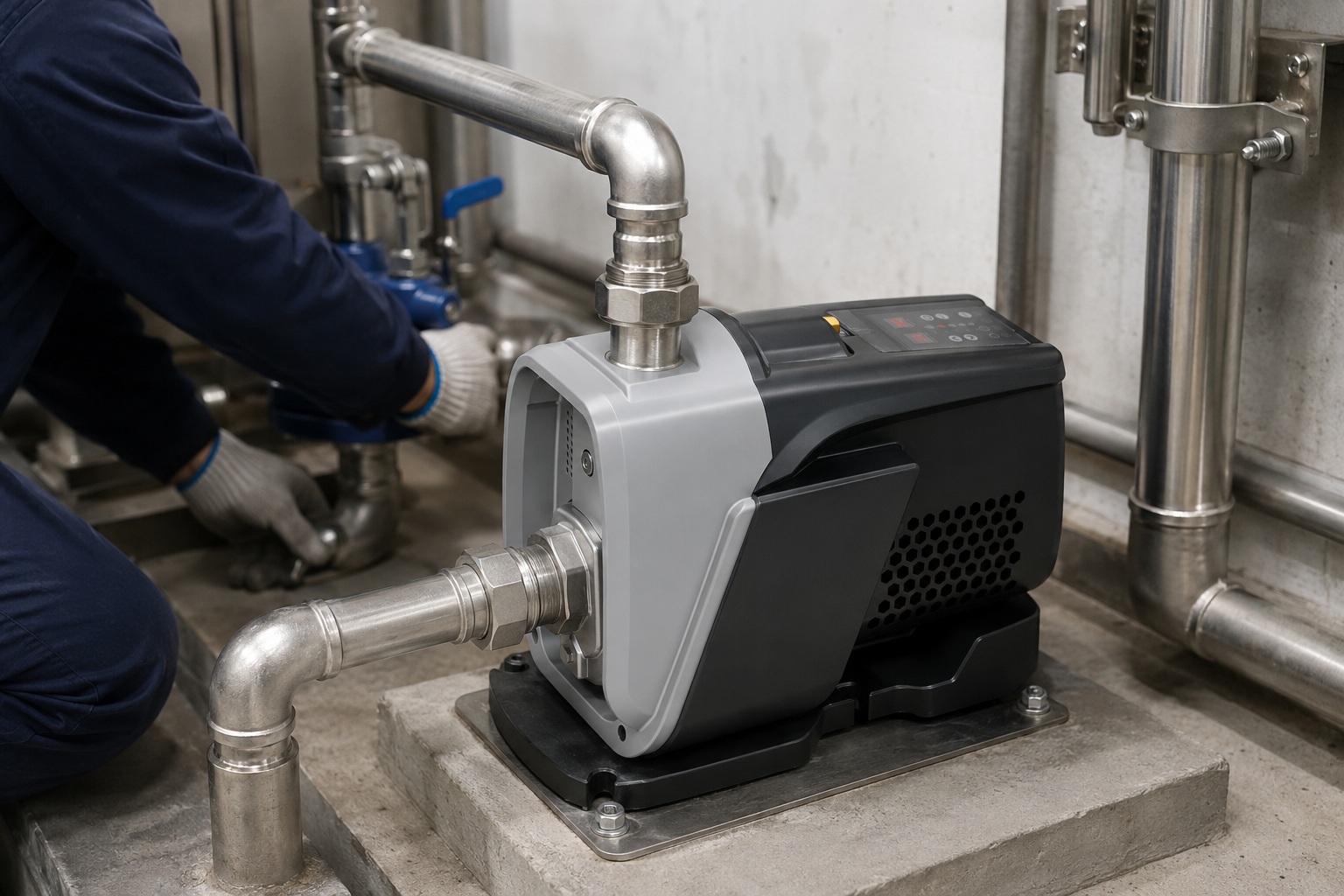
Struggling to select the right pump?
Choosing incorrectly can lead to inefficiency and costly failures.
This guide clearly explains the differences to ensure you make the perfect choice.
The main difference is their mechanism.
A centrifugal pump uses an impeller to accelerate fluid, converting velocity to pressure.
A rotary pump, however, traps and moves a fixed amount of fluid using rotating elements like gears or lobes.
Centrifugal pumps are ideal for low-viscosity liquids and high flow rates, while rotary pumps excel with viscous fluids and require a constant flow.
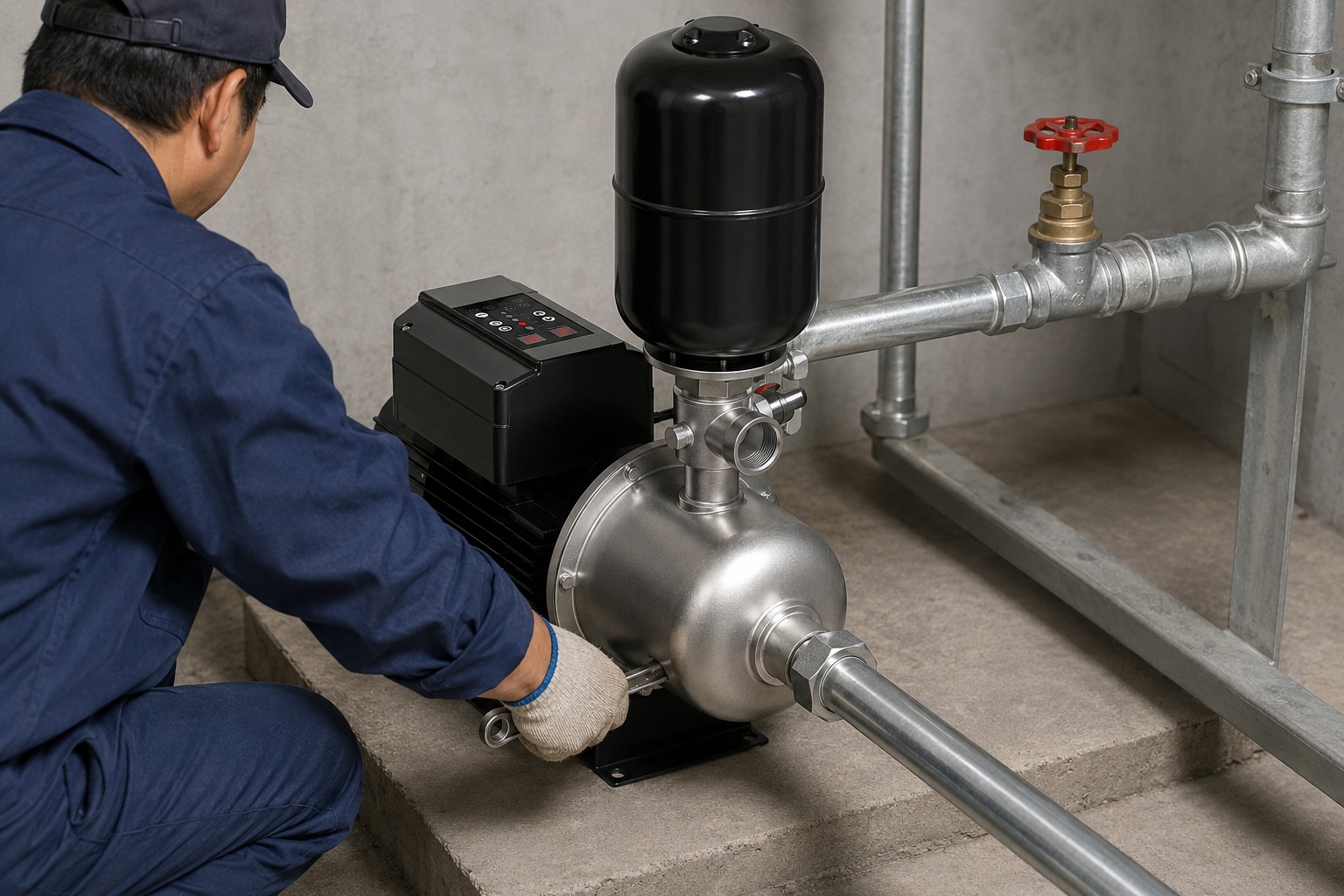
Understanding this core difference is the first step.
But how this affects performance, cost, and application is crucial for your business.
We will dive into the specific mechanics, compare their ideal uses, and analyze their long-term value.
This knowledge will empower you to select the most efficient and reliable pump for any project, satisfying your customers and protecting your bottom line.
Let's explore these two workhorses of the fluid-handling world in more detail.
What Exactly is a Centrifugal Pump?
Choosing a pump for high-volume transfer can be confusing.
Using the wrong type can cause pressure loss and operational headaches.
Centrifugal pumps are your solution for moving large volumes of low-viscosity fluids efficiently.
A centrifugal pump uses a spinning impeller to create fluid movement.
Liquid enters the pump at the impeller's center, or eye.
The rotating vanes of the impeller then propel the liquid outwards at high speed.
This kinetic energy is converted into pressure as the fluid exits into the casing (volute).
To truly grasp the value of a centrifugal pump, we must look deeper into its design and operational principles.
This pump's performance is not just about moving liquid; it's about doing so with remarkable efficiency for specific tasks.
The relationship between flow rate and pressure is a defining characteristic.
It is governed by the pump's performance curve.
Let's break down the key components and how they contribute to its function.
The Heart of the Matter: The Impeller
The impeller is the core component.
Its design directly impacts the pump's performance.
There are three main types of impellers.
- Open Impeller: Has vanes attached to a central hub but is open on the sides. It is best for handling liquids with suspended solids but is less efficient, typically around 50-60%.
- Semi-Open Impeller: Features vanes attached to a backplate, providing more strength than an open design. It offers a balance between solids-handling capability and efficiency.
- Closed Impeller: Has vanes enclosed between two shrouds (a front and back plate). This is the most efficient design, often exceeding 85-90% efficiency, but is best for clear, low-viscosity liquids.
The impeller's diameter and rotational speed are also critical factors.
A larger diameter or higher speed will generate more pressure and a higher flow rate.
The Casing (Volute)
The volute is the casing that receives the fluid from the impeller.
It is designed with an increasing cross-sectional area.
This clever design slows down the fluid.
As the fluid slows, its kinetic energy is converted into pressure.
This process is a fundamental principle of fluid dynamics known as the Bernoulli principle.
The efficiency of this energy conversion is a key indicator of a well-designed pump.
A high-quality volute can increase overall pump efficiency by 5-10%.
Centrifugal Pump Performance Metrics
Understanding how to read a pump curve is essential.
It allows you to match a pump to your system's requirements perfectly.
| Metric | Description | Typical Range (for water) |
|---|---|---|
| Flow Rate (Q) | The volume of liquid moved per unit of time. | 10 - 100,000+ Gallons per Minute |
| Head (H) | The height to which a pump can raise a liquid; a measure of pressure. | 5 - 500+ feet |
| Efficiency (η) | The ratio of water horsepower output to brake horsepower input. | 60% - 93% |
| Best Efficiency Point (BEP) | The point on the curve where the pump operates most efficiently. | N/A |
| NPSHr | Net Positive Suction Head Required to prevent cavitation. | Varies by pump model |
Centrifugal pumps shine in applications requiring high flow rates, such as water supply, circulation, and large-scale irrigation.
They are generally simpler in construction with fewer moving parts than rotary pumps, which often translates to lower initial and maintenance costs.
However, they are not effective with highly viscous fluids or applications needing precise dosing.
Understanding the Rotary Pump Mechanism
Need a pump for thick, viscous fluids like oils or syrups?
Using a centrifugal pump here would fail, leading to burnout and production halts.
A rotary pump is the answer, designed specifically to handle high-viscosity materials with a consistent flow.
A rotary pump is a type of positive displacement pump.
It moves fluid by trapping a fixed volume within its rotating or reciprocating parts.
This trapped fluid is then forced out through the discharge port.
The flow rate is directly proportional to the pump's speed, regardless of pressure.
The term "positive displacement" is key to understanding the rotary pump's unique advantages.
Unlike a centrifugal pump that creates pressure through velocity, a rotary pump physically pushes the fluid.
This creates a constant, non-pulsating flow that is critical for many industrial applications.
It also allows the pump to handle fluids with viscosities thousands of times greater than water.
Let's examine the common types and their inner workings.
Common Types of Rotary Pumps
The internal mechanism defines the type of rotary pump and its best application.
They all share the principle of trapping and moving fluid, but how they achieve this differs.
- Gear Pumps: Use two meshing gears to trap fluid between the gear teeth and the casing. They are simple, cost-effective, and excellent for high-pressure applications involving clean oils and polymers.
- Lobe Pumps: Similar to gear pumps but the lobes do not touch. This allows them to handle solids, slurries, and sensitive products like foods without damage. They offer superb sanitary qualities.
- Vane Pumps: Feature a rotor with sliding vanes that create chambers of varying size as it rotates. They excel at handling low-viscosity liquids and can run dry for short periods.
- Screw Pumps: Use one or more screws that rotate in a stationary casing. They provide a very smooth, pulsation-free flow, ideal for shear-sensitive liquids and high-viscosity applications.
The Power of Positive Displacement
The core strength of a rotary pump lies in its positive displacement nature.
This mechanism brings several crucial benefits.
Handling High Viscosity
A rotary pump's ability to handle thick fluids is its primary advantage.
While a centrifugal pump's efficiency drops dramatically with viscosity (a drop of over 20% for fluids just 100 times more viscous than water), a rotary pump maintains efficiency.
| Fluid | Typical Viscosity (cP) | Recommended Pump Type |
|---|---|---|
| Water | 1 | Centrifugal |
| Olive Oil | 84 | Rotary (Vane/Gear) |
| Honey | 10,000 | Rotary (Lobe/Screw) |
| Bitumen | 100,000+ | Rotary (Gear/Screw) |
Constant Flow and Precision
Since a rotary pump moves a fixed volume with each revolution, the output is directly tied to its speed.
This makes it perfect for metering and dosing applications where precision is paramount.
You can achieve flow control accuracy of up to ±1%.
This is vital in chemical processing, food manufacturing, and pharmaceuticals.
Self-Priming and High-Pressure Capability
Rotary pumps have excellent suction lift capabilities.
They are typically self-priming, meaning they can evacuate air from the suction line and start pumping without external help.
Furthermore, because they are positive displacement pumps, they can generate very high pressures.
This makes them suitable for hydraulics and other high-pressure systems where centrifugal pumps would fall short.
Key Differences: Centrifugal vs. Rotary Pump Compared
Choosing between centrifugal and rotary pumps can directly impact system efficiency.
A mismatched pump can increase energy costs by up to 20-30%.
Knowing the key differences ensures you select the most cost-effective and reliable option for your needs.
The primary difference lies in their operating principle.
Centrifugal pumps impart velocity to a fluid, which is then converted into pressure.
Rotary pumps trap and displace a fixed volume of fluid with each rotation.
This leads to major divergences in performance with fluid viscosity, flow rate, and pressure.
The theoretical difference is just the starting point.
How these principles play out in real-world scenarios is what matters for your business.
A pump that is perfect for water transfer will be completely ineffective for moving molasses.
Likewise, a pump designed for precision chemical dosing is oversized and inefficient for bulk water dewatering.
Let's create a clear, head-to-head comparison to guide your decision-making process.
Performance Under Different Conditions
The performance characteristics of these two pump types diverge significantly based on the fluid and system requirements.
Fluid Viscosity
This is the most critical deciding factor.
- Centrifugal Pumps: Highly efficient with low-viscosity fluids like water (viscosity of 1 cP). Their performance degrades rapidly as viscosity increases. A fluid with a viscosity of 500 cP can reduce efficiency by over 25%.
- Rotary Pumps: Designed for high-viscosity fluids. In fact, their efficiency often increases with viscosity as the thicker fluid helps seal the clearances within the pump. They can handle fluids with viscosities exceeding 1,000,000 cP.
Flow Rate and Pressure Relationship
Their responses to system pressure changes are opposite.
- Centrifugal Pumps: The flow rate varies significantly with changes in pressure (head). If you restrict the discharge line, the flow rate will decrease while pressure increases, following the pump's performance curve.
- Rotary Pumps: The flow rate is nearly constant, regardless of pressure. Restricting the discharge line will cause pressure to build up until the pressure relief valve opens or the motor stalls. The pump continues to try and displace the same volume of fluid.
Feature Comparison Table
This table provides a high-level overview of the most important distinctions.
| Feature | Centrifugal Pump | Rotary Pump |
|---|---|---|
| Operating Principle | Non-Positive Displacement (Kinetic) | Positive Displacement |
| Best for Viscosity | Low (< 500 cP) | High (> 100 cP) |
| Flow Rate vs. Pressure | Variable flow, dependent on pressure | Constant flow, largely independent of pressure |
| Flow Type | Smooth, continuous | Can be smooth (screw) or pulsating (lobe) |
| Self-Priming | Generally no (requires initial prime) | Yes, excellent suction lift capabilities |
| Solids Handling | Good, especially with open/vortex impellers | Varies by type; Lobe pumps are excellent |
| Max Pressure | Moderate | Very High |
| Maintenance | Lower, fewer moving parts | Higher, closer tolerances and more wear parts |
| Initial Cost | Generally lower | Generally higher |
Understanding these tradeoffs is vital.
A centrifugal pump may have a lower purchase price, but if applied to a high-viscosity fluid, the energy and maintenance costs will quickly surpass any initial savings.
Conversely, using a complex rotary pump for a simple water transfer task is an unnecessary expense.
Choosing the Right Pump for Your Application
Selecting the wrong pump is a common but costly mistake.
It can lead to system failure, product damage, and unplanned downtime.
Properly matching the pump to the application guarantees reliability and operational excellence for your customers.
The right choice starts with analyzing four key factors.
These are the fluid's properties (viscosity, solids), the required flow rate, the system pressure (head), and the total cost of ownership.
Centrifugal pumps are for high-volume, low-viscosity transfer.
Rotary pumps are for viscous fluids or precision dosing.
The decision-making process should be methodical.
It's not just about picking one type over the other.
It's about understanding the specific demands of the job and finding the most efficient tool for it.
A thorough analysis prevents costly errors and ensures the system performs as expected for years to come.
Let's walk through a structured approach to making the perfect choice.
Step 1: Analyze Your Fluid
The fluid itself will immediately narrow your options.
Ask these questions first.
- What is the viscosity? This is the most important question. As we've established, if viscosity is high (e.g., above 500 cP), a rotary pump is almost always the correct choice.
- Does it contain solids? If yes, a centrifugal pump with an open or vortex impeller is a great option. For rotary pumps, a lobe or progressive cavity pump would be suitable. A gear pump would be damaged by solids.
- Is the fluid shear-sensitive? Products like emulsions, yogurts, or some polymers can be damaged by the high speeds of a centrifugal pump. A gentle-acting rotary pump, like a lobe or screw pump, is better.
- Is it corrosive or abrasive? The pump's construction materials must be compatible with the fluid. Both pump types are available in various materials like stainless steel, ductile iron, or exotic alloys.
Step 2: Define Your Performance Requirements
Next, you need to know what the pump must achieve.
Required Flow Rate and Pressure
- High Flow, Low-to-Moderate Pressure: This is the domain of centrifugal pumps. Think of municipal water systems, building water boosters, or large-scale irrigation.
- Low Flow, High Pressure: A classic rotary pump application. Hydraulic systems, high-pressure cleaning, and fuel injection are perfect examples.
- Constant, Precise Flow: This points directly to a rotary pump. Applications in metering, dosing, and food processing rely on this characteristic.
A Quick Selection Guide
This table maps common applications to the most likely pump type.
| Application | Key Requirements | Best Pump Type |
|---|---|---|
| Water Boosting | High flow, variable demand, clean fluid | Centrifugal (especially with VSD) |
| Chemical Dosing | Precise, low flow, constant output | Rotary (Gear, Peristaltic) |
| Oil Transfer | High viscosity, high pressure | Rotary (Gear, Screw) |
| Wastewater Pumping | High flow, solids present | Centrifugal (Submersible, with grinder/vortex) |
| Food Processing | Sanitary, shear-sensitive, high viscosity | Rotary (Lobe) |
| Irrigation | Very high flow, low pressure | Centrifugal (Axial Flow, Centrifugal) |
Step 3: Consider the Total Cost of Ownership (TCO)
The initial purchase price is only part of the story.
A truly savvy choice considers the long-term costs.
- Initial Cost: Centrifugal pumps are often less expensive to purchase.
- Energy Efficiency: The most efficient pump for the specific application will have the lowest energy cost. A mismatched pump will waste significant energy. For example, a centrifugal pump's efficiency can drop by 30% if operated far from its Best Efficiency Point (BEP).
- Maintenance & Repair: Centrifugal pumps have fewer moving parts, generally leading to lower maintenance costs. Rotary pumps, with their tight clearances, can be more susceptible to wear from abrasives and may require more frequent service.
By carefully evaluating these three areas—fluid, performance, and cost—you can confidently select the pump that delivers the best value and reliability.
Conclusion
In summary, centrifugal pumps use an impeller for high-flow, low-viscosity tasks.
Rotary pumps use displacement for viscous fluids and precise, constant flow.
Choosing correctly maximizes efficiency and reduces cost.
Frequently Asked Questions
Can a centrifugal pump handle viscous fluids?
Centrifugal pumps are not ideal for viscous fluids. Their efficiency drops significantly as fluid viscosity increases, making them highly inefficient and prone to failure with thick liquids like oil or honey.
Is a rotary pump self-priming?
Yes, most rotary pumps are self-priming. They can effectively evacuate air from the suction line and create the lift needed to start pumping fluid without needing to be manually primed.
Which pump is more efficient?
Efficiency depends entirely on the application. For moving large volumes of water, a centrifugal pump operating at its Best Efficiency Point (BEP) is more efficient. For thick, viscous fluids, a rotary pump is far more efficient.
What happens if you run a centrifugal pump dry?
Running a centrifugal pump dry can cause rapid damage. The water it pumps also serves to cool and lubricate the seals. Without it, the mechanical seal can overheat and fail in minutes.
Can a rotary pump handle solids?
It depends on the type. Lobe and progressive cavity rotary pumps are designed to handle solids and slurries effectively. However, gear pumps have tight clearances and can be quickly damaged by abrasive particles.
Why do rotary pumps need a pressure relief valve?
Because they are positive displacement pumps, they will continue to build pressure if the discharge is blocked. A pressure relief valve is a critical safety device that prevents over-pressurization, which could rupture pipes or damage the pump.
Which pump is better for high-pressure applications?
Rotary pumps are generally better for generating very high pressures. Their positive displacement action allows them to overcome high system resistance more effectively than the kinetic energy method of centrifugal pumps.
What is the main advantage of a centrifugal pump?
The main advantages are simplicity, reliability, and lower cost for high-volume transfer of low-viscosity fluids. They have fewer moving parts, which typically results in lower maintenance requirements and a lower initial purchase price.