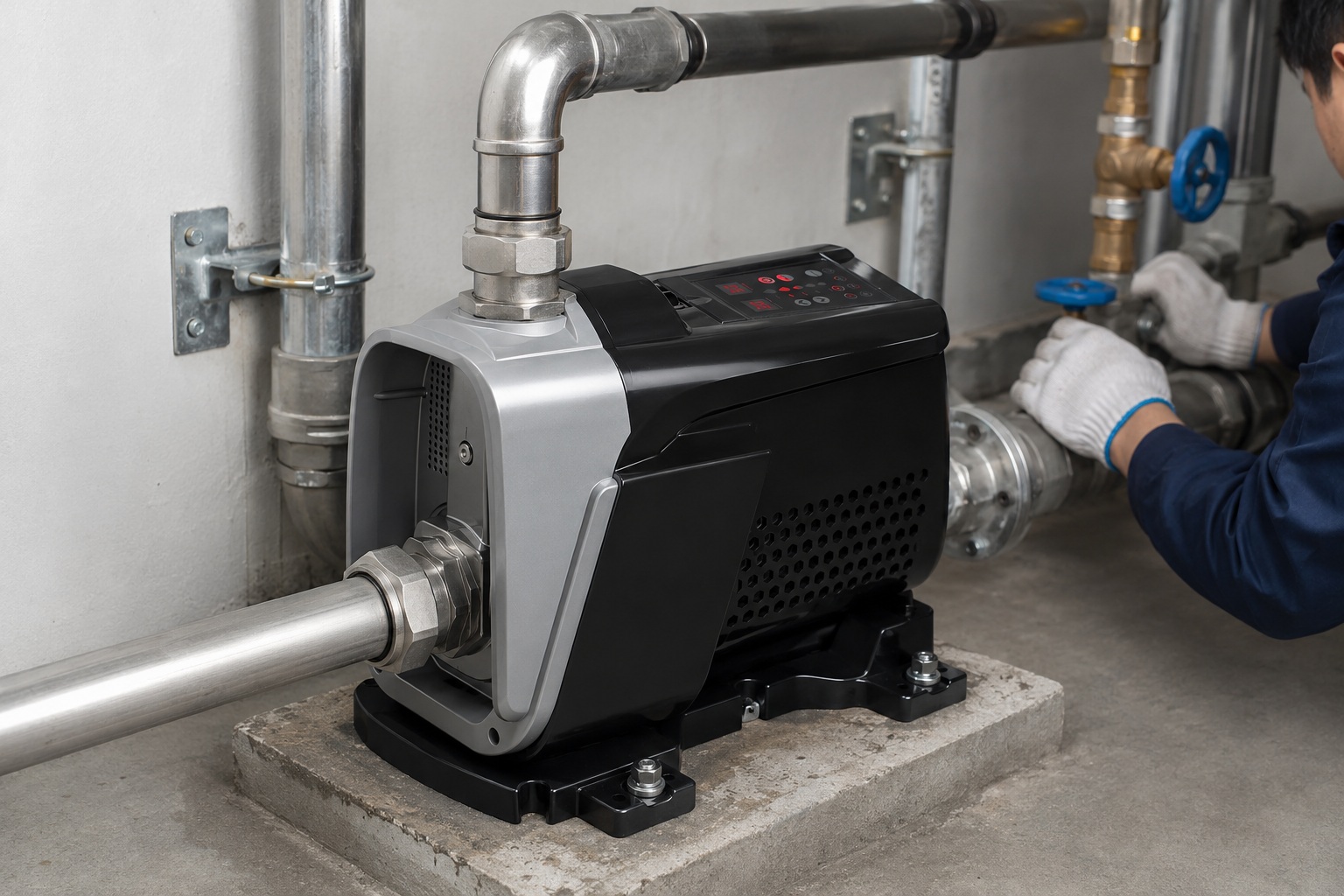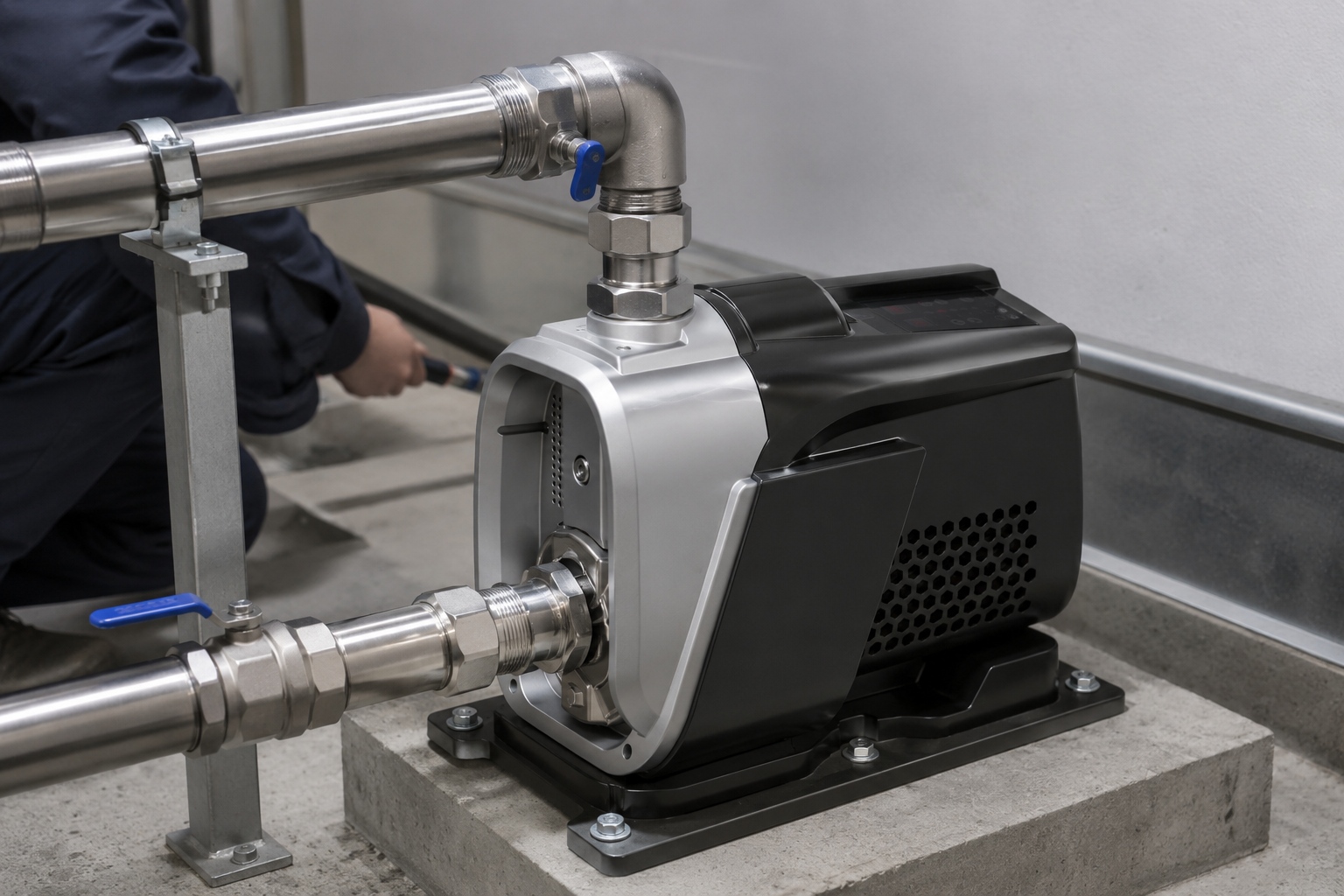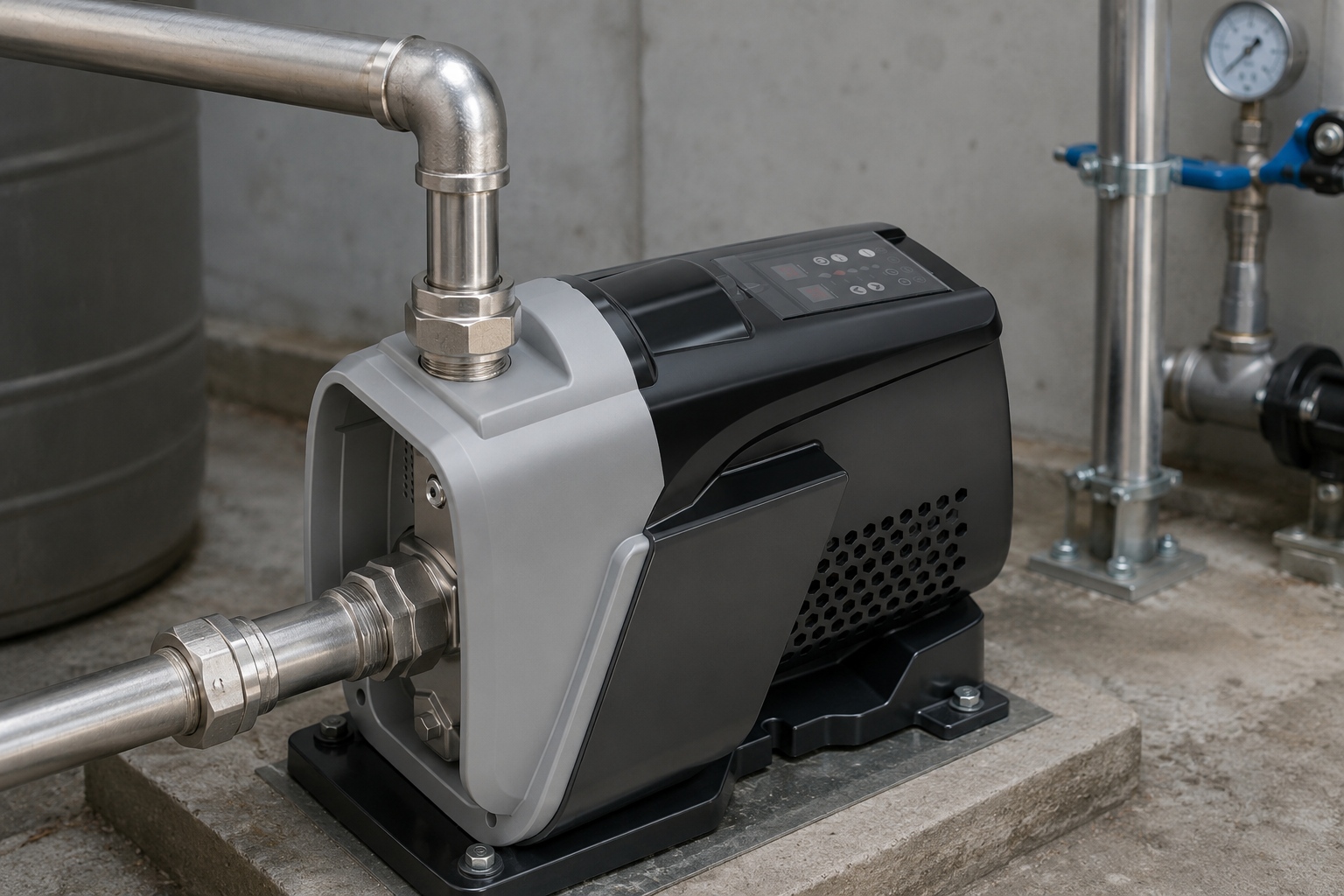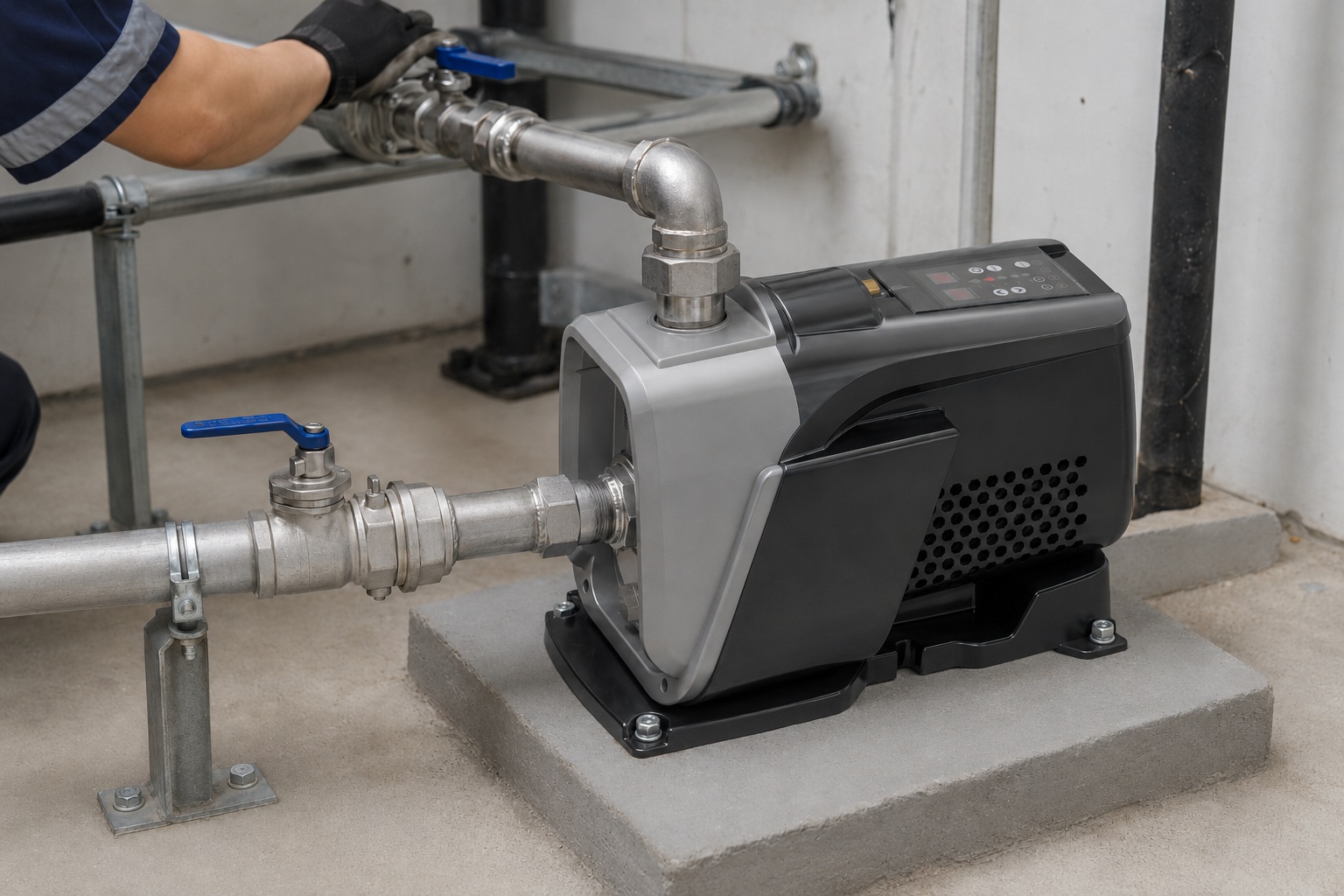
Struggling with pumps that need manual priming?
This constant need for intervention wastes time and can damage your equipment if it runs dry.
A self-priming pump is a type of pump designed to automatically remove air from its suction line.
It creates a vacuum to draw liquid into the pump body, eliminating the need for manual priming after the initial setup.
This makes it highly efficient and reliable.
Self-priming pumps represent a significant step forward in fluid handling technology.
They solve a persistent problem that has plagued standard centrifugal pumps for decades.
Understanding how they achieve this automated priming is key to appreciating their value in various applications.
Let’s explore the mechanics, benefits, and applications of these versatile machines.
How Does a Self-Priming Pump Work?
Are you tired of the complex and repetitive task of priming your pump?
Manually filling the suction line with liquid is tedious and can lead to operational delays and potential pump damage.
A self-priming pump works by mixing air with water inside the pump casing.
This mixture is then expelled through the discharge port, while the heavier water falls back.
This process repeats, gradually creating a vacuum that pulls liquid up the suction line until the pump is fully primed.
To understand the genius behind this design, we need to look closer at the priming cycle.
Unlike standard centrifugal pumps, which are helpless against air in the suction line, self-priming pumps are engineered to handle it effectively.
The process relies on a clever use of fluid dynamics within a specially designed casing.
The Priming Cycle Explained
The pump’s ability to self-prime starts the moment it is turned on.
Initially, the pump casing is filled with a reserve of liquid from its previous operation.
When the impeller begins to spin, it churns this liquid, creating a fluid ring.
This action also starts drawing air from the suction line into the pump.
The air mixes with the liquid in the impeller’s eye.
Air and Water Separation
This air-water mixture is then forced to the outer edge of the impeller and into the air separation chamber.
Here, a critical process occurs.
The velocity of the mixture decreases significantly.
This allows the lighter air to separate from the heavier liquid.
The separated air rises and is vented out through the pump’s discharge outlet.
Meanwhile, the denser, air-free liquid falls back down into the reservoir chamber due to gravity.
Creating the Vacuum
This recirculated liquid is then picked up again by the impeller.
It mixes with more air being drawn from the suction line.
The cycle repeats continuously.
With each cycle, more air is expelled from the system.
This gradual evacuation of air reduces the pressure in the suction line, creating a vacuum.
The atmospheric pressure on the surface of the liquid source is now greater than the pressure inside the suction line.
This pressure difference pushes the liquid up the suction pipe and into the pump.
Once all the air is purged and the suction line is filled with liquid, the priming cycle is complete.
The pump then ceases to be a "liquid-ring" pump and begins to operate like a standard centrifugal pump, moving liquid efficiently.
This entire process happens automatically, often in just a few minutes, without any need for external intervention.
The table below breaks down the stages of the priming cycle.
| Stage | Action | Result |
|---|---|---|
| Stage 1: Start-up | Impeller spins, mixing retained liquid with air from the suction line. | Creates an air-liquid mixture. |
| Stage 2: Separation | The mixture enters a chamber where velocity decreases. | Air separates from the liquid. |
| Stage 3: Expulsion | Air is pushed out the discharge port. | Liquid falls back into the casing. |
| Stage 4: Repetition | The cycle repeats, purging more air each time. | A vacuum forms in the suction line. |
| Stage 5: Pumping | The vacuum draws liquid into the pump. | Normal pumping operation begins. |
This automated functionality can increase operational uptime by over 95% in applications requiring frequent start-stop cycles.
The key design feature is the pump casing, which is larger than a standard pump’s to hold the necessary reserve liquid for priming.
What Are the Different Types of Self-Priming Pumps?
Choosing the right pump can be confusing.
With so many options, you might pick a pump that isn’t suited for your specific fluid type or application needs, leading to inefficiency.
The main types are centrifugal self-priming pumps and positive displacement self-priming pumps.
Centrifugal types are common for water and low-viscosity fluids.
Positive displacement types, like diaphragm pumps, handle viscous liquids and slurries better.
The term "self-priming" describes a function, not a single type of pump.
Several pump designs incorporate this capability.
Each type is engineered for different scenarios, from moving clean water to handling abrasive industrial waste.
Understanding the core differences between these types is crucial for making an informed decision and ensuring optimal performance for your specific task.
Self-Priming Centrifugal Pumps
This is the most common type of self-priming pump.
It uses the working principle described in the previous section, with an integrated reservoir and air-water separation chamber.
They are the workhorses for a wide range of applications.
These pumps are ideal for moving water and other low-viscosity fluids.
Their design allows them to handle small solids, making them popular in construction site dewatering and agricultural irrigation.
One major advantage is their ability to re-prime automatically if the suction line runs dry and then liquid becomes available again.
They are known for their relatively high flow rates.
However, their suction lift capability is generally limited to about 25 feet (7.6 meters) under ideal conditions.
Diaphragm Self-Priming Pumps
Diaphragm pumps operate on a positive displacement principle.
They use a flexible diaphragm that moves back and forth.
This action alternately increases and decreases the volume of a chamber.
On the backstroke, the chamber volume increases, creating a vacuum that draws fluid in.
On the forward stroke, the volume decreases, forcing the fluid out the discharge.
This mechanism is inherently self-priming and can run dry for extended periods without damage.
They excel at handling a wide variety of fluids, including viscous, abrasive, and shear-sensitive liquids.
Their flow rates are generally lower than centrifugal pumps, but they can generate high pressures.
They are widely used in chemical processing, food manufacturing, and slurry transfer.
Other Self-Priming Designs
Other designs also offer self-priming capabilities.
- Liquid Ring Vacuum Pumps: Often used as part of a larger priming system, these create a strong vacuum to prime large centrifugal pumps that lack a built-in self-priming feature.
- Side-Channel Pumps: A hybrid design, these pumps have star-shaped impellers and can handle high amounts of entrained gas, making them naturally self-priming. They are suitable for low-flow, high-head applications.
- Jet Pumps: These use a venturi nozzle to create a vacuum, drawing liquid up the suction line. They are commonly found in residential well water systems.
Here is a comparison of the main types.
| Pump Type | Operating Principle | Best For | Key Feature |
|---|---|---|---|
| Centrifugal | Liquid Ring & Separation | Water, low-viscosity fluids | High flow rates, re-priming |
| Diaphragm | Positive Displacement | Viscous, abrasive fluids | Can run dry, handles solids |
| Side-Channel | Hybrid Impeller Design | Gassy liquids, high head | Excellent gas handling |
Choosing the correct type depends entirely on the fluid’s characteristics and the system’s requirements for flow and pressure.
A centrifugal self-primer might be 20-30% more energy-efficient for clean water transfer than a diaphragm pump, but it would fail quickly if used for thick sludge.
Key Advantages of Using Self-Priming Pumps?
Is your pump setup causing operational headaches?
Standard pumps that sit above the fluid source require complex priming systems, check valves, and constant monitoring, increasing costs and failure points.
Self-priming pumps offer significant advantages by eliminating manual priming.
They save time, enhance safety by keeping operators away from the pump, and are versatile enough to be placed above the liquid source, offering greater installation flexibility.
The benefits of self-priming pumps extend far beyond simple convenience.
They fundamentally change how fluid transfer systems can be designed and operated.
By removing the constraint of keeping the pump below the liquid level, they open up a world of possibilities for engineers and operators.
Let’s delve into the specific advantages that make these pumps a superior choice in many situations.
Enhanced Operational Efficiency
Time is money in any operation.
Self-priming pumps save significant labor hours.
They eliminate the need for an operator to manually fill the suction line before every start-up.
In applications with intermittent pumping needs, this automation can lead to a 15-25% reduction in associated labor costs.
This feature is especially valuable in remote or unmanned locations.
The pump can start automatically based on a level switch or timer without any human intervention.
This ensures that processes like dewatering or tank filling happen exactly when needed, improving overall system efficiency.
Improved Safety
Safety is a primary concern in any industrial environment.
Manual priming can be hazardous.
It may require operators to carry buckets of liquid, often in slippery or confined spaces.
There’s also a risk of exposure to hazardous or corrosive fluids.
Self-priming pumps mitigate these risks.
The pump and motor can be located in a safe, dry, and easily accessible location above the sump or tank.
This keeps maintenance personnel away from potentially dangerous areas.
By automating the priming process, the potential for human error and associated accidents is greatly reduced.
Greater Installation Flexibility
Perhaps the most significant advantage is the flexibility in system design.
Standard centrifugal pumps must be installed below the liquid level (in a "flooded suction" condition) to stay primed.
This can be impractical or impossible in many scenarios, such as draining a pit or emptying an underground tank.
Self-priming pumps overcome this limitation.
They can be placed at a higher elevation than the fluid source.
This simplifies installation and maintenance significantly.
The motor is kept away from the liquid, reducing the risk of water damage and electrical faults.
It also makes routine checks and service much easier.
Protection Against Dry Running
While not all self-priming pumps can run dry indefinitely, their design offers inherent protection.
Because the pump casing retains a reserve of liquid for priming, the mechanical seal—one of the most vulnerable components—remains lubricated for longer if the suction line runs dry.
Standard pumps can suffer catastrophic seal failure within seconds of running dry.
A self-priming pump can often survive short periods of dry running without damage.
When the liquid returns, it can re-prime itself and resume normal operation, a feature that prevents costly downtime and repairs.
This self-recovery capability is a critical advantage in applications with unreliable liquid supply.
Common Applications for Self-Priming Pumps
Wondering where a self-priming pump fits in your operations?
Many industries struggle with moving liquids from below-grade tanks, pits, or sumps, where traditional pumps fail without complex setups.
Self-priming pumps are used across numerous industries.
Common applications include construction site dewatering, agricultural irrigation, wastewater treatment, and transferring chemicals from underground storage.
Their versatility makes them invaluable for many fluid-handling tasks.
The unique ability to lift liquid from a lower level makes self-priming pumps incredibly versatile.
Their problem-solving nature has led to their adoption in a vast array of demanding environments.
From rugged construction sites to sterile chemical plants, these pumps provide reliable solutions where others would falter.
Let’s explore some of the most prominent sectors where self-priming pumps are considered essential equipment.
Industrial and Manufacturing
In industrial settings, these pumps are true workhorses.
- Wastewater Treatment: They are frequently used to transfer effluent and sludge between tanks or to lift it from collection sumps. Their ability to handle solids is a major benefit here. In fact, over 60% of pumps used in municipal lift stations are of the self-priming variety.
- Chemical Processing: Safely transferring chemicals from underground storage tanks or tanker trucks is a critical task. Self-priming pumps allow for top-unloading, which is much safer than bottom-unloading as it reduces the risk of spills from faulty valves.
- Bilge Pumping: On ships and in industrial plants, bilge pits collect various waste liquids. Self-priming pumps are perfect for emptying these pits without requiring a submersible unit.
Construction and Mining
Construction and mining sites are dynamic and challenging environments.
- Dewatering: This is a primary application. Self-priming trash pumps, which can handle large solids like mud, sand, and pebbles, are used to keep excavations and tunnels dry. Their portability and quick setup are essential.
- Dust Control: Water needs to be sprayed on roads and work areas to control dust. Self-priming pumps can draw water from temporary sources like ponds or tanks to supply water trucks or sprinkler systems.
- Slurry Transfer: In mining, these pumps are used to move abrasive slurries from processing areas to tailing ponds. Diaphragm self-priming pumps are often preferred for this demanding task.
Agriculture
Water management is the lifeblood of agriculture.
- Irrigation: Self-priming pumps are used to draw water from rivers, canals, or ponds to irrigate fields. Their ability to lift water and re-prime after shutdown makes them ideal for automated irrigation systems.
- Liquid Fertilizer Transfer: Farmers use them to move liquid fertilizers and pesticides from storage tanks to sprayer equipment, a process that often requires a suction lift.
- Stock Watering: Pumping water from a dam or well to a distant water trough for livestock is another common use.
The table below summarizes key applications by industry.
| Industry | Primary Application | Reason for Use | Typical Pump Type |
|---|---|---|---|
| Wastewater | Lift Stations, Sump Emptying | Handles solids, suction lift | Centrifugal Trash Pump |
| Construction | Site Dewatering | Portability, handles debris | Centrifugal Trash Pump |
| Chemical | Tanker Unloading | Safety, suction lift | Centrifugal or Diaphragm |
| Agriculture | Irrigation | Suction lift from open source | Centrifugal Pump |
| Marine | Bilge Pumping | Reliability, removes water/oil mix | Centrifugal or Diaphragm |
The widespread use of these pumps is a testament to their practical design and problem-solving capabilities in real-world scenarios.
Conclusion
Self-priming pumps offer a smart, automated solution for fluid handling.
They increase efficiency, improve safety, and provide unmatched installation flexibility across many industries.
FAQs
1. Can a self-priming pump run dry?
Some types, like diaphragm pumps, can run dry without damage.
Centrifugal self-priming pumps can tolerate it for short periods but should not run dry indefinitely.
2. What is the maximum suction lift of a self-priming pump?
The theoretical maximum suction lift is about 33.9 feet (10.3 meters) at sea level, but in practice, most self-priming pumps operate effectively up to 25 feet (7.6 meters).
3. Do self-priming pumps need a foot valve?
While not strictly necessary for priming, using a foot valve on the suction line can help the pump prime faster and prevent water from draining back, keeping it ready.
4. How do you prime a self-priming pump for the first time?
For the very first use, you must manually fill the pump casing with liquid.
After this initial prime, the pump will be able to self-prime for subsequent operations.
5. What is the difference between a self-priming pump and a submersible pump?
A self-priming pump sits outside the liquid, lifting it via a suction hose.
A submersible pump is placed directly inside the liquid and pushes it upwards.
6. How long does it take for a self-priming pump to prime?
Priming time depends on the suction lift height and pipe length.
Typically, it ranges from about one to five minutes for most common applications.
7. Are self-priming pumps less efficient?
Due to the internal recirculation and energy used during the priming cycle, they can be slightly less efficient (around 5-10%) than a standard centrifugal pump in a flooded suction setup.
8. Can self-priming pumps handle solids?
Yes, many models, often called "trash pumps," are specifically designed to handle solids, debris, and slurries without clogging, making them ideal for dewatering and wastewater.