Blog

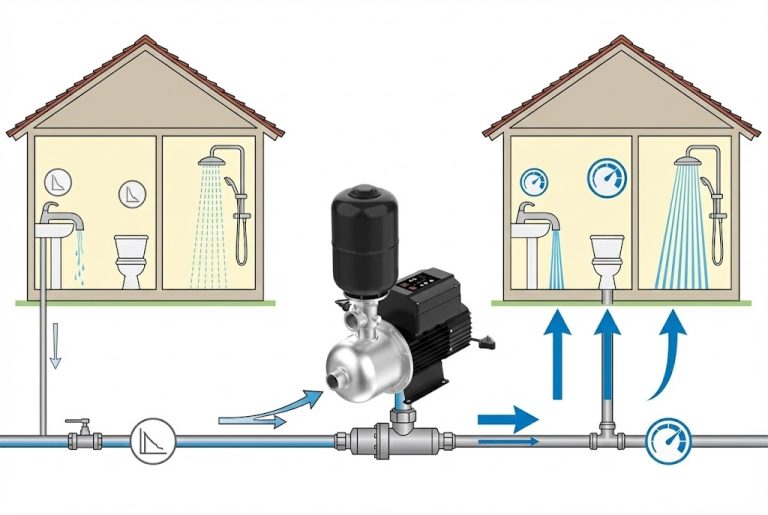
This illustration shows a complete RAFSUN booster pump installation designed to solve common household water pressure issues. The image compares two homes: the left side demonstrates weak water flow from faucets, toilets, and showers due to low municipal pressure, while the right side shows strong, consistent water pressure after installing a RAFSUN booster pump system on the main incoming water line. The central section displays the stainless-steel RAFSUN pump with pressure tank and control unit connected to the piping network, increasing flow to all fixtures. Blue arrows indicate boosted water movement, highlighting how the system improves shower performance, faucet pressure, and overall plumbing efficiency. The graphic serves as a visual guide for Booster Pump Installation: FAQs for Water Pressure Issues, showing how RAFSUN technology upgrades low-pressure homes to stable, high-pressure water supply.
Read More
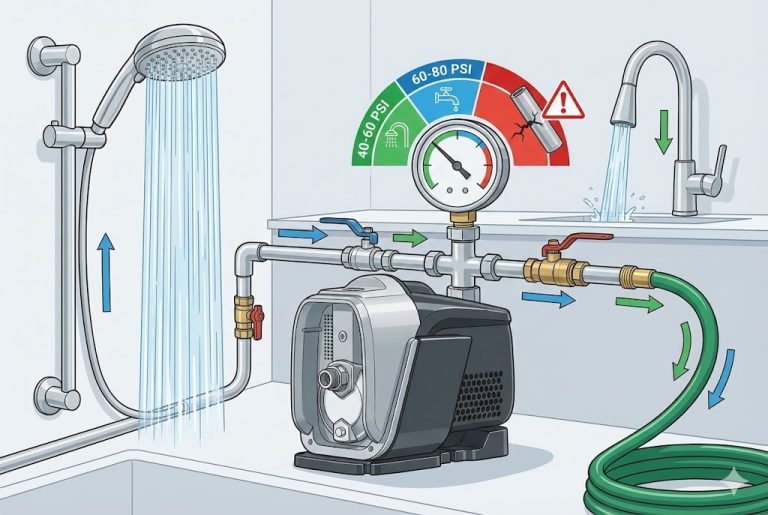
"Detailed illustration of a RAFSUN booster pump installed in a household plumbing system, showing water flow to a shower, faucet, and outdoor hose. A pressure gauge highlights the normal booster pump operating range of 40–60 PSI, with indicators for safe, optimal, and over-pressure zones. Arrows display inlet and outlet flow directions, helping explain what is the normal pressure for a booster pump and how a RAFSUN pump maintains stable, consistent water pressure throughout the home."
Read More
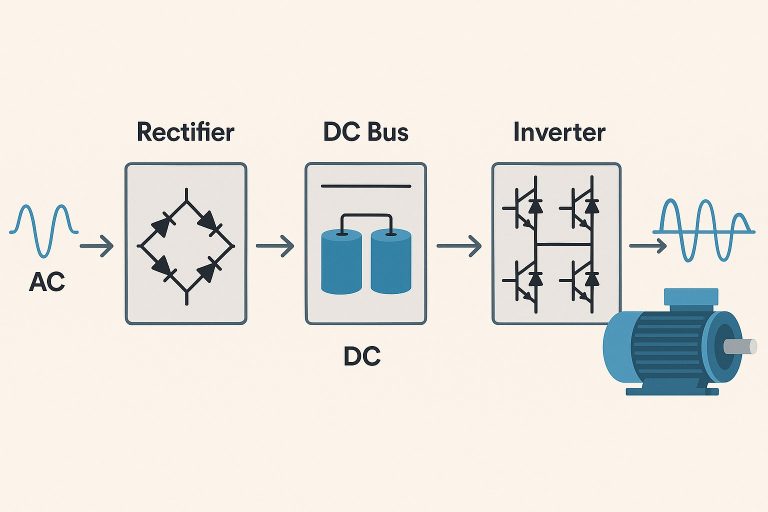
A detailed technical illustration showing how a Variable Frequency Drive (VFD) converts AC power into DC and then back into controlled AC to run a motor. The diagram displays the full three-stage process: incoming AC waveform on the left, a rectifier block converting AC to DC, a DC bus with capacitor storage smoothing the power, and an inverter module generating variable-frequency AC for the motor on the right. The flow arrows visually connect each stage, clearly demonstrating the power conversion sequence. This educational graphic supports the topic “Does a VFD change AC to DC?” and highlights the advanced motor-control technology used in RAFSUN water pump systems.
Read More
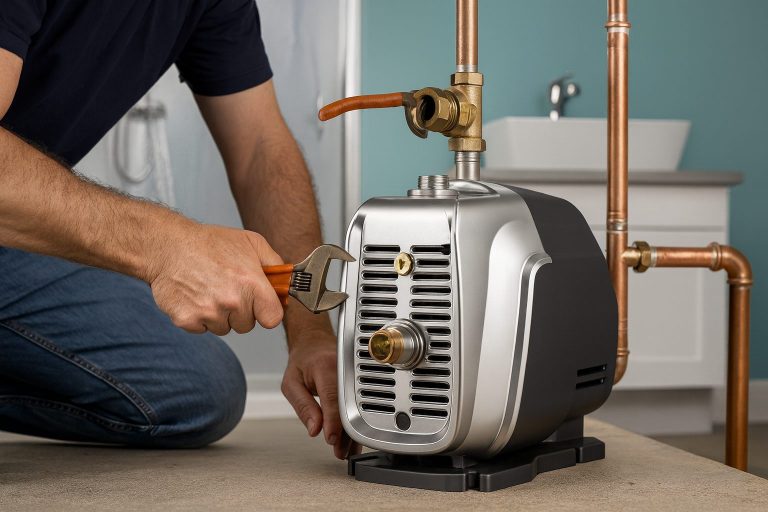
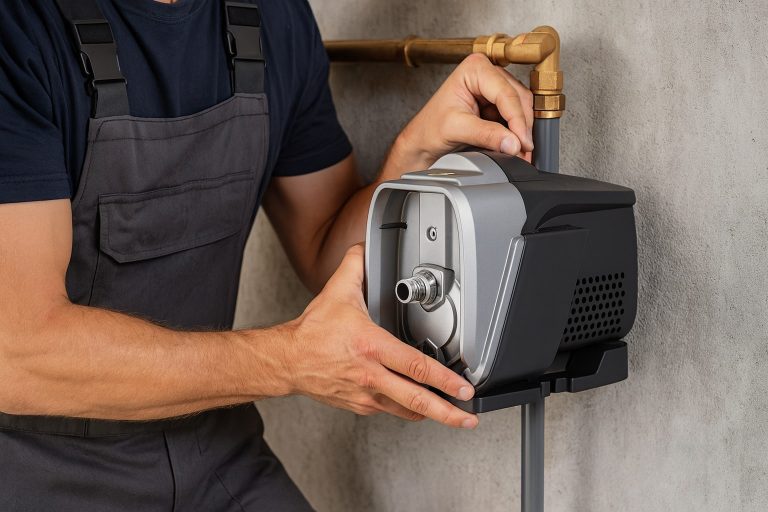
A plumber installs a modern RAFSUN booster pump onto a home’s copper plumbing system, ensuring stable household water pressure. The stainless-steel pump sits on a concrete floor while the technician—shown without a visible face—tightens the fittings. This scene illustrates what is considered a good flow rate for residential use, typically 6–12 GPM, ensuring reliable performance for showers, faucets, and daily water needs.
Read More
A technician, shown without revealing the face, installs a modern RAFSUN centrifugal water pump system in a clean mechanical room. The setup highlights high-quality stainless-steel pump components and an intelligent motor designed for stable performance. The scene emphasizes reliability and durability, illustrating why centrifugal pumps are often considered the most reliable choice for low-viscosity fluids such as water. This professional installation environment visually supports the topic: Which type of pump is most reliable?
Read More
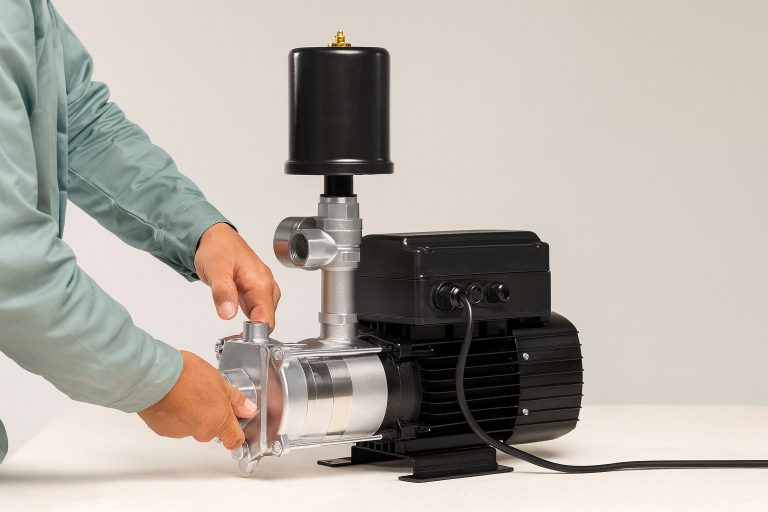
A technician adjusts a RAFSUN booster pump equipped with a compact pressure tank, demonstrating how the tank stabilizes water pressure and reduces pump cycling. The image shows hands-only, with no visible face, focusing on the installation of the pressure tank on the stainless steel and black variable-speed RAFSUN pump. This visual illustrates the concept behind the question: “Do you need a pressure tank with a booster pump?” by showing how a pressure tank acts as a buffer to improve system performance and maintain consistent household water pressure.
Read More
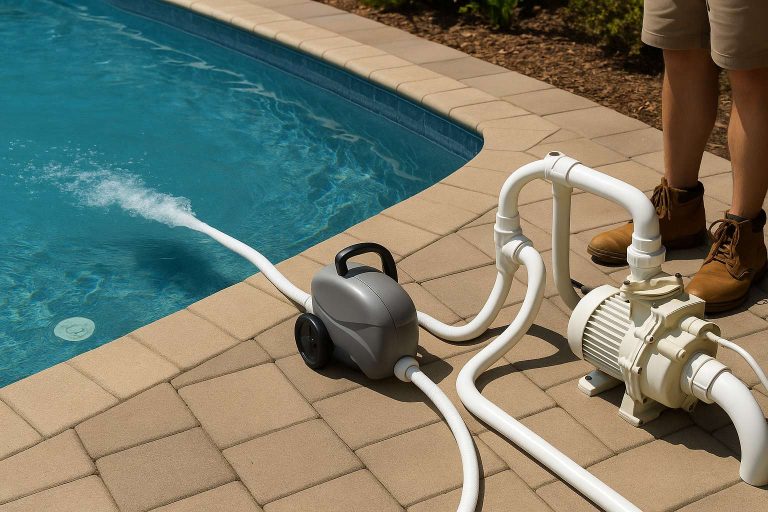
A technician with face not visible is installing a RAFSUN pool booster pump beside a residential swimming pool. The secondary pump is connected to the pressure-side pool cleaner hose, increasing water pressure to power cleaning equipment and pool features. Clear blue water reflects sunlight as the boosted jet stream enters the pool, demonstrating how a booster pump adds extra pressure without overloading the main filtration system. This scene illustrates what a booster pump does for a pool by enhancing cleaners, water jets, and other high-demand features.
Read More
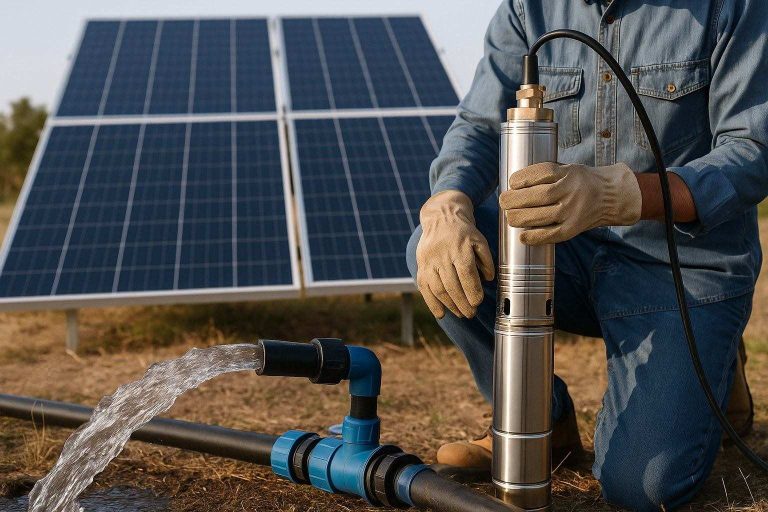
A technician performing routine upkeep on a RAFSUN solar water pump system at an off-grid site, kneeling beside a stainless steel submersible pump while clean solar panels operate in the background. The worker, with face not visible, inspects connections and checks water output flowing through the pipe, illustrating the minimal maintenance required for modern solar pumping systems. This image represents the core steps of solar pump care—cleaning solar panels, ensuring proper wiring, and visually checking the brushless DC motor and sealed pump components—supporting the topic: What maintenance is needed for solar water pumps?
Read More
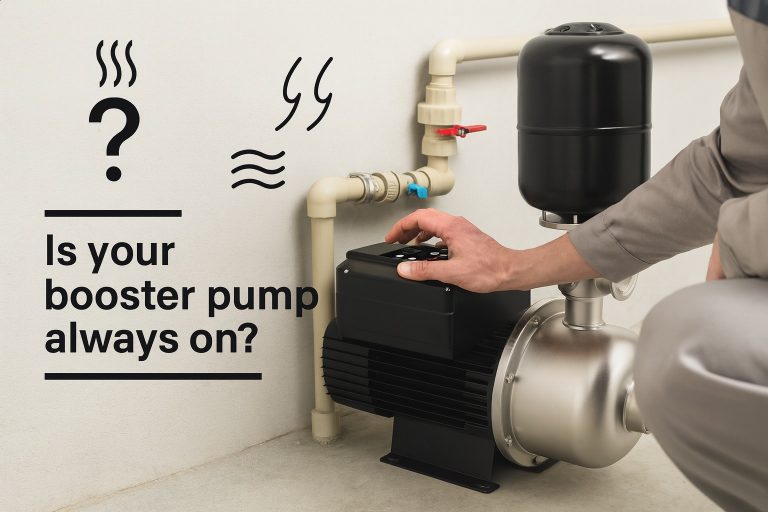
A professional technician, with face intentionally not shown, inspecting a RAFSUN booster pump system installed on a household water line. The image shows the technician adjusting the control panel while the stainless-steel pump and pressure tank are connected to PVC plumbing. This scene visually illustrates the question Should a booster pump run all the time? by showing a real maintenance scenario related to continuous pump operation, water pressure issues, and system troubleshooting.
Read More
A professional installer, with their face not visible, setting up a RAFSUN booster pump in a residential plumbing system. The scene illustrates the process of determining the correct pump specifications by evaluating flow rate requirements and calculating total dynamic head (TDH). The image visually supports the concept of how to calculate booster pump size using fixture count, vertical lift, friction loss, and desired outlet pressure.
Read More
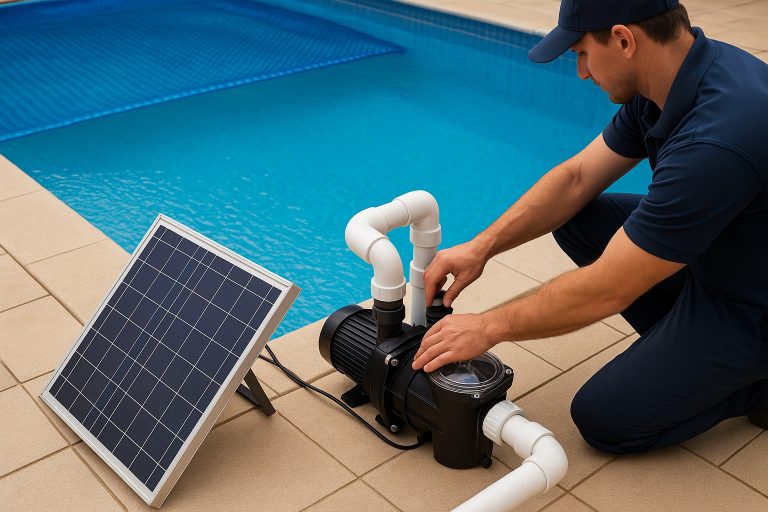
A high-end residential swimming pool scene featuring a professional installer, face hidden, setting up a RAFSUN solar-powered pool pump beside a clear blue pool. The system is connected to rooftop solar panels and a solar cover floating on the water, illustrating the cheapest way to heat a swimming pool by combining solar heating with an energy-free RAFSUN solar pump. The image highlights efficient water circulation, eco-friendly operation, and dramatically reduced running costs.
Read More
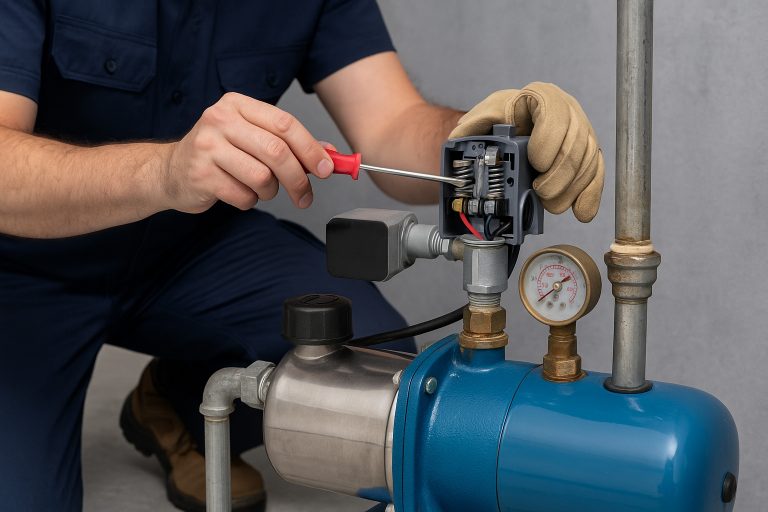
A professional installer adjusts a residential water pump system equipped with a pressure switch, demonstrating the difference between a 30/50 PSI and a 40-60 PSI setting. The scene shows high-quality plumbing components and a compact pressure tank connected to a RAFSUN water pump. The image highlights how correct pressure switch selection improves water flow and home water performance, helping homeowners understand which option—30/50 or 40-60 pressure switch—offers stronger, more consistent water pressure for their household.
Read More
Scroll to Top

Talk to RAFSUN About Your Pump Requirements

Rafsun Solar Water Pump-0

Get A Free Quote Now !

VSD Contact Form

See our Privacy Policy for how we handle your information.

Contact Rafsun to get the service for free

RAFSUN BWD, HMS, RUC and REB variable-speed booster pump range

Get A Free Quote Now !

VSD Contact Form

See our Privacy Policy for how we handle your information.