Struggling with inefficient water flow?
This leads to high energy costs and potential system damage.
Understanding the main pump types ensures you select the most effective solution for your needs.
The four primary types of water pumps are centrifugal, submersible, positive displacement, and jet pumps. Each type is engineered with a distinct mechanism, making it uniquely suited for specific tasks ranging from deep well extraction and household boosting to handling viscous industrial fluids.
Choosing the right pump is the most critical decision for any water transfer system.
The correct choice directly impacts operational efficiency, energy consumption, and long-term reliability.
A mismatched pump can lead to performance issues and premature failure.
Let’s dive into the specifics of each type.
This detailed breakdown will help you identify the ideal pump technology for your customers’ applications, ensuring satisfaction and repeat business.
1. Centrifugal Pumps: The Versatile Workhorse
Need to move large volumes of fluid quickly?
Using the wrong pump can create a bottleneck.
This slows down processes and increases operational costs.
Centrifugal pumps offer a high-flow solution for countless applications.
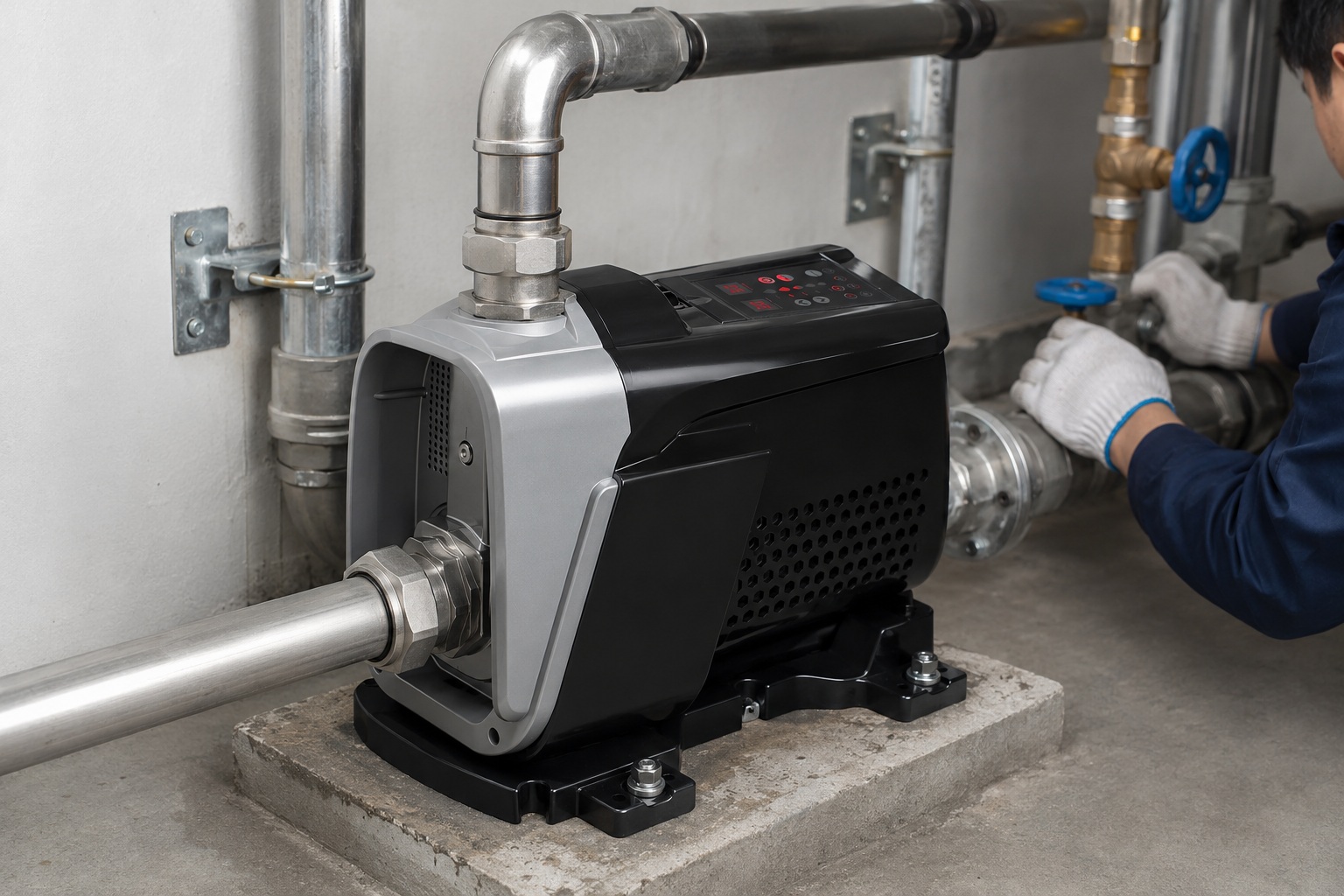
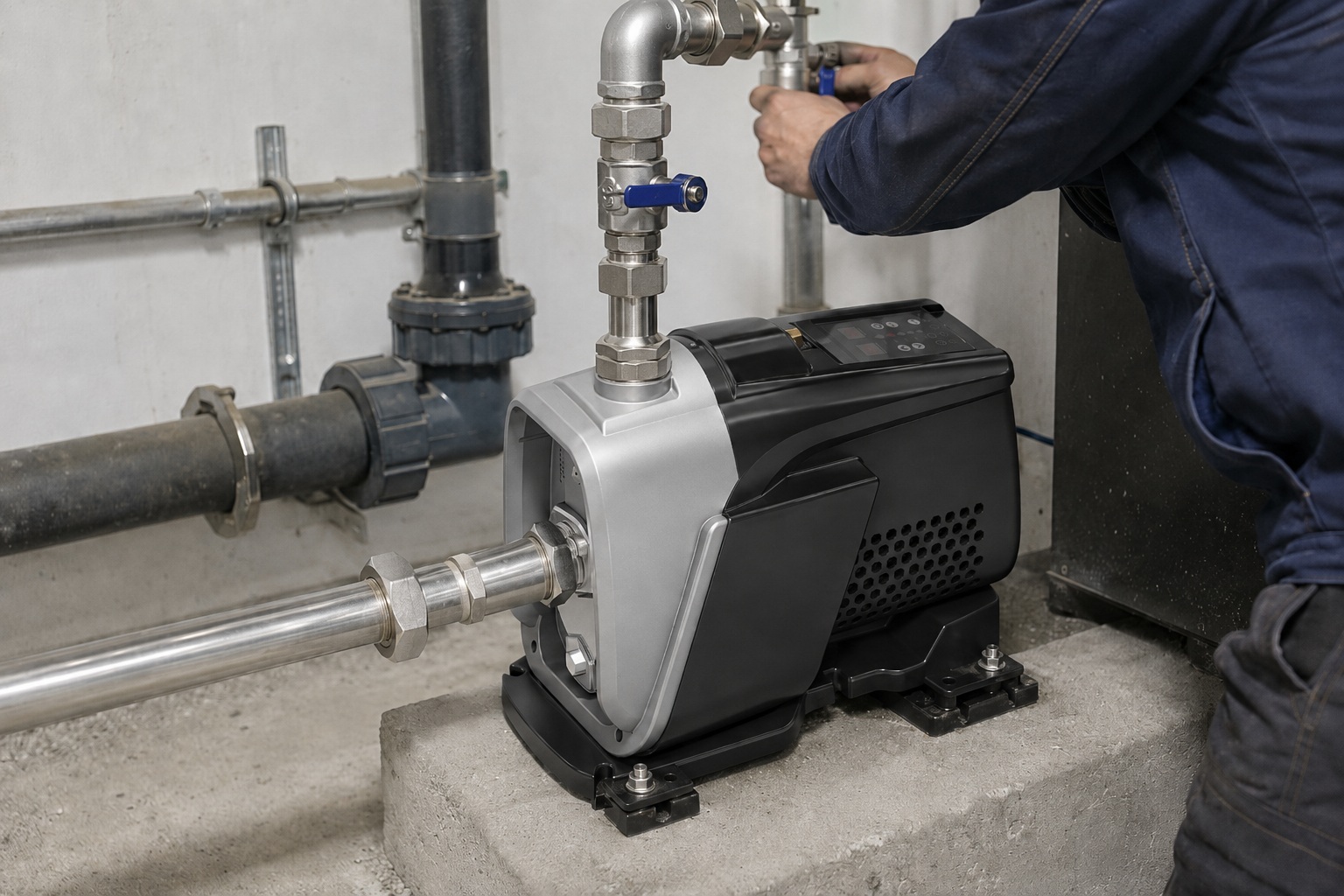
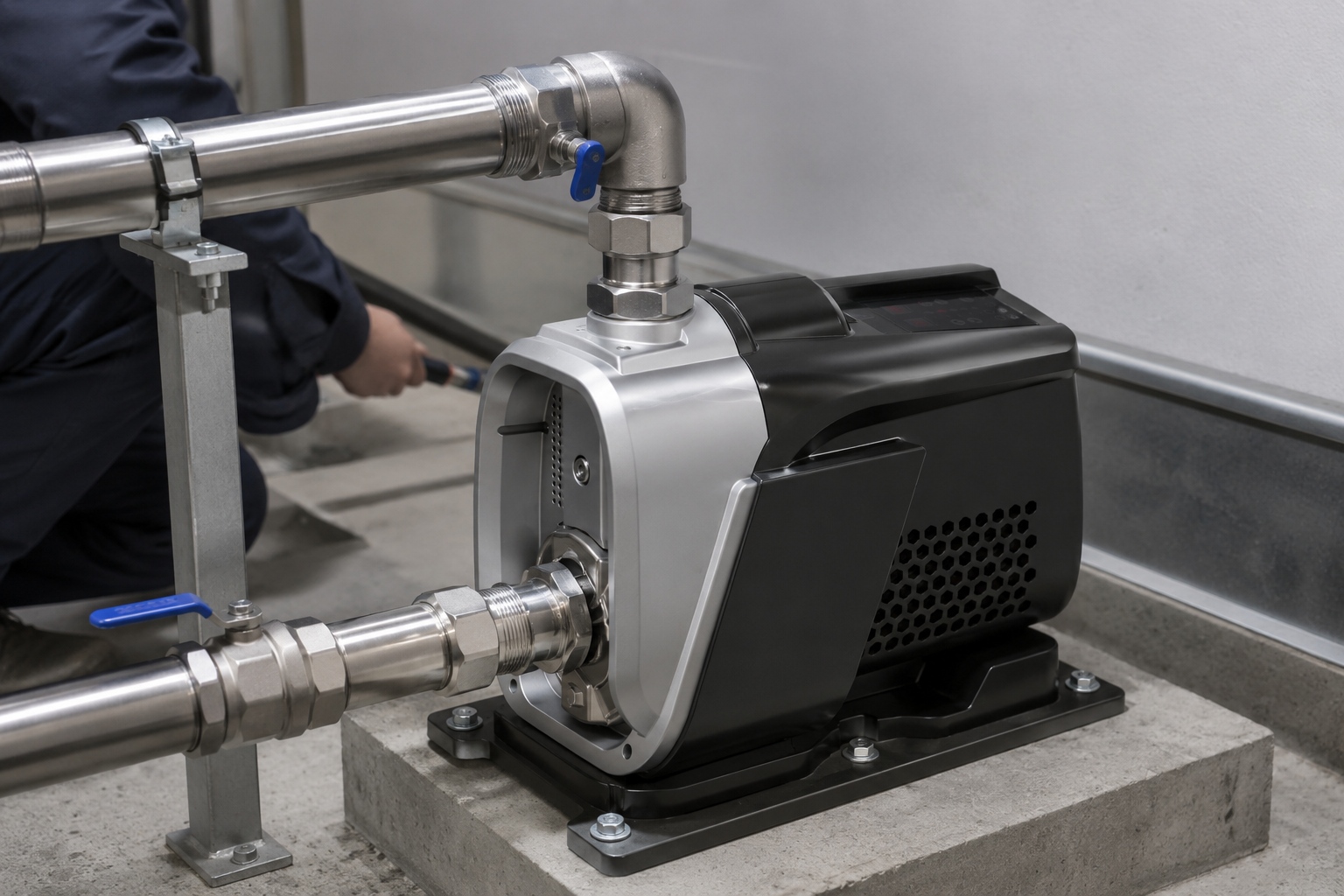
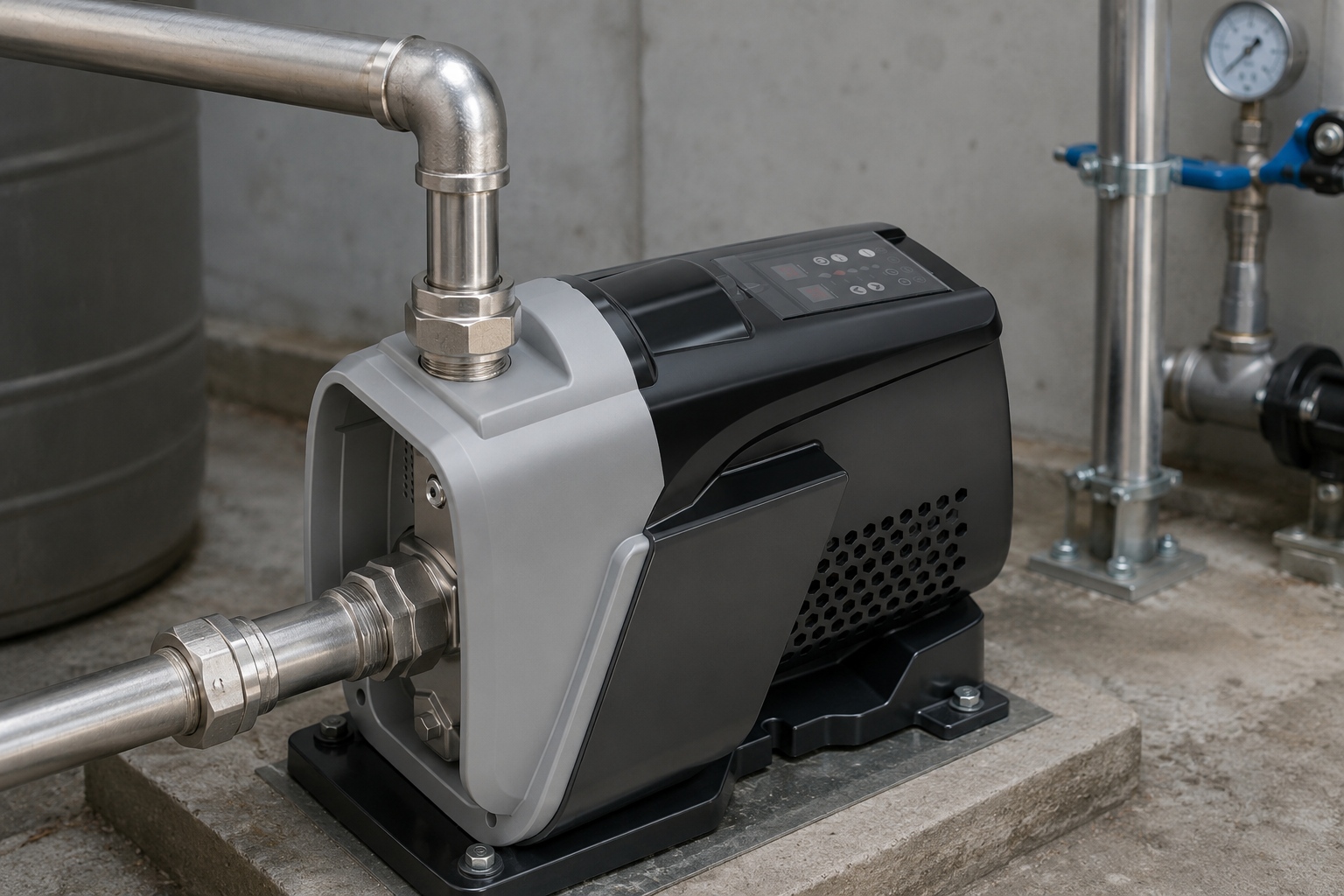
A centrifugal pump is the most common type used globally, accounting for over 75% of industrial pump installations. It uses a rotating impeller to draw fluid in and propel it outward by centrifugal force, making it ideal for transferring low-viscosity liquids at high flow rates.
Centrifugal pumps are the backbone of the fluid transfer industry.
They are valued for their simple design and operational efficiency.
This simplicity translates to lower initial costs and easier maintenance compared to more complex pump types.
Their ability to handle large volumes of fluid makes them indispensable in a wide range of sectors.
How Centrifugal Pumps Operate
The core of a centrifugal pump is the impeller.
This is a rotor with a series of curved vanes.
When the pump is operating, the motor spins the impeller at high speed.
This rotation creates a low-pressure area at the center, or "eye," of the impeller, drawing fluid into the pump casing.
As the fluid enters, the impeller’s vanes catch it and accelerate it radially outward.
The centrifugal force generated converts the rotational energy from the motor into kinetic energy (velocity) of the fluid.
The fluid then enters the volute, a specially shaped chamber that expands in cross-sectional area.
In the volute, the high-velocity fluid slows down.
This decrease in speed causes a conversion of kinetic energy into potential energy, in the form of increased pressure.
This pressure is what forces the fluid out of the pump’s discharge port and through the system.
Key Characteristics and Variants
Centrifugal pumps are defined by their performance curve, which shows the relationship between flow rate (Q) and head (H).
The head is the height to which a pump can lift fluid.
Typically, as the flow rate increases, the head decreases.
The Best Efficiency Point (BEP) on this curve represents the operational sweet spot where the pump performs with the highest efficiency, often reaching up to 90% in well-designed models.
There are several variations to suit different needs.
- Single-stage pumps have one impeller and are used for low-head applications.
- Multi-stage pumps use multiple impellers in series to generate progressively higher pressures, making them ideal for high-head applications like boiler feeds or reverse osmosis.
- Axial flow pumps move fluid parallel to the impeller shaft, designed for very high flow and very low head.
- Mixed flow pumps combine aspects of radial and axial flow for moderate flow and head.
Application Suitability
The versatility of centrifugal pumps is unmatched.
They are best suited for clean or slightly contaminated, low-viscosity fluids like water, thin oils, and chemicals.
They are not ideal for handling solids, which can cause wear and blockages, or for high-viscosity fluids, which they struggle to move efficiently.
| Application Sector | Common Use Cases | Fluid Type |
|---|---|---|
| Municipal | Water supply, wastewater treatment, pressure boosting | Clean or treated water |
| Agriculture | Irrigation, drainage, sprinkler systems | River or well water |
| Industrial | Chemical processing, cooling tower circulation, boiler feed | Water, chemicals, coolants |
| Residential | Domestic water pressure boosting, pool circulation | Potable water |
Understanding these parameters allows you to confidently specify the right centrifugal pump configuration for your clients, ensuring optimal and reliable system performance.
This deep knowledge positions you as an expert and builds trust with your B2B customers.
2. Submersible Pumps: The Deep Well Specialist
Lifting water from deep wells presents a major challenge.
Surface pumps struggle with suction lift limitations.
This often leads to cavitation and pump failure.
Submersible pumps push water up, eliminating these issues entirely.
A submersible pump is a type of centrifugal pump with a hermetically sealed motor, designed to be fully submerged in the fluid it is pumping. This design allows it to push water to the surface from great depths, far exceeding the suction lift capabilities of surface pumps.
Submersible pumps are the go-to solution for deep water extraction.
Their design elegantly solves the physical limitations of atmospheric pressure that restrict surface-mounted pumps.
Surface pumps can typically only lift water from about 7-8 meters (25 feet) due to suction limits.
Submersible pumps, however, don’t pull water; they push it.
This fundamental difference allows them to operate hundreds of meters below the surface.
Their integrated, sealed design also makes them highly efficient.
The surrounding water helps cool the motor, preventing overheating and extending the pump’s operational lifespan.
This inherent cooling is a significant advantage, especially in continuous-duty applications where motor temperature is a critical concern.
Design and Functional Advantages
The construction of a submersible pump is a feat of engineering.
The entire unit, comprising the pump end and the motor, is contained within a watertight housing.
This assembly is typically long and slender, allowing it to fit inside narrow well casings.
The motor is located at the bottom of the unit, with the pump stages stacked above it.
This configuration ensures the motor is constantly cooled by the fluid flowing past it towards the pump intake.
Key Technical Aspects
- Sealed Motor: The motor is protected from the surrounding fluid by multiple mechanical seals. It is often filled with oil or an inert gas to equalize pressure and aid in cooling.
- Multi-Stage Design: Most submersible well pumps are multi-stage centrifugal pumps. Each stage consists of an impeller and a diffuser, and adding more stages increases the total head, or lifting capability, of the pump. A pump with 20 stages can achieve 20 times the pressure of a single stage.
- Materials: Critical components are often made from stainless steel or other corrosion-resistant materials. This is vital for longevity, as the pump is constantly immersed in water, which can be corrosive depending on its mineral content. For example, 316 stainless steel is often preferred over 304 for its superior resistance to chlorides.
Application Deep Dive
The primary application for submersible pumps is lifting water from deep boreholes and wells.
They are essential for providing water in regions where the water table is far below the ground.
| Application | Description | Key Requirement |
|---|---|---|
| Deep Well Pumping | Extracting water for municipal, agricultural, or residential use from depths of 20 to 400 meters or more. | High head, reliability. |
| Dewatering | Removing water from construction sites, mines, or flooded areas. These are often robust, solids-handling models. | Abrasion resistance, high flow. |
| Wastewater Management | Pumping sewage and slurry in municipal lift stations. These "grinder" or "cutter" pumps can macerate solids. | Clog resistance, solids handling. |
| Offshore Oil & Gas | Used in subsea applications for boosting pressure and artificial lift, operating under extreme pressures. | Extreme durability, corrosion resistance. |
A key advantage for your B2B customers is the pump’s efficiency.
Because it pushes water instead of pulling it, a submersible pump uses its energy to move the fluid column, not to create a vacuum.
This results in significant energy savings, a powerful selling point for large-scale operations like agricultural irrigation or municipal water supply.
By understanding the technical superiority of submersible pumps in deep-lift scenarios, you can provide your clients with a solution that is not only effective but also economically sound over the long term.
3. Positive Displacement Pumps: The Precision Movers
Need to move thick fluids or dose precise amounts?
Centrifugal pumps are inefficient with viscous liquids.
They also can’t provide a consistent flow rate.
Positive displacement pumps solve this by moving a fixed volume with each cycle.
Positive displacement (PD) pumps operate by trapping a fixed amount of fluid and forcing it into the discharge pipe. This mechanism ensures a constant flow rate regardless of pressure, making them perfect for metering applications and for pumping high-viscosity fluids or slurries.
Positive displacement pumps function like a syringe.
They draw in a set volume of fluid and then mechanically push it out.
This action is fundamentally different from the velocity-driven operation of a centrifugal pump.
The key characteristic of a PD pump is that its flow rate is directly proportional to its speed (RPM).
This makes them exceptionally predictable and controllable.
If you double the speed, you double the flow.
This relationship holds true even as the system’s backpressure or head changes, which is a major advantage over centrifugal pumps.
Their ability to handle high pressures and a wide range of viscosities, from water to thick pastes, makes them vital in many industrial processes.
Types and Mechanisms
Positive displacement pumps are broadly categorized into two main groups: rotary and reciprocating.
Each group contains several distinct pump designs.
Rotary Pumps
Rotary pumps use rotating elements to move fluid. They produce a smooth, low-pulsation flow.
- Gear Pumps: Two meshing gears rotate to trap fluid between the gear teeth and the pump casing, transporting it from the inlet to the outlet. They are simple, cost-effective, and excellent for clean, viscous fluids like oil and polymers.
- Lobe Pumps: Similar to gear pumps but the lobes do not touch. This gentle action makes them suitable for shear-sensitive products and solids, common in the food and pharmaceutical industries.
- Vane Pumps: Vanes slide in and out of a rotor, trapping fluid and moving it to the discharge port. They can handle low-viscosity fluids well and are often used in automotive and hydraulic applications.
Reciprocating Pumps
Reciprocating pumps use a back-and-forth motion to move fluid. They can generate very high pressures but produce a pulsating flow that may require a pulsation dampener.
- Piston/Plunger Pumps: A piston or plunger moves back and forth in a cylinder, drawing fluid in on the suction stroke and pushing it out on the discharge stroke. They are the go-to choice for high-pressure applications like pressure washing and reverse osmosis.
- Diaphragm Pumps: A flexible diaphragm flexes back and forth, driven by a mechanical linkage or compressed air (AODD pumps). Since the fluid is isolated by the diaphragm, they are excellent for pumping corrosive, abrasive, or sterile fluids.
Performance and Application Matrix
The defining trait of PD pumps is their ability to overcome high system pressures.
As pressure in the discharge line increases, a centrifugal pump’s flow rate drops significantly.
A PD pump, however, will continue to deliver nearly the same flow rate until its structural limits or the motor’s power limit is reached.
This makes them essential for high-pressure injection or transfer applications.
| Pump Type | Viscosity Range | Pressure Capability | Key Applications |
|---|---|---|---|
| Gear Pump | Medium to Very High | Medium to High | Fuel oil transfer, hydraulic systems, chemical additives |
| Lobe Pump | Low to Very High | Low to Medium | Food processing (jams, creams), pharmaceuticals, pulps |
| Diaphragm Pump | Low to High | Low to Medium | Chemical dosing, slurry transfer, dewatering |
| Piston Pump | Low to Medium | Very High | High-pressure cleaning, oil & gas extraction, water jet cutting |
For your B2B clients, the choice of a PD pump is driven by the fluid’s properties and the application’s need for precision.
If a client needs to dose an exact amount of a chemical additive or move a product like tomato paste without changing its consistency, a PD pump is the only viable solution.
Your ability to explain which specific PD type fits their process will set you apart as a knowledgeable supplier.
4. Jet Pumps: The Suction Specialists
Need a simple, reliable pump for a shallow well?
Submersible pumps can be overkill and complex to service.
You need a surface-mounted pump with good suction power.
Jet pumps use a clever venturi effect to amplify suction, making them ideal for this task.
A jet pump is a type of centrifugal pump that incorporates a jet ejector to improve its suction capabilities. This ejector uses a stream of high-velocity water to create a partial vacuum, allowing the pump to draw water from depths greater than a standard centrifugal pump alone.
Jet pumps are a popular choice for residential water systems that draw from shallow wells.
They offer a robust, surface-mounted solution that is easy to access for maintenance.
Their genius lies in the jet ejector assembly.
This small but critical component consists of a nozzle and a venturi tube.
A portion of the high-pressure water from the pump’s discharge is diverted back and forced through the nozzle at high speed.
This creates a low-pressure zone (the Venturi effect) that draws additional water from the well into the system.
This "boosted" suction allows the pump to overcome the typical 7-8 meter atmospheric lift limit of a standard centrifugal pump.
Shallow Well vs. Deep Well Jet Pumps
The main distinction within this category is based on the location of the jet ejector.
This determines the pump’s maximum suction depth.
Shallow Well Jet Pumps
These are the more common and simpler type.
- Mechanism: The jet ejector is built directly into the pump’s housing on the surface.
- Depth Limit: They are effective for well depths down to about 7.6 meters (25 feet).
- Installation: They use a single pipe that runs from the pump down into the well.
- Applications: Ideal for boosting water pressure from a city main, or drawing water from a shallow well, lake, or cistern for home and garden use.
Deep Well Jet Pumps
These are designed for wells that exceed the shallow well limit.
- Mechanism: The jet ejector is separated from the pump and installed down in the well, below the water level.
- Depth Limit: They can be used for wells down to depths of around 30-40 meters (100-130 feet). Beyond this, a submersible pump is usually a better choice.
- Installation: They require two pipes running down to the well: one to carry high-pressure drive water down to the ejector, and a larger one to bring the drive water plus the new well water back up to the pump.
Performance Considerations and Trade-offs
While effective, jet pumps are generally less efficient than submersible pumps for the same application.
A portion of the energy is used to recirculate the drive water, which represents an efficiency loss.
For a deep well application, a submersible pump will typically deliver more water for the same energy input, a crucial factor for B2B customers concerned with long-term operating costs.
| Feature | Shallow Well Jet Pump | Deep Well Jet Pump | Submersible Pump |
|---|---|---|---|
| Max Depth | ~7.6 m (25 ft) | ~30-40 m (130 ft) | 200+ m (650+ ft) |
| Installation | Simple (1 pipe) | Complex (2 pipes) | Moderate (1 pipe + cable) |
| Efficiency | Moderate | Lower | High |
| Maintenance | Easy (surface access) | Easy (surface access) | Difficult (pulling the pump) |
| Priming | Must be primed | Must be primed | Self-priming |
The primary selling point for jet pumps is their reliability and serviceability.
Since the motor and main pump components are above ground, they are protected from submersion and are easy for a technician to access.
For your clients looking for a cost-effective, easily maintainable solution for a private home or small commercial property with a reasonably shallow well, a jet pump is an excellent and highly dependable choice.
Conclusion
Understanding the four main pump types—centrifugal, submersible, positive displacement, and jet—is key.
Each offers distinct advantages for specific applications, ensuring efficiency and reliability when chosen correctly.
FAQs
What are the 2 main types of pumps?
The two main categories are centrifugal pumps, which use velocity to move fluid, and positive displacement pumps, which move a fixed volume per cycle.
What is the most common water pump?
The centrifugal pump is the most common type. It is widely used in residential, commercial, and industrial applications due to its simplicity, efficiency, and cost-effectiveness.
How do I choose a water pump?
To choose a pump, consider the flow rate, pressure (head), fluid type (viscosity, solids), and suction depth. Match these requirements to the capabilities of different pump types.
What is the difference between submersible and centrifugal pump?
A submersible pump is a type of centrifugal pump designed to be fully immersed in fluid. Its key difference is being sealed and pushing water up from below.
Which pump is used for high pressure?
Positive displacement pumps, particularly piston and plunger pumps, are best for generating very high pressure. Multi-stage centrifugal pumps are also used for high-pressure applications.
What is the difference between a jet pump and a submersible pump?
A jet pump sits on the surface and uses suction, while a submersible pump is placed in the well and pushes water up. Submersibles are more efficient for deep wells.
Can a centrifugal pump run without water?
No, running a centrifugal pump without water (dry running) can quickly damage the mechanical seal and cause the pump to overheat, leading to catastrophic failure.
What size water pump do I need for my house?
For an average house, a pump that provides 40-60 PSI and a flow rate of 10-12 gallons per minute (GPM) per fixture is typically sufficient.