Choosing the wrong irrigation pump wastes water, energy, and money.
Your crops are thirsty, and your current system just isn't delivering, risking your entire harvest.
A properly sized pump ensures every drop counts.
To choose an irrigation pump, you must first determine your water source and calculate your required flow rate (GPM/LPM) and pressure (PSI/Bar).Then, you can select a pump type—like centrifugal or submersible—that matches these specifications and your power source, ensuring efficient and reliable water delivery.
Understanding these factors is the first step toward building a successful irrigation system.
Each element plays a critical role in the final decision.
This guide will walk you through each consideration in detail.
You will learn how to make an informed choice that guarantees efficiency and longevity for your agricultural or landscaping projects.
Let's ensure your system is built for success from the ground up.
Understanding Your Water Source is Crucial
Your water source is shallow, making pump selection confusing.
You worry a wrong choice will damage the pump or fail to draw water effectively.
Matching the pump to the source's depth and type is essential for success.
First, identify your water source type: a deep well, a shallow well, a river, a lake, or a pond. The source dictates whether you need a submersible pump (for wells) or a surface pump (for rivers and ponds), as each is designed for different suction capabilities.
The type of water source you have is the single most important factor when selecting a pump.
It directly influences the type of pump you can use and its required specifications.
A mismatch here can lead to inefficiency, premature pump failure, and inadequate water supply.
Let's break down the primary water sources and how they affect your choice.
Deep Water Sources
Deep water sources are typically wells where the water level is more than 25 feet (or 7.6 meters) below the ground.
Surface pumps struggle with this depth due to limitations of atmospheric pressure.
Therefore, a specific type of pump is required.
Submersible pumps are the standard solution for these applications.
They are installed directly inside the well, submerged below the water level.
This design allows them to push water to the surface rather than pulling it, overcoming the physical limits of suction.
Surface Water Sources
Surface water sources include rivers, lakes, ponds, and reservoirs.
For these, the water is easily accessible from the ground level.
Centrifugal pumps, jet pumps, or other types of surface pumps are ideal.
These pumps are installed on dry land near the water's edge.
They use an intake pipe to pull water from the source.
It's crucial to consider the vertical distance from the pump to the water surface, known as the suction lift.
Most surface pumps have a maximum practical suction lift of around 25 feet (7.6 meters).
Comparing Water Source Implications
The table below outlines the key differences and pump considerations for various water sources.
| Water Source Type | Typical Depth | Recommended Pump Type | Key Consideration |
|---|---|---|---|
| Deep Well | > 25 ft (7.6 m) | Submersible Pump | The pump must be submerged; pushing water is more efficient than pulling it from this depth. |
| Shallow Well | < 25 ft (7.6 m) | Shallow Well Jet Pump | Suction lift is within the pump's capability; easy access for maintenance. |
| River/Lake/Pond | Surface level | Centrifugal Pump | Must be placed close to the source; check for debris and use a filter on the intake. |
| Municipal Supply | Pressurized | Booster Pump | Used to increase existing pressure for sprinklers; not for drawing water. |
Understanding your water source goes beyond just its type.
Water quality is also a factor.
Water with high levels of sand or debris may require a pump designed to handle solids or an effective filtration system to prevent rapid wear.
Failing to account for this can reduce a pump's lifespan by over 50%.
Calculating Flow Rate and Pressure Requirements
Your sprinklers don't reach far enough, and some areas are always dry.
You're overwatering some sections while others wither, wasting resources and harming your plants.
Properly calculated flow and pressure provide even, efficient coverage.
Calculate your required flow rate by mapping your irrigation zones and summing the GPM/LPM needs of all sprinklers or emitters in the largest zone. Add 10-15% as a buffer. Pressure (PSI/Bar) is determined by the requirement of your highest-pressure sprinkler plus elevation and friction loss.
Flow rate and pressure are the two pillars of pump performance.
Getting them wrong is the most common reason for an underperforming irrigation system.
They are not independent variables; they are interconnected.
A pump's performance is shown on a pump curve, which illustrates the inverse relationship between flow and pressure.
As the flow rate increases, the pressure the pump can generate decreases.
Your goal is to find a pump that operates efficiently at your specific flow and pressure "sweet spot".
How to Determine Your Flow Rate (GPM/LPM)
Flow rate, measured in Gallons Per Minute (GPM) or Liters Per Minute (LPM), is the volume of water your pump can move.
Your total required flow rate is determined by the needs of your irrigation system.
First, divide your property into irrigation zones.
A zone is a group of sprinklers or emitters that will run at the same time.
Your pump only needs to supply water for the largest zone, not the entire property at once.
Next, find the GPM or LPM requirement for each sprinkler head or drip emitter in that largest zone.
This information is usually available from the manufacturer.
Sum the requirements for all heads in that zone to get your total required flow rate.
For example, if your largest zone has 10 sprinkler heads, and each requires 3 GPM, your required flow rate is 30 GPM.
It's a professional best practice to add a 10-15% buffer to account for future system wear and potential expansions.
Understanding Pressure (PSI/Bar)
Pressure, measured in Pounds per Square Inch (PSI) or Bar, is the force that pushes water through the pipes and out of the sprinklers.
Every sprinkler head or emitter has an optimal operating pressure range.
Too little pressure results in poor coverage, weak spray, and large water droplets.
Too much pressure creates a fine mist that evaporates quickly and can damage sprinkler heads.
To calculate your required pressure, start with the manufacturer's recommended operating pressure for your chosen sprinkler head.
Let's say it's 40 PSI.
You must then add pressure to account for two other factors:
- Elevation Head: The pressure needed to push water uphill. You need 1 PSI for every 2.31 feet of vertical elevation change.
- Friction Loss: The pressure lost as water moves through pipes, valves, and fittings. This is a complex calculation, but friction loss charts are available online. On average, you can expect 5-10 PSI of loss in a typical residential system.
So, if your sprinkler needs 40 PSI, your highest sprinkler is 10 feet above the pump (10 / 2.31 = 4.3 PSI), and you estimate 5 PSI of friction loss, your total required pressure is 40 + 4.3 + 5 = 49.3 PSI.
| Irrigation Type | Typical Flow Rate Need | Typical Pressure Need | Notes |
|---|---|---|---|
| Drip Irrigation | Low (0.5-2 GPH per emitter) | Low (10-30 PSI) | Highly efficient; best for targeted watering of plants and gardens. Requires a pressure regulator. |
| Sprinkler (Rotor) | Medium (2-10 GPM per head) | Medium (30-60 PSI) | Ideal for large, open lawn areas. Coverage distance is highly dependent on pressure. |
| Sprinkler (Spray) | Medium (1-5 GPM per head) | Low-Medium (20-40 PSI) | Good for smaller or irregularly shaped lawns and garden beds. |
| Agricultural Gun | High (20-100+ GPM) | High (60-120 PSI) | Used for large-scale agriculture; requires a powerful pump and large-diameter pipes. |
Matching Pump Type to Your Needs
You're overwhelmed by the different types of pumps available.
Choosing the wrong one could mean poor performance, high energy bills, or a pump that breaks down quickly.
Selecting the right pump type ensures efficiency and reliability for your specific application.
For deep wells, use a submersible pump. For shallow wells or surface water, a centrifugal or jet pump is best. If you need to increase pressure in an existing line, use a booster pump. The key is to match the pump's design to your water source and pressure needs.
Once you know your water source, flow rate, and pressure needs, you can select the correct category of pump.
Each pump type is engineered for a specific job.
Using a pump outside of its intended application is a recipe for failure.
Think of it like using a sports car to haul gravel—it might work for a short time, but it won't be efficient and will quickly lead to damage.
Let's explore the most common types of pumps used for irrigation and their ideal applications.
Centrifugal Pumps
Centrifugal pumps are the workhorses of surface irrigation.
They are simple, durable, and efficient for moving large volumes of water at moderate pressures.
They use an impeller to spin the water, creating centrifugal force that pushes it out of the pump's discharge port.
These pumps must be "primed," meaning the pump casing and suction line must be filled with water before starting.
They are best suited for pulling water from sources like lakes, rivers, or shallow wells where the suction lift is less than 25 feet.
They are an excellent choice for flood irrigation or for feeding large sprinkler systems from a surface water source.
Over 70% of surface irrigation systems in agriculture rely on some form of centrifugal pump.
Submersible Pumps
Submersible pumps are designed to be placed directly into the water source, typically a deep well.
Their key advantage is that they push water instead of pulling it.
This eliminates concerns about suction lift and priming.
A submersible pump is a sealed unit containing both the pump and the motor.
This design makes them very efficient because the motor is cooled by the surrounding water, and energy is not wasted on suction.
They are the only viable option for wells deeper than 25 feet and can push water from hundreds of feet deep.
They are also used in some surface water applications, like in a cistern or tank, to provide quiet, efficient pressure.
Booster Pumps
Booster pumps are not designed to draw water from a source.
Instead, their job is to increase the pressure within an existing water line.
If your irrigation system is fed by municipal water or a well system that has adequate flow but insufficient pressure, a booster pump is the solution.
They work by taking the incoming water and passing it through a centrifugal-style impeller to add pressure before sending it on to the irrigation system.
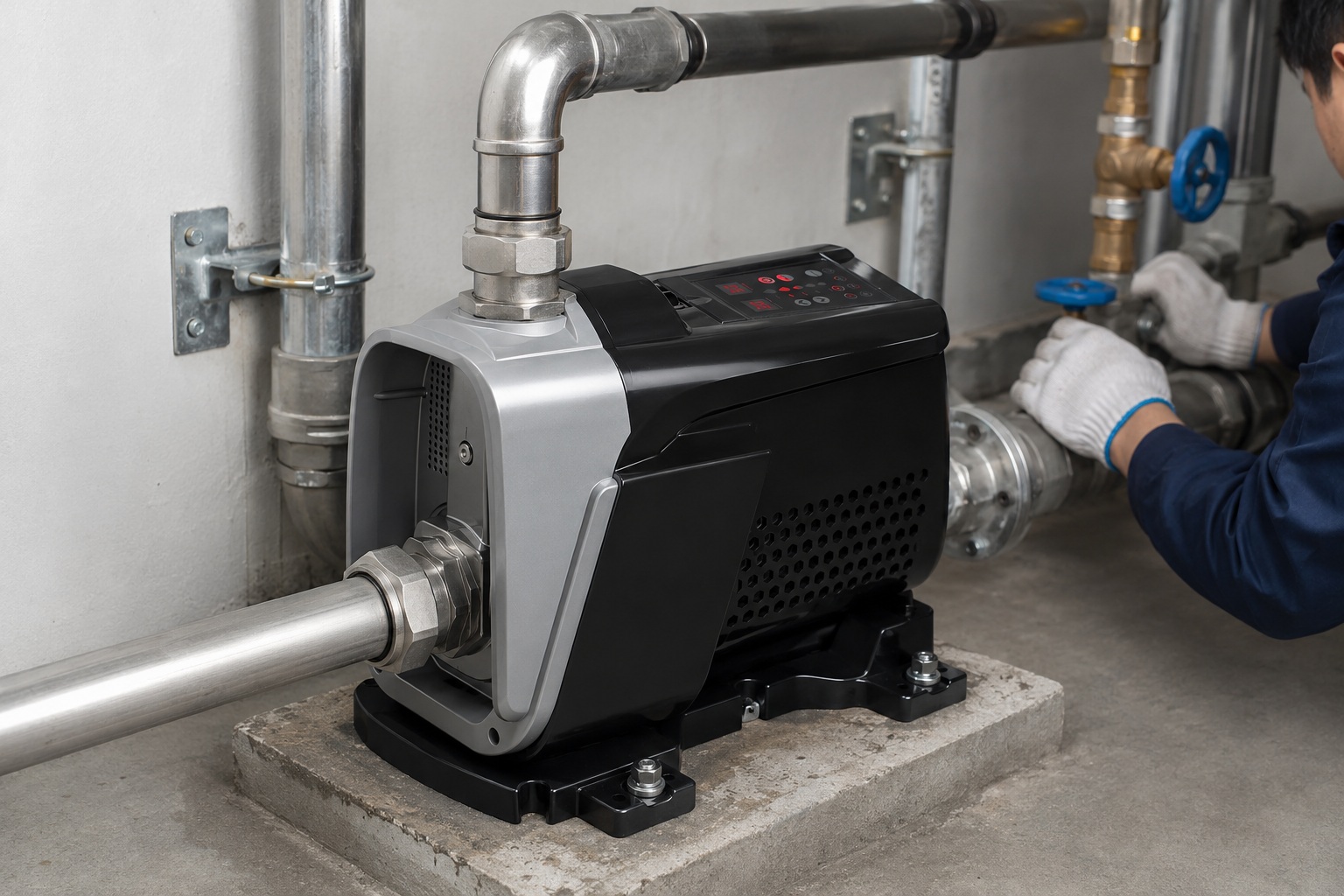
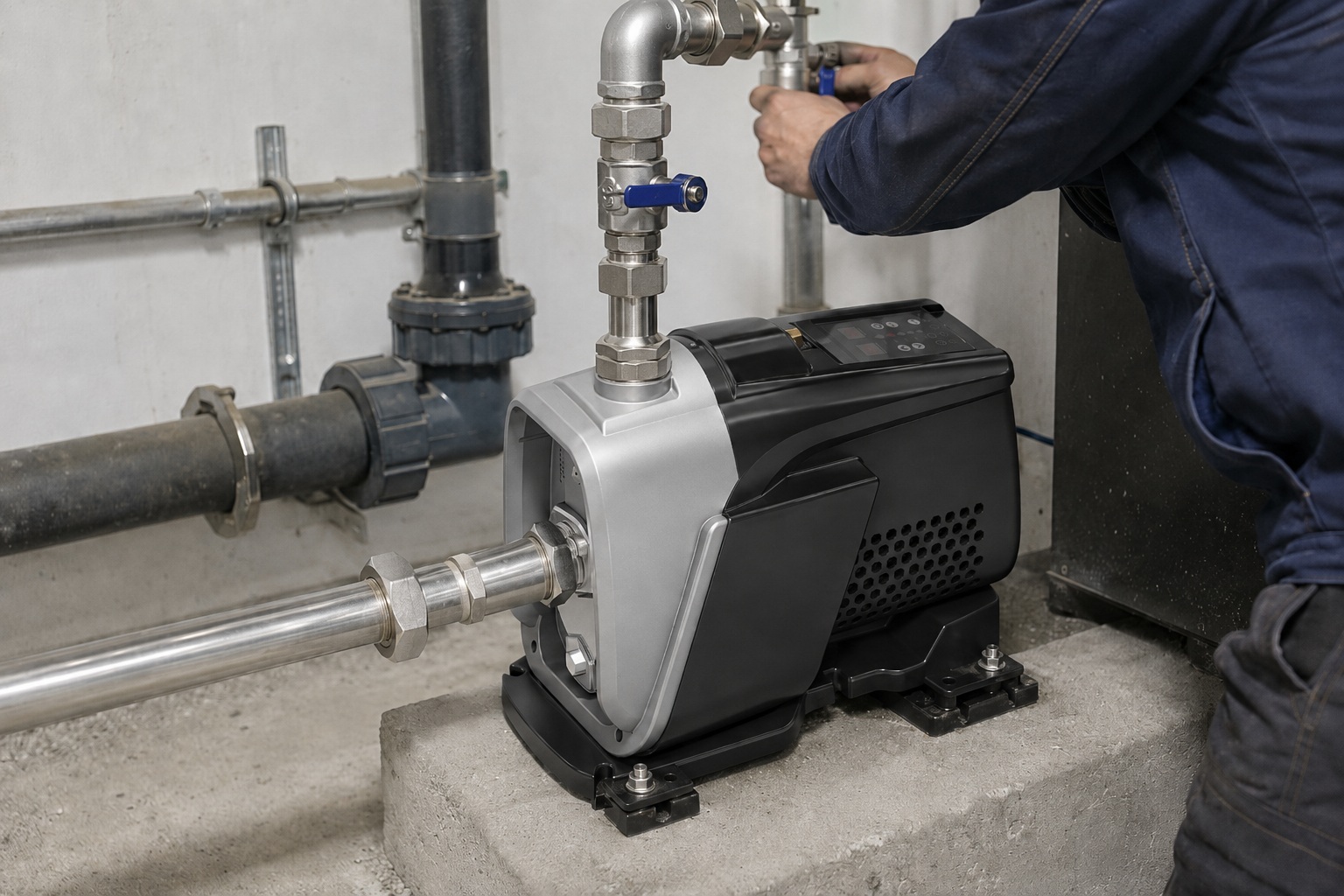
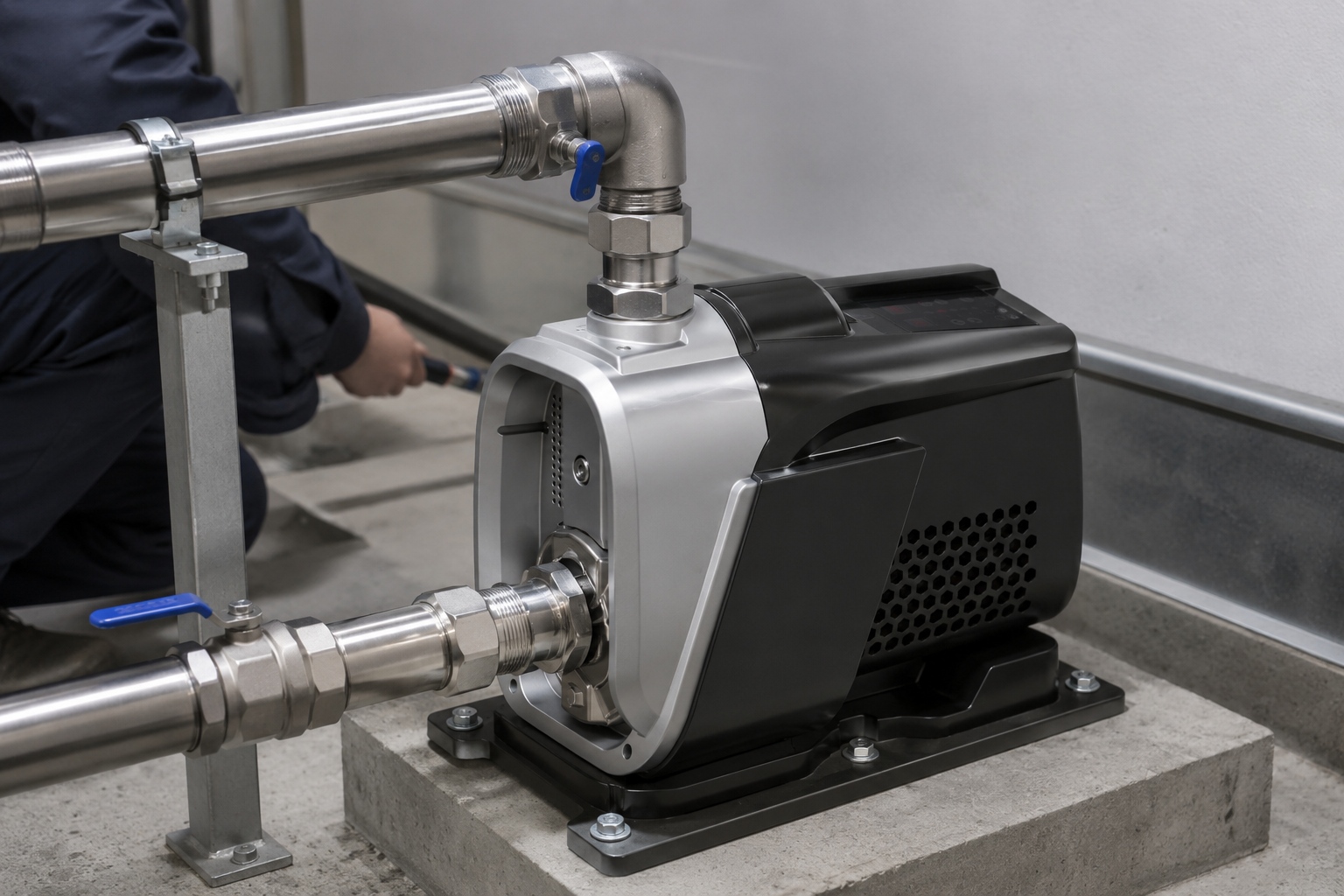
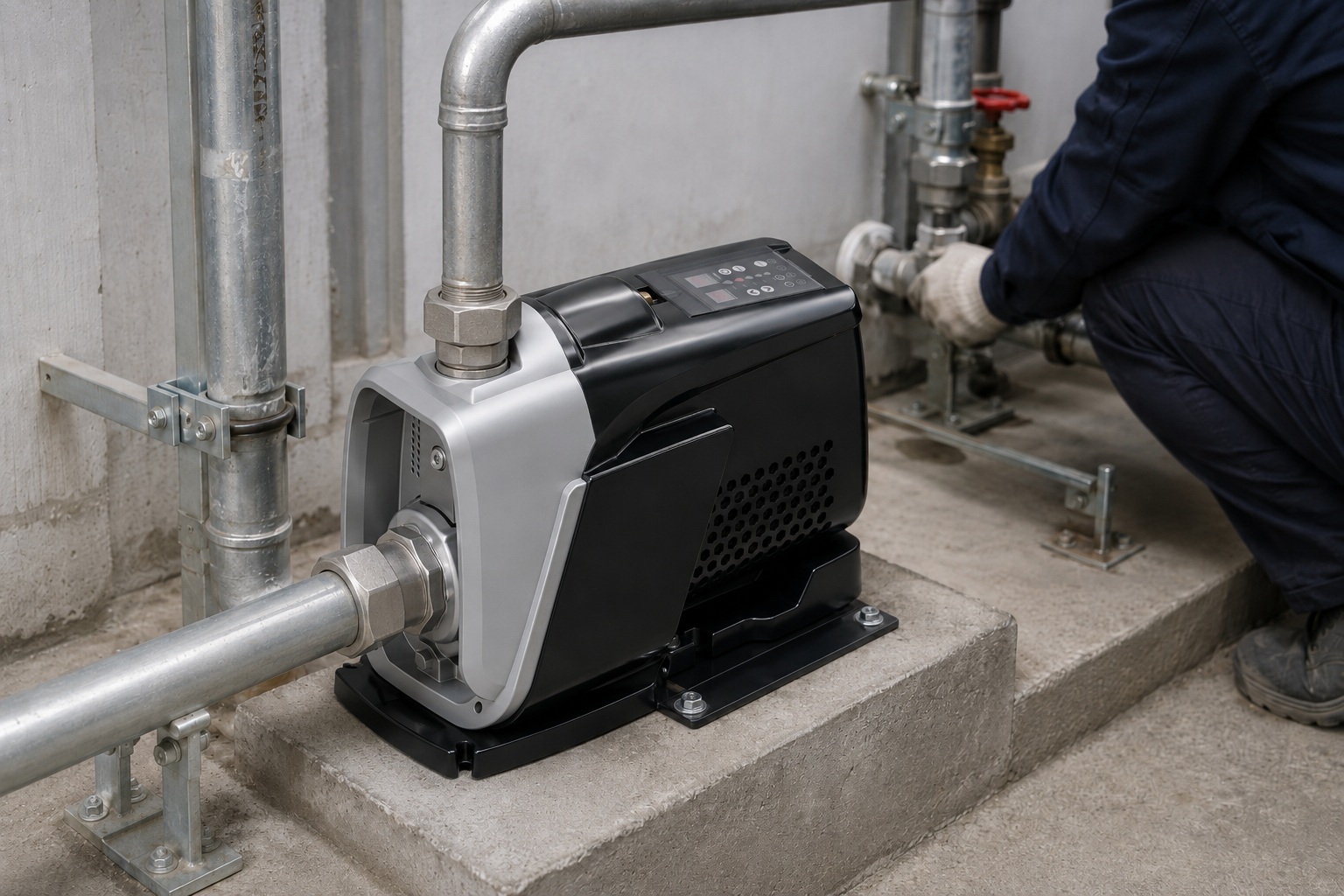
Modern booster pumps, especially those with Variable Frequency Drives (VFDs), can maintain constant pressure even as water demand changes, which is ideal for complex irrigation zones.
This can improve system efficiency by 20-30%.
| Pump Type | Best Use Case | Pros | Cons |
|---|---|---|---|
| Centrifugal | Surface water (lakes, rivers), shallow wells | High flow rates, durable, relatively inexpensive, easy to maintain | Must be primed, limited suction lift (~25 ft), can be noisy |
| Submersible | Deep wells (>25 ft) | No priming needed, no suction lift limit, very efficient, quiet | More complex installation, repairs require pulling the pump from the well |
| Jet Pump | Shallow wells with some suction lift | Self-priming (in some configurations), good pressure | Less efficient than submersible, can be noisy, lower flow rates than centrifugal |
| Booster Pump | Increasing pressure in existing water lines | Solves low-pressure problems, can provide constant pressure | Cannot draw water from a source, adds complexity to the system |
Evaluating Power Sources and Efficiency
High electricity bills from your pump are cutting into your profits.
You face power outages or have a site with no grid access, making irrigation unreliable.
Choosing an efficient pump and the right power source saves money and ensures consistency.
Select a power source based on availability and cost. Electric pumps are common, but consider solar for off-grid locations. For maximum efficiency, choose a pump with a Variable Frequency Drive (VFD), which can reduce energy consumption by 30-50% by matching motor speed to water demand.
The power source for your pump is a critical decision that impacts both your operating costs and the reliability of your system.
The most efficient pump in the world is useless if you can't power it consistently.
Your choice will depend on your location, access to the electrical grid, and your budget for both initial investment and long-term operating costs.
Energy costs can account for up to 65% of the total cost of ownership for a large irrigation pump over its lifespan.
Therefore, efficiency is not just a buzzword; it's a key financial consideration.
Electric Pumps (AC)
Standard electric pumps are the most common choice for irrigation where grid power is available and reliable.
They are available in a wide range of sizes and types.
Single-phase power (110V or 230V) is common for smaller, residential applications.
Three-phase power (208V, 230V, or 460V) is used for larger, commercial and agricultural pumps due to its higher efficiency and motor longevity.
When selecting an electric pump, look for motors with a high efficiency rating.
A premium efficiency motor can be 2-4% more efficient than a standard motor, a difference that adds up to significant savings over thousands of hours of operation.
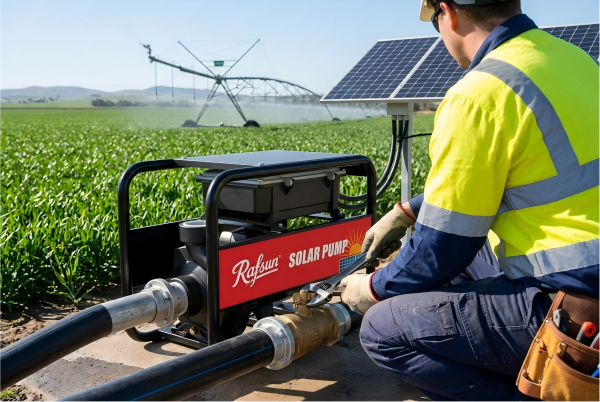
Solar-Powered Pumps
Solar pumps have become a revolutionary technology for off-grid and remote irrigation.
They use photovoltaic (PV) panels to convert sunlight directly into electricity to power the pump.
The initial investment for a solar pump system is higher than for a conventional electric pump.
However, the operating costs are virtually zero, and there is no reliance on the electrical grid or fossil fuels.
Modern solar pump systems are highly efficient and can pump significant volumes of water, especially DC brushless motor types.
They are ideal for filling tanks during the day or for direct irrigation in sunny climates.
The return on investment for a solar pump can be as short as 2-3 years in areas with high electricity costs or no grid access.
Variable Frequency Drive (VFD) Technology
Variable Frequency Drive (VFD) technology represents a major leap in pump efficiency.
A VFD is a smart controller that adjusts the pump motor's speed in real-time to match the system's water demand.
Traditional pumps run at a single, fixed speed.
When less flow is needed, they rely on a pressure-regulating valve, which is like driving with one foot on the gas and one foot on the brake.
It wastes a massive amount of energy.
A VFD-equipped pump slows down, providing the exact flow and pressure needed.
This simple change can reduce energy consumption by 30-50% or more.
VFDs also provide a "soft start" for the motor, reducing mechanical and electrical stress and extending the pump's lifespan.
| Power Option | Initial Cost | Operating Cost | Best For | Key Feature |
|---|---|---|---|---|
| Standard Electric (AC) | Medium | Medium-High | Locations with reliable grid power | Wide availability and proven technology |
| Solar Power (DC/AC) | High | Very Low | Off-grid, remote locations, or areas with high electricity costs | Energy independence, environmentally friendly |
| VFD-Equipped Electric (AC) | High | Low | Systems with varying flow/pressure needs; energy-conscious users | Maximum energy efficiency (30-50% savings), constant pressure control |
Calculating Total Dynamic Head (TDH) for Accuracy
You bought a pump rated for 50 PSI, but your sprinklers are barely working.
You overlooked the impact of elevation and pipe friction, causing the pump to underperform.
Calculating Total Dynamic Head (TDH) is the only way to guarantee your pump will deliver the required pressure at the destination.
Total Dynamic Head (TDH) is the total pressure your pump must overcome. Calculate it by adding three values: the vertical lift from the water source to the highest point, the pressure required by your sprinklers (in feet of head), and the friction loss from pipes and fittings.
Total Dynamic Head (TDH) is arguably the most misunderstood—and most critical—calculation in pump selection.
It is the real-world workload you are asking your pump to perform.
Pump performance curves are charted in feet of head, not PSI.
Failing to calculate TDH correctly is the number one cause of pump misapplication.
An undersized pump will fail to deliver the needed pressure and flow.
An oversized pump will waste energy, operate outside its best efficiency point, and have a shorter lifespan.
Let's break down the three components of TDH.
What is Static Head (Vertical Lift)?
Static head is the total vertical distance the water must be lifted, independent of any movement.
It has two parts:
- Suction lift: The vertical distance from the water's surface (in your well or pond) up to the centerline of the pump. This only applies to surface pumps.
- Elevation head: The vertical distance from the centerline of the pump up to the highest point of delivery (e.g., the highest sprinkler head on a hill).
You simply add these two distances together.
For example, if the pump is 10 feet above the pond surface (suction lift) and the highest sprinkler is 25 feet above the pump (elevation head), your total static head is 10 + 25 = 35 feet.
What is Pressure Head?
This is the pressure required by your irrigation emitters, converted into feet of head.
Sprinklers, drip systems, and nozzles are all rated to operate at a certain PSI.
You need to convert this PSI requirement into its equivalent value in feet of head to add it to your TDH calculation.
The conversion formula is simple: 1 PSI = 2.31 feet of head.
So, if your sprinkler heads require 40 PSI to operate correctly, your pressure head is 40 PSI * 2.31 ft/PSI = 92.4 feet.
Factoring in Friction Loss
Friction loss is the head, or pressure, lost due to friction as water moves through pipes, valves, elbows, and other fittings.
It is a significant factor, especially in long pipe runs or complex systems.
Friction loss depends on:
- Pipe Diameter: Smaller pipes cause much more friction loss than larger pipes for the same flow rate. Doubling pipe diameter can reduce friction loss by a factor of 16.
- Flow Rate: The faster the water moves, the higher the friction loss.
- Pipe Material & Age: Smoother pipes (like PVC) have less friction than rougher pipes (like old steel).
Calculating friction loss precisely requires using charts or online calculators.
For an estimate, you can assume that for every 100 feet of pipe, you will lose a certain amount of head based on your flow rate and pipe size. A common estimate for initial planning is to add 10-20% of your static head as friction loss.
Final TDH Calculation
The formula is straightforward:
TDH = Static Head + Pressure Head + Friction Loss
Using our examples:
- Static Head = 35 feet
- Pressure Head = 92.4 feet
- Friction Loss (Estimated 15% of static + pressure head) = (35 + 92.4) * 0.15 = 19.1 feet
Total Dynamic Head (TDH) = 35 + 92.4 + 19.1 = 146.5 feet
You would then look for a pump that can efficiently deliver your required flow rate (e.g., 30 GPM) at a head of 146.5 feet.
Conclusion
Choosing the right irrigation pump involves matching the pump's capabilities to your unique system requirements.
By carefully considering your water source, flow, pressure, and power, you ensure a successful and efficient system.
FAQs
What size pump do I need for my irrigation system?
First, calculate your required flow rate in GPM based on your largest irrigation zone. Then, determine your Total Dynamic Head (TDH). Select a pump that can deliver the required GPM at your calculated TDH.
Is a bigger irrigation pump always better?
No. An oversized pump wastes energy, can cause "dead-heading" which damages the pump, and increases wear on your system. It's crucial to select a pump that operates at its Best Efficiency Point for your specific needs.
How do I calculate the flow rate for my irrigation pump?
Sum the flow rates (in GPM or LPM) of all the sprinkler heads or emitters in the single largest zone that will run at one time. This total is the minimum flow rate your pump must provide.
Can I use a well pump for irrigation?
Yes, absolutely. A well pump, especially a submersible one, is an excellent source for an irrigation system. Just ensure the pump's flow and pressure capabilities match the needs of your irrigation design.
How far can an irrigation pump push water?
This depends on the pump's pressure rating, which is determined by its Total Dynamic Head (TDH) capability. For every 1 PSI of pressure, a pump can push water 2.31 feet vertically, minus any friction loss.
What is the difference between a sprinkler pump and a well pump?
A "sprinkler pump" is usually a high-flow, high-pressure surface centrifugal pump designed to boost pressure from a municipal source or draw from a lake. A "well pump" is typically a submersible pump designed to push water from deep underground.
How many sprinkler heads can a 1 HP pump run?
This depends on the flow rate (GPM) of each sprinkler head. A 1 HP pump might produce 20-30 GPM. If your sprinklers use 3 GPM each, you could run 6-10 heads, but you must also consider the pressure requirements.
How much pressure do I need for irrigation?
Most sprinkler systems require between 30 and 60 PSI to operate effectively. However, drip irrigation systems need much lower pressure, typically 10 to 30 PSI, and require a pressure regulator.