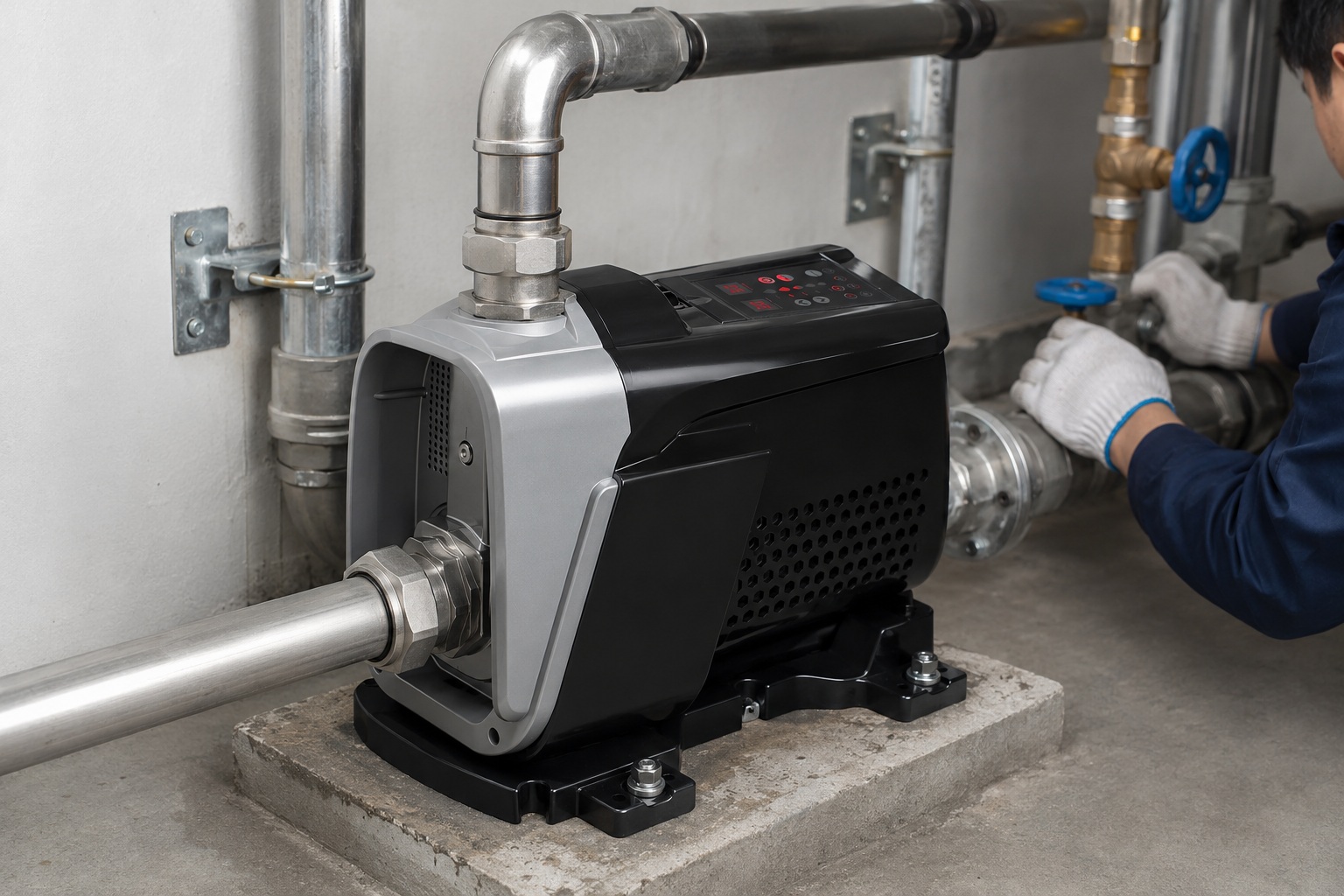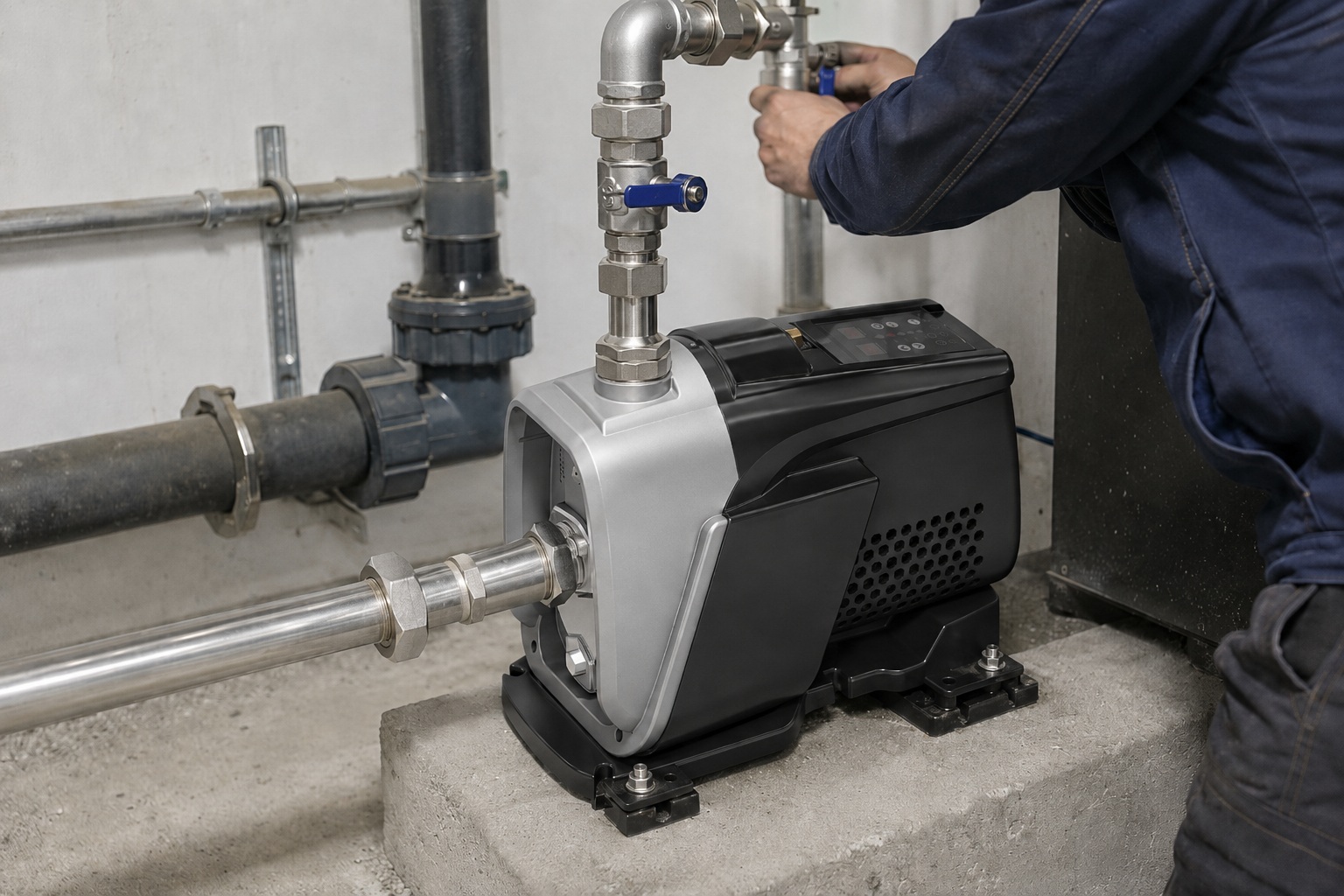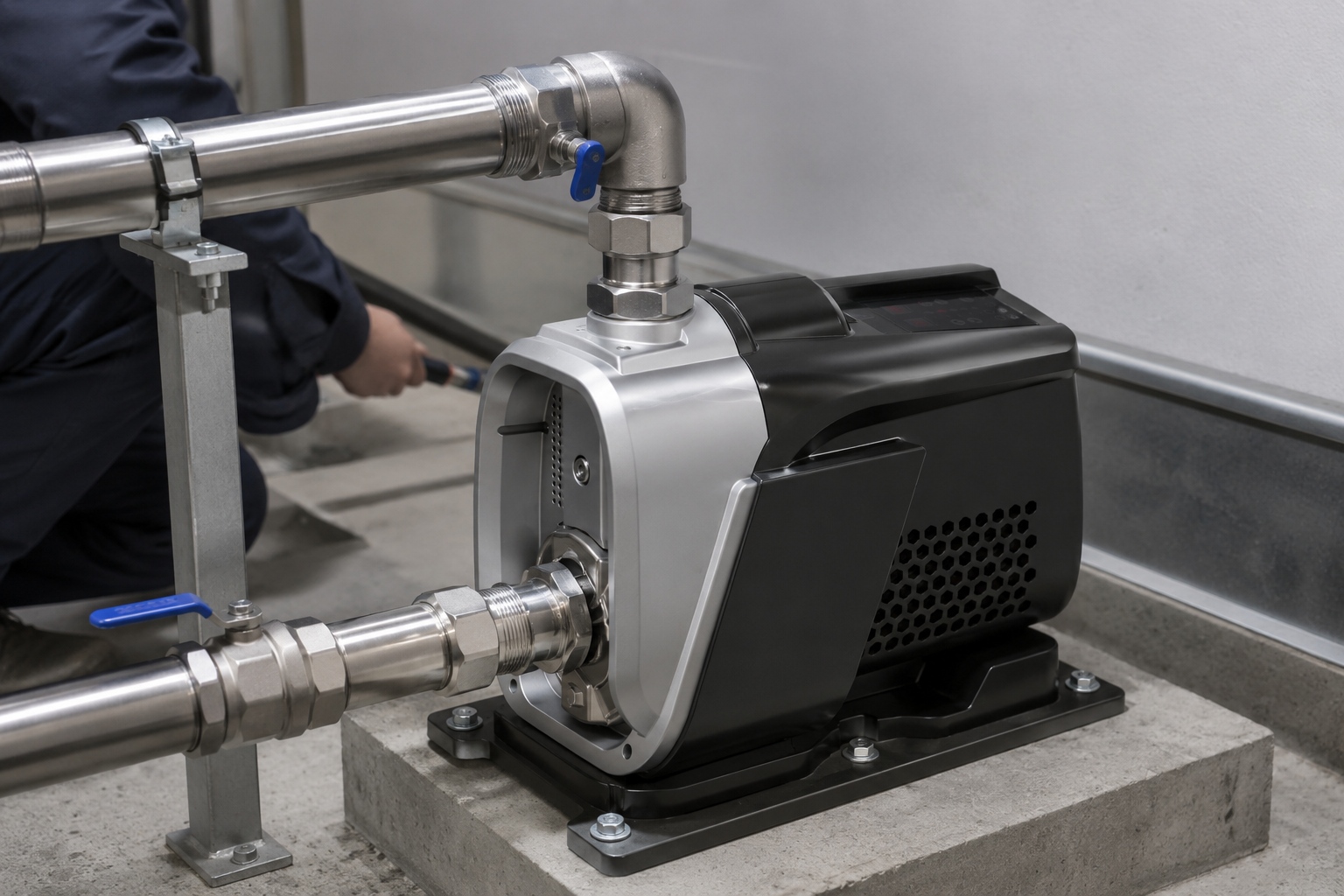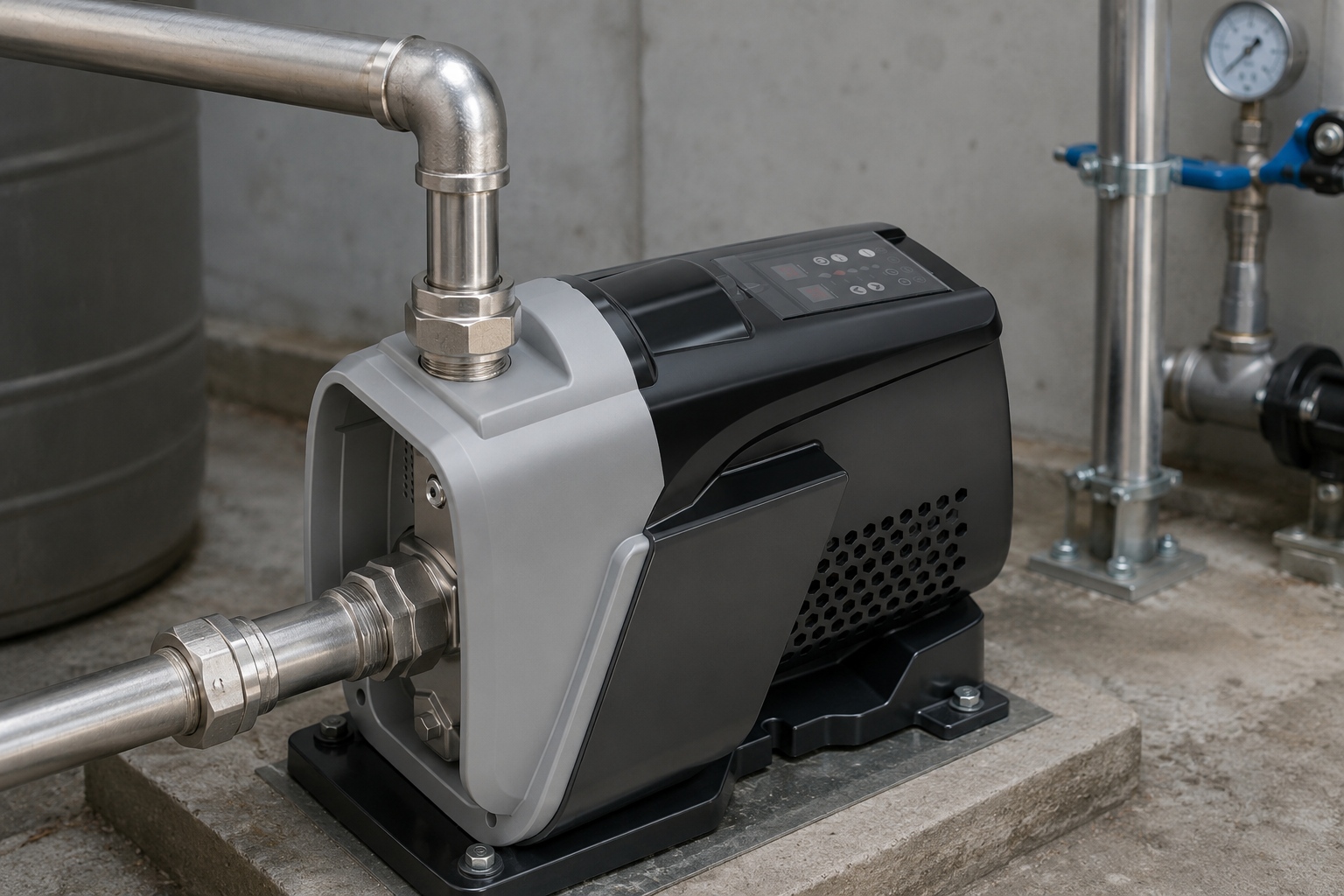
Struggling to find pumps that fit your brand and quality standards?
Your brand feels lost among generic products.
Partnering with an OEM can solve this by creating custom pumps for you.
OEM stands for Original Equipment Manufacturer.
An OEM pump is manufactured by one company, like us at RAFSUN, but sold under another company’s brand name.
This allows businesses to offer high-quality, customized pumps without needing their own manufacturing facility.
It is a popular strategy for importers and distributors.
Choosing the right manufacturing partner is a critical business decision.
You need a partner who understands your market and your quality requirements.
This decision can significantly impact your brand’s reputation and profitability.
An OEM partnership offers a strategic advantage in the competitive pump market.
It allows you to focus on marketing and sales while leaving the complex manufacturing process to experts.
This collaboration can unlock new growth opportunities for your business.
The Core Concept of OEM in Manufacturing
Finding a reliable manufacturer is tough.
You worry about inconsistent quality and losing brand control.
An OEM partnership gives you expert manufacturing under your own brand name.
OEM, or Original Equipment Manufacturer, is a business model where a company produces parts or equipment.
Another company then markets and sells these products under its own brand.
This is a common practice across many industries, including electronics, automotive, and, of course, water pumps.
Understanding the OEM model is key to leveraging its full potential.
It is more than just outsourcing; it is a strategic partnership.
This model is built on trust, clear specifications, and shared goals for quality and market success.
The core idea is specialization.
The manufacturer, or OEM, specializes in production efficiency, engineering, and quality control.
Our facility, for example, dedicates over 30 engineers to research and development alone.
This focus results in more than 100 technical patents in intelligent pump technology.
The buying company, or the brand owner, specializes in marketing, sales, and understanding the local customer base.
This division of labor creates a powerful synergy.
The OEM Workflow Explained
The OEM process follows a structured path.
It begins with the client’s needs.
The client provides detailed specifications for the product.
This can include performance metrics, design aesthetics, material requirements, and branding elements.
For instance, a distributor in Australia might require a booster pump with specific flow rates, pressure settings, and a motor that meets local energy efficiency standards.
The OEM’s engineering team then takes over.
They translate these specifications into a viable product design.
This often involves creating prototypes and conducting initial tests.
Once the design is approved, mass production begins.
Quality Control in OEM
Quality is not an afterthought in a successful OEM partnership.
It is integrated into every step.
A robust quality control system is non-negotiable.
This system ensures that every unit meets the client’s standards.
At our facility, we implement a four-tiered quality protocol.
- IQC (Incoming Quality Control): All raw materials are inspected before entering the production line. This prevents defects from the very start.
- LQC (Line Quality Control): Inspections happen at various stages on the assembly line to catch issues early.
- PQC (Process Quality Control): The entire manufacturing process is continuously monitored to ensure consistency.
- OQA (Outgoing Quality Assurance): Final products are rigorously tested before they are packaged and shipped. This step verifies that the pump performs exactly as specified.
These tests are extensive.
Our pumps undergo over 144 hours of salt spray testing to ensure corrosion resistance.
They also endure 1000+ hours of UV resistance testing to guarantee durability in sunny climates.
This level of detail ensures that the final product not only works well but also enhances the client’s brand reputation.
The table below shows a typical comparison between OEM and other models.
| Feature | OEM (Original Equipment Manufacturer) | ODM (Original Design Manufacturer) | Own Manufacturing |
|---|---|---|---|
| Product Design | Client’s design or co-developed | Manufacturer’s existing design | Client’s own design |
| Branding | Client’s brand | Client’s brand | Client’s brand |
| Intellectual Property | Usually owned by the client | Usually owned by the manufacturer | Owned by the client |
| Initial Investment | Moderate (tooling, NRE) | Low (minimal customization) | Very High (factory, R&D) |
| Time to Market | Moderate | Fast | Slow |
| Customization Level | High | Low | Very High |
This structured approach allows companies like yours to bring high-quality, brand-specific pumps to market effectively.
Why Choose OEM for Your Pump Business?
You want to grow your pump brand.
But the cost of building a factory and R&D team is too high.
An OEM partnership lets you launch a custom product line without that massive investment.
Choosing an OEM partner allows you to control your brand and product quality.
You can offer unique pumps tailored to your market’s needs.
This strategy enhances brand value and provides a significant competitive edge, all while managing costs effectively.
The decision to partner with an OEM is a strategic one that can define your business’s trajectory.
It moves you from simply reselling generic products to building a respected brand.
Let’s explore the specific advantages this model brings to a pump importer or distributor.
This path is about building long-term value for your company.
Gaining a Competitive Edge
In a crowded market, differentiation is everything.
Selling the same pumps as your competitors leads to price wars.
These wars erode profit margins and damage brand perception.
An OEM partnership allows you to break free from this cycle.
You can specify unique features for your pumps.
For example, you could request a variable speed drive (VSD) pump with a proprietary control interface.
Or a solar pump optimized for the specific solar irradiance levels in your region.
These custom features make your product stand out.
Customers will see your brand as innovative and tailored to their needs.
This creates brand loyalty and allows you to command a better price.
Our data shows that distributors with OEM-differentiated products can achieve up to 15-20% higher profit margins compared to those selling generic models.
Cost-Effectiveness and Focus
Manufacturing is capital-intensive.
Building a factory requires a huge upfront investment.
You also need to hire and train workers, manage supply chains, and invest in ongoing R&D.
Annual operating costs for a medium-sized pump factory can easily exceed millions of dollars.
An OEM partnership eliminates these costs.
You leverage the manufacturer’s existing infrastructure, expertise, and economies of scale.
We produce over 300,000 units annually, which lowers the cost per unit for all our partners.
This frees up your capital.
You can invest in areas that directly drive growth for your business.
- Marketing and Sales: Build a powerful brand presence in your market.
- Customer Support: Provide excellent service that builds loyalty.
- Distribution Network: Expand your reach to new customers and regions.
This focus is a significant strategic advantage.
You can do what you do best: sell products and build relationships.
Ensuring Quality and Compliance
A major concern for any importer is product quality and reliability.
A batch of faulty pumps can destroy your brand’s reputation.
Reputable OEM manufacturers have world-class quality control systems in place.
As mentioned, our process includes IQC, LQC, PQC, and OQA.
This multi-stage approach reduces the defect rate to less than 0.1%.
Furthermore, established OEMs ensure their products meet international standards.
Our pumps are certified by CE, IEC, and RoHS.
This means they meet safety, performance, and environmental standards recognized globally.
This pre-certification saves you time and money.
You avoid the complex and expensive process of getting products certified yourself.
You can import and sell the pumps with confidence, knowing they are compliant and safe.
| Advantage | Description | Impact on Your Business |
|---|---|---|
| Brand Control | Your brand is on a high-quality, unique product. | Strengthens brand identity and customer loyalty. |
| Cost Savings | No need for investment in a factory or large R&D team. | Higher profit margins and more capital for growth. |
| Focus on Core Business | You can concentrate on sales, marketing, and distribution. | Increased market share and stronger customer relationships. |
| Guaranteed Quality | Leverage expert manufacturing and rigorous QC processes. | Reduced product returns and enhanced brand reputation. |
| Faster Time-to-Market | Utilize an existing production line and supply chain. | Quicker response to market trends and sales opportunities. |
Choosing OEM is choosing to build a resilient and profitable brand.
It is a proven path for growth in the global pump industry.
Choosing the Right OEM Pump Manufacturer
You know OEM is the right path.
But choosing the wrong partner could lead to delays, poor quality, and financial loss.
You need a partner with proven experience, strong technical skills, and a commitment to quality.
Selecting the right OEM partner involves evaluating their technical capabilities, quality control systems, and production capacity.
Look for a manufacturer with a strong R&D team, international certifications, and a track record of serving global markets.
This ensures a successful, long-term partnership.
Finding the right manufacturer is the most critical step in your OEM journey.
This partner will be an extension of your own company.
Their performance directly reflects on your brand.
Therefore, you must conduct thorough due diligence.
A careful selection process mitigates risk and sets the stage for a profitable collaboration.
Let’s break down the key criteria to consider when evaluating potential OEM pump manufacturers.
Technical Expertise and R&D Strength
The manufacturer’s technical ability is the foundation of your product’s quality.
A weak engineering team cannot create an innovative or reliable pump.
Look for a company that invests heavily in research and development.
A strong R&D department indicates a commitment to innovation and continuous improvement.
For example, our R&D department consists of over 30 engineers.
This team is dedicated to advancing pump technology, particularly in areas like intelligent permanent magnet variable frequency pumps.
Their work has resulted in over 100 technical patents.
This means when you partner with us, you are not just getting a manufacturer.
You are gaining access to a deep pool of engineering talent.
This talent can help you design a product that is more efficient, durable, and advanced than your competitors’.
Verifiable Quality Control Systems
You must be able to trust your partner’s quality control.
Do not just take their word for it.
Ask for details about their quality management system.
A professional manufacturer will be transparent about their processes.
They should be able to provide documentation on their IQC, LQC, PQC, and OQA protocols.
You can also ask for performance data.
- What is their average defect rate?
- What specific tests do they perform on their pumps?
- Can they share results from tests like salt spray or UV resistance?
A reliable partner will proudly share this information.
For instance, we can show that our products meet CE, IEC, and RoHS standards.
These certifications from third-party organizations provide objective proof of quality and safety.
Some clients even send their own quality inspectors to the factory, a practice we welcome.
Production Capacity and Global Experience
Your chosen partner must be able to meet your demand.
Assess their production capacity.
How many production lines do they have?
How many units can they produce per year?
A manufacturer with a large capacity, like our 300,000+ units per year, is less likely to face production bottlenecks.
This ensures a stable supply chain for your business.
Global experience is also crucial.
A manufacturer that exports to many countries understands the complexities of international logistics, customs, and different market regulations.
We supply pumps to over 150 countries.
This experience means we can help you navigate the shipping and importation process smoothly.
It also means our products are designed to perform well in a wide range of climates and conditions, from the heat of Dubai to the demanding agricultural needs of South Africa.
This global footprint is backed by over 50,000 customer reviews from international markets, providing a wealth of feedback that drives our continuous improvement.
Here is a checklist for evaluating a potential OEM partner:
| Criteria | Questions to Ask | Ideal Answer |
|---|---|---|
| R&D Capability | How large is your R&D team? How many patents do you hold? | A significant number of engineers and patents in relevant technology. |
| Quality System | Can you describe your QC process? What are your defect rates? | A documented multi-stage system (IQC, PQC, OQA) with low defect rates (<1%). |
| Certifications | What international certifications do your products have? | Key certifications like CE, IEC, RoHS for your target market. |
| Production Scale | What is your annual production capacity? How many production lines do you have? | Capacity that can comfortably handle your current and future order volume. |
| Export Experience | Which countries do you export to? Can you handle logistics for my country? | Extensive experience exporting to your region and globally. |
| Communication | How do you handle communication and project management with clients? | A dedicated account manager and proficiency in your language. |
| Factory Audit | Are you open to a factory visit or a third-party audit? | Yes, a transparent partner will welcome a visit. |
Selecting a partner based on these aeras of expertise ensures that your OEM strategy will be built on a solid foundation of quality, reliability, and trust.
The OEM Customization Process
You’ve found a potential OEM partner.
Now, how do you turn your product idea into a reality?
The process can seem complex, but a good partner will guide you through it.
The OEM customization process involves several stages.
It starts with your initial concept and specifications, moves through design and prototyping, and ends with mass production and quality assurance.
Clear communication at every stage is crucial for success.
The journey from an idea to a finished, branded product is a collaborative effort.
It requires a structured process and open lines of communication between you and your OEM manufacturer.
This ensures that the final product perfectly aligns with your vision and market needs.
A professional OEM partner will have a well-defined workflow to manage this process efficiently.
Let’s walk through the typical stages of OEM pump customization.
Stage 1: Initial Consultation and Specification
This is the starting point.
You bring your idea to the manufacturer.
This includes your vision for the product and the specific requirements it must meet.
The more detail you can provide, the better.
- Performance: What is the required flow rate, head pressure, and power consumption?
- Application: Will it be a household booster pump, a deep well pump, or a solar pump for irrigation?
- Design: Do you have specific requirements for the pump’s color, shape, or materials?
- Branding: How should your logo and brand name be applied to the product and packaging?
- Target Market: What are the specific regulations and user expectations in your country?
An experienced OEM sales and engineering team will ask probing questions to fill in any gaps.
They will help you refine your specifications to ensure the product is both effective and manufacturable.
Stage 2: Design, Engineering, and Prototyping
Once the specifications are clear, the OEM’s R&D team gets to work.
They create detailed engineering drawings and 3D models of the pump.
This is where their technical expertise becomes invaluable.
They might suggest improvements to your design to enhance performance, reduce cost, or improve reliability.
For example, they might recommend a different impeller material for better efficiency or a more robust seal for longer life.
After you approve the design, the next step is creating a prototype.
This is a physical sample of your pump.
The prototype allows you to see and test the product before committing to mass production.
You can verify its performance, check the build quality, and approve the aesthetics.
This stage often involves some back-and-forth.
Based on your feedback, the engineers may make adjustments to the design and create a second prototype.
This iterative process continues until the prototype perfectly matches your expectations.
Stage 3: Tooling and Production Setup
With a finalized prototype, the factory prepares for mass production.
This involves creating the necessary tooling, such as molds for plastic parts or dies for casting metal components.
Tooling is often a one-time investment and is a key part of the OEM agreement.
The ownership of the tooling can be negotiated, but it is typically created for the client’s exclusive use.
Simultaneously, the production line is set up.
Workers are trained on the specific assembly process for your product.
Quality control checkpoints are established along the line to ensure every unit is assembled correctly.
Stage 4: Mass Production and Quality Assurance
Now, production begins at scale.
The manufacturer’s supply chain team ensures a steady flow of quality raw materials.
The production lines operate efficiently to produce your pumps according to the agreed-upon schedule.
Throughout this stage, the quality control team is vigilant.
They perform the IQC, LQC, and PQC checks that we discussed earlier.
Before the pumps are packaged, they undergo final testing (OQA).
This typically includes:
- Performance Test: Every pump is tested to ensure it meets the specified flow rate and pressure.
- Leak Test: The pump is checked for any water leaks.
- Electrical Safety Test: The motor and wiring are tested to meet standards like CE or IEC.
This comprehensive testing guarantees that the products shipping out with your brand name are reliable and safe.
The process ends with secure packaging, designed to protect the pumps during international shipping, and logistics management to get the products from our factory to your warehouse.
Conclusion
An OEM partnership is a powerful strategy for building a strong pump brand.
It offers custom products, cost savings, and quality assurance, allowing you to compete effectively in your market.
FAQs
What is the difference between OEM and ODM?
OEM involves making a product to a buyer’s specifications.
ODM is when a buyer selects an existing product design from a manufacturer and brands it as their own.
What are the main benefits of OEM?
The main benefits include brand control, product differentiation, cost savings by avoiding factory investment, and access to expert manufacturing and quality control.
How do I protect my intellectual property with an OEM?
Protect your IP with a comprehensive OEM agreement.
This contract should clearly define ownership of designs, patents, and tooling, often through a Non-Disclosure Agreement (NDA).
What is the minimum order quantity (MOQ) for OEM pumps?
MOQ varies by manufacturer and product complexity.
It is a negotiated quantity that makes the production run economically viable for the factory.
Can I customize the packaging with OEM?
Yes, full customization of packaging is a standard part of the OEM service.
This includes the box design, user manual, and any other inserts with your branding.
How long does the OEM process take?
The timeline varies, but a typical project can take 4-9 months.
This includes design, prototyping (1-3 months), tooling (1-2 months), and first mass production (1-2 months).
Is visiting the factory necessary before choosing an OEM partner?
It is highly recommended.
A factory visit allows you to verify their capabilities, quality systems, and working conditions firsthand, building trust and confidence.
What are the main risks of an OEM partnership?
Risks include potential quality issues, communication barriers, and supply chain disruptions.
These can be mitigated by choosing a reputable partner and having a strong contract.