Choosing the right water pump feels overwhelming.
A wrong choice can lead to inefficiency, high energy bills, and premature failure.
This guide will help you find the perfect pump for your needs.
The best water pump is the one that perfectly matches your specific application. This depends on factors like required flow rate (GPM), pressure (PSI), water source, and power availability. For modern homes, an intelligent variable frequency drive (VSD) pump is often the top choice for its efficiency and consistent pressure.
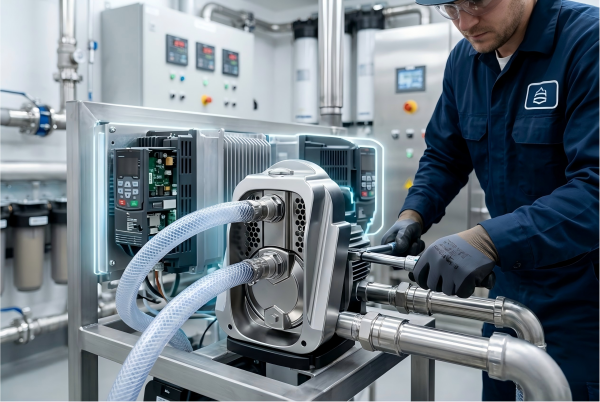
Finding the ideal pump requires a closer look at the options available.
You need to understand how each type works to see which one fits your system.
Let's dive into the most common types of water pumps.
This will help you make an informed decision for your home, farm, or business.
Understanding Centrifugal Pumps: The Versatile Workhorse
Need to move large volumes of water efficiently?
Struggling with pumps that can't handle high flow rates for irrigation or circulation?
Centrifugal pumps are the simple, reliable solution for high-volume water transfer.
Centrifugal pumps are ideal for applications requiring high flow rates at relatively low pressure. They are the go-to choice for irrigation systems, domestic water supply, and fluid circulation in HVAC systems. Their simple design ensures reliability and makes them a cost-effective solution for moving large amounts of water.
Centrifugal pumps are the most common type of pump used worldwide.
They account for over 75% of all pump installations.
Their popularity comes from a simple yet effective design.
An impeller, a rotating component with vanes, spins rapidly inside a casing.
This spinning action creates centrifugal force.
The force pushes water outwards and into the discharge outlet.
How They Work
The process begins as water enters the pump through the suction inlet.
It flows directly to the center, or "eye," of the impeller.
As the impeller spins, it flings the water to the outer edge of the pump casing.
This action increases the water's velocity and pressure.
A diffuser or volute then collects the fast-moving water.
It slows the water down, converting its kinetic energy into higher pressure.
This pressurized water then exits through the discharge port.
Key Applications and Use Cases
The design of centrifugal pumps makes them perfect for specific jobs.
They excel at moving large quantities of fluid.
- Domestic Water Supply: Boosting water pressure in residential buildings.
- Irrigation: Supplying water to large agricultural fields.
- Industrial Circulation: Moving fluids in heating, ventilation, and air conditioning (HVAC) systems.
- Dewatering: Removing water from construction sites or flooded areas.
Advantages vs. Disadvantages
Every pump type has its strengths and weaknesses.
Understanding these helps you decide if a centrifugal pump is right for you.
They are generally not self-priming, meaning the casing must be filled with water before starting.
They are also less effective at handling solids or highly viscous fluids compared to other pump types.
| Feature | Advantage | Disadvantage |
|---|---|---|
| Design | Simple, few moving parts | Not self-priming |
| Flow Rate | Excellent for high-volume transfer | Efficiency drops at low flow rates |
| Maintenance | Low maintenance, reliable | Sensitive to cavitation and air bubbles |
| Cost | Generally lower initial cost | Not ideal for high-pressure applications |
Choosing Submersible Pumps: For Wells and Boreholes
Do you need to life water from deep underground?
Surface pumps can't create enough suction for deep wells.
Submersible pumps are designed to be submerged, pushing water up from great depths effortlessly.
Submersible pumps are best for extracting water from deep wells, boreholes, and tanks. Because they are fully submerged in the fluid, they use direct pressure to push water to the surface. This makes them more efficient than surface pumps for deep applications, as they don't struggle with suction lift.
A submersible pump is a unique piece of engineering.
It combines a pump and a motor into a single, sealed unit.
This design allows the entire assembly to operate underwater.
This is a major advantage over other pump types, like jet pumps, which are located on the surface.
Surface pumps pull water up, but they are limited by atmospheric pressure.
They typically can't lift water from depths greater than 25 feet (about 7.6 meters).
Submersible pumps don't pull water; they push it.
This allows them to move water from hundreds of feet deep with remarkable efficiency, often achieving 30% greater efficiency than a comparable jet pump.
Deep Dive into Functionality
The sealed motor is directly connected to the pump body.
When powered on, the motor drives a series of stacked impellers.
Each impeller and its corresponding diffuser is called a stage.
Water is drawn into the bottom of the pump through an intake screen.
It then moves up through the series of spinning impellers.
Each stage adds more pressure to the water.
This process builds enough force to push the water up a pipe to the surface.
The entire unit is cooled by the surrounding water, preventing the motor from overheating during continuous operation.
Key Parameters for Selection
Choosing the right submersible pump is critical for performance and longevity.
You must consider several factors.
- Well Depth: The total depth of your well or borehole determines the required pump head.
- Flow Rate (GPM): How much water do you need? This is measured in gallons per minute (GPM) or liters per minute (LPM).
- Total Dynamic Head (TDH): This is the total pressure the pump must overcome. It includes the vertical lift, friction loss in the pipes, and the final pressure required at the outlet.
- Well Casing Diameter: The pump must be able to fit inside your well casing. Common sizes are 4 inches and 6 inches.
Comparing Pump Models
Submersible pumps come in various models designed for different needs.
Let's compare two common scenarios.
| Parameter | Scenario A: Shallow Well | Scenario B: Deep Well Farm |
|---|---|---|
| Application | Residential Home | Agricultural Irrigation |
| Well Depth | 100 feet | 400 feet |
| Required GPM | 10 GPM | 50 GPM |
| Pump Type | 1/2 HP, 10-stage pump | 5 HP, 25-stage pump |
| Key Feature | Lower horsepower, energy-efficient | High horsepower, multi-stage design |
This table shows how pump specifications change drastically with the application's demands.
A higher horsepower (HP) and more stages are needed for deeper wells and higher flow requirements.
Harnessing Solar Power: The Rise of Solar Water Pumps
Need to pump water in a remote location without electricity?
Running power lines is expensive and generators are noisy and require fuel.
Solar water pumps offer a clean, quiet, and self-sufficient solution powered by the sun.
Solar water pumps are the best solution for off-grid water supply, especially in agriculture and for remote communities. They use photovoltaic (PV) panels to power the pump directly, eliminating the need for grid electricity or fossil fuels. This makes them sustainable, reliable, and cost-effective in the long run.
A solar water pump is more than just a pump.
It is a complete system.
The core components are solar panels, a controller, and the pump itself.
The solar panels capture sunlight and convert it into direct current (DC) electricity.
This power is sent to a controller.
The controller manages the power, protects the pump from damage, and optimizes its performance based on the available sunlight.
It often includes sophisticated electronics like Maximum Power Point Tracking (MPPT).
MPPT technology adjusts the electrical load to maximize the energy harvested from the solar panels, increasing pump efficiency by up to 30%.
Finally, the controller delivers power to the pump motor, which moves the water.
Types of Solar Pumps
There are two main types of solar pumps.
Each is suited for different applications.
- Surface Solar Pumps: These pumps are located on the ground. They are used to move water from shallow sources like ponds, streams, or storage tanks. They are excellent for small-scale irrigation or livestock watering.
- Submersible Solar Pumps: These are designed to be placed deep inside a well or borehole, just like their AC counterparts. They are a popular choice for extracting drinking water or for irrigation in arid regions where the water table is low.
Designing a Solar Pumping System
Proper system design is crucial for reliable performance.
You need to balance the water requirement with the available solar energy at your location.
Key Design Considerations:
- Water Demand: First, calculate your daily water needs (gallons or liters per day). This determines the total work the pump must do.
- Total Dynamic Head (TDH): Calculate the total pressure required, including vertical lift and pipe friction. This determines the size and power of the pump.
- Solar Irradiance: Assess the amount of sunlight your location receives. This is measured in "peak sun hours" per day and varies by season and geography. This data determines the size of the solar array needed.
- System Components: Based on the above, you can select the pump, the controller, and the number and wattage of the solar panels.
Let's look at a sample system calculation.
| Parameter | Value | Description |
|---|---|---|
| Daily Water Need | 5,000 Gallons | For a small farm |
| Total Dynamic Head | 150 Feet | Vertical lift + friction |
| Peak Sun Hours | 5 Hours | Average for the location |
| Required Power | ~750 Watts | Calculated based on pump efficiency |
| Solar Array Size | 3 x 300W Panels | A 900W array to ensure sufficient power |
This systematic approach ensures the pump will meet your water needs even on days with less-than-perfect sunshine.
Variable Frequency Drive (VSD) Pumps: Smart and Efficient
Are you tired of fluctuating water pressure and high electricity bills?
Traditional pumps run at a single, fixed speed, wasting energy.
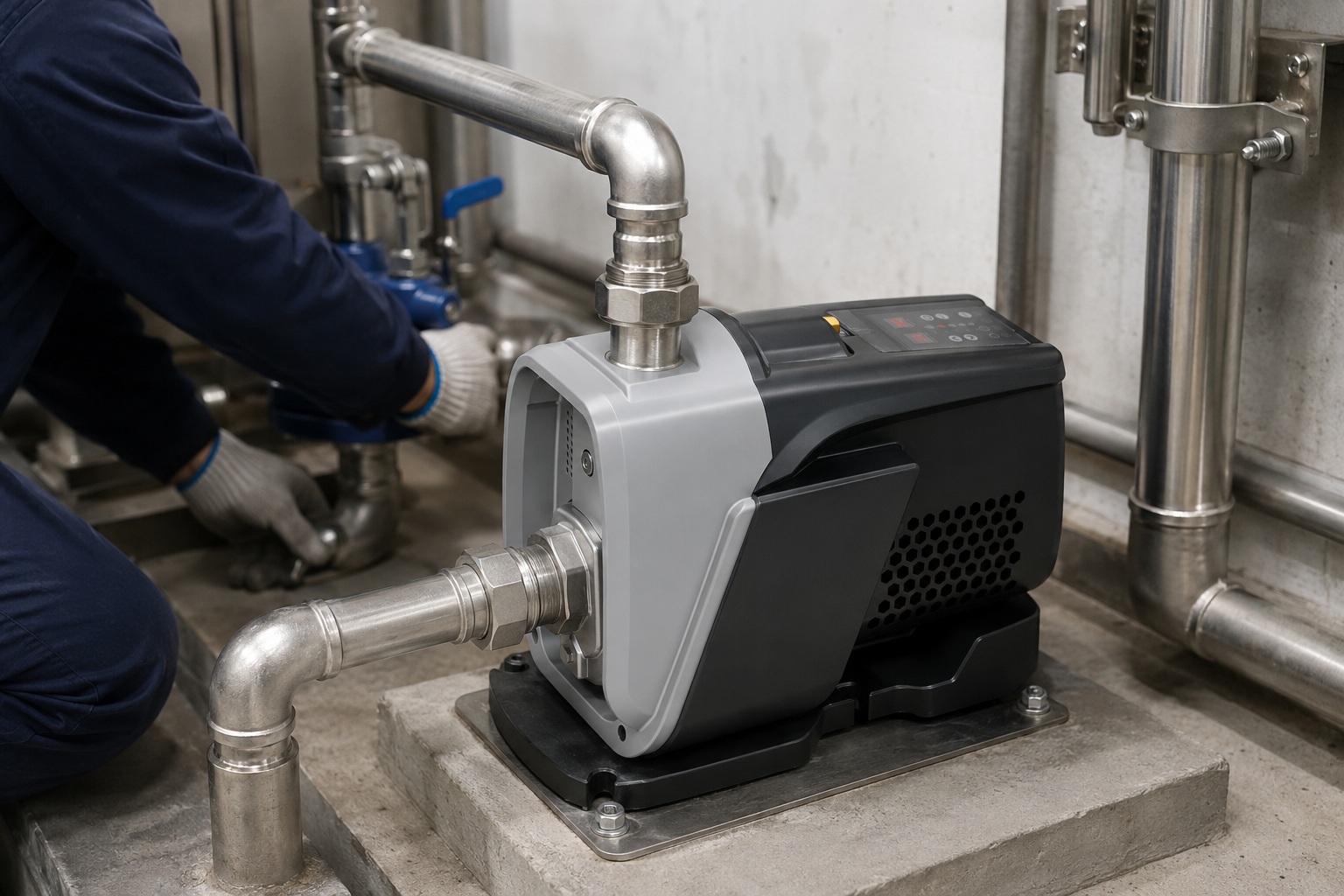
VSD pumps automatically adjust their speed to match water demand, providing constant pressure and saving energy.
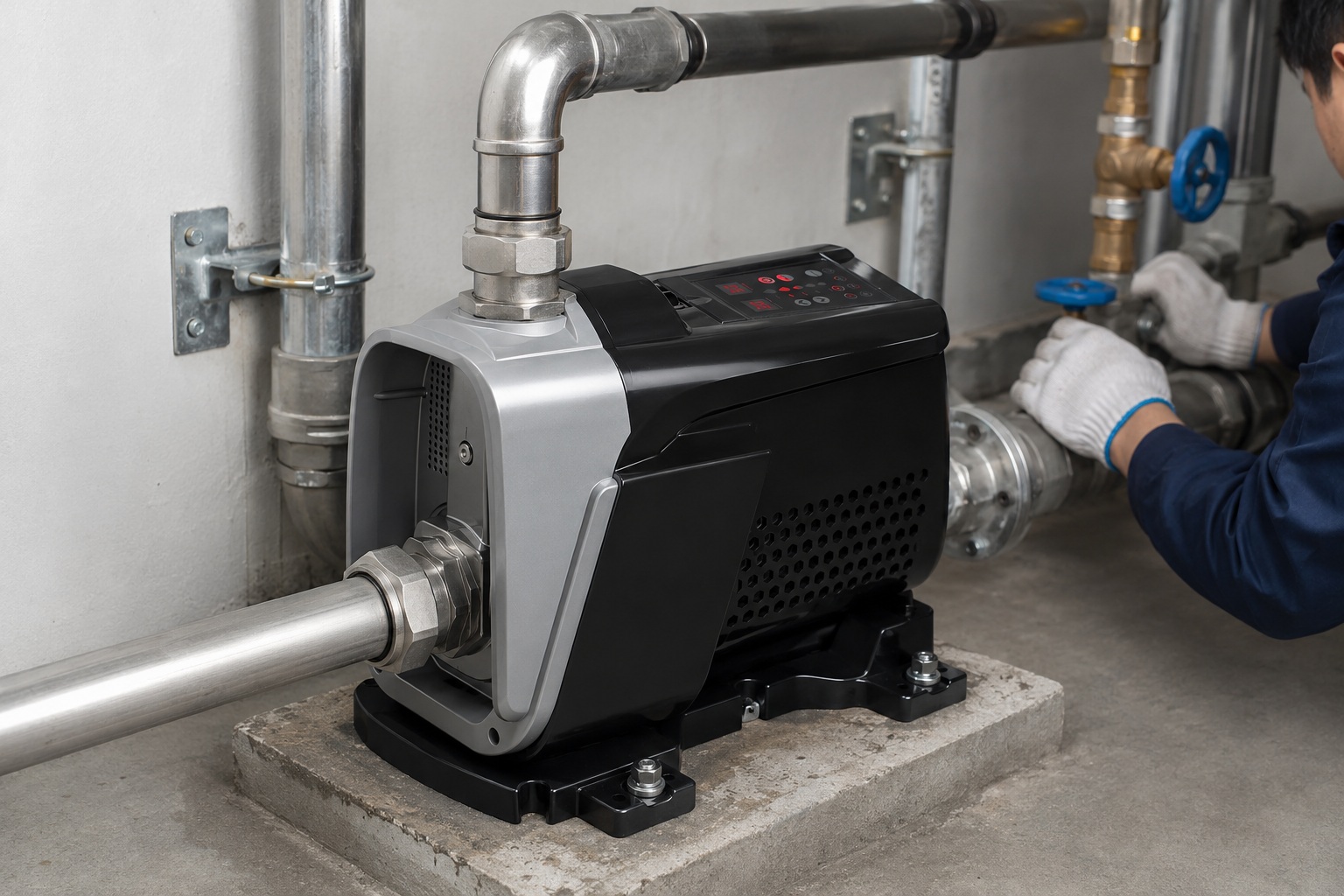
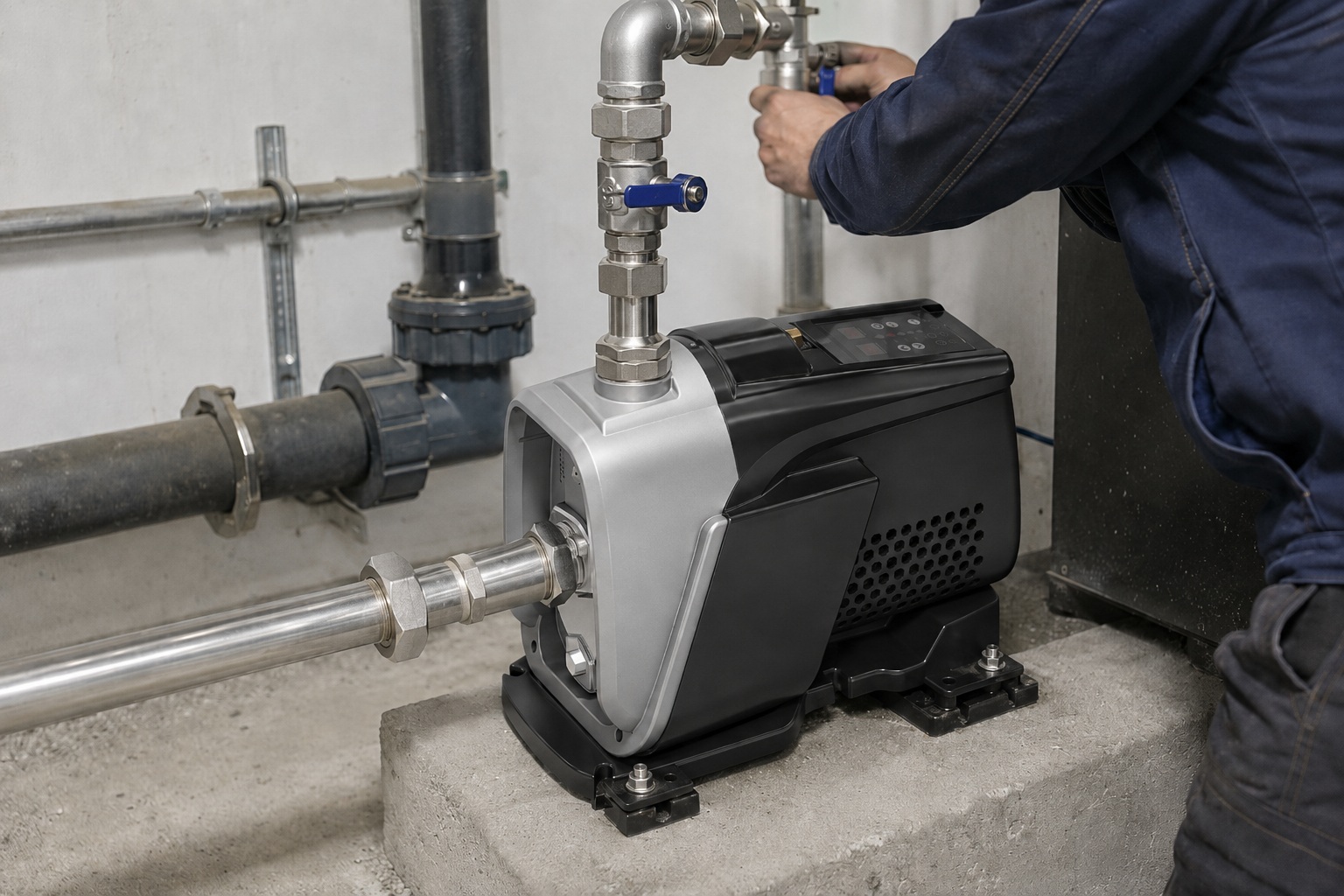
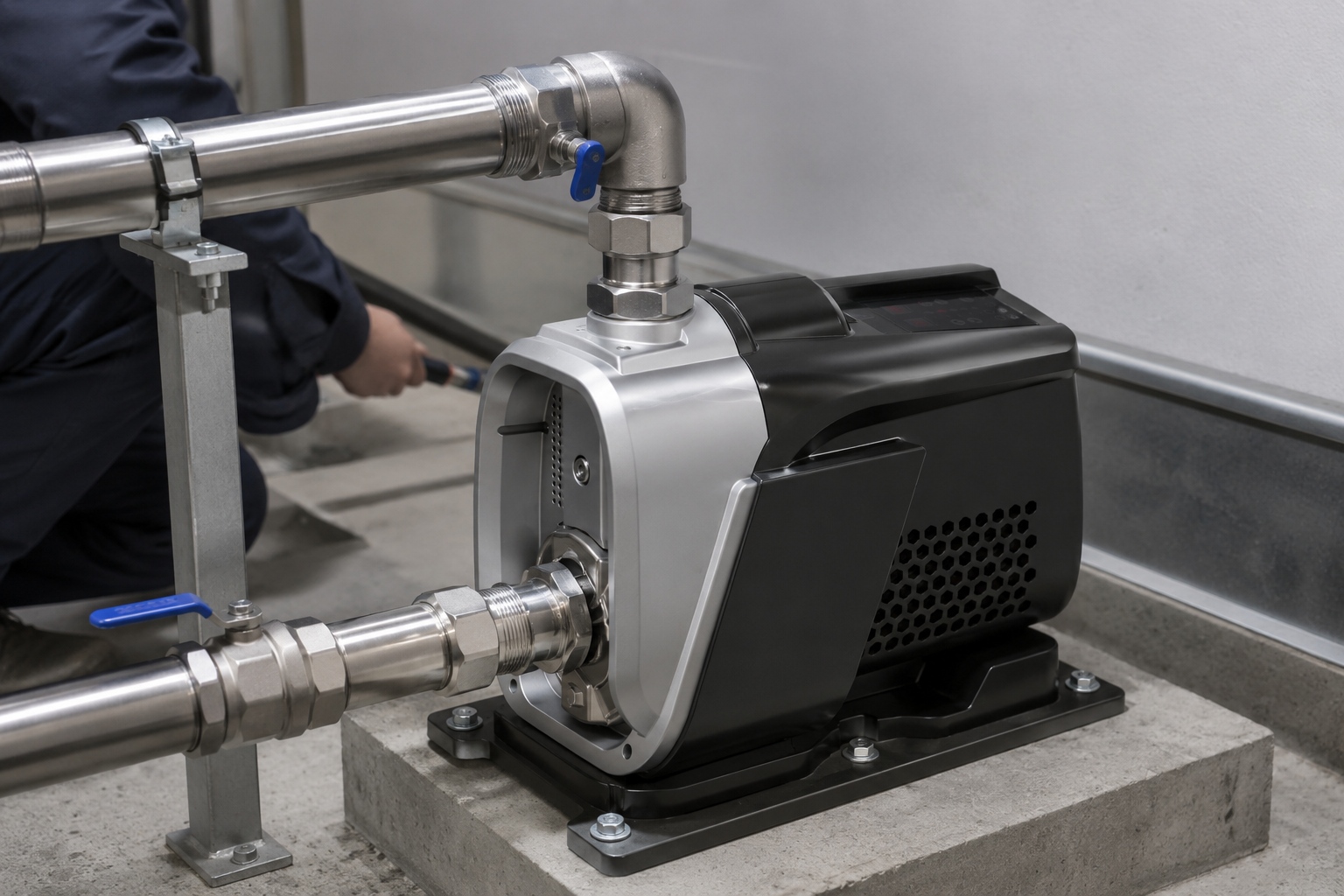
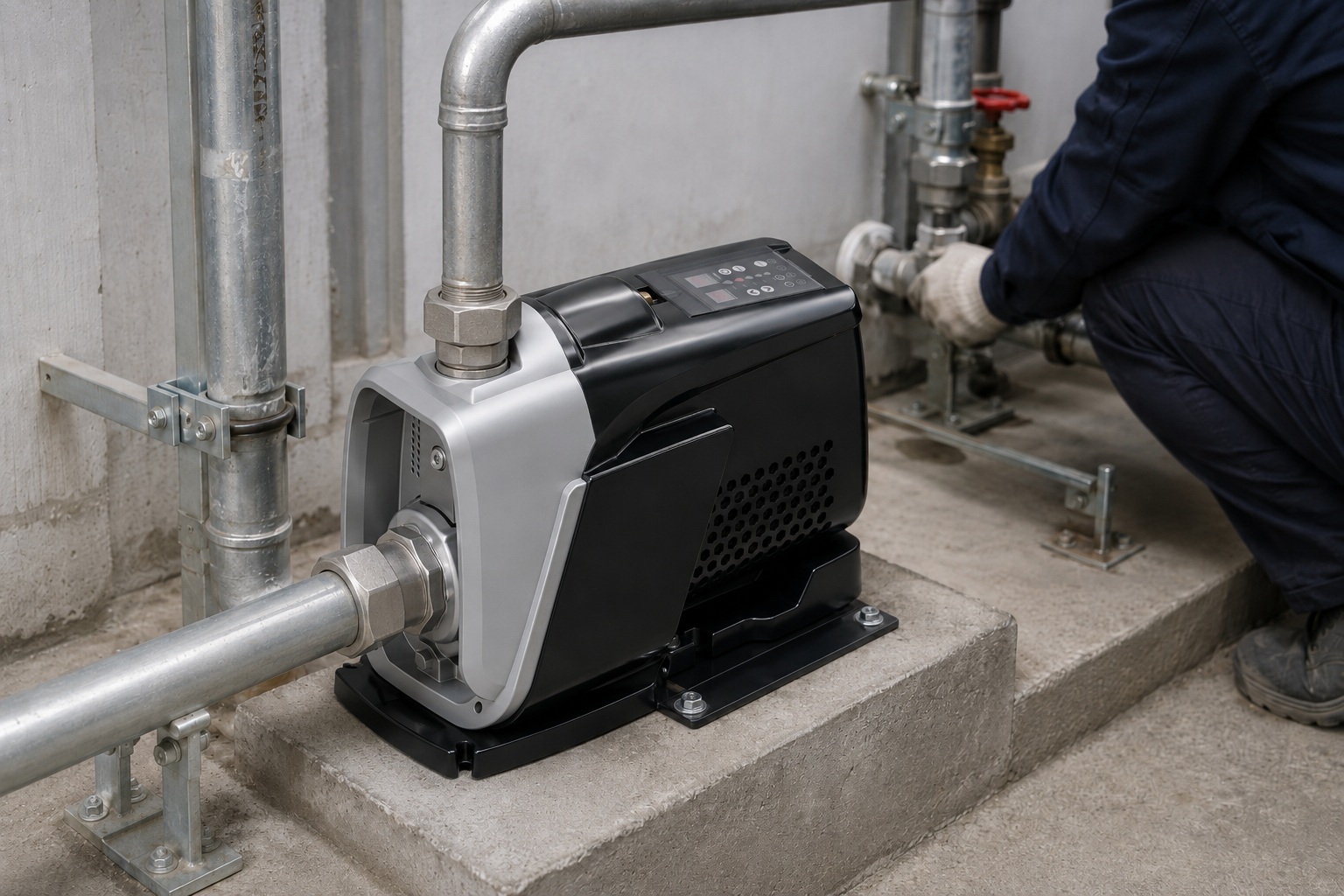
VSD (Variable Frequency Drive) pumps are the best choice for modern residential and commercial applications where constant water pressure and energy efficiency are priorities. By intelligently adjusting motor speed, they eliminate pressure fluctuations and can reduce energy consumption by 30-50% or more compared to fixed-speed pumps.
A VSD pump, also known as a variable speed drive pump, is a game-changer in water management.
While a standard pump operates in a simple on/off state, a VSD pump is much smarter.
It integrates a pressure sensor and an intelligent controller (the VSD).
The pressure sensor continuously monitors the pressure in your plumbing system.
When you open a tap, the pressure begins to drop.
The sensor detects this drop and signals the VSD controller.
The controller then increases the speed of the pump's motor just enough to maintain the pre-set pressure.
If you open another tap, the pump speeds up more.
When you close all the taps, the pump slows down and then stops.
This intelligent operation ensures you always have consistent, powerful water pressure.
The Energy Saving Advantage
The primary benefit of a VSD pump is its incredible energy efficiency.
A fundamental principle of pump physics is the Pump Affinity Laws.
These laws state that the power consumed by a pump is proportional to the cube of its speed.
This means a small reduction in speed leads to a massive reduction in power consumption.
For example, reducing the pump's speed by just 20% can reduce its energy use by nearly 50%.
Since most households have fluctuating water demand, a fixed-speed pump runs at 100% power even for small tasks.
A VSD pump, however, only uses the exact amount of energy needed at any given moment.
VSD vs. Traditional Pressure Tank System
Traditional systems use a large pressure tank to manage pressure.
The pump fills the tank to a high-pressure cut-off point and then shuts off.
As you use water, the pressure in the tank drops until it hits a low-pressure cut-on point, and the pump violently starts again.
This leads to noticeable pressure fluctuations.
Let's compare the two systems.
| Feature | Traditional System (with Pressure Tank) | VSD Pump System |
|---|---|---|
| Pressure | Fluctuates between high and low setpoints | Perfectly constant and stable |
| Energy Use | High; pump always runs at full speed | Low; pump speed matches demand |
| Component Wear | High stress from frequent on/off cycles | Soft starts reduce wear on motor and pipes |
| System Size | Requires a large, bulky pressure tank | Compact, all-in-one unit |
| Noise Level | Loud starts and stops | Much quieter, smoother operation |
Advanced Features and Protections
Modern VSD pumps are packed with intelligent features.
They offer comprehensive protection for the pump and motor.
- Dry-Run Protection: Automatically shuts off the pump if the water source runs dry.
- Over-voltage and Under-voltage Protection: Protects the motor from electrical grid fluctuations.
- Overload Protection: Prevents the motor from burning out if it becomes jammed.
- Leak Detection: Some advanced models can detect small leaks in the plumbing system.
These features make VSD pumps not just efficient, but also extremely reliable and durable.
Conclusion
The "best" water pump is the one tailored to your job.
Assess your needs for flow, pressure, and power source.
This ensures you choose an efficient and reliable solution.
FAQs
What size water pump do I need for my house?
For an average home, a pump providing 10-12 gallons per minute (GPM) is usually sufficient. Consider a VSD booster pump to maintain constant pressure throughout the house, regardless of how many taps are open.
How do I choose between a submersible and a jet pump?
Choose a submersible pump if your well is deeper than 25 feet, as they are more efficient at pushing water from great depths. For shallow wells (less than 25 feet), a jet pump is a viable and often more accessible option.
Are solar water pumps reliable?
Yes, solar water pumps are very reliable, especially in sunny climates. Modern systems are designed to work efficiently even on overcast days and require minimal maintenance, making them a durable off-grid solution.
Can a VSD pump really save me money?
Absolutely. By adjusting its speed to match water demand, a VSD pump can reduce electricity consumption by 30-50% compared to a conventional pump. The savings on your energy bill can lead to a quick return on investment.
What is "pump head"?
Pump head is the height to which a pump can raise water. It's a measure of the pressure a pump can produce and is usually measured in feet or meters. Total Dynamic Head (TDH) includes this vertical lift plus friction loss from pipes.
How long does a water pump last?
A well-maintained, high-quality water pump can last 15 to 20 years. The lifespan depends on the pump type, water quality, and how often it runs. VSD pumps may last longer due to soft starts that reduce mechanical stress.
What is the difference between a booster pump and a well pump?
A well pump, like a submersible or jet pump, draws water from an underground source. A booster pump increases the pressure of water that is already in your plumbing system, improving flow from taps and showers.