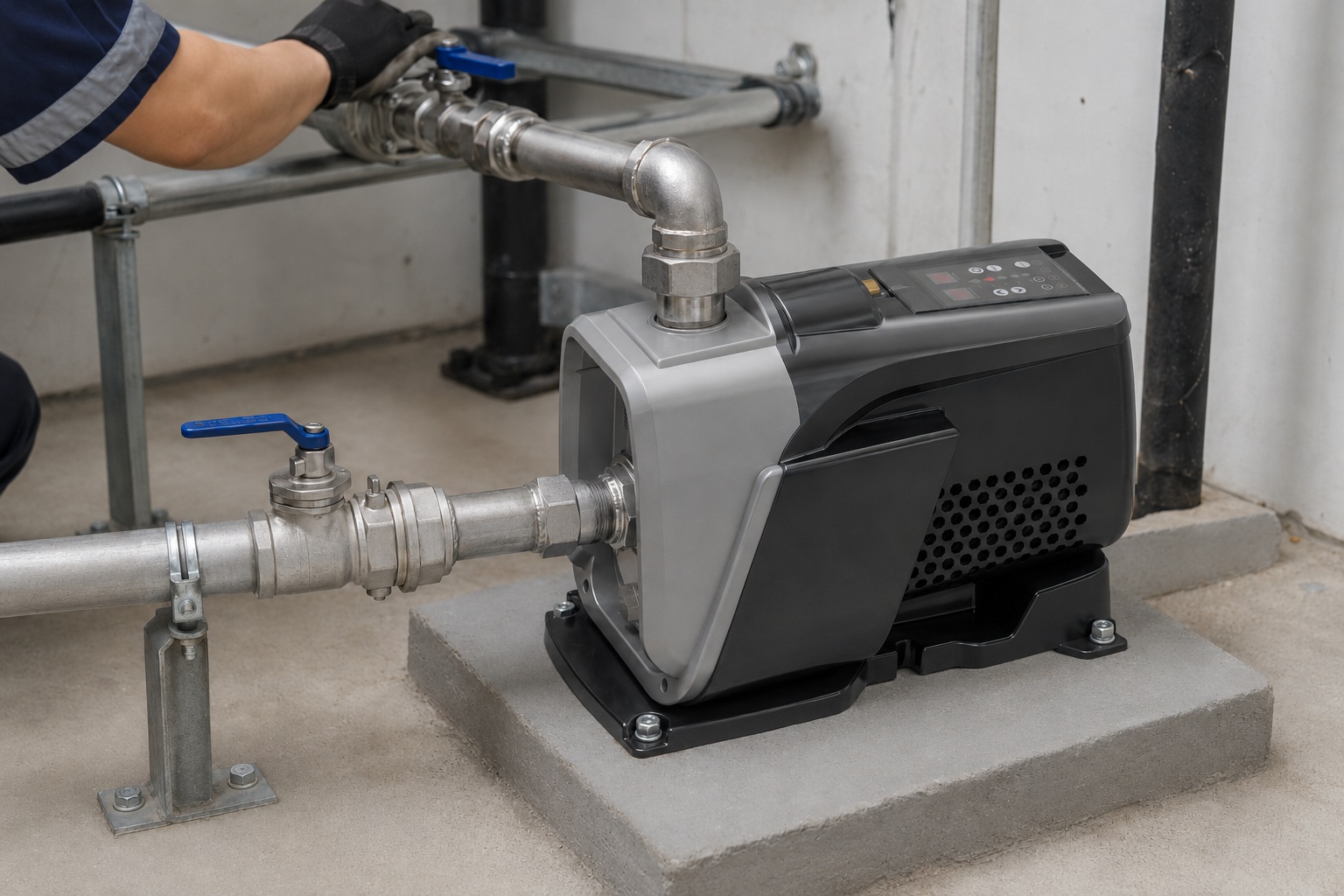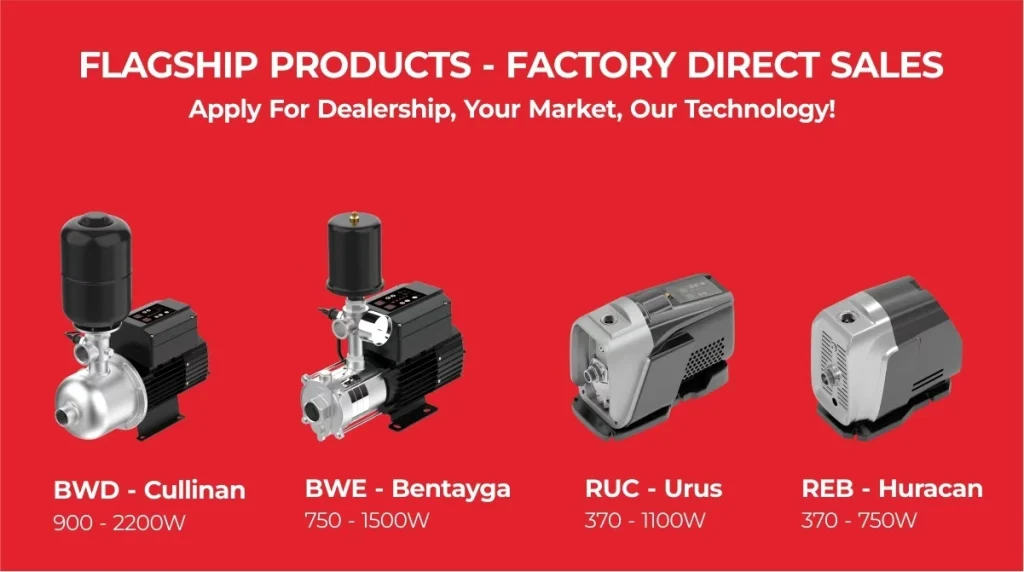
Are you struggling to select the right pump model?
The wrong choice can lead to energy waste and costly failures.
Understanding the most common pump clarifies your options.
Centrifugal pumps are the most commonly used type worldwide.
They account for an estimated 75-80% of all pump installations.
Their widespread use stems from a simple design, operational versatility, and cost-effectiveness for a vast range of applications, from domestic water supply to large-scale industrial processes.
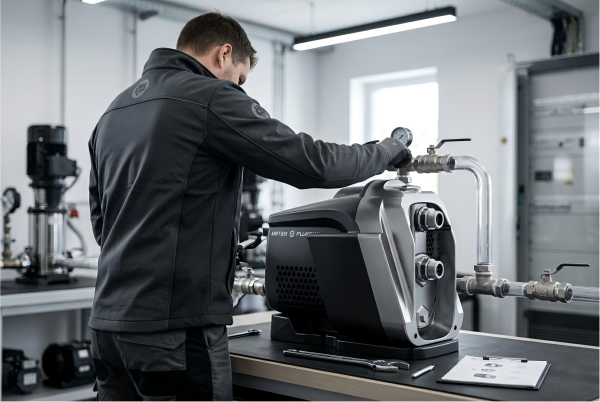
Choosing the right pump is critical for any system’s success.
A pump is the heart of many fluid transfer operations.
Its performance directly impacts efficiency, reliability, and operating costs.
While one type dominates the market, it isn’t always the perfect solution for every unique scenario.
Understanding why this pump is so popular—and what the alternatives are—is the first step toward making an informed purchasing decision for your business.
This guide will break down the most common pump type, explore its variations, and help you identify when a different solution might be necessary for optimal performance.
Let’s dive into the details to ensure you choose the best equipment for your needs.
Why Are Centrifugal Pumps So Dominant?
Does the popularity of one pump type seem surprising?
Relying on a less common type might mean limited support and higher costs.
Understanding the dominance of centrifugal pumps gives you a reliable starting point.
The dominance of centrifugal pumps is due to their simple design, high efficiency, and wide adaptability.
They offer a smooth, non-pulsating flow and can handle various fluids, from water to low-viscosity chemicals.
Their reliability and lower maintenance costs make them the economic choice for over 75% of global applications.
The principle behind a centrifugal pump is straightforward yet highly effective.
Liquid enters the pump at the center of a rotating component called an impeller.
The impeller has curved vanes that spin rapidly.
This rotation flings the liquid outwards due to centrifugal force.
As the liquid is thrown to the outside, its speed (kinetic energy) increases.
The liquid then moves from the impeller into a volute casing or a diffuser.
This casing is specially shaped to slow down the fluid.
Slowing the fluid converts its kinetic energy into pressure energy.
This pressure is what pushes the fluid through the piping system.
This simple mechanism has very few moving parts, which is a major reason for its popularity.
Fewer parts mean less wear and tear, leading to higher reliability and reduced maintenance schedules.
Statistical data from industrial maintenance reports consistently shows that centrifugal pumps have a Mean Time Between Failures (MTBF) that is up to 50% longer than many positive displacement pump types under similar operating conditions.
Key Advantages Driving Adoption
The widespread adoption isn’t accidental.
It’s driven by a powerful combination of features that benefit users across all sectors.
From small residential units to massive industrial complexes, these benefits are clear.
- Cost-Effectiveness: The manufacturing process is relatively simple. This results in a lower initial purchase price compared to more complex pump designs.
- High Flow Rates: Centrifugal pumps are unmatched in their ability to move large volumes of fluid efficiently. This makes them ideal for applications like irrigation, municipal water supply, and large-scale chemical processing.
- Smooth Flow: The rotating action of the impeller produces a steady, uniform flow. This is a significant advantage over reciprocating pumps that can create pressure pulsations in the system.
- Versatility: These pumps can be designed to handle a wide range of liquids. They can move water, thin fuels, chemicals, and even some slurries, as long as viscosity is relatively low.
- Scalability: The design can be scaled easily. It works for small, fractional horsepower pumps for home use and for enormous multi-megawatt pumps used in power plants or pipelines.
A Look at the Numbers
The market data confirms this dominance.
Global pump market analysis reports consistently place centrifugal pumps as the largest segment.
They often capture over 75% of the total market revenue.
For general water and wastewater applications, this figure can climb to over 90%.
This market share is a testament to their robust and versatile design.
| Feature | Centrifugal Pumps | Positive Displacement Pumps |
|---|---|---|
| Primary Function | High Flow, Moderate Pressure | High Pressure, Precise Flow |
| Flow Rate | Varies with pressure | Relatively constant |
| Best For | Low-viscosity fluids (e.g., water) | High-viscosity fluids (e.g., oil, slurry) |
| Initial Cost | Generally Lower | Generally Higher |
| Maintenance | Lower | Higher |
| Market Share | ~75-80% | ~20-25% |
This overwhelming preference in the market ensures a wide availability of spare parts and experienced technicians.
It creates a positive feedback loop that solidifies the centrifugal pump’s position as the industry standard.
What Are the Main Types of Centrifugal Pumps?
Do you think all centrifugal pumps are the same?
Choosing the wrong sub-type can lead to poor performance and premature failure.
Learning the main types helps you match the pump to the specific job.
The main types of centrifugal pumps are categorized by their impeller design and casing.
Key types include end-suction, submersible, multi-stage, and self-priming pumps.
Each is engineered for specific applications, from simple water transfer to high-pressure boiler feed or deep-well extraction.
While all centrifugal pumps operate on the same core principle, their physical design can vary significantly.
These variations are not just for show.
They are specific engineering solutions designed to solve different operational challenges.
The configuration of the pump’s casing, the number and type of impellers, and its orientation all play a crucial role in its performance characteristics.
For example, the choice between a horizontal and a vertical pump often comes down to the available floor space.
Vertical pumps can have a much smaller footprint, which is a critical factor in crowded industrial facilities or offshore platforms where space is a premium.
Understanding these categories is essential for anyone involved in sourcing, installing, or operating pumping systems.
It ensures that the selected equipment is not just adequate, but optimal for the task.
Categorization Based on Impeller Design
The impeller is the heart of the pump.
Its design is the single most important factor determining the pump’s performance.
- Open Impeller: The vanes are visible and attached to a central hub. These are best for liquids with suspended solids, like slurries or wastewater, as they are less likely to clog. Their efficiency is typically 10-15% lower than enclosed designs.
- Semi-Open Impeller: These have a back wall (shroud) that adds mechanical strength. They maintain good solids-handling capability while offering better efficiency than open impellers.
- Enclosed Impeller: The vanes are sandwiched between two shrouds. This is the most efficient design (often achieving over 85% hydraulic efficiency) and is used for clear, low-viscosity liquids. It is the standard for most water-moving applications.
Common Configurations and Their Uses
The physical construction of the pump housing and motor assembly defines its application range.
These configurations are designed to meet specific installation and operational needs.
End-Suction Pumps
This is the most common configuration.
The suction nozzle is on the opposite side of the casing from the motor.
The discharge nozzle is typically positioned on top.
They are widely used in commercial buildings for HVAC systems and in industrial settings for general water transfer.
Their simple, robust design makes them a cost-effective choice for thousands of applications.
Submersible Pumps
As the name suggests, the entire pump assembly, including the motor, is designed to be fully submerged in the fluid.
The motor is sealed in a watertight housing.
This design is highly efficient because it uses the pressure of the surrounding water to help push liquid into the pump, eliminating the need for priming.
They are the standard for deep well water extraction, sump drainage, and wastewater treatment.
More than 95% of deep well applications rely on submersible pump technology.
Multi-Stage Pumps
These pumps contain two or more impellers within a single casing.
The fluid is discharged from one impeller and immediately enters the suction of the next.
Each stage adds more pressure to the fluid.
This design is used to generate very high pressures for applications like boiler feed water, reverse osmosis, and high-rise building water supply.
A multi-stage pump can achieve pressures 2 to 10 times higher than a single-stage pump with the same flow rate.
| Pump Configuration | Typical Application | Key Feature |
|---|---|---|
| End-Suction | General water transfer, HVAC | Simple, common, cost-effective |
| Submersible | Deep wells, sump pits, wastewater | Hermetically sealed, self-priming |
| Multi-Stage | High-pressure systems, boiler feed | Multiple impellers to build pressure |
| Self-Priming | Pumping from below pump level | Can evacuate air from suction line |
When Should You Choose a Different Pump Type?
Is a centrifugal pump always the right answer?
Forcing one to work in the wrong application causes inefficiency and rapid wear.
Knowing the limits of centrifugal pumps is key to avoiding costly mistakes.
You should choose a different pump type, like a positive displacement pump, when dealing with high-viscosity fluids, requiring precise dosing, or needing to generate very high pressures at low flow rates.
Centrifugal pump efficiency drops sharply with thick fluids, making them unsuitable for oil, sludge, or syrups.
The dominance of centrifugal pumps can sometimes lead to their misapplication.
They are masters of moving low-viscosity fluids at high flow rates.
However, they have clear limitations.
When the application parameters fall outside their ideal operating window, their performance plummets.
Forcing a centrifugal pump to handle thick, viscous liquids is like asking a race car to plow a field.
It will struggle, waste enormous amounts of energy, and fail quickly.
The impeller is designed to "fling" fluid, but it can’t effectively grip and move thick substances.
This results in a process called "slip," where the impeller spins but the fluid barely moves, converting most of the motor’s energy into heat instead of flow.
This is where an entirely different pumping principle becomes necessary.
Understanding these boundaries is just as important as understanding the strengths of centrifugal pumps.
The Challenge of Viscosity
Viscosity is a measure of a fluid’s resistance to flow.
Water has a viscosity of 1 centipoise (cP).
Honey, in contrast, can have a viscosity of over 2,000 cP.
Centrifugal pump performance is rated using water.
As viscosity increases, the efficiency of a centrifugal pump decreases dramatically.
- At 100 cP: Pump efficiency might drop by 20-30%.
- At 500 cP: Efficiency can be cut by more than 50%.
- Above 1,000 cP: A centrifugal pump is often completely unusable.
For these applications, you need a positive displacement (PD) pump.
PD pumps trap a fixed amount of fluid and force it through the discharge pipe.
Their performance is largely unaffected by viscosity.
Situations Demanding a Positive Displacement Pump
There are several clear indicators that a centrifugal pump is the wrong tool for the job.
If your application involves any of the following, a positive displacement pump is almost certainly the better choice.
High-Viscosity Fluids
This is the most common reason to choose a PD pump.
They are ideal for pumping oils, resins, molasses, sludges, and food products like tomato paste.
Their mechanism physically pushes the fluid, overcoming its internal resistance.
Precise Dosing or Metering
PD pumps deliver a fixed volume of fluid with each revolution.
This makes them perfect for applications where exact quantities are required, such as chemical injection, pharmaceutical production, or food and beverage additive systems.
The flow rate of a PD pump is directly proportional to its speed, making it highly controllable and accurate, often with a precision of +/- 1%.
High Pressure, Low Flow
Centrifugal pumps are inefficient at creating high pressure when the flow rate is low.
PD pumps, on the other hand, excel in these conditions.
They can generate very high pressures regardless of the flow rate.
This makes them suitable for applications like hydraulic systems and high-pressure cleaning.
Need for Self-Priming
While some special centrifugal pumps are self-priming, most are not.
They cannot evacuate air from their suction line on their own.
Many PD pump designs, such as diaphragm or peristaltic pumps, are inherently self-priming and can handle significant amounts of entrained gas or air.
| Condition | Recommended Pump Type | Reason |
|---|---|---|
| High Viscosity (>500 cP) | Positive Displacement | Centrifugal pumps lose efficiency and fail to move thick liquids. |
| Precise Metering | Positive Displacement | Delivers a fixed volume per revolution for high accuracy. |
| High Pressure & Low Flow | Positive Displacement | Maintains high pressure even when flow rate is minimal. |
| Delicate or Shear-Sensitive Fluids | Positive Displacement (e.g., Lobe, Peristaltic) | The gentle pumping action prevents damage to the fluid structure. |
| Large Volume & Low Viscosity | Centrifugal | Most efficient and cost-effective solution for these conditions. |
Key Factors in Selecting the Right Pump
Are you worried about making the final pump selection?
Overlooking a single critical factor can lead to system-wide problems.
A systematic approach ensures you consider all variables for a successful outcome.
The key factors in selecting a pump are flow rate, total head (pressure), fluid properties (viscosity, temperature, corrosivity), and material compatibility.
Analyzing these four core parameters methodically will guide you to a reliable and efficient pump selection, preventing costly operational issues.
Selecting the right pump goes beyond simply knowing the most common type.
It’s a technical decision that requires a careful analysis of the system’s requirements.
The goal is to choose a pump that not only meets the performance needs but also does so with maximum efficiency and reliability.
This means finding a pump that operates at or near its Best Efficiency Point (BEP).
The BEP is the point on the pump’s performance curve where it uses the least amount of energy to move the most fluid.
Operating a pump far from its BEP leads to wasted energy, increased vibration, and a significantly shorter lifespan for components like seals and bearings.
Studies by pump system auditors have shown that improperly sized pumps can waste 20-40% of the energy they consume.
A thorough evaluation process protects your investment and minimizes long-term operating costs.
The Four Core Selection Pillars
To ensure a successful pump installation, you must accurately define the following four parameters.
These are the fundamental data points needed to read a pump curve and make a proper selection.
1. Required Flow Rate (Q)
This is the volume of fluid you need to move in a given amount of time.
It is typically measured in gallons per minute (GPM), cubic meters per hour (m³/h), or liters per second (L/s).
This is usually determined by the process requirement, like the time needed to fill a tank or the circulation rate needed for a cooling system.
2. Total Head (H)
This is the total pressure the pump must generate to overcome the system’s resistance.
It is a measure of the total energy added to the fluid.
Head is a combination of three factors:
- Static Head: The vertical height difference between the source and destination of the fluid.
- Friction Head: The pressure lost due to friction as the fluid moves through pipes, valves, and fittings. This increases with flow rate and pipe length.
- Pressure Head: Any additional pressure required at the discharge point, for example, to spray the fluid or inject it into a pressurized vessel.
Understanding the Fluid
The fluid itself dictates many aspects of the pump choice.
Its properties have a direct impact on performance and material selection.
3. Fluid Properties
- Viscosity: As discussed, this is critical. It’s the primary factor in the centrifugal vs. positive displacement decision.
- Temperature: High temperatures can affect pump materials, clearances, and seal performance. It may require special cooling arrangements or high-temperature materials.
- Corrosivity and Abrasiveness: The chemical nature of the fluid determines which materials are suitable for the pump’s wetted parts. Using the wrong material, like cast iron for an acidic fluid, will lead to rapid failure. Abrasive solids require hardened materials to resist wear.
- Specific Gravity: The density of the fluid relative to water. A fluid heavier than water will require more power to pump at the same flow and head.
4. Material Compatibility and Construction
Once the fluid properties are known, you can select the pump’s materials.
This is a critical step for ensuring long service life.
| Fluid Type | Common Material Recommendation | Rationale |
|---|---|---|
| Fresh Water | Cast Iron, Bronze | Cost-effective and resistant to minor corrosion. |
| Seawater | Stainless Steel (316), Duplex Steel, Bronze | Excellent resistance to chloride corrosion. |
| Acids/Alkalis | Stainless Steel, High-Alloy Metals, Lined Polymers (e.g., PTFE) | Resistance to chemical attack. |
| Abrasive Slurries | Hardened Iron, Rubber-Lined Casing | Resistance to wear and erosion. |
By systematically working through these four areas—Flow, Head, Fluid Properties, and Materials—you build a complete profile of your application.
This data-driven approach removes guesswork.
It allows you to confidently select a pump that will perform reliably and efficiently for years to come.
Conclusion
In summary, centrifugal pumps are the most common type.
They are ideal for moving large volumes of low-viscosity fluids efficiently.
Choose wisely based on your specific application needs.
FAQs
What are the 2 main types of pumps?
The two main classifications are centrifugal pumps and positive displacement pumps.
Centrifugal pumps use a spinning impeller, while positive displacement pumps trap and force fluid.
What is the difference between a pump and a motor?
A pump moves fluid, while a motor converts electrical energy into mechanical motion.
A motor is often used to power a pump.
Why do centrifugal pumps need priming?
Most centrifugal pumps need priming to remove air from the casing.
The impeller is designed to pump liquid, not air, and cannot create suction otherwise.
Which pump is used for high pressure?
Positive displacement pumps, like piston or plunger pumps, are best for high pressure.
Multi-stage centrifugal pumps can also generate high pressures.
Can a centrifugal pump run dry?
No, a centrifugal pump should not run dry.
Running without liquid will cause the mechanical seal to overheat and fail quickly due to lack of lubrication.
How do I increase the pressure of my water pump?
You can increase pressure by increasing the pump’s speed, using a larger diameter impeller, or switching to a multi-stage pump designed for higher head.
What is pump cavitation and why is it bad?
Cavitation is the formation and collapse of vapor bubbles inside a pump.
This is bad because it causes noise, vibration, and severe damage to the impeller.
What is a pump performance curve?
A pump curve is a graph showing the pump’s performance.
It plots flow rate against head, efficiency, and power consumption, helping you select the right operating point.