Struggling with inconsistent cooling and high fuel costs?
Your engine’s performance and longevity are at risk with outdated mechanical pumps.
Yes, in most modern applications, electric water pumps are demonstrably better.
They provide superior cooling efficiency, precise flow control, and reduced engine load.
This leads to improved fuel economy, increased horsepower, and enhanced reliability compared to traditional mechanical pumps.
To truly understand why electric water pumps are gaining widespread adoption, we need to move beyond a simple "yes" or "no" answer.
The advantages are not just marginal; they represent a fundamental shift in how we manage thermal efficiency in various systems.
Let’s dive deep into the specific aspects of performance, reliability, and cost to see the complete picture.
This exploration will reveal why making the switch is not just an upgrade, but a strategic investment in efficiency and long-term value.
A Closer Look at Efficiency and Performance
Your traditional pump is draining your engine’s power.
This constant parasitic loss wastes fuel and reduces available horsepower, hurting your bottom line.
Electric water pumps operate independently of engine speed.
They eliminate parasitic horsepower loss by up to 85% and can improve fuel economy by 2-5%.
This provides consistent, optimal coolant flow regardless of how fast the engine is running.
The performance advantage of an electric water pump stems from its intelligent design, which decouples it from the engine’s crankshaft.
A traditional mechanical pump is belt-driven, meaning its speed is directly tied to the engine’s RPM.
This creates a significant inefficiency.
At high engine speeds, the mechanical pump spins unnecessarily fast, pumping far more coolant than needed and consuming significant engine power—a phenomenon known as parasitic loss.
Conversely, at engine idle, it spins slowly, sometimes providing insufficient flow for optimal cooling, especially in hot conditions.
Electric pumps solve this problem completely.
The Power of Independent Operation
An electric pump uses its own motor, controlled by an electronic unit.
This allows it to run at the precise speed required to maintain the target temperature, regardless of the engine’s RPM.
It can provide high flow when the engine is idling in traffic on a hot day and reduce flow when cruising on a cool highway, when less cooling is needed.
This intelligent operation prevents overheating, avoids over-cooling, and keeps the engine in its most efficient temperature window.
Quantifying the Gains
The benefits are not just theoretical; they are measurable and significant.
By removing the pump from the engine’s accessory belt drive, you free up horsepower that can be used to move the vehicle or power equipment.
| Feature | Mechanical Pump | Electric Pump | Advantage |
|---|---|---|---|
| Power Source | Engine Belt | Independent Electric Motor | Decoupled from Engine RPM |
| Parasitic Loss | High (e.g., 5-10 hp) | Very Low (e.g., <1 hp) | Frees up ~90% of lost HP |
| Flow at Idle | Low/Inadequate | High/On-Demand | Improved idle cooling |
| Flow at High RPM | Excessive | Optimal/Controlled | Prevents over-cooling & cavitation |
| Fuel Economy | Baseline | Improvement of 2-5% | Significant long-term savings |
Continuous Cooling Advantage
Another critical performance feature is the ability to continue running after the main engine is shut off.
This "run-on" capability is vital for turbo-charged engines, preventing "heat soak" that can damage the turbocharger’s bearings by circulating coolant until it has cooled to a safe temperature.
This feature also benefits hybrid and electric vehicles, where cabin heating or battery cooling is required even when the internal combustion engine is not running.
The precise control and efficiency gains make electric pumps a clear winner in performance.
Analyzing Reliability and Lifespan
A failed mechanical water pump can cause catastrophic engine failure.
Bearing and seal failures due to constant belt tension are common, leading to unexpected downtime and costly repairs.
Electric water pumps have fewer failure points.
With no side-loading from belts and the ability to operate at lower average speeds, their brushless motors and robust seals offer a service life that can exceed 15,000 to 20,000 hours, often outlasting the vehicle itself.
Reliability is arguably the most critical factor for any component, and this is where electric water pumps present a compelling case for an upgrade.
The architecture of a mechanical pump makes it inherently vulnerable to specific types of failures.
It is constantly under tension from the drive belt, which places a significant side-load on its main shaft and bearings.
This continuous stress is a leading cause of premature bearing wear and eventual failure.
Furthermore, the pump’s seal is another common failure point, leading to coolant leaks that can go unnoticed until significant engine damage occurs.
Electric water pumps are engineered to overcome these exact issues.
Designed for Longevity
The design philosophy behind an electric pump prioritizes durability and eliminates the weaknesses of its mechanical counterpart.
- No Side-Loading: Because an electric pump is not belt-driven, its bearings are not subjected to constant radial stress. This single change dramatically increases bearing lifespan.
- Brushless DC Motors: Modern electric pumps use brushless DC (BLDC) motors. These motors have no physical brushes to wear out, making them extraordinarily reliable and efficient, with operational lifespans often rated in the tens of thousands of hours.
- Soft Start Functionality: Electric pumps don’t jolt to life. They feature a "soft start" where the controller gradually ramps up the motor speed. This reduces initial mechanical and electrical stress on the components, further enhancing longevity.
Durability Testing and Standards
Quality electric pumps undergo rigorous validation testing to ensure they can withstand harsh operating environments.
This includes extensive thermal shock, vibration, and salt spray testing to simulate years of real-world use.
| Test Type | Mechanical Pump Weakness | Electric Pump Advantage |
|---|---|---|
| Vibration & Stress | Belt tension magnifies vibration wear | No belt tension; integrated motor dampens vibration. |
| Thermal Cycling | Seals expand/contract, leading to leaks | Advanced seal materials; lower operational stress. |
| Contamination | Leaking seal can introduce coolant to bearings | Sealed motor and electronics compartment. |
| Operational Hours | Typically 60,000 – 100,000 miles | Often rated for 20,000+ hours (equivalent to 500,000+ miles) |
Proactive Failure Detection
Perhaps one of the most innovative reliability features is the pump’s self-diagnostic capability.
The integrated controller continuously monitors motor current, speed, and temperature.
If it detects a problem, such as a blockage or impending motor failure, it can send a fault code to the main system controller.
This allows for proactive maintenance, turning a potential catastrophic failure into a scheduled repair, saving immense costs and preventing secondary damage.
This level of intelligence and robust design makes the electric water pump a far more reliable solution for mission-critical applications.
Understanding Cost vs. Long-Term Value
The initial cost of a cheap mechanical pump seems low.
But frequent replacements, related engine repairs, and poor fuel efficiency add up, creating a much higher total cost of ownership.
An electric water pump has a higher upfront cost.
However, its extended lifespan, elimination of related maintenance (like belt changes), and significant fuel savings result in a lower total cost of ownership and a strong return on investment within 24-36 months.
When evaluating any new technology, it is crucial to look beyond the initial purchase price and consider the Total Cost of Ownership (TCO).
While a standard mechanical water pump might be cheaper to buy off the shelf, its associated costs can quickly accumulate over its service life.
In contrast, an electric water pump, though more expensive upfront, is designed to minimize these long-term expenses, delivering a superior financial return.
Let’s break down the components of TCO for both pump types.
Initial Investment (CapEx)
There is no denying that the capital expenditure for an electric water pump is higher.
This is due to the more complex technology involved, including the brushless motor, the integrated electronic controller, and the higher-grade materials required for long-term reliability.
- Mechanical Pump: Low initial price.
- Electric Pump: 2x to 5x higher initial price.
This initial cost can be a barrier for some, but it is only one part of the financial equation.
Operational Costs (OpEx)
This is where the electric pump starts to show its true value.
- Fuel Savings: As discussed, the elimination of parasitic drag can improve fuel efficiency by 2-5%. For a commercial vehicle or a piece of heavy machinery, this translates into substantial annual savings.
- Maintenance Costs: Mechanical pumps often need to be replaced along with the timing belt, a labor-intensive job. Electric pumps are not tied to this service interval. They require no belt tensioning and often last the life of the vehicle, eliminating multiple replacement cycles.
- Downtime Costs: A failed water pump doesn’t just cost the price of the part; it costs hours or days of lost productivity. The superior reliability of electric pumps means significantly less unplanned downtime, a critical metric for any commercial operation.
A TCO Comparison Model
Let’s imagine a hypothetical scenario for a light commercial vehicle over a 5-year period.
| Cost Factor | Mechanical Pump Scenario | Electric Pump Scenario |
|---|---|---|
| Initial Cost | $100 | $400 |
| Replacements (2) | $200 + $600 Labor | $0 |
| Lost Fuel Efficiency | $800 (@ $160/year) | $0 (Baseline for savings) |
| Risk of Downtime | High (1 potential failure event) | Very Low |
| Total Cost | $1,700 | $400 |
This simplified model shows that over five years, the "cheaper" mechanical option actually costs over four times more than the electric pump when all factors are considered.
The return on investment (ROI) for the electric pump is realized through direct fuel, labor, and parts savings, making it the more fiscally responsible choice for any long-term operator.
Installation and System Integration
Swapping a mechanical pump seems straightforward.
However, it often requires special tools, timing belt alignment, and handling messy coolant, making it a complex and time-consuming job.
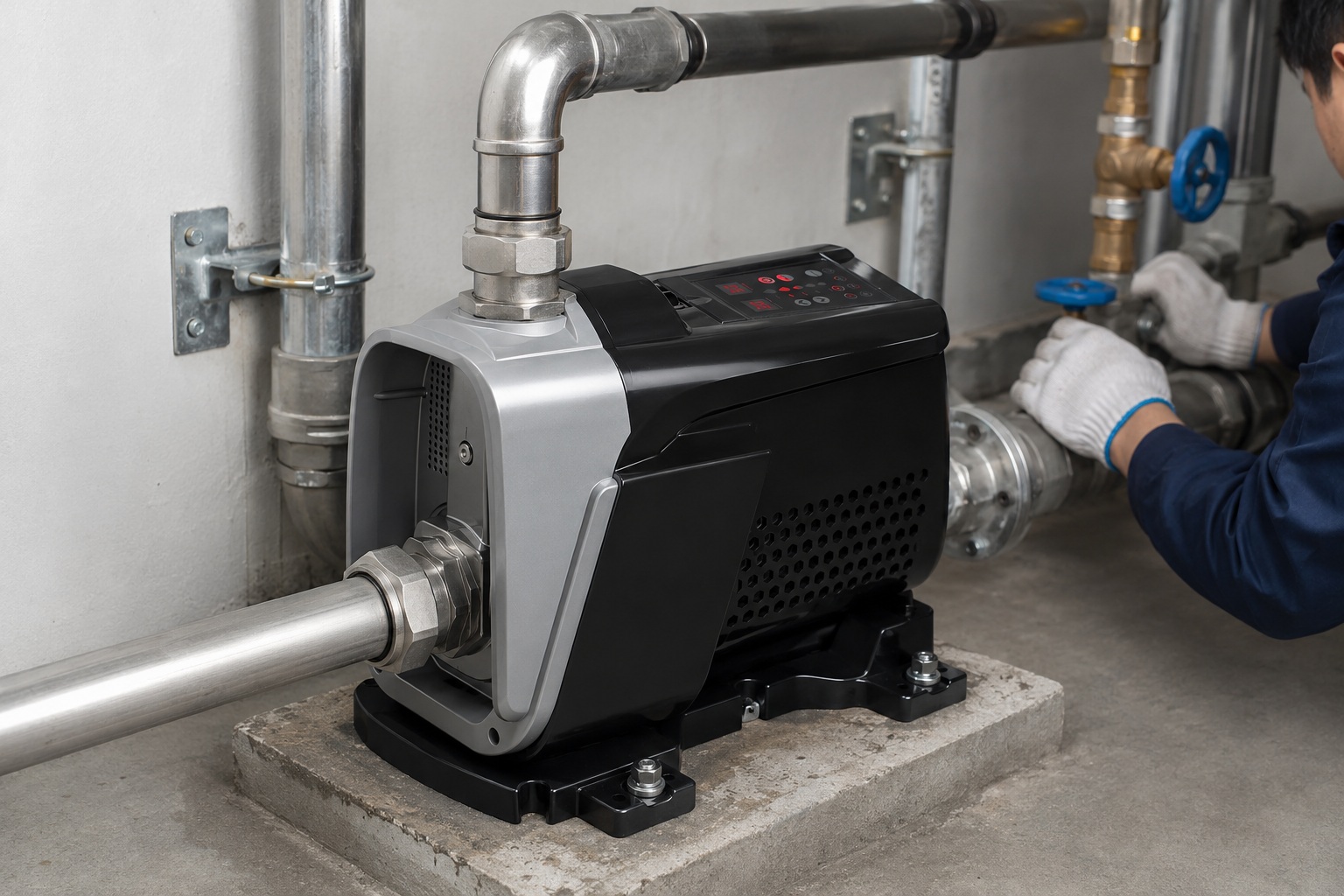
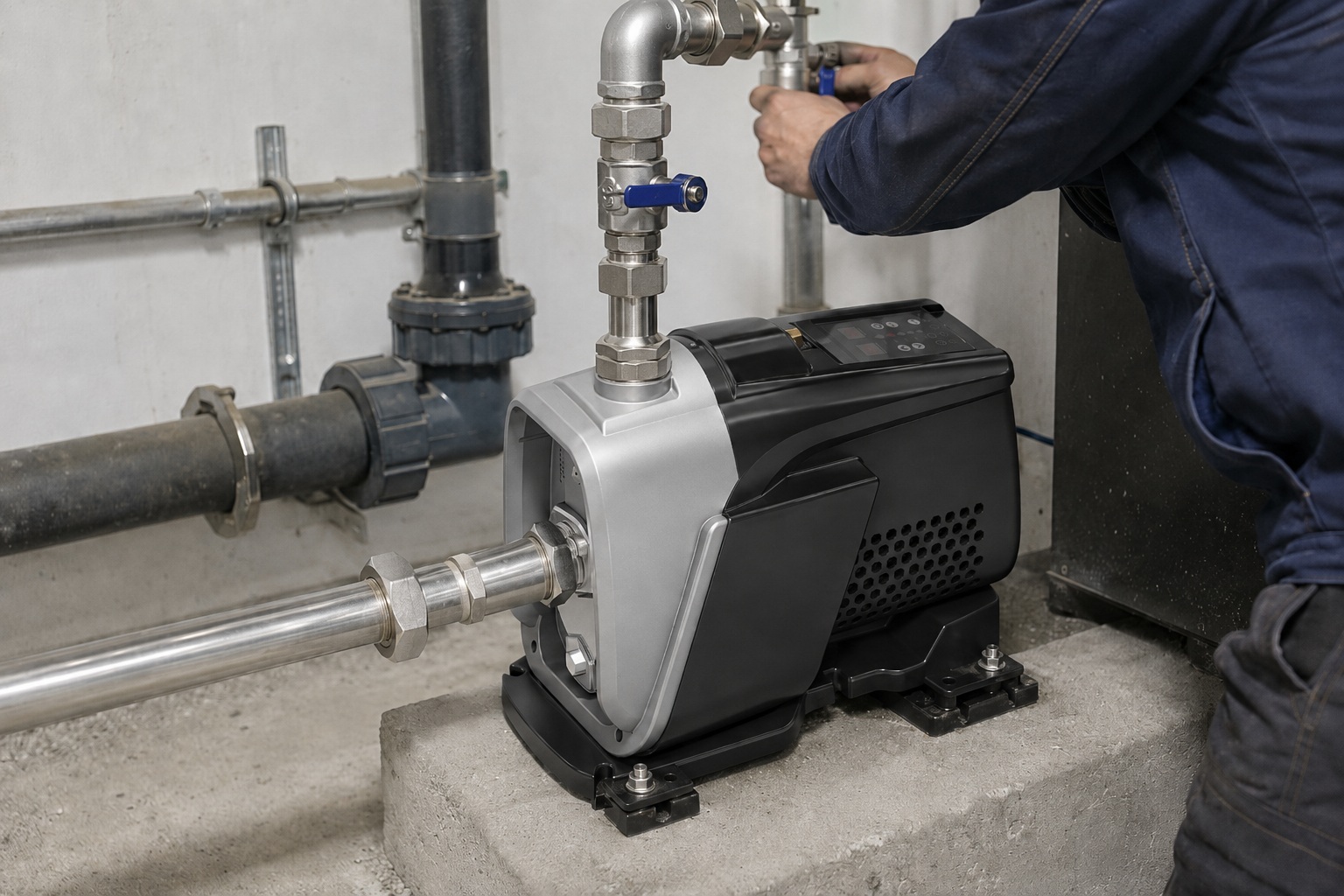
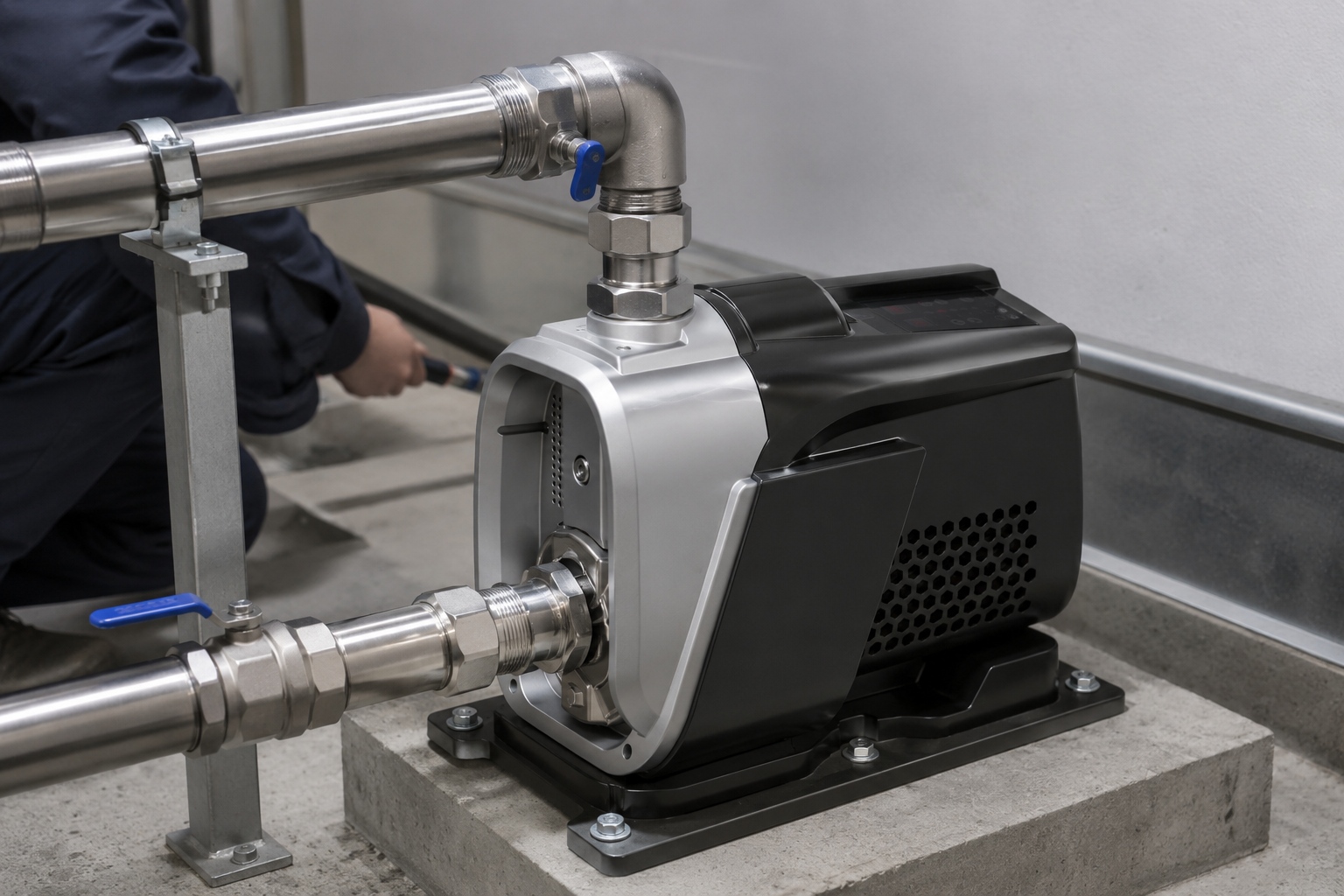
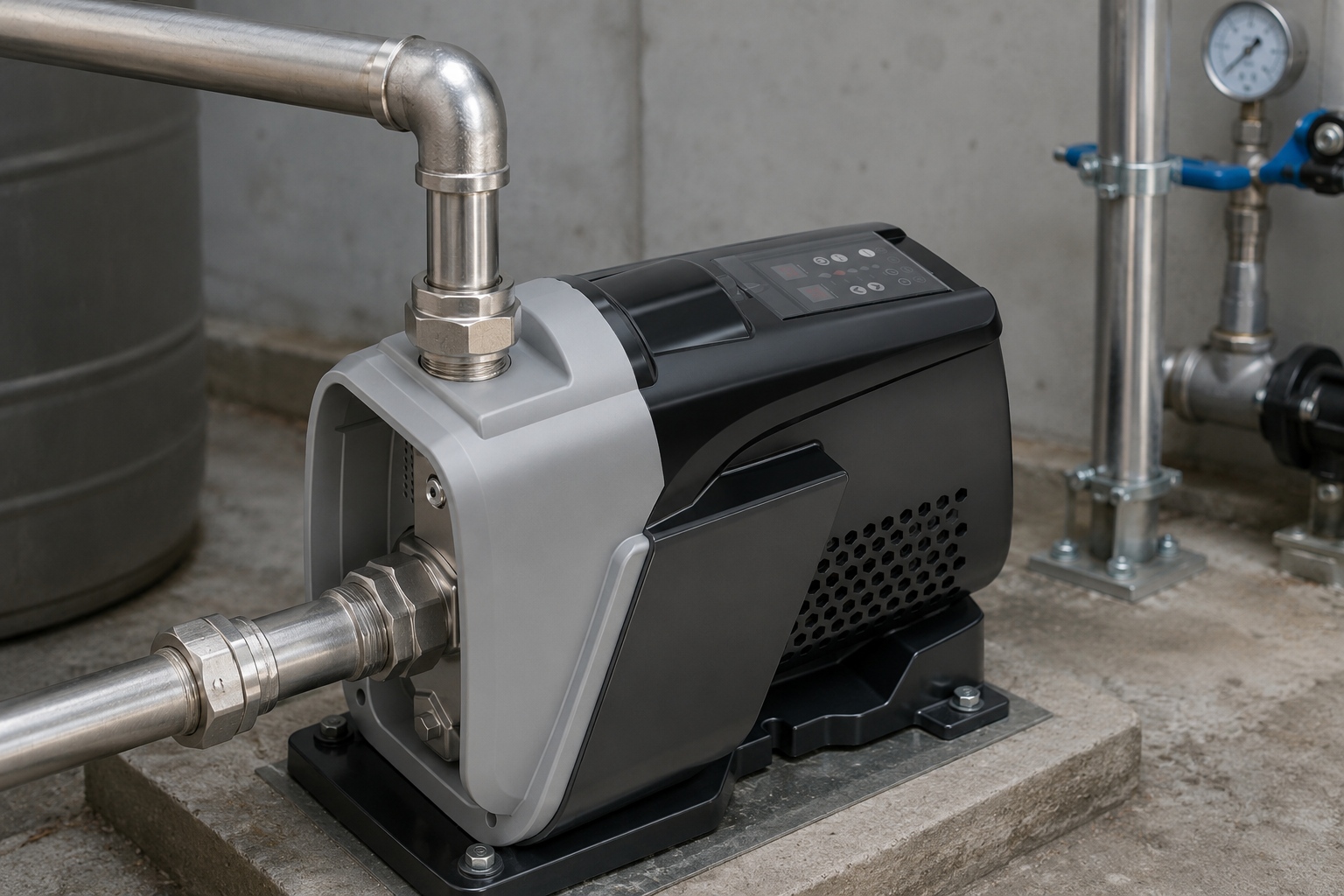
Electric water pumps offer flexible installation.
They can be mounted anywhere in the coolant path, optimizing hose routing and simplifying access. Their simple electrical connections replace complex mechanical linkages, significantly reducing installation and service time.
The physical installation and system integration of an electric water pump highlight its modern design and flexibility, offering significant advantages over the rigid constraints of a mechanical pump.
A mechanical pump’s location is non-negotiable; it must be mounted to the engine block and driven by the accessory belt.
This often places it in a cramped, hard-to-reach location, making replacement a difficult and labor-intensive process that can take several hours.
Electric pumps free designers and technicians from this constraint.
Unlocking Installation Flexibility
The primary advantage is locational freedom.
Since an electric pump only needs a power source and to be spliced into the coolant hoses, it can be mounted virtually anywhere it fits.
- Optimal Placement: Engineers can place the pump at the lowest point in the system to improve priming and avoid air pockets.
- Improved Access: It can be mounted in an easily accessible location, turning a multi-hour replacement job into a task that takes less than an hour.
- Simplified Plumbing: Freedom of placement allows for shorter, more efficient hose routing, reducing the number of potential leak points and improving coolant flow dynamics.
Electrical vs. Mechanical Integration
Integrating a new component into a system is often a challenge.
Electric pumps simplify this process.
| Integration Aspect | Mechanical Pump | Electric Pump | Advantage |
|---|---|---|---|
| Physical Mounting | Fixed to engine block | Flexible bracket mounting | Vastly simpler installation |
| Power Connection | Complex belt system | Simple 2 or 3-pin connector | Reduced complexity and failure points |
| Control System | No control (passive) | CAN bus or PWM signal | Allows for intelligent thermal management |
| Required Tools | Belt tensioners, pulley holders | Basic hand tools, wire crimpers | No specialized equipment needed |
CAN Bus and Smart Control
The most advanced electric pumps integrate seamlessly into a vehicle’s or system’s Controller Area Network (CAN bus).
This allows the pump to communicate directly with the main engine control unit (ECU).
The ECU can then command the pump to deliver a precise flow rate based on a multi-dimensional map that considers engine speed, load, coolant temperature, ambient temperature, and even vehicle speed.
This level of sophisticated, a "smart" system, is impossible with a purely mechanical device.
It ensures the entire system operates at peak efficiency under all possible conditions, from a cold start on a winter morning to pulling a heavy load up a steep grade in the summer heat.
This ease of installation and advanced integration capability are key reasons why electric pumps are the standard for high-performance and high-efficiency applications.
Conclusion
Electric water pumps are superior in efficiency, reliability, and control.
They reduce fuel consumption, increase horsepower, and offer a lower total cost of ownership, making them a wise investment.
FAQs
Can you replace a mechanical water pump with an electric one?
Yes, you can. It requires removing the old pump, blocking its port, and wiring the new electric pump into the coolant hoses and a power source.
Are electric water pumps reliable?
High-quality electric pumps are very reliable. Their brushless motors and lack of belt tension mean they often outlast the engine they are cooling.
How long does an electric water pump last?
Many electric water pumps are rated for 15,000 to 20,000 operating hours or more, which is often longer than the lifespan of the vehicle itself.
What are the disadvantages of an electric water pump?
The main disadvantages are a higher initial purchase cost and a reliance on the vehicle’s electrical system. A failure in the electrical supply can disable the pump.
Do electric water pumps use a lot of power?
No, they are very efficient. An average automotive electric water pump draws between 10 and 15 amps at full speed, far less power than the engine horsepower consumed by a mechanical pump.
Can an electric water pump run continuously?
Yes, they are designed for continuous duty. Their controllers constantly adjust speed to meet cooling demands, which enhances their longevity by avoiding unnecessary high-speed operation.