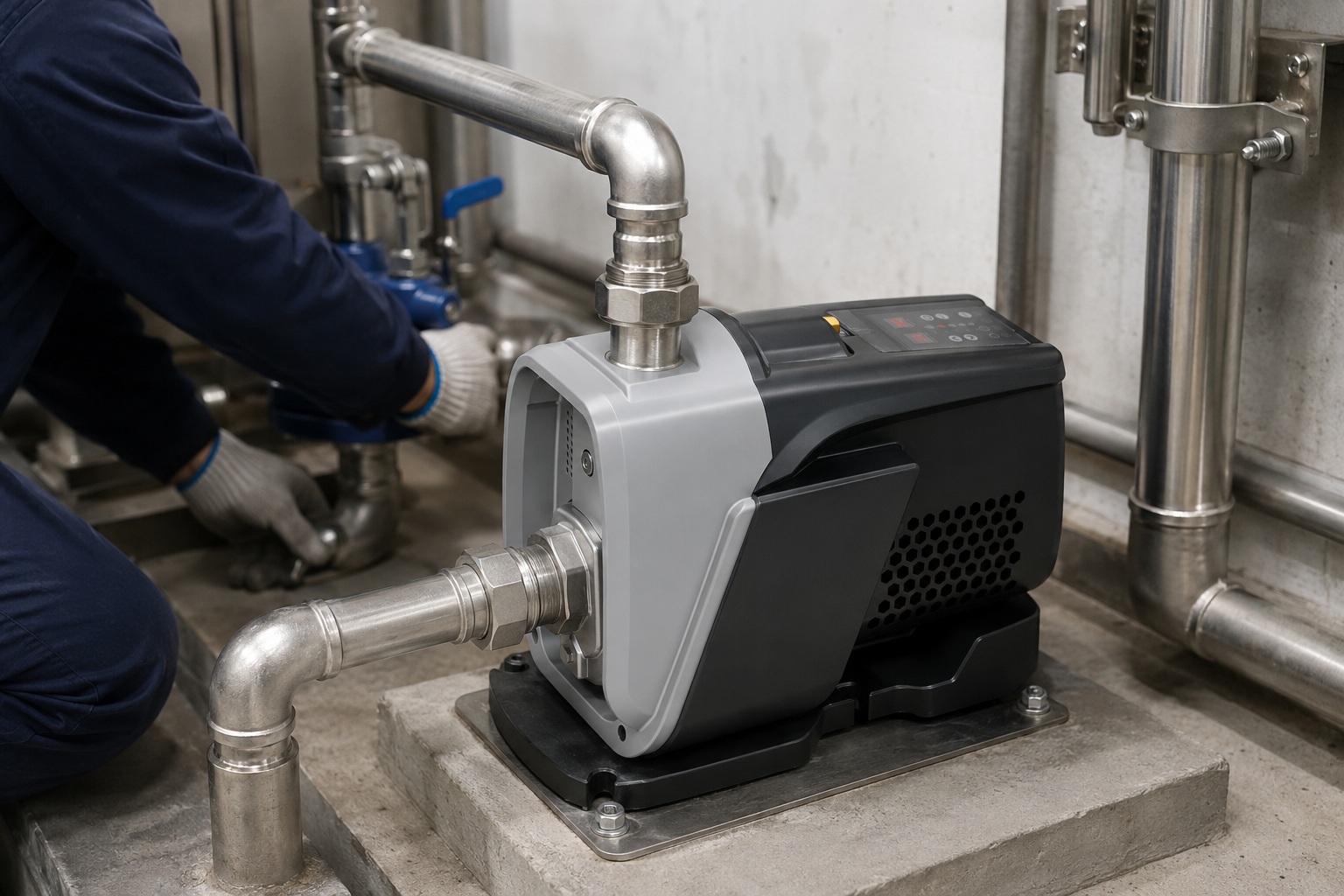
Struggling with inconsistent water pressure or flow?
This often points to using the wrong pump for the job, leading to wasted energy and potential damage.
A correctly chosen pump provides reliable performance.
The two primary categories of electric pumps are centrifugal pumps and positive displacement (PD) pumps.
Centrifugal pumps use a spinning impeller to generate flow, making them ideal for high-volume, low-viscosity applications.
Positive displacement pumps, in contrast, trap and move fixed amounts of fluid, excelling at high-pressure or high-viscosity tasks.
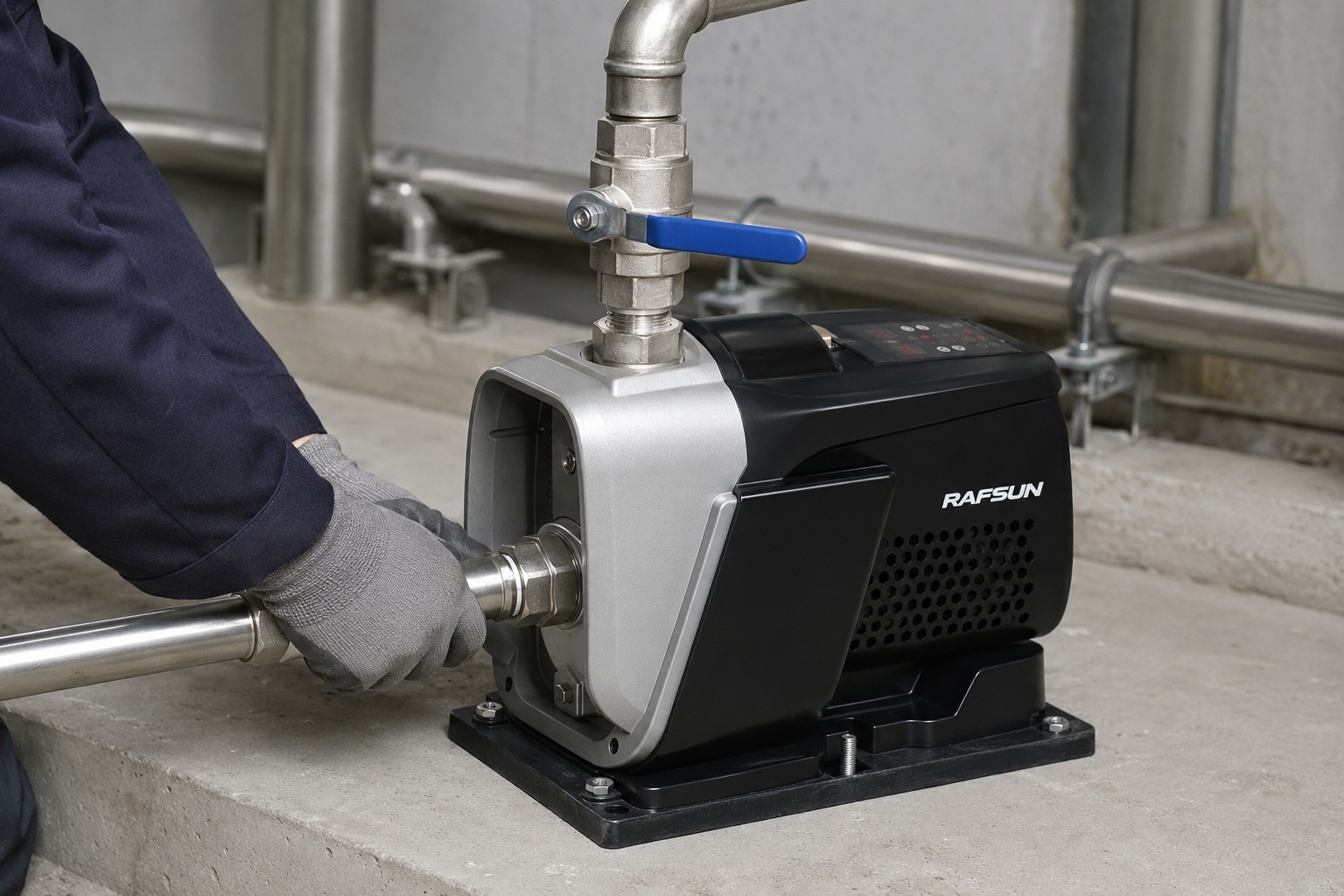
Understanding that these two types exist is the first crucial step.
However, their internal workings and performance characteristics are vastly different.
This difference is what determines if a pump will succeed or fail in your specific application.
Delving into their designs will equip you to make an informed choice, ensuring efficiency and longevity for your fluid handling systems.
Let's explore each type in detail.
Centrifugal Pumps: The Workhorses of Fluid Transfer
Need to move large volumes of water quickly and efficiently?
Using an undersized or incorrect pump type results in high energy bills and poor system performance.
Centrifugal pumps provide an economical, high-flow solution.
Centrifugal pumps are the most prevalent type, utilizing a rotating impeller to accelerate fluid and convert this velocity into pressure.
They are best suited for transferring low-viscosity liquids like water at high flow rates, forming the backbone of countless residential, commercial, and industrial systems.
A centrifugal pump operates on a simple yet powerful principle.
It converts rotational energy, typically from an electric motor, into kinetic energy in a fluid.
This energy is then transformed into potential energy in the form of pressure.
This process is highly efficient for fluids with a viscosity similar to water.
However, the pump's performance is intrinsically linked to its design and the system's conditions.
To truly master pump selection, one must look beyond the surface and understand the mechanics, characteristics, and variations of this pump category.
How Centrifugal Pumps Generate Flow
The core of the process lies in the interaction between the impeller and the casing.
Liquid first enters the pump through the suction nozzle, directed to the center, or "eye," of the impeller.
As the impeller spins at high speed, its curved vanes catch the liquid.
Centrifugal force flings the liquid outward toward the edge of the impeller.
This action dramatically increases the liquid's velocity.
The fast-moving liquid then exits the impeller and enters the volute.
The volute is a specially shaped spiral casing that widens progressively.
This expanding chamber forces the liquid to slow down.
According to Bernoulli's principle, as the liquid's velocity decreases, its pressure increases.
This pressurized liquid is then discharged from the pump.
This entire sequence is continuous, providing a smooth, non-pulsating flow.
Key Performance Characteristics
A centrifugal pump's output is not fixed.
It is defined by a performance curve that shows the relationship between flow rate (volume per unit of time) and head (the height to which the pump can lift the fluid).
Generally, as the flow rate increases, the head decreases.
Operation is most efficient at a specific point on this curve, known as the Best Efficiency Point (BEP).
Operating a pump more than 10-15% away from its BEP can lead to increased vibration, premature wear, and a significant drop in energy efficiency.
These pumps are also highly sensitive to fluid viscosity.
Even a modest increase in viscosity can cause a sharp decline in performance and a rise in power consumption.
Common Sub-types of Centrifugal Pumps
While the basic principle remains the same, centrifugal pumps come in various configurations to suit different needs.
Understanding these sub-types is key to selecting the right tool for the job.
| Sub-Type of Centrifugal Pump | Primary Design Feature | Common Applications | Advantages |
|---|---|---|---|
| End-Suction | Fluid enters the "end" of the casing and is discharged at the top, typically at 90 degrees. | General water supply, irrigation, HVAC systems, and light industrial use. | Simple design, cost-effective, easy to install and maintain. |
| Submersible | The entire assembly, including the motor, is hermetically sealed and submerged in the fluid. | Deep well water extraction, sump drainage, sewage and wastewater treatment. | Self-priming, quiet operation, eliminates risk of cavitation from a long suction line. |
| Multistage | Features multiple impellers housed in a single casing, arranged in series. | High-pressure applications like boiler feed, reverse osmosis, and high-rise building water supply. | Generates extremely high pressure (head) compared to single-stage pumps. |
| Vertical Turbine | The motor is located above ground, connected by a long shaft to the submerged pump bowls. | Agricultural irrigation from wells, municipal water supply, cooling water circulation. | Can lift water from very deep sources with high efficiency. |
Major Advantages and Disadvantages
Centrifugal pumps are popular for good reason, but they aren't a universal solution.
Advantages:
- Simplicity and Reliability: Their design has few moving parts, leading to lower maintenance requirements and a longer operational life.
- Cost-Effectiveness: Mass production and simple construction generally result in a lower initial purchase price compared to PD pumps.
- High Flow Rates: They are unmatched in their ability to move large volumes of low-viscosity fluid efficiently.
- Smooth Flow: The continuous action of the impeller produces a steady, pulsation-free discharge.
Disadvantages:
- Lack of Suction Lift: Most standard centrifugal pumps are not self-priming and must be filled with liquid before starting.
- Viscosity Limitation: Performance deteriorates rapidly with increases in fluid viscosity, making them unsuitable for thick liquids.
- Sensitivity to System Conditions: Their flow rate varies significantly with changes in system pressure (head).
- Cavitation Risk: If suction conditions are poor, they can suffer from cavitation—the formation and collapse of vapor bubbles—which is noisy and can cause severe damage to the impeller.
Positive Displacement Pumps: Precision in Every Stroke
Facing a task that demands constant flow regardless of pressure, like metering chemicals?
A centrifugal pump would fail, as its flow rate drops when pressure increases.
Positive displacement pumps deliver unwavering precision.
Positive displacement (PD) pumps operate by trapping a fixed volume of fluid and mechanically forcing it into the discharge pipe.
This mechanism ensures a consistent flow rate regardless of system pressure, making them ideal for high-pressure, high-viscosity, or precision-dosing applications.
The fundamental principle of a positive displacement pump is distinct from a centrifugal one.
Instead of imparting velocity, a PD pump directly displaces a specific quantity of fluid during each operational cycle.
This is achieved by creating expanding and contracting cavities within the pump.
The result is a flow that is directly proportional to the pump's speed and is largely unaffected by changes in the discharge pressure.
This characteristic makes them indispensable in many specialized industrial and commercial scenarios where pressure is high, viscosity is a challenge, or flow must be precise.
Let's dissect their mechanics and application range.
The Mechanism of Positive Displacement
All PD pumps work by creating a void that allows fluid to enter, and then reducing that void to force the fluid out.
The cycle begins as the pump's moving elements (like gears, pistons, or lobes) separate.
This separation creates an expanding cavity on the suction side, which generates a vacuum.
Atmospheric or head pressure pushes fluid into this cavity, filling it.
Next, the moving elements begin to come back together.
This action collapses the cavity, reducing its volume.
Since liquids are virtually incompressible, the fluid is squeezed out and forced into the discharge line.
This cycle repeats at a rate determined by the pump's speed, producing a nearly constant flow.
Because the parts have very tight clearances, there is minimal internal fluid slip from the discharge side back to the suction side.
This is why they maintain flow so well against high back-pressure.
Key Performance Characteristics
The performance of a PD pump is defined by its consistency.
Its flow rate is directly proportional to its speed (RPM).
Doubling the speed effectively doubles the output, making them excellent for metering applications where precise control is needed.
Unlike centrifugal pumps, a PD pump's flow rate is almost independent of the system's head or pressure.
It will attempt to produce flow an dpressure until the motor stalls, the piping ruptures, or an internal pressure relief valve activates.
PD pumps excel at handling viscous fluids.
In fact, increasing viscosity can sometimes improve their volumetric efficiency by reducing internal slip.
The flow can be pulsating, especially in reciprocating types, though many designs incorporate features to dampen these pulses.
Main Categories of Positive Displacement Pumps
The PD family is diverse, with two major branches: Rotary and Reciprocating.
Each contains various specific designs tailored for different tasks.
| PD Category | Sub-Type | Operating Principle | Typical Applications |
|---|---|---|---|
| Rotary | Gear Pump | Two meshing gears rotate to trap and move fluid around their outer periphery. | Pumping hydraulic oil, chemicals, resins, and food products like chocolate. |
| Lobe Pump | Two synchronized, non-contacting lobes rotate to create and collapse cavities. | Sanitary applications for food, beverage, and pharmaceutical products; shear-sensitive fluids. | |
| Vane Pump | Movable vanes slide in and out of a rotor, trapping fluid between the vanes and the casing. | Automotive power steering, low-pressure hydraulics, and transferring fuels and solvents. | |
| Reciprocating | Piston/Plunger Pump | A piston or plunger moves back and forth in a cylinder, drawing in fluid on one stroke and pushing it out on the other. | High-pressure cleaning (pressure washers), oil and gas production, reverse osmosis. |
| Diaphragm Pump | A flexible diaphragm moves back and forth, driven by a mechanical linkage or compressed air, to displace fluid. | Chemical transfer, wastewater treatment, applications requiring zero leakage. |
Major Advantages and Disadvantages
The specialized nature of PD pumps gives them unique strengths and weaknesses.
Advantages:
- High-Pressure Capability: They can generate extremely high pressures, often exceeding 5,000 PSI in some designs.
- Constant Flow: They deliver a consistent, predictable flow rate that is not significantly affected by pressure changes.
- Viscosity Handling: They are the go-to solution for pumping thick, viscous liquids, from syrups to heavy oils.
- Self-Priming: The tight tolerances and positive action allow them to draw a suction lift and prime themselves.
Disadvantages:
- Pulsating Flow: Reciprocating types can produce a pulsating flow that may require a pulsation dampener for some applications.
- Pressure Relief Required: They will continue to build pressure against a closed valve, making a pressure relief valve a mandatory safety component in the system.
- Complexity and Cost: They generally have more complex mechanics and tighter tolerances, leading to a higher initial cost and potentially higher maintenance expenses.
- Lower Flow Rates: Compared to centrifugal pumps of a similar size and power, they typically produce much lower flow rates.
Conclusion
Choosing between centrifugal and positive displacement pumps depends entirely on your application's needs for flow, pressure, and fluid type.
Each has distinct advantages for specific tasks.
FAQs
What type of pump is a water pump?
Most common water pumps, used for boosting pressure in homes or for irrigation, are centrifugal pumps. They are efficient at moving large volumes of water at moderate pressures.
What is the advantage of a centrifugal pump over a positive displacement pump?
The main advantages are higher flow rates, a simpler and more cost-effective design, and a smooth, non-pulsating output. They are ideal for moving low-viscosity fluids like water.
Why do positive displacement pumps create more pressure?
They create more pressure by trapping a fixed amount of fluid in a cavity and then mechanically forcing it out. This direct action can overcome very high back-pressures in a system.
Can a centrifugal pump be used for high viscosity?
No, centrifugal pumps are not suitable for high-viscosity fluids. Their performance drops significantly as viscosity increases, leading to low flow and high energy consumption.
Is a submersible pump a positive displacement pump?
No, the vast majority of submersible pumps, like those used in wells, are multistage centrifugal pumps. They use a series of impellers to generate high pressure to lift water from deep underground.
Which pump is more efficient?
Efficiency depends on the application. A centrifugal pump is more efficient at its Best Efficiency Point (BEP) for high-flow, low-pressure tasks. A PD pump is more efficient for high-pressure or high-viscosity tasks.
Do positive displacement pumps need priming?
Generally, no. The positive-action mechanism of PD pumps allows them to draw air and create a suction lift from a dry start, making them self-priming.
What happens if you run a centrifugal pump with the discharge valve closed?
Running a centrifugal pump with the discharge valve closed for an extended period causes the fluid inside to heat up, which can damage the pump's seals and other components. However, it will not build infinite pressure.