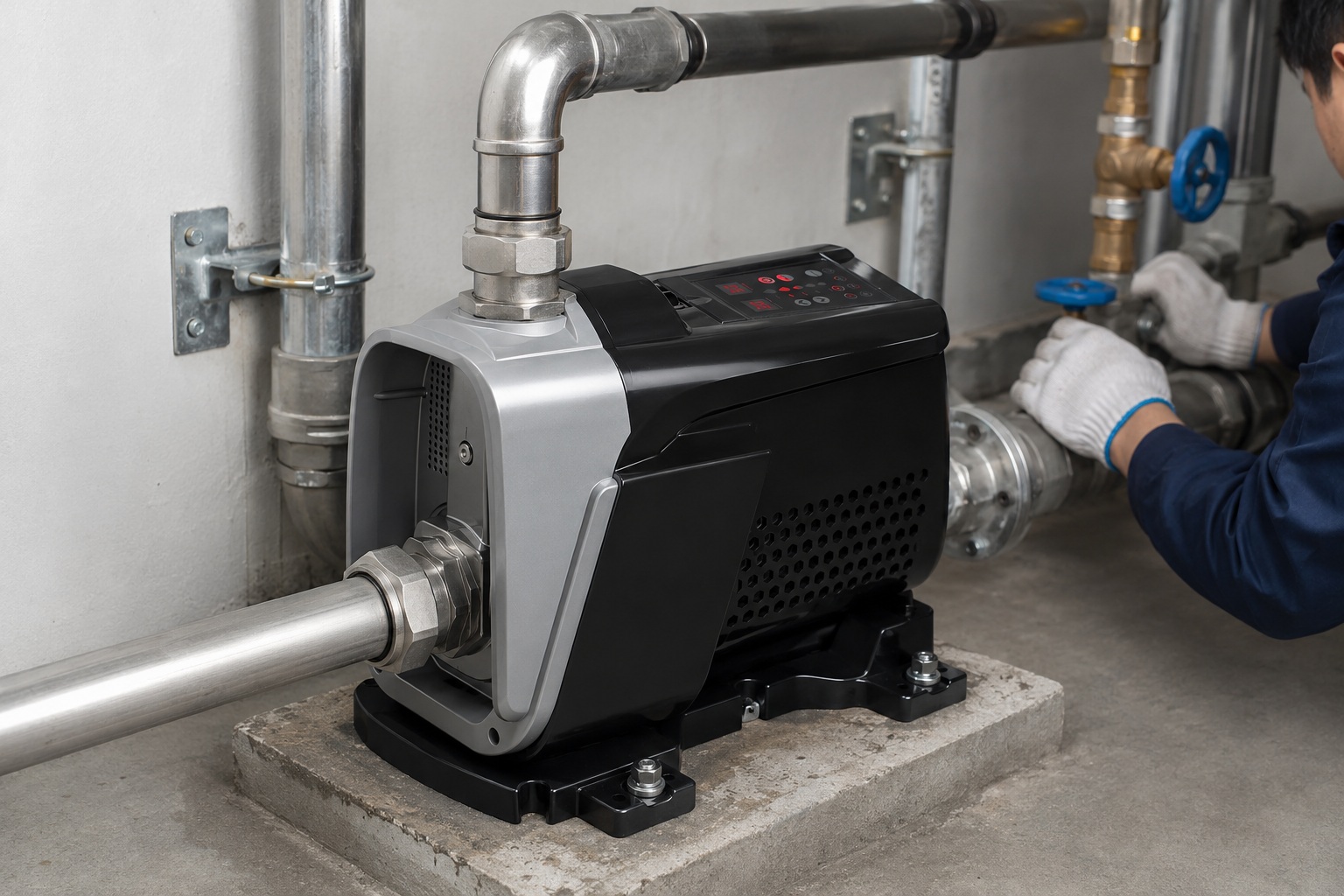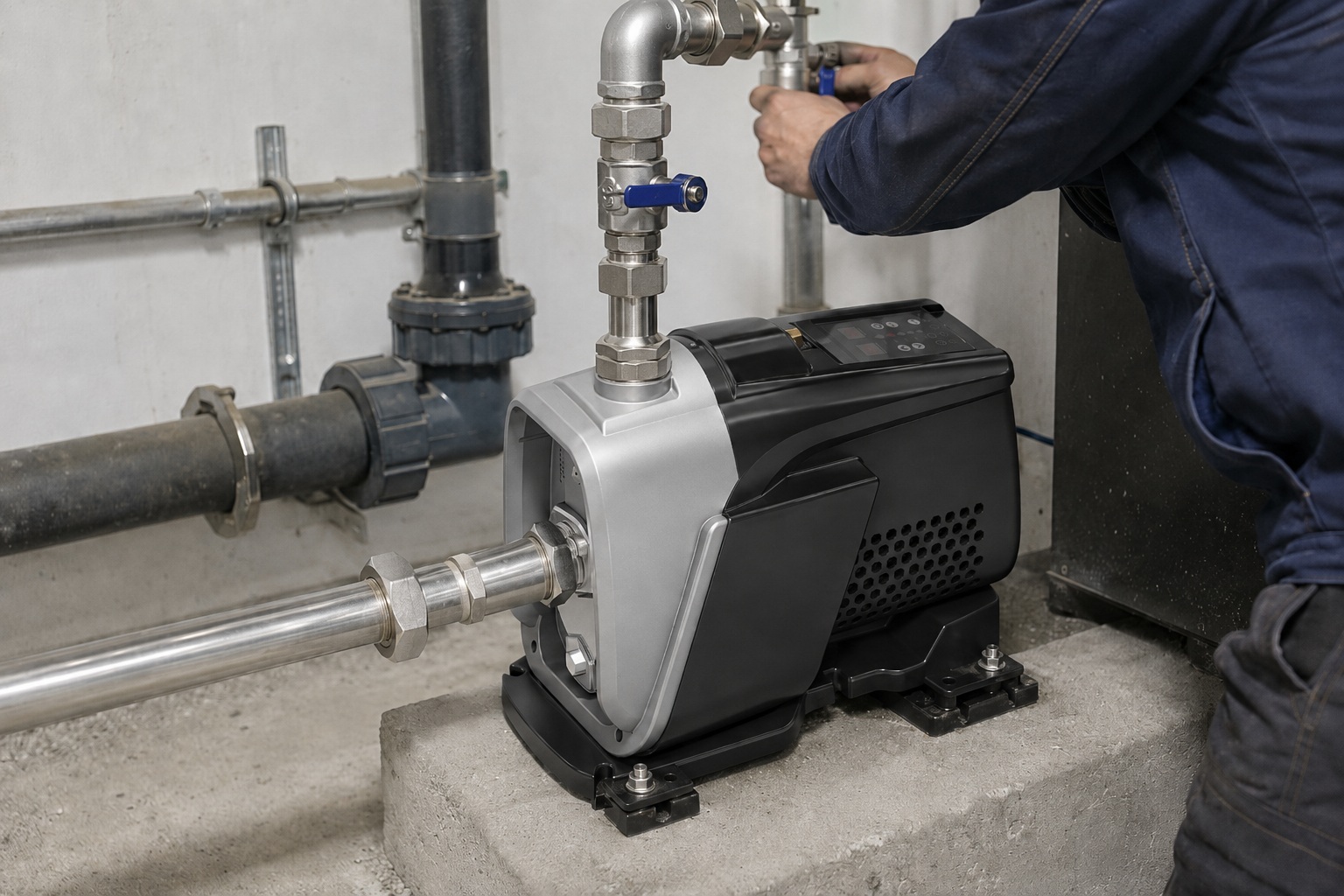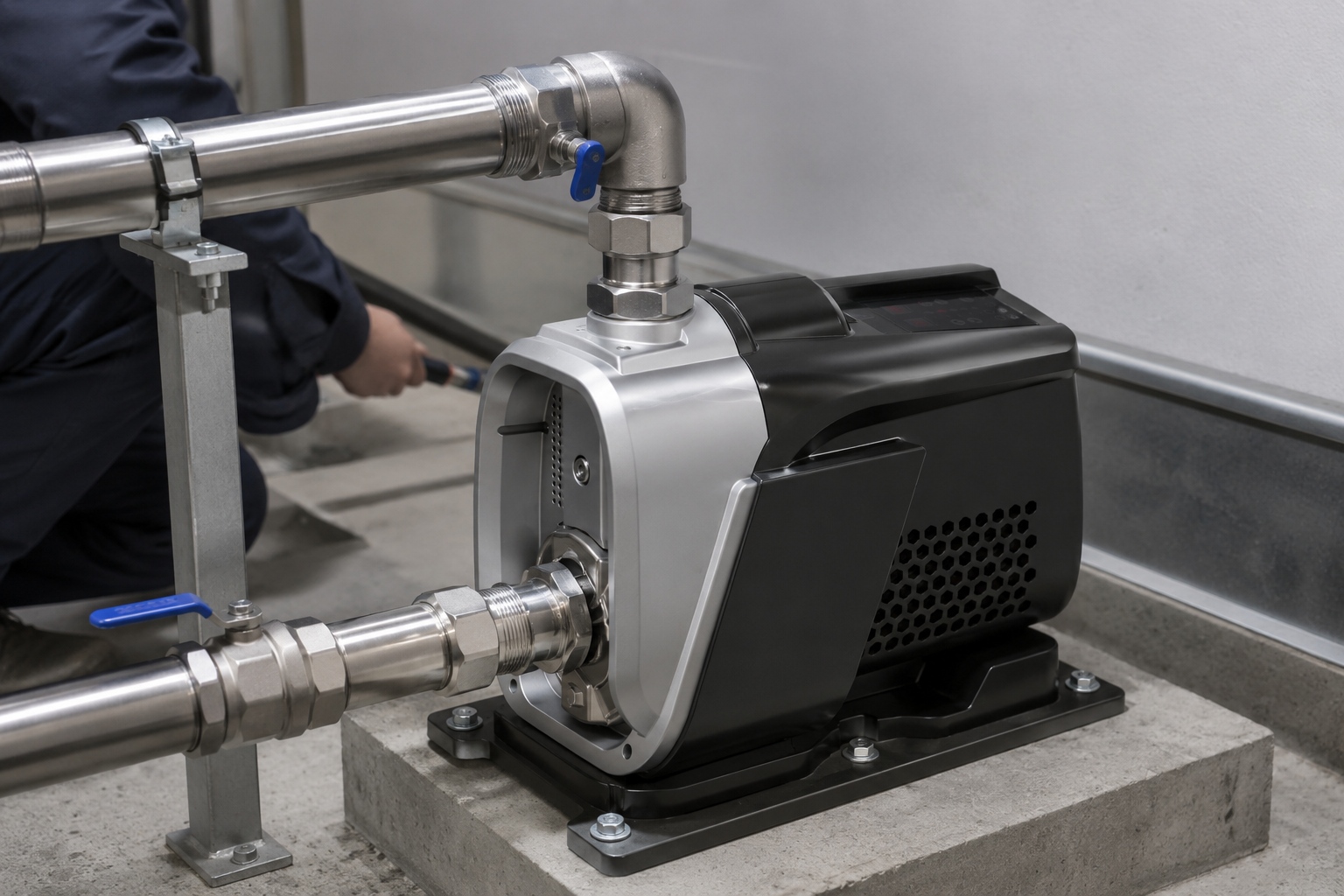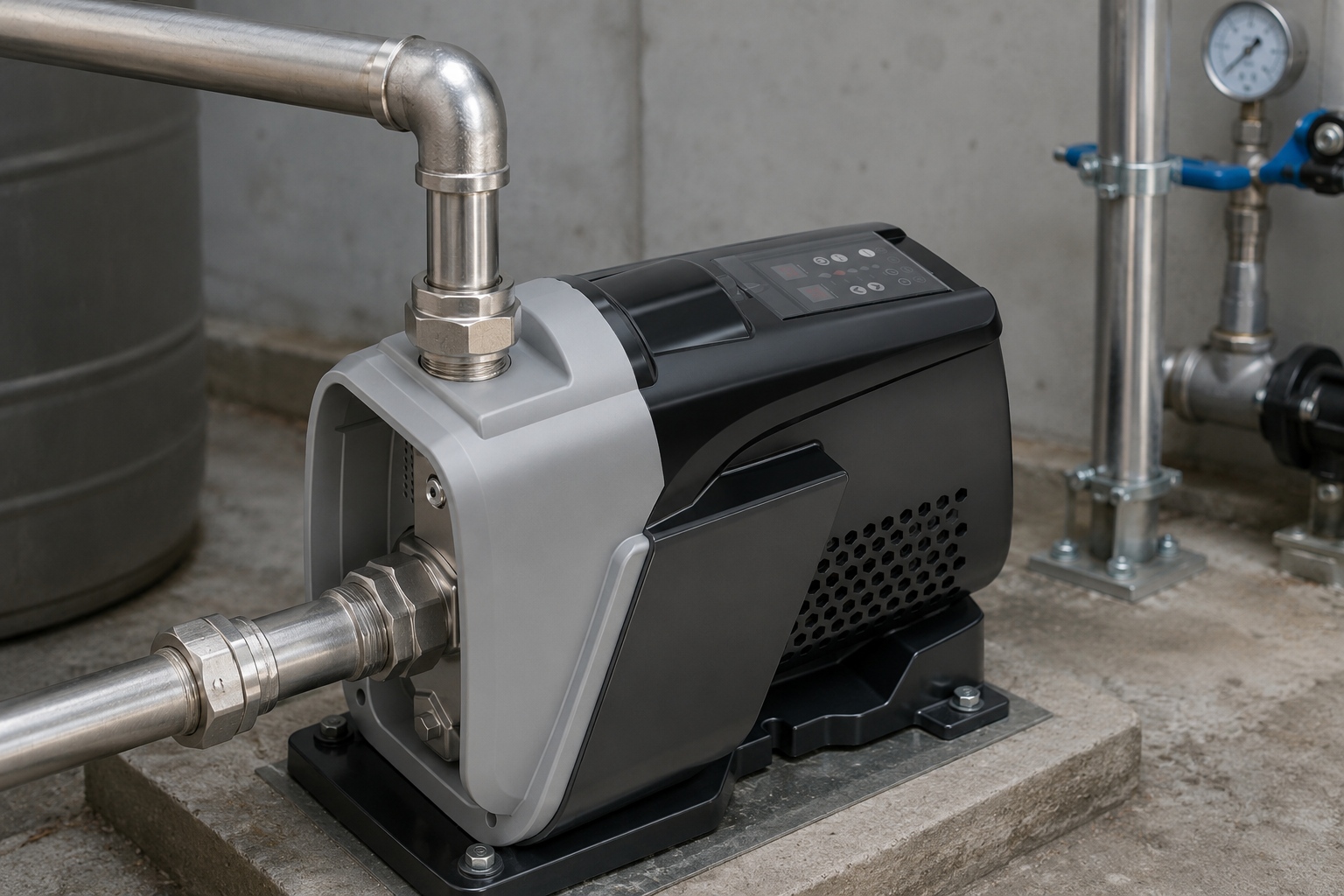
Struggling with inconsistent water pressure or flow?
This can halt daily operations and lead to frustration.
Understanding pump mechanics is the first step toward a reliable solution.
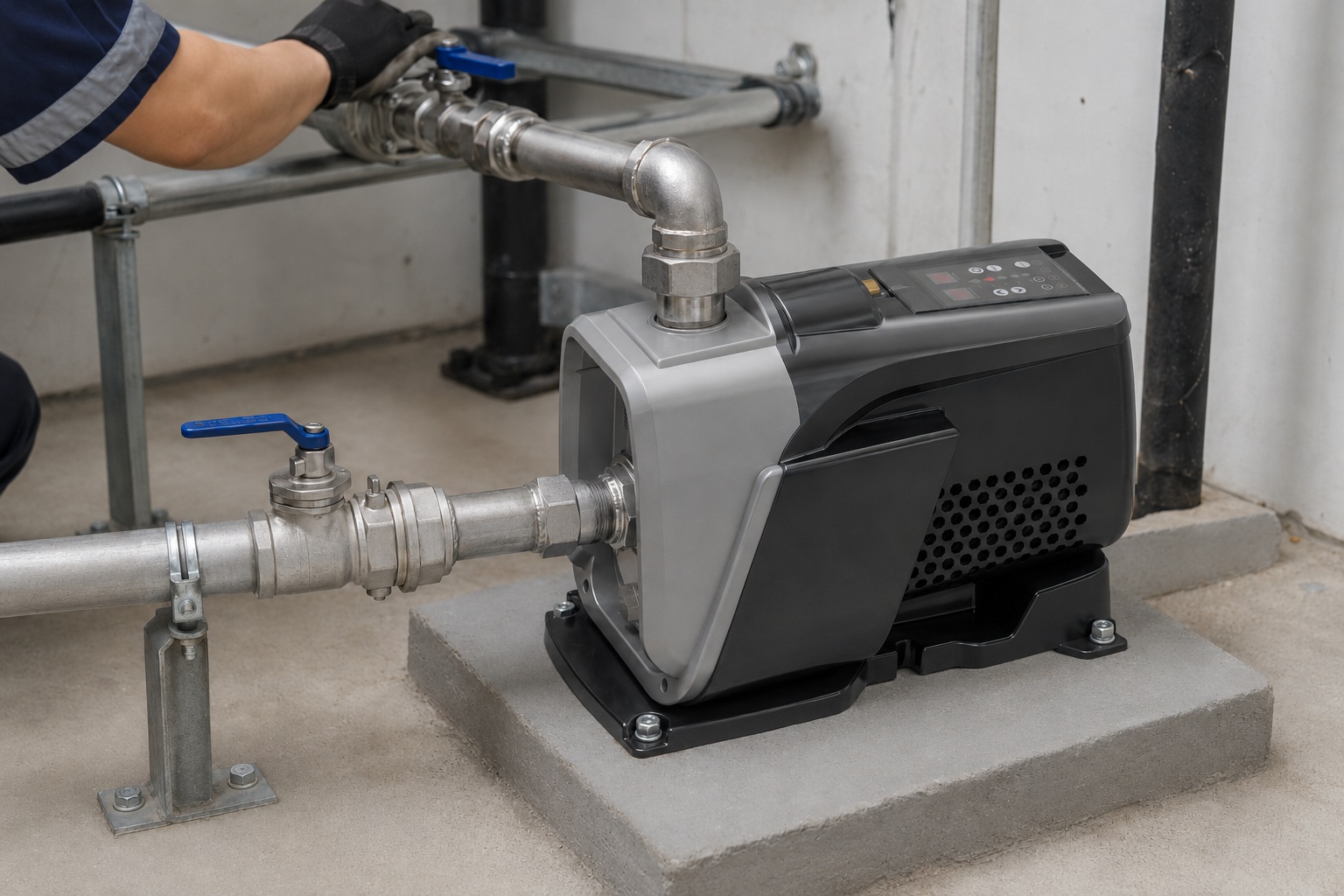
An electric pump converts electrical energy into mechanical energy using a motor.
This energy powers a mechanism, like an impeller, which creates pressure differences.
These pressure changes effectively move fluids, such as water, from an inlet to an outlet.
This fundamental process is the key to managing water in homes, farms, and entire industries.
But the real magic lies in the details of how each component works together to achieve this task.
Let’s explore the inner workings of these essential machines.
The Heart of the Machine: Core Components of an Electric Pump
Unsure what’s inside a pump?
This knowledge gap can lead to costly maintenance errors.
Knowing the key parts helps you understand its function and troubleshoot issues effectively.
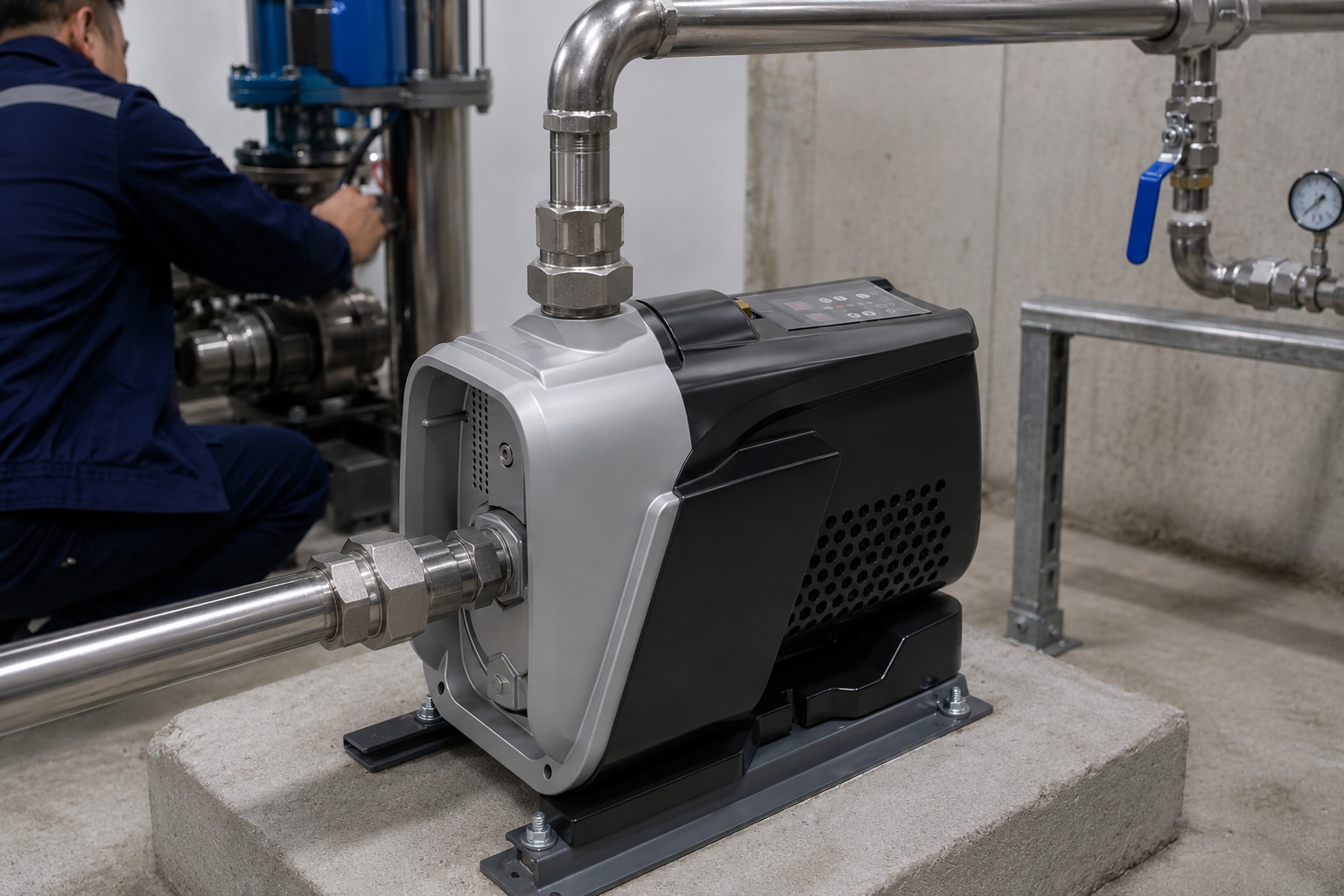
The core of an electric pump consists of two main parts: the motor and the pump head.
The motor provides the power.
The pump head, or "wet end," contains the impeller, volute, and seals, all of which directly handle the fluid.
To truly grasp how a pump functions, we need to inspect each major component individually.
The synergy between the motor and the pump head is what makes fluid transfer possible.
Each part has a specific role, and its design and material quality significantly impact the pump’s performance and lifespan.
Let’s break down these essential parts.
The Electric Motor
The motor is the powerhouse of the pump.
It converts electrical energy into the rotational mechanical energy needed to drive the pump mechanism.
Motors can be AC (Alternating Current) or DC (Direct Current), with AC motors being more common in residential and industrial applications due to their direct compatibility with the power grid.
The power of the motor, measured in horsepower (HP) or kilowatts (kW), is a critical factor determining the pump’s capacity.
For instance, a simple household booster pump might have a 0.5 HP motor, while a large industrial pump could require over 100 HP.
The Pump Head (Wet End)
The pump head is where all the action happens.
It’s the part that comes into direct contact with the fluid being moved, which is why it’s often called the "wet end."
Its main components are the impeller and the volute casing.
- Impeller: This is a rotor with vanes or blades that spins at high speed. As it rotates, it imparts velocity to the water. The design, diameter, and speed of the impeller are the primary determinants of the pump’s flow rate and pressure.
- Volute Casing: This is the snail-shaped casing that surrounds the impeller. Its purpose is to collect the fluid from the impeller and slow it down. As the fluid slows, its velocity energy is converted into pressure energy, a principle known as Bernoulli’s principle. The volute directs this pressurized fluid toward the pump’s outlet.
Seals and Bearings
Seals and bearings are critical for reliability and longevity.
Mechanical seals prevent water from leaking out of the pump head and into the motor, a common point of failure in lower-quality pumps. They create a leak-proof barrier between the rotating shaft and the stationary pump casing.
Bearings support the pump shaft, ensuring it rotates smoothly with minimal friction. High-quality bearings can reduce operational noise, decrease energy consumption by 2-3%, and significantly extend the pump’s service life.
| Component | Primary Function | Importance in Performance |
|---|---|---|
| Motor | Converts electrical energy to mechanical (rotational) energy. | Determines the pump’s power, flow, and pressure limits. |
| Impeller | Rotates to impart velocity energy to the fluid. | Its design and speed directly control flow and pressure. |
| Volute Casing | Converts the fluid’s velocity into pressure. | Crucial for achieving the pump’s rated pressure output. |
| Seals | Prevent fluid from leaking and protect the motor. | Essential for safety, efficiency, and longevity. |
| Bearings | Support the shaft and reduce rotational friction. | Affects noise, energy efficiency, and pump lifespan. |
Creating Flow: The Pumping Mechanism Explained
Does the process of moving water with a pump seem like magic?
Misunderstanding the physics leads to poor system design and inefficiency.
We’ll clarify how pumps generate pressure and flow.
Pumps operate by creating a low-pressure zone at the inlet, drawing fluid in.
The pump’s internal mechanism then imparts energy to the fluid, forcing it out at a higher pressure through the outlet.
This pressure differential is the fundamental principle of all pumping action.
This basic concept of moving fluid by manipulating pressure is universal, but its execution varies.
The most common method in electric pumps involves centrifugal force.
It’s an elegant and efficient process that relies on simple physics to achieve powerful results.
Let’s dive into how the impeller and volute work together to masterfully create this flow.
The Principle of Pressure Differential
At its core, a pump doesn’t "suck" water in.
Instead, it creates a region of lower pressure at its inlet port compared to the pressure of the fluid source.
Fluids, like all things in nature, tend to move from an area of higher pressure to an area of lower pressure to achieve equilibrium.
This natural tendency causes the fluid to flow into the pump’s inlet.
It’s a subtle but important distinction that highlights the physics at play.
The Impeller in Action
Once inside the pump, the fluid enters the "eye" of the impeller, which is its center.
The motor spins the impeller at high speeds, often ranging from 1,500 to 3,600 revolutions per minute (RPM).
The rotating vanes of the impeller catch the fluid and, through centrifugal force, sling it outwards towards the edge of the impeller.
This action dramatically increases the fluid’s velocity.
A 10% increase in impeller rotational speed can result in an approximate 21% increase in pressure and a 10% increase in flow, demonstrating the powerful relationship between speed and output.
The Volute’s Conversion Role
As the high-velocity fluid exits the impeller, it enters the volute casing.
The volute is designed with a progressively increasing cross-sectional area.
This expanding space forces the fluid to slow down.
According to Bernoulli’s principle, when a fluid’s velocity decreases, its pressure must increase (assuming its potential energy remains constant).
The volute is a masterfully designed pressure converter.
It efficiently transforms the kinetic energy (velocity) imparted by the impeller into potential energy (pressure).
This pressurized fluid is then guided to the discharge outlet, ready to be moved through the piping system.
The efficiency of this energy conversion process, often exceeding 85% in well-designed pumps, is a key metric of pump performance.
Two Main Families: Centrifugal vs. Positive Displacement Pumps
Choosing the wrong pump type can cripple a system.
Each application has specific needs for flow and pressure.
Understanding the two main designs prevents costly purchasing mistakes.
Centrifugal pumps use a spinning impeller to generate flow and are ideal for moving large volumes of low-viscosity fluids.
Positive displacement (PD) pumps trap a fixed amount of fluid and force it out, providing constant flow regardless of pressure.
While both pump types move fluid, their methods and ideal uses are worlds apart.
Centrifugal pumps dominate the water-moving market due to their simplicity and efficiency with water.
Positive displacement pumps, however, excel in specialized scenarios where consistency and pressure are paramount.
Knowing which to choose is critical for any system designer or distributor.
The Centrifugal Pump Advantage
Centrifugal pumps are the most common type, accounting for over 70% of pumps installed worldwide.
Their design is relatively simple, with a rotating impeller inside a volute casing.
This simplicity translates to lower manufacturing and maintenance costs.
- How it Works: As explained earlier, they use centrifugal force to accelerate a fluid and a volute to convert this velocity into pressure.
- Best For: High-flow, low-to-moderate pressure applications. Think of moving water for irrigation, general water supply, or circulation in HVAC systems.
- Key Characteristic: Their flow rate varies significantly with changes in system pressure (or head). As pressure increases, flow decreases. They are excellent for fluids with low viscosity, like water.
The Positive Displacement (PD) Pump Niche
Positive displacement pumps operate by trapping a specific volume of fluid in a cavity and then forcing (displacing) it out the discharge port.
This action is more mechanical and less reliant on velocity.
- How it Works: Common types include reciprocating (piston, plunger, diaphragm) and rotary (gear, lobe, screw) pumps. Each cycle moves a fixed amount of fluid.
- Best For: Low-flow, high-pressure applications, or for pumping viscous fluids (like oils and slurries). They are also used for applications requiring precise, constant flow, known as metering.
- Key Characteristic: A PD pump will deliver a nearly constant flow rate regardless of the discharge pressure. This makes them predictable but also requires a pressure relief valve in the system to prevent over-pressurization and potential damage.
Making the Right Choice
The choice between these two families depends entirely on the application’s needs.
Imagine needing to fill a large tank quickly; a high-flow centrifugal pump is your best bet.
Now imagine needing to dose a precise amount of chemical into a system at high pressure; a positive displacement pump is the only reliable choice.
Distributors and importers must understand this distinction to properly advise their clients and stock the right inventory.
| Feature | Centrifugal Pump | Positive Displacement Pump |
|---|---|---|
| Operating Principle | Generates pressure via velocity (centrifugal force) | Displaces a fixed volume of fluid per rotation/stroke. |
| Flow Rate | Variable, dependent on pressure. High flow is typical. | Constant, independent of pressure. Low flow is typical. |
| Pressure Range | Best for low to moderate pressure. | Can generate very high pressures. |
| Fluid Viscosity | Best with low-viscosity fluids (e.g., water). | Can handle high-viscosity fluids (e.g., oil, sludge). |
| Typical Use | Water supply, irrigation, circulation. | Metering, hydraulics, pumping viscous liquids. |
| Safety | Can operate against a closed valve for short periods. | Requires a pressure relief valve to avoid damage. |
The Brains of the Operation: Variable Frequency Drives (VFD)
Tired of high energy bills from pumps running at full speed?
Fixed-speed pumps waste energy when full power isn’t needed.
Intelligent VFD technology matches pump speed to demand, slashing costs.
A Variable Frequency Drive (VFD), also known as an inverter, is an electronic controller that adjusts an electric motor’s speed.
In pumps, this allows for precise control over flow and pressure, significantly improving energy efficiency and system performance.
The shift from fixed-speed to variable-speed pumping represents one of the most significant advancements in modern pump technology.
It’s like swapping a car that only has an on/off accelerator for one with a fully responsive gas pedal.
This level of control not only saves energy but also extends the life of the pump and improves the quality of the entire water system.
Let’s examine how this "brain" brings intelligence to the brawn of the pump.
How a VFD Works
A VFD takes the incoming AC power of a fixed frequency (e.g., 50 or 60 Hz) and converts it.
First, it rectifies the AC power into DC power.
Then, it inverts the DC power back into a new AC signal with a variable frequency.
Since an AC motor’s speed is directly proportional to the frequency of the power supplied, changing the frequency effectively changes the pump’s speed.
Modern VFDs use sophisticated algorithms and sensors, such as pressure transducers, to automatically adjust the pump’s speed to maintain a constant pressure or flow, regardless of changing demand.
The Power of Pump Affinity Laws
The incredible energy savings of VFDs are explained by the Pump Affinity Laws.
These laws describe the relationship between pump speed, flow, pressure, and power consumption.
- Flow is proportional to speed. (If you reduce speed by 20%, flow reduces by 20%).
- Pressure is proportional to the square of the speed. (If you reduce speed by 20%, pressure reduces by 36%).
- Power is proportional to the cube of the speed. (If you reduce speed by 20%, the power required drops by nearly 50%!).
This cubic relationship is the key.
Even a small reduction in pump speed results in a massive reduction in energy consumption.
For applications with variable demand, like residential water systems or industrial processes, a VFD pump running at 80% speed can meet demand most of the time while using less than half the energy of a fixed-speed pump.
This can lead to energy savings of 30-50% or more.
Benefits Beyond Energy Savings
While energy efficiency is the VFD’s headline feature, the benefits are far more extensive.
- Reduced Mechanical Stress: Soft-starting and stopping eliminates the sudden torque and "water hammer" effect, reducing stress on pipes, valves, and the pump itself. This extends the lifespan of the entire system.
- Enhanced Process Control: The ability to precisely maintain a set pressure or flow is critical in many industrial and commercial applications, improving product quality and consistency.
- Quieter Operation: Running at lower speeds for most of the day makes VFD pumps significantly quieter than their fixed-speed counterparts that are always running at 100%.
- Intelligent Protection: Advanced VFDs include built-in protections against dry running, over-voltage, over-current, and overheating, safeguarding the pump motor from the most common causes of failure.
This makes VFD technology not just an efficiency upgrade but a comprehensive system improvement.
Conclusion
Electric pumps combine a motor and a pump head to convert electricity into fluid flow.
Understanding their core components, mechanisms, and intelligent controls like VFDs is key to choosing the right pump.
FAQs
What are the two basic principles of a pump?
Pumps operate on two main principles.
The first is creating a pressure differential to draw fluid in.
The second is using a mechanism like an impeller or piston to expel that fluid under pressure.
How does a pump create pressure?
In a centrifugal pump, a spinning impeller increases the fluid’s velocity.
A snail-shaped casing called a volute then slows the fluid down, converting its velocity into pressure.
Do pumps create flow or pressure?
A pump creates flow.
The pressure is a result of the resistance the flow encounters within the piping system.
Without flow, there is no pressure.
What causes a pump to lose pressure?
A pump can lose pressure due to several reasons.
Common causes include a worn impeller, air leaks in the suction line (cavitation), or clogs in the pipes or pump itself.
What is the difference between an electric motor and a pump?
An electric motor converts electrical energy into mechanical rotation.
A pump is a machine that uses this rotation from a motor to move fluid. The motor is the power source for the pump.
Why does a pump need priming?
Centrifugal pumps need priming to fill the pump casing with water.
This is because they are designed to pump liquid, not air, and cannot create the necessary low-pressure zone with air.
Can an electric water pump run continuously?
Whether a pump can run continuously depends on its design and duty rating.
Many industrial-grade pumps are rated for continuous duty, while some smaller, cheaper pumps are for intermittent use only.
How much electricity does a water pump use?
Electricity usage depends on the pump’s power rating (kW) and how long it runs.
A 1kW pump running for one hour uses 1 kilowatt-hour (kWh) of electricity. VFD pumps use significantly less.