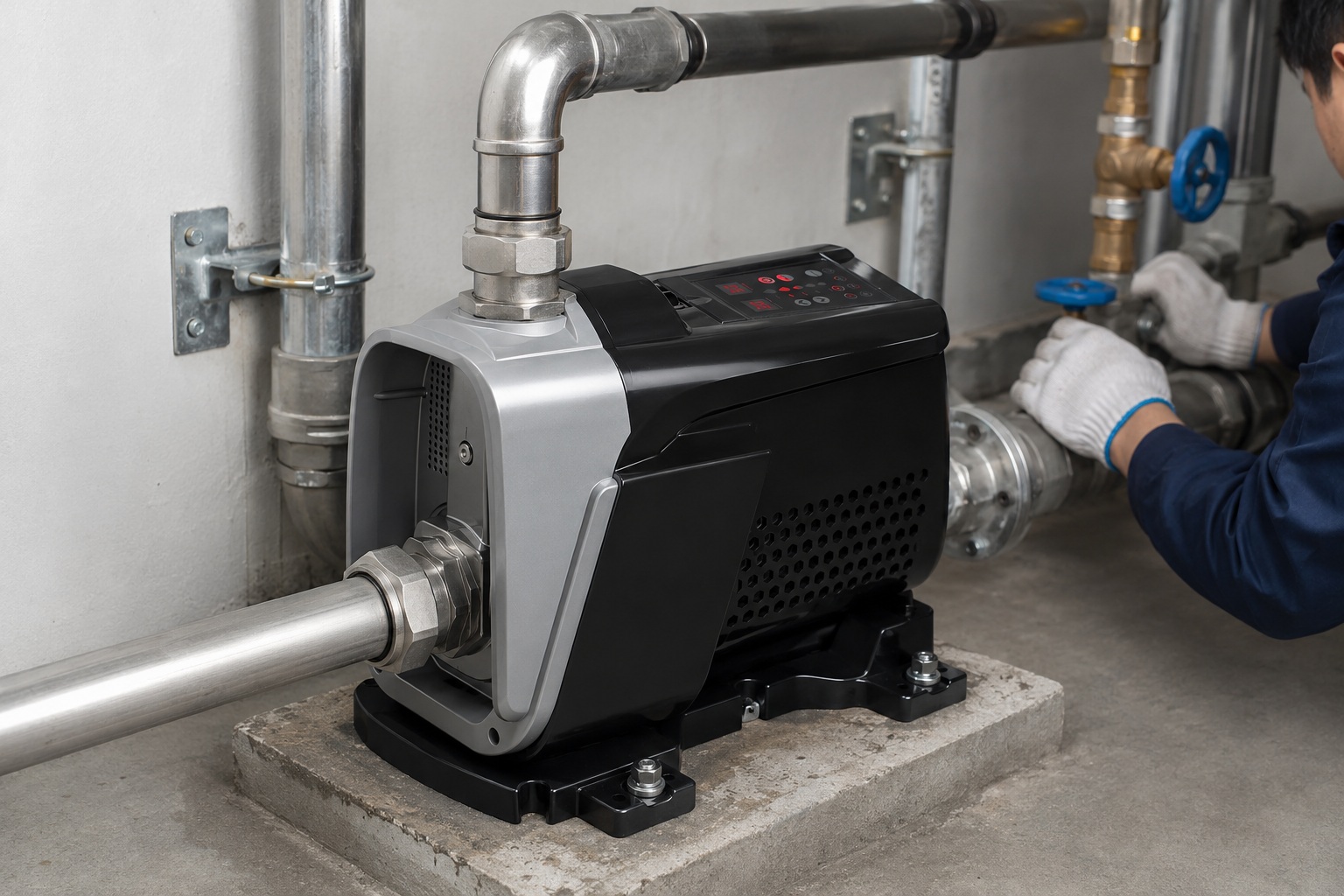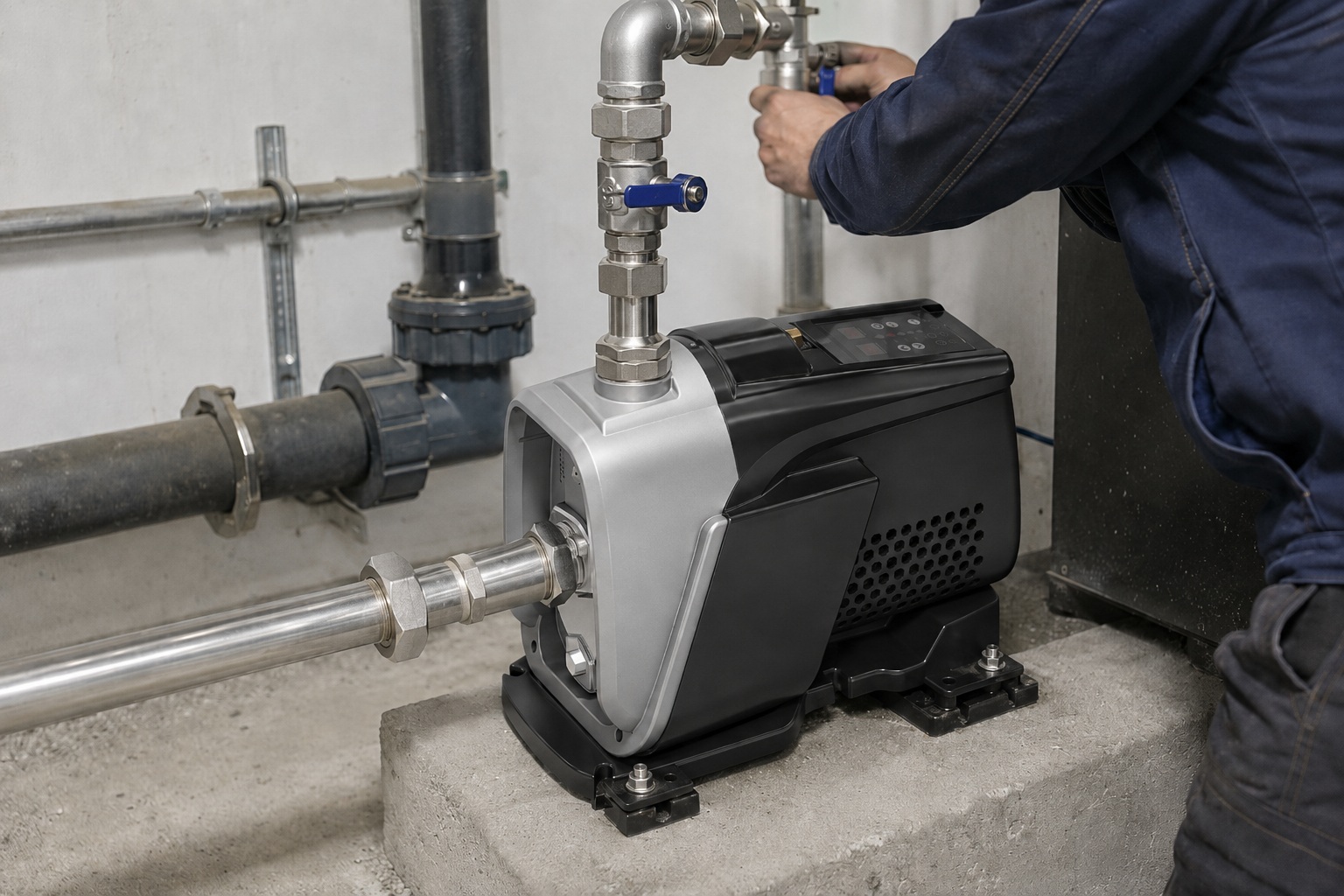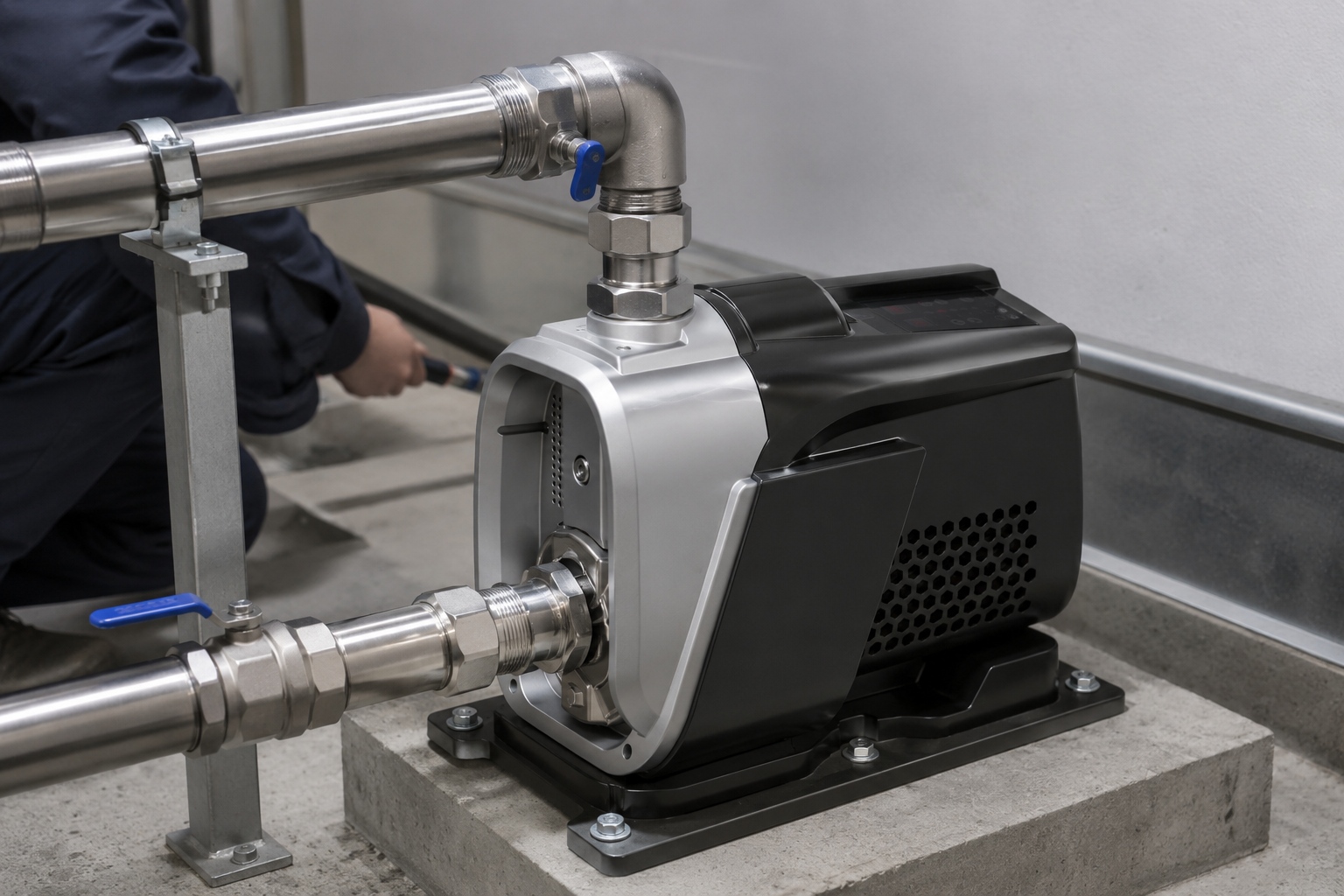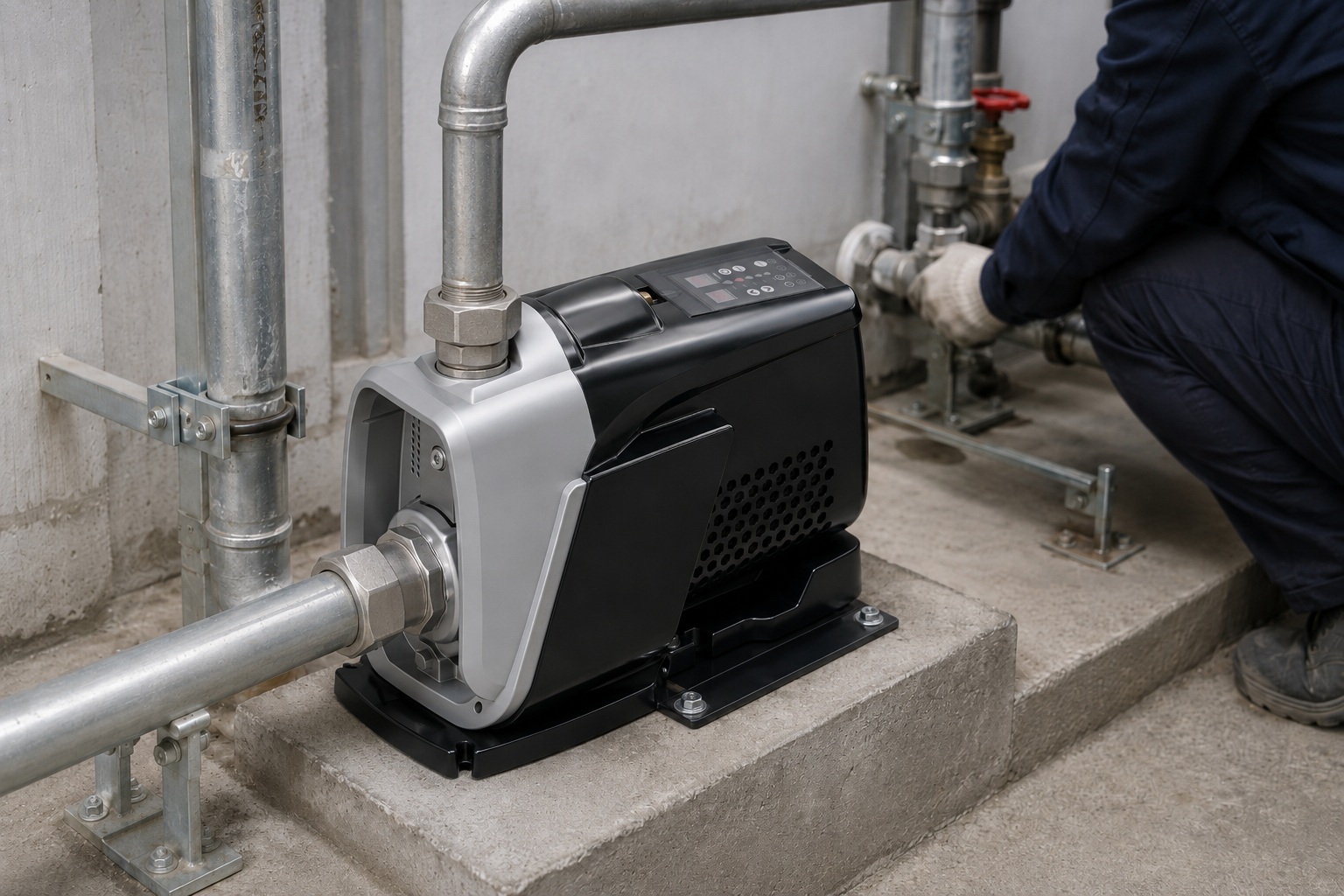
Struggling to achieve high pressure for your fluid systems?
Your single-stage pumps might not be enough, leading to inefficient operations and high energy costs for your business.
A multistage centrifugal pump works by passing fluid through a series of impellers, or stages, arranged in sequence on a single shaft.
Each stage boosts the pressure of the fluid incrementally, combining to achieve a much higher final discharge pressure than a single-stage pump can.
Understanding this technology is crucial for optimizing high-pressure applications.
Many industries rely on these pumps for their efficiency and reliability.
This guide will break down exactly how they achieve such impressive performance.
Let's explore the mechanics, components, and applications that make these pumps a cornerstone of modern fluid handling.
This knowledge will empower you to make better-informed decisions for your specific operational needs.
What Exactly is a Multistage Centrifugal Pump?
Are your operations limited by insufficient pump pressure?
This can lead to system bottlenecks, reducing overall productivity and impacting your bottom line with every cycle.
You need a better solution.
A multistage centrifugal pump is a type of pump that contains two or more impellers.
These pumps are used for applications that require high head or pressure.
The impellers are connected in series, and the fluid's pressure increases with each stage it passes through.
To truly grasp how these pumps generate high pressure, we must look beyond the basic definition.
The core concept is "staging."
Imagine climbing a tall ladder.
Each rung you step on takes you a little higher.
A multistage pump works on a similar principle, but for fluid pressure instead of height.
Each "stage" is a self-contained pump unit consisting of an impeller and a diffuser.
The fluid enters the first stage, its pressure is boosted, and then it is guided directly into the next stage, where the process repeats.
This sequential pressure increase is what sets them apart.
The Power of Staging
The "staging" effect is the pump's most defining feature.
A single-stage pump has one impeller, which limits the total pressure it can generate.
It might be able to increase fluid pressure by, for example, 100 PSI.
However, a four-stage pump, with each stage contributing a similar pressure boost, could theoretically achieve a final pressure of 400 PSI.
This ability to stack pressure makes them indispensable for certain tasks.
The final-stage discharge pressure is approximately the sum of the pressures generated by each individual stage.
This modular approach to pressure generation allows for impressive scalability.
Key Characteristics
Several key characteristics define multistage pumps and their operational capabilities.
Understanding these traits helps in selecting the right pump for a specific application.
| Characteristic | Description | Impact on Performance |
|---|---|---|
| Series Impellers | Multiple impellers mounted on a single shaft. | Allows for incremental pressure increase. The total head is the sum of the head from each stage. |
| High Head/Pressure | Designed specifically to produce high discharge pressures. | Ideal for boiler feed, reverse osmosis, and high-rise building water supply where pressure is a primary requirement. |
| Variable Performance | Performance can be tailored by adding or removing stages. | Some designs allow for customization to meet very specific pressure and flow rate requirements without a complete redesign. |
| Efficiency at Duty Point | Operates most efficiently at a specific design point (Best Efficiency Point or BEP). | Running the pump far from its BEP can lead to increased wear, higher energy consumption, and potential damage. |
This design philosophy allows them to operate where other pumps simply cannot.
They bridge the gap between standard centrifugal pumps and positive displacement pumps for high-pressure services.
Their ability to generate a steady, non-pulsating flow at high pressure makes them a preferred choice in many sophisticated systems.
Core Components and Their Functions
Are you unsure what makes a multistage pump tick?
Confusion about its internal parts can make maintenance and troubleshooting a costly and time-consuming guessing game.
This leads to longer downtimes.
The main components are multiple impellers mounted on a shaft, diffusers (or volutes) for each stage, and an outer casing.
The impellers add velocity, and the diffusers convert that velocity into pressure, stage by stage, to achieve high-pressure output.
The reliability and efficiency of a multistage pump depend entirely on the precise engineering of its internal components.
Each part has a specific role in moving the fluid and boosting its pressure.
Like a well-rehearsed team, these components must work together flawlessly to achieve the desired performance.
A failure in one part can compromise the entire system's output.
Let's break down the essential components and detail the critical function each one performs in the pressure-boosting process.
The Heart of the Pump: Impellers
The impeller is the rotating component that transfers energy from the motor to the fluid.
In a multistage pump, there are several impellers.
They are all mounted on a common shaft.
When the shaft spins, the impellers spin with it.
The fluid enters the impeller at its center, called the eye.
The spinning vanes of the impeller then sling the fluid outward at high velocity due to centrifugal force.
This action is the first step in creating pressure.
The design of the impeller vanes, including their curvature and number, is optimized to handle specific flow rates and fluids with maximum efficiency, often achieving over 85% hydraulic efficiency at the design point.
The Pressure Converter: Diffusers
After leaving the impeller at high velocity, the fluid enters a stationary component called the diffuser.
The diffuser consists of a set of fixed vanes that form expanding passages.
Its primary job is to slow the fluid down.
According to Bernoulli's principle, as the fluid's velocity decreases in the expanding passages of the diffuser, its kinetic energy is converted into potential energy, or pressure.
This conversion process is critical.
Without the diffuser, the high-velocity energy imparted by the impeller would be largely wasted as turbulence and heat.
The diffuser also guides the fluid smoothly into the eye of the next impeller in the sequence.
The Complete Assembly
A table helps clarify the role of each primary and secondary component.
| Component | Function | Material Considerations |
|---|---|---|
| Impellers | Rotates to impart velocity to the fluid. | Cast Iron, Bronze, Stainless Steel (e.g., SS304, SS316), Duplex Stainless Steel for corrosive fluids. |
| Diffusers | Slows the fluid down to convert velocity into pressure. | Cast Iron, Stainless Steel. Must be resistant to erosion from high-velocity flow. |
| Shaft | Transmits torque from the motor to the impellers. | High-strength steel or stainless steel (e.g., 420 SS) to handle torque and prevent deflection. |
| Bearings | Support the shaft and reduce friction. | Ball or roller bearings, often oil or grease lubricated. Materials must withstand high rotational speeds. |
| Mechanical Seals | Prevent fluid from leaking out along the shaft. | Carbon, Silicon Carbide, Tungsten Carbide. Selection depends on fluid type, temperature, and pressure. |
| Outer Casing | Contains the pressure and houses all internal components. | Cast Iron, Carbon Steel, Stainless Steel. Must be rated to withstand the pump's maximum discharge pressure. |
Each of these parts is a product of careful engineering.
The materials are chosen to withstand the operational pressures, temperatures, and corrosive properties of the fluid being pumped.
The precise fit and alignment of these components are essential for long service life and maintaining high efficiency.
The Step-by-Step Working Principle
Do you find the actual process of pressure generation in these pumps confusing?
Not knowing the fluid's path makes it hard to diagnose issues like pressure loss or low flow.
This can lead to incorrect repairs.
Fluid enters the first stage at the suction inlet.
The first impeller accelerates the fluid, and its diffuser converts the velocity to pressure.
This pressurized fluid then enters the next stage, where the process repeats, compounding the pressure until it exits at the final discharge.
To truly appreciate the effectiveness of a multistage pump, it is helpful to visualize the journey of the fluid as it travels from the low-pressure inlet to the high-pressure outlet.
This step-by-step process is a seamless and continuous flow.
Each stage builds upon the work of the last.
Think of it as a relay race where each runner adds more speed.
Here, each stage adds more pressure.
Let's follow the fluid from start to finish.
Stage 1: The Suction and First Boost
The process begins at the pump's suction nozzle.
- 1. Fluid Entry: Liquid enters the first chamber of the pump under suction-line pressure.
- 2. Entering the Impeller: The fluid is drawn into the eye of the first impeller. The impeller is already rotating at high speed, typically between 1,500 and 3,600 RPM.
- 3. Energy Transfer: Centrifugal force created by the spinning impeller vanes pushes the fluid radially outward. The fluid gains significant kinetic energy (velocity) in this process.
- 4. First Pressure Conversion: The high-velocity fluid exits the impeller and immediately enters the first diffuser. The diffuser's expanding passages force the fluid to slow down, converting its kinetic energy into a higher pressure. At this point, the fluid's pressure has been boosted by the first stage.
The Intermediate Stages: Compounding the Pressure
The fluid now leaves the first stage and is skillfully guided to the next.
- 1. Crossover Passageway: The diffuser from the first stage directs the now-pressurized fluid through a crossover channel into the eye of the second impeller. This transfer must be smooth to minimize energy losses, a mark of high-quality pump design.
- 2. The Process Repeats: The second impeller grabs the fluid and adds more kinetic energy, accelerating it again.
- 3. Further Pressure Conversion: The fluid then moves into the second diffuser, where its newly gained velocity is once again converted into an even higher pressure.
This entire cycle of acceleration and deceleration repeats for every stage within the pump.
If it is a 10-stage pump, this process will happen 10 times in quick succession.
With each stage, the cumulative pressure rises significantly.
The Final Stage and Discharge
The final stage completes the work.
- 1. Final Boost: The fluid passes through the last impeller-diffuser assembly, receiving its final pressure increase.
- 2. Collection and Exit: After leaving the final diffuser, the high-pressure fluid is collected in the pump's discharge chamber, also known as the volute in some designs.
- 3. High-Pressure Discharge: The fluid then exits the pump through the discharge nozzle, ready to do work in the larger system, such as feeding a boiler or pushing water to the top of a skyscraper.
This entire journey, from low-pressure suction to high-pressure discharge, can happen in a fraction of a second.
The seamless, continuous nature of this process results in a smooth, non-pulsating flow, which is a major advantage over many types of positive displacement pumps.
Horizontal vs. Vertical Multistage Pumps: What's the Difference?
Are you trying to decide between a horizontal or vertical pump?
Choosing the wrong orientation can lead to installation problems, wasted space, and maintenance headaches that disrupt your operations.
This is a critical choice.
The main difference is their shaft orientation and footprint.
Horizontal pumps have a larger footprint and are easier to service.
Vertical pumps are space-saving and often better suited for higher pressures, as their inline design minimizes radial forces on the shaft.
Choosing between a horizontal and a vertical multistage pump is a fundamental decision that impacts your system's layout, maintenance procedures, and even its performance.
The choice is not merely about aesthetics or which one looks better in the facility.
It's about practical considerations.
Each configuration offers distinct advantages and is suited for different environments and applications.
Understanding these differences ensures you select the most appropriate and cost-effective solution for your specific needs.
The Horizontal Multistage Pump
Horizontal pumps are arguably the more traditional configuration.
Their shaft is oriented horizontally, parallel to the ground.
- Footprint and Installation: They require a larger footprint, which must be accounted for during the design phase of a facility. They are typically mounted on a concrete base or steel skid.
- Serviceability: Maintenance is often considered easier. The "between-bearings" design allows the pump casing to be split, giving technicians direct access to the internal components like impellers and diffusers without having to disconnect the motor or extensive piping. This can reduce downtime during service by up to 40%.
- NPSH Requirements: They may have more stringent Net Positive Suction Head (NPSH) requirements because the centerline of the first-stage impeller is higher off the ground compared to a vertical pump's first stage.
The Vertical Multistage Pump
Vertical pumps are a more modern and increasingly popular design, especially in applications where space is at a premium.
- Footprint and Installation: Their key advantage is a significantly smaller footprint. They are ideal for tight spaces or for retrofitting into existing systems. Their suction and discharge nozzles are often "in-line," which can simplify piping layouts.
- Pressure Handling: The vertical, in-line design helps to balance radial hydraulic forces. This can result in a longer seal and bearing life, particularly in very high-pressure applications.
- Serviceability: Maintenance can be more complex. To access the impellers, the motor usually has to be removed first, and the "stack" of stages is pulled up and out of the pump casing.
A Head-to-Head Comparison
This table summarizes the key deciding factors when choosing between the two configurations.
| Feature | Horizontal Multistage Pump | Vertical Multistage Pump |
|---|---|---|
| Footprint | Large, requires more floor space. | Small, space-saving design. |
| Installation | Requires solid foundation; piping can be complex. | Simpler in-line piping; good for tight spaces. |
| Maintenance | Easier access to internals (split-case design). | Can be more complex; often requires motor removal. |
| Best Application | General industry, oil & gas, large-scale water transfer. | Building services (HVAC, boosting), RO, boiler feed. |
| Pressure Range | Good for moderate to high pressures. | Often preferred for very high pressures due to balanced radial loads. |
| NPSH | May require higher available NPSH. | Can operate with lower available NPSH. |
The final decision often comes down to a trade-off.
If you have ample floor space and prioritize ease of maintenance, a horizontal pump might be the better choice.
If you are constrained by space and need an efficient high-pressure solution for a building or a compact system, the vertical pump is likely the superior option.
Key Applications for Multistage Pumps
Are you wondering where these powerful pumps are actually used?
Without understanding their common applications, you might miss opportunities to use them to solve your own high-pressure challenges effectively.
This is valuable information.
Multistage pumps are widely used in applications requiring high pressure.
Common uses include boiler feedwater systems, reverse osmosis (RO) desalination, high-pressure cleaning, water supply for high-rise buildings, and mine dewatering, where fluid must be moved against significant head.
The unique ability of multistage pumps to generate high pressure efficiently makes them essential in a vast range of industries.
They are the unseen workhorses behind many critical processes.
From ensuring a city has clean water to helping generate electricity, their role is diverse and vital.
Recognizing these applications can spark ideas for how they might be leveraged in your own operations.
Let's explore some of the most important sectors where these pumps are indispensable.
Industrial and Power Generation
In industrial settings, high pressure is often a non-negotiable requirement.
- Boiler Feedwater: This is perhaps the most classic application. Power plants use multistage pumps to force feedwater into steam boilers against the boiler's immense internal pressure. The reliability of these pumps is critical, as a failure can lead to a complete plant shutdown.
- High-Pressure Cleaning: Large-scale cleaning systems, such as those for industrial vessels or vehicles, use the high-pressure stream generated by multistage pumps to blast away dirt and contaminants.
- Reverse Osmosis (RO): Desalination and water purification plants rely heavily on multistage pumps. They provide the high pressure (often 50-80 bar) needed to force water through RO membranes, separating salt and impurities from the fresh water. Up to 60% of a desalination plant's energy consumption can be from these pumps.
Municipal and Commercial Water Supply
Ensuring water reaches every user is a major logistical challenge, especially in modern cities.
- Water Distribution and Boosting: In municipal water systems, multistage pumps are used as boosters to maintain adequate water pressure across long distances and hilly terrain.
- High-Rise Buildings: To supply water to the upper floors of skyscrapers, the pressure from the city main is insufficient. Vertical multistage pumps are installed in mechanical rooms to boost water pressure reliably to every floor.
- Firefighting Systems: High-pressure fire suppression systems, particularly in large industrial facilities and tall buildings, use multistage pumps to ensure water can be delivered at the required pressure and flow rate to fight fires effectively.
Other Key Sectors
The versatility of these pumps extends to many other specialized fields.
- Mining: Deep mines often need to be dewatered. Multistage pumps are used to lift water from great depths to the surface against the massive head pressure.
- Snowmaking: Ski resorts use multistage pumps to push water at high pressure through snow cannons, which then atomize the water into the cold air to create artificial snow.
- Oil and Gas: In the oil and gas industry, they are used for applications like water injection to maintain reservoir pressure and the pipeline transport of crude oil over long distances.
Across these applications, the common thread is the need to overcome significant resistance, whether from gravity, friction, or process pressure.
Multistage pumps provide a reliable and efficient solution to this fundamental engineering challenge.
Advantages and Disadvantages of Multistage Pumps
Are you weighing the pros and cons of using a multistage pump?
Making a decision without a balanced view can lead to investing in technology that is either overkill or inadequate for your needs.
A clear comparison is essential.
The primary advantage is their ability to generate very high pressure efficiently with a smooth, pulsation-free flow.
However, they are more complex and expensive than single-stage pumps and can be sensitive to running dry or handling solids, requiring more careful operation.
No piece of equipment is perfect for every situation.
Multistage centrifugal pumps are exceptional at what they do, but they come with their own set of trade-offs.
A thorough understanding of both their strengths and weaknesses is crucial for making a sound investment and ensuring long-term operational success.
This balanced perspective protects you from unexpected costs and performance issues down the line.
Let's objectively evaluate the benefits and drawbacks.
The Clear Advantages
The reasons for choosing a multistage pump are compelling, especially when pressure is the primary goal.
- High-Pressure Capability: This is their main purpose. They can achieve pressures far beyond the reach of single-stage centrifugal pumps, making them the default choice for high-head applications.
- Energy Efficiency: For a given high-pressure duty point, a multistage pump is often more energy-efficient than using a single-stage pump running at an extremely high speed or using a positive displacement pump. Operating multiple stages near their Best Efficiency Point (BEP) saves significant energy over the pump's lifecycle. Savings can reach 15-30% compared to less suitable pump types.
- Scalability and Flexibility: The performance curve can be tailored by varying the number of stages. This allows for a semi-custom solution without designing a new pump from scratch.
- Smooth Flow: Like all centrifugal pumps, they provide a steady, non-pulsating flow, which is beneficial for systems sensitive to pressure spikes, unlike reciprocating positive displacement pumps.
- Reliability: When properly selected and maintained, these pumps are known for their high reliability and long service life in continuous-duty applications.
The Potential Disadvantages
It is equally important to be aware of the potential downsides.
- Higher Initial Cost: The complexity of having multiple impellers, diffusers, and a more robust casing makes them more expensive to purchase than single-stage pumps.
- Increased Complexity: More parts mean more potential points of failure. Maintenance and repair can be more complex and time-consuming, requiring skilled technicians.
- Sensitivity to Operating Conditions: They are less tolerant of handling solids or abrasive particles than some other pump types. Abrasives can quickly erode the tight clearances between impellers and diffusers.
- Risk of Dry Running: Running a multistage pump without fluid can cause rapid overheating and catastrophic failure, as the fluid is also used for cooling and lubrication of internal components.
- Limited to Clean Fluids: They are designed primarily for clean liquids. High viscosity or the presence of significant solids can drastically reduce efficiency and cause damage.
Making the Right Choice
A simple decision matrix can help summarize the trade-offs.
| Factor | Consider a Multistage Pump When... | Consider Alternatives When... |
|---|---|---|
| Pressure | You need high discharge head (>150 meters). | Low to moderate pressure is sufficient. |
| Fluid | The fluid is clean and low-viscosity (like water). | The fluid contains solids, abrasives, or is highly viscous. |
| Budget | Lifecycle energy cost is a higher priority than initial capital cost. | Initial purchase price is the primary constraint. |
| Flow | A smooth, non-pulsating flow is required. | Pulsating flow is acceptable (a PD pump might work). |
| Maintenance | You have skilled technicians for service. | You require the simplest possible maintenance routine. |
Ultimately, a multistage pump is a specialized tool.
When applied correctly to a high-pressure, clean-fluid application, its advantages far outweigh its disadvantages, providing an unmatched combination of performance, efficiency, and reliability.
Conclusion
In summary, a multistage pump uses a series of impellers to incrementally boost fluid pressure, making it the ideal solution for various high-head applications across many industries.
FAQs
What is the difference between a single-stage and a multistage pump?
A single-stage pump has one impeller and is for lower-pressure uses. A multistage pump has two or more impellers in series to generate much higher pressures.
How much pressure can a multistage pump generate?
This varies by design, but industrial multistage pumps can generate pressures exceeding 100 bar (1,450 PSI), making them suitable for demanding applications like boiler feeds.
Can a multistage pump run dry?
No, a multistage pump should never be run dry. The pumped liquid cools and lubricates the internal components, and running dry can cause rapid overheating and severe damage.
Are multistage pumps efficient?
Yes, when operated at their designed duty point, multistage pumps are very energy-efficient for high-pressure services, often outperforming other pump types in terms of lifecycle cost.
What is the difference between a vertical and horizontal multistage pump?
The primary difference is shaft orientation. Vertical pumps save floor space and are often used in buildings, while horizontal pumps are easier to service and common in industrial plants.
What maintenance do multistage pumps require?
Regular maintenance includes monitoring bearing lubrication, checking mechanical seals for leaks, and verifying alignment. Periodic internal inspections may be needed for wear on impellers and diffusers.
What is the maximum number of stages in a multistage pump?
The number of stages can vary widely. While 4 to 10 stages are common, specialized pumps for very high pressures, like in oil and gas, can have 50 or more stages.
Can multistage pumps handle solids?
Generally, no. Multistage pumps are designed for clean liquids. Solids and abrasive particles can cause rapid wear and damage to the tight internal clearances, reducing efficiency.