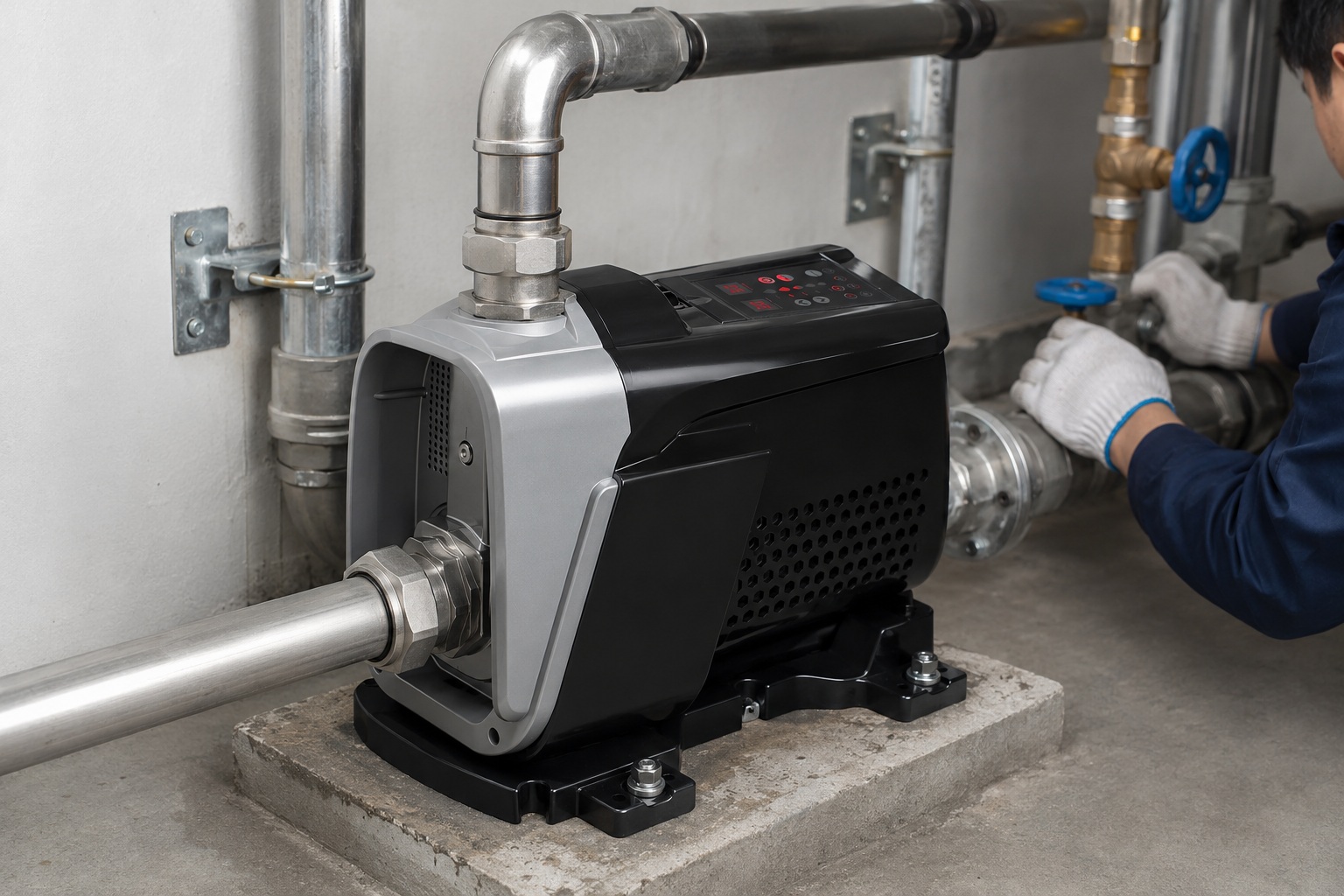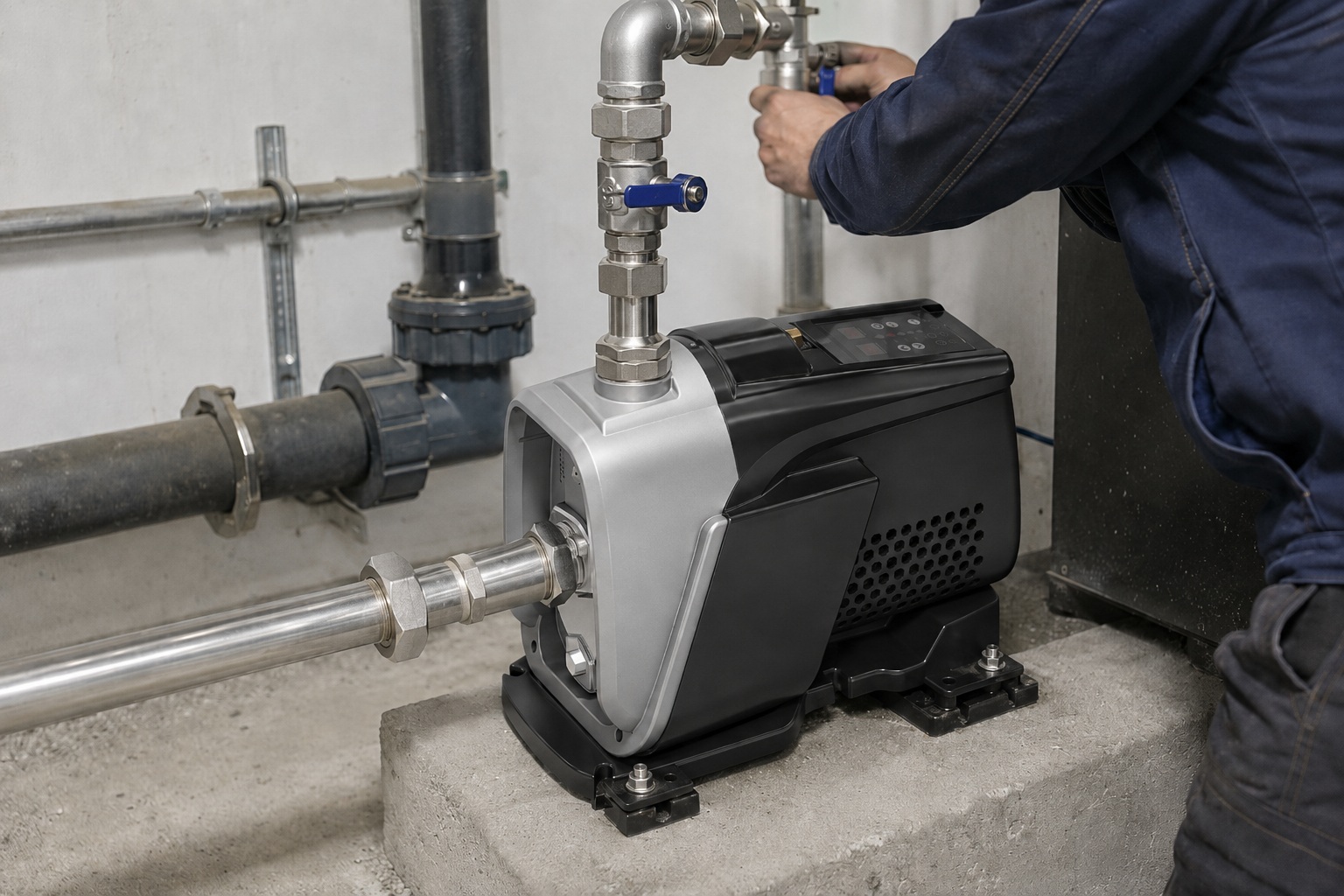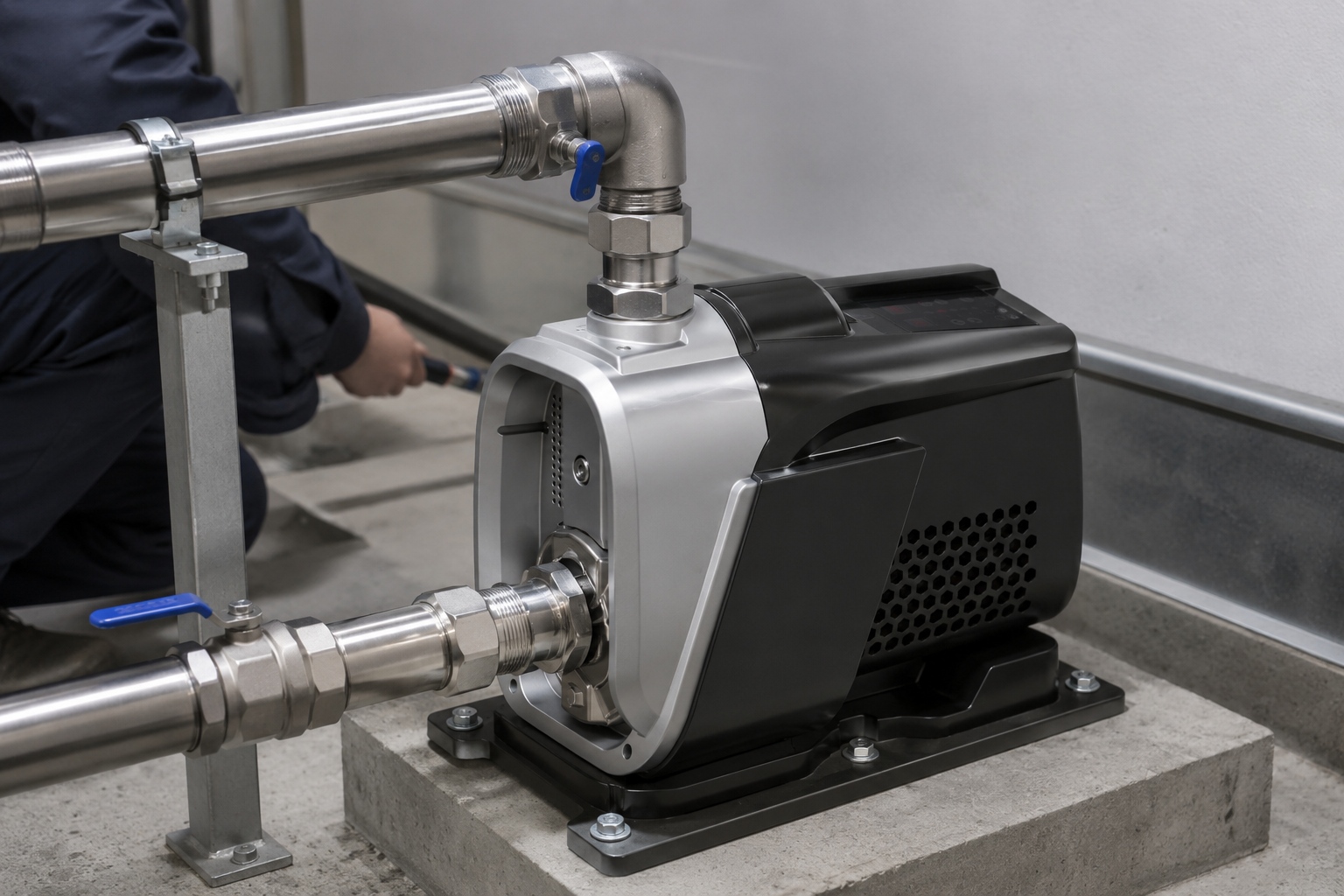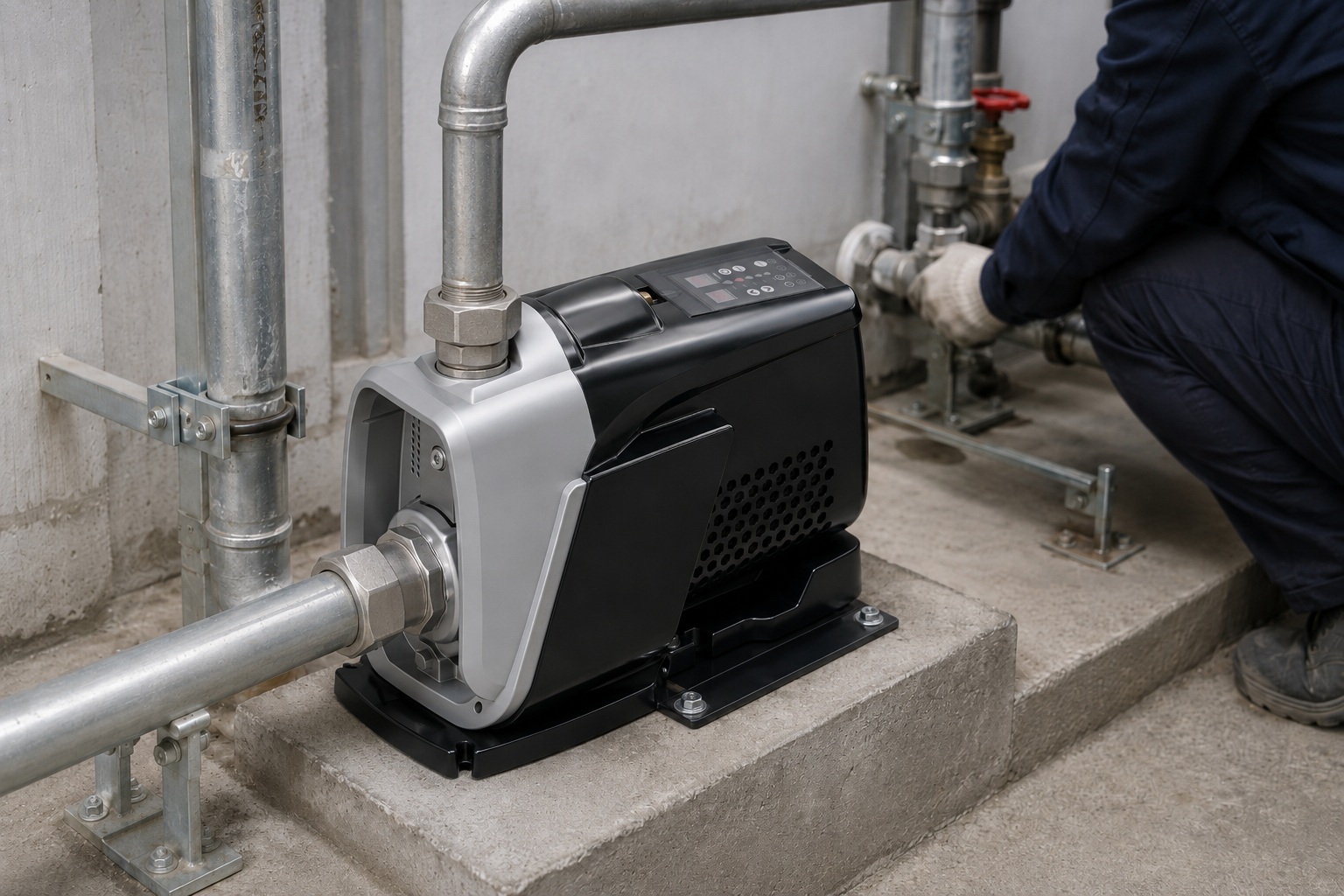
Struggling to identify pump types?
The wrong choice can lead to inefficiency and failure, costing you money.
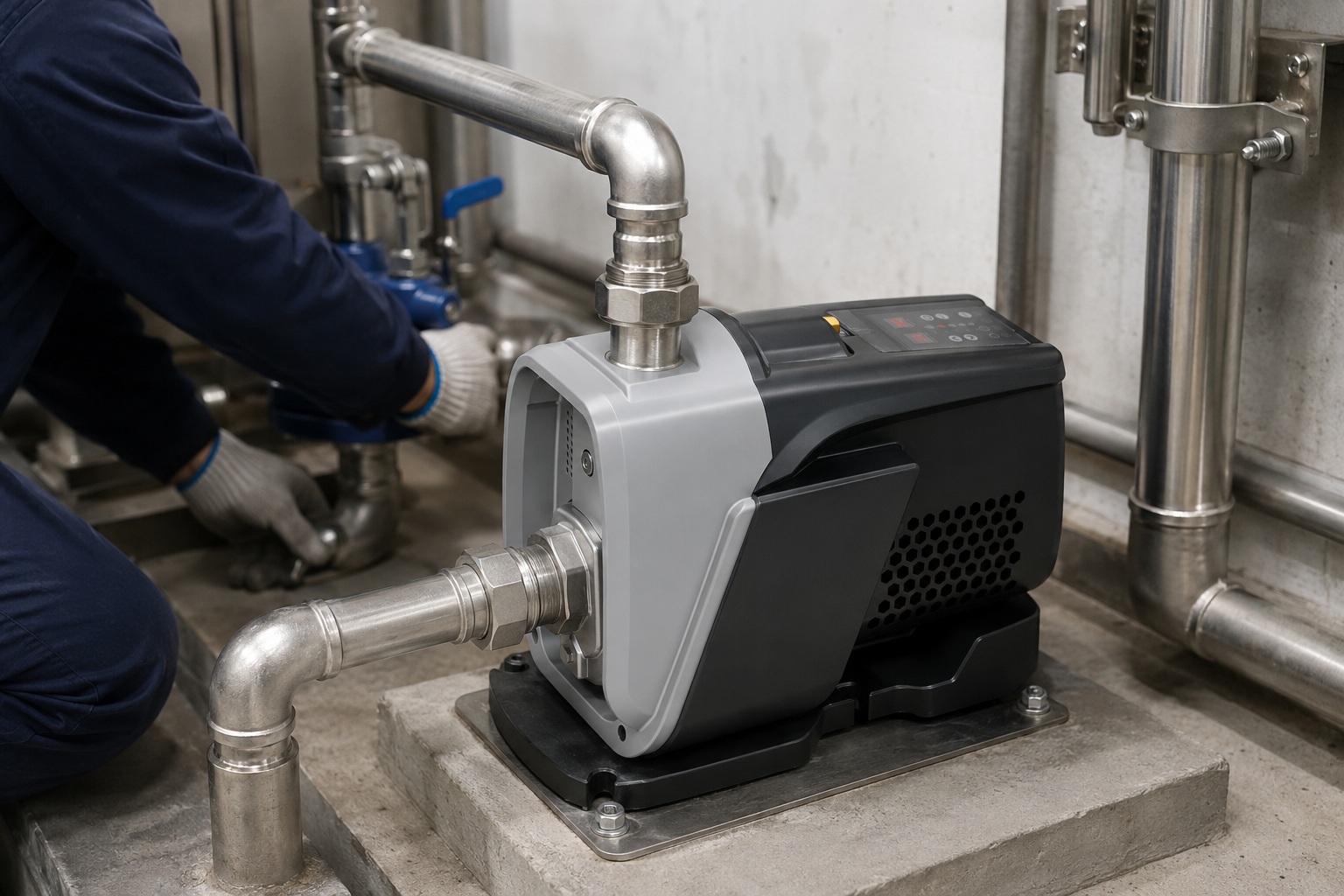
To determine if a centrifugal pump is single-stage or multi-stage, check the casing. A multi-stage pump typically has a longer, more segmented casing to house multiple impellers. A single-stage pump is more compact with a single volute. The nameplate data also definitively states the pump type.
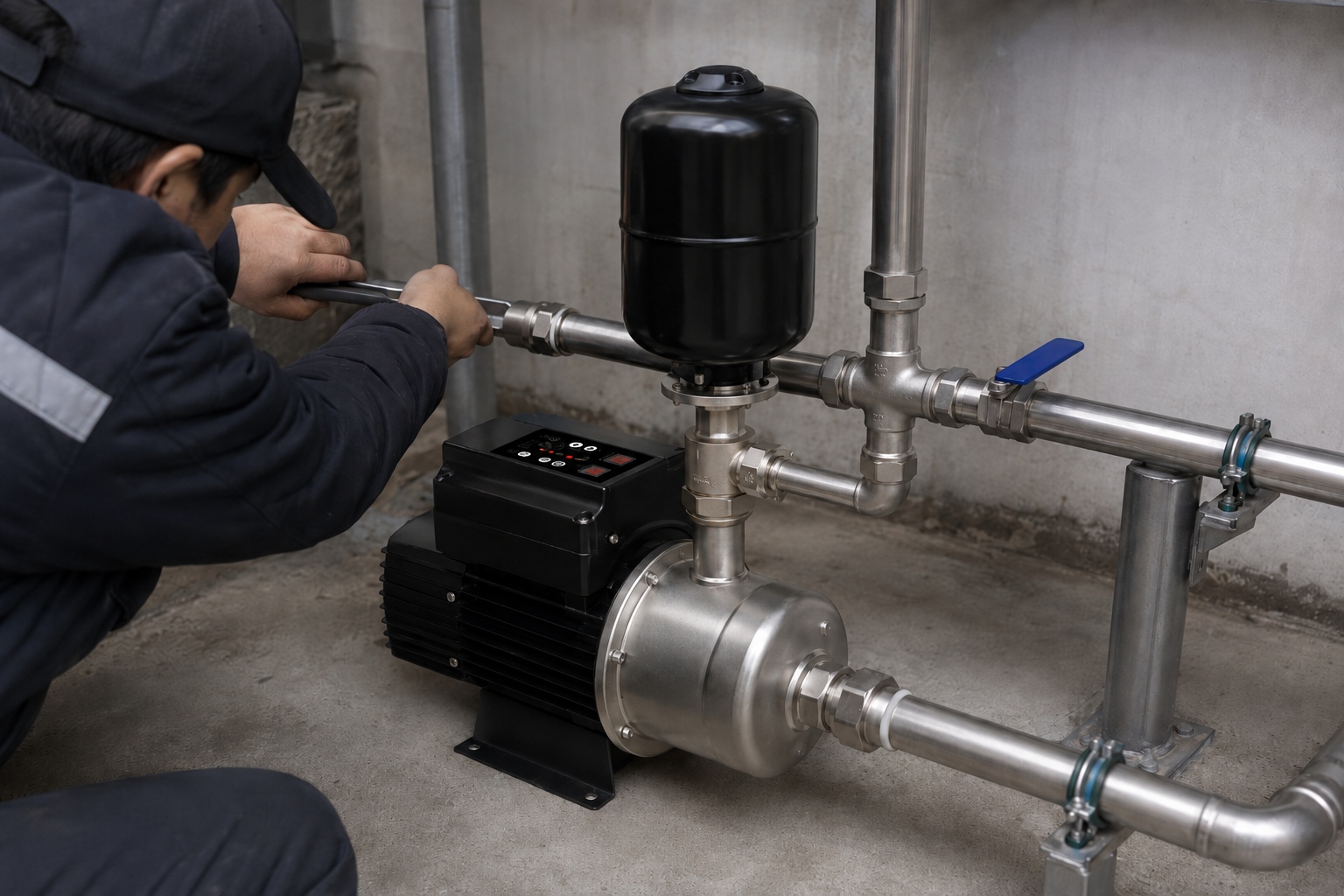
Knowing the visual cues is a great start.
But for a truly confident identification, we need to dig deeper.
We will explore the design, performance metrics, and documentation.
Let's break down the key differences to make you an expert.
This knowledge is crucial for importers and distributors.
You need to ensure you're sourcing the right equipment for your clients.
This applies to specific high-pressure or general-purpose needs.
Understanding the Basics: What Defines a Single-Stage Pump?
Confused by pump terminology?
Selecting a pump with the wrong pressure capabilities can result in system underperformance and damage.
A single-stage centrifugal pump has one impeller rotating on a shaft. It uses this single impeller to generate velocity and pressure. This design makes it ideal for high flow rates at relatively low to moderate pressures.
The single-stage pump is the most common type of centrifugal pump.
Its design is simple and effective.
The core principle involves one key component.
The Single Impeller Design
At the heart of the pump is a single impeller.
This impeller spins on a shaft driven by a motor.
As it spins, it draws fluid into its center, or the "eye".
Centrifugal force then throws the fluid outwards to the edge of the impeller.
This action dramatically increases the fluid's velocity.
The fluid then exits the impeller and enters the pump casing, known as the volute.
How It Generates Pressure
The volute is a specially designed spiral-shaped casing.
Its cross-sectional area gradually increases along the flow path.
This increase in area forces the high-velocity fluid to slow down.
According to Bernoulli's principle, as velocity decreases, pressure increases.
This conversion process from kinetic energy (velocity) to potential energy (pressure) is how the pump achieves its final discharge pressure.
The entire pressure boost is accomplished in this single step, or "stage".
Typical Performance and Applications
Single-stage pumps are workhorses for a vast array of applications.
They are defined by their hydraulic performance characteristics.
- High Flow Rates: Their design allows them to move large volumes of fluid efficiently.
- Lower Pressure Heads: Because they only have one impeller, the total pressure they can generate is limited. They are generally not suited for applications requiring extremely high pressure.
- Simplicity and Reliability: Fewer moving parts mean greater reliability and easier maintenance. This results in a lower total cost of ownership, a key factor for distributors like you. Over 90% of common water transfer tasks can be handled by a single-stage pump.
Below is a table comparing typical characteristic ranges.
| Feature | Single-Stage Pump | Multi-Stage Pump |
|---|---|---|
| Number of Impellers | 1 | 2 or more |
| Typical Pressure | Low to Moderate | High to Very High |
| Typical Flow Rate | Moderate to High | Low to Moderate |
| Casing Design | Compact, single volute | Elongated, segmented |
| Maintenance | Simpler, fewer parts | More complex |
| Initial Cost | Lower | Higher |
This fundamental understanding of the single-stage design is the first step in differentiating it from its multi-stage counterpart.
Exploring the Alternative: What Is a Multi-Stage Pump?
Need high pressure but your current pump isn't delivering?
Using the wrong pump type for high-head jobs leads to inefficiency and premature failure.
A multi-stage pump contains two or more impellers within a single casing. These impellers operate in series, with the discharge of one feeding the suction of the next, progressively boosting pressure at each stage.
The multi-stage pump is a specialized solution.
It is engineered specifically for high-pressure applications.
Its design builds directly upon the principles of a single-stage pump.
But it multiplies the effect.
The Series Impeller Configuration
Imagine connecting several single-stage pumps one after another.
The outlet of the first pump feeds into the inlet of the second, and so on.
A multi-stage pump does exactly this, but it packages it all within one, more efficient unit.
Each "stage" consists of an impeller and a corresponding diffuser.
Fluid enters the first impeller and its pressure is boosted, just like in a single-stage pump.
Instead of exiting the pump, the fluid is then guided by a diffuser to the eye of the second impeller.
The second impeller adds another boost of pressure to the fluid, which is now at an even higher pressure.
This process repeats through every stage of the pump.
If a pump has four stages, the pressure is boosted four separate times before the fluid is finally discharged. This series amplification can result in discharge pressures that are 400% to 1000% higher than a comparable single-stage pump.
Why This Design Is Used
The primary reason to use a multi-stage design is to achieve high pressure heads efficiently.
To get very high pressure from a single-stage pump, you would need an impractically large impeller diameter or an extremely high rotational speed.
Both of these options create mechanical stress, vibrations, and reduce operational efficiency.
By using multiple smaller impellers, a multi-stage pump can reach very high final pressures while keeping impeller diameters and speeds within a reasonable, efficient range.
Key Types of Multi-Stage Pumps
Multi-stage pumps come in a few common configurations, which is important for you to know when sourcing for different applications.
- Vertical Multi-Stage: Often used in building services and pressure boosting systems where a small footprint is critical. The stages are stacked vertically.
- Horizontal Multi-Stage: Commonly found in industrial applications like boiler feed water and reverse osmosis systems. The stages are arranged horizontally along a single shaft.
- Deep Well Submersible: These are multi-stage pumps designed to be submerged down a borehole to lift water from significant depths. Each stage adds the pressure needed to overcome the next section of the vertical lift.
Understanding that a multi-stage pump is essentially a chain of pressure boosters in one body is the key to recognizing its purpose and identifying it in the field.
The First Check: Visual Inspection and Physical Clues
Can't tell pumps apart on a warehouse floor?
Mistaking a single-stage for a multi-stage pump can lead to ordering the wrong stock, causing costly delays.
Visually, a multi-stage pump has a noticeably longer and often more segmented body than a single-stage pump. This elongated casing is necessary to house the multiple impellers arranged in a series along the shaft.
Your eyes are the first and often most effective tool for a quick assessment.
The physical differences between these two pump types are usually quite distinct.
An experienced eye can often identify the type with more than 95% accuracy from a visual inspection alone.
Let's break down exactly what to look for.
Casing Shape and Length
This is the most obvious clue.
A single-stage pump accomplishes its work with one impeller inside one volute.
Therefore, its casing is relatively compact and often has a simple, rounded "snail-shell" shape.
A multi-stage pump, by contrast, needs space for all its impellers and diffusers.
This forces the casing to be much longer relative to its diameter.
Think of it like this: a single-stage pump looks more like a square or a circle, while a multi-stage pump looks like a long tube or cylinder.
Comparing Casing Styles
| Feature to Inspect | Single-Stage Pump Appearance | Multi-Stage Pump Appearance |
|---|---|---|
| Overall Proportions | Casing length is similar to its width/height. Looks "stubby". | Casing is significantly longer than its width/height. Looks "long and thin". |
| Casing Body | Usually a smooth, one-piece volute casing. | Often has visible segments, tie-bolts, or rings indicating different stages. |
| Inlet/Outlet Flanges | Nozzle positions can vary (end suction/top discharge, etc.). | Often has "in-line" nozzles where suction and discharge are on the same axis for vertical types. Horizontal types have end suction and top discharge. |
Look for Segmentation and Tie-Bolts
Many horizontal multi-stage pumps are constructed in a modular way.
The different stage casings are held together by long external bolts, called tie-bolts, that run the entire length of the pump.
If you see several identical "rings" or sections clamped together between the suction and discharge ends of the pump, you are almost certainly looking at a multi-stage pump.
Each of these sections houses one impeller and one diffuser.
Vertical multi-stage pumps also show this segmentation, with a series of stacked, similar-looking chambers creating a tall, slender profile.
The Motor-to-Pump Ratio
While not a perfect indicator, observe the size of the motor relative to the pump's "wet end" (the casing).
In a single-stage pump, the motor and wet end are often proportionally similar in size.
For a multi-stage pump, especially one with many stages, the pump end can look disproportionately long and thin compared to the motor it's attached to.
By training your eye to spot these physical characteristics—length, segmentation, and proportion—you can quickly sort and identify pumps in a shipment or on a factory floor, saving time and preventing errors.
The Technical Proof: Checking the Nameplate and Documentation
Making an expensive guess based on visuals alone?
An incorrect assumption about a pump's capabilities can damage your reputation and lead to returned goods.
The most reliable way to identify a pump is by reading its nameplate. The manufacturer's data plate explicitly states the model, type, and key performance metrics, including the number of stages or a model number that indicates its configuration.
While visual inspection is a great skill, the ultimate source of truth is the data provided by the manufacturer.
The nameplate is a permanent label affixed to the pump.
It contains all the critical information you need for identification and application.
For a B2B buyer like yourself, relying on this data is non-negotiable for quality assurance.
Decoding the Nameplate
A pump nameplate is packed with information.
Here’s what you should look for to determine the number of stages.
- Pump Model/Type: Often, the model number itself contains clues. For example, a model like "CDL-4-160" might indicate a vertical multi-stage pump, where "160" could refer to the number of stages or a performance characteristic tied to them. A model "IS-100-80-160" is more typical for a single-stage pump. Manufacturers have their own coding systems, but multi-stage models often have a more complex name.
- "Stages" Field: Some nameplates will have an explicit field labeled "Stages" or "No. of Stages". If you see a number greater than 1 here, you have a multi-stage pump. This is the most direct confirmation.
- Head (H): Look at the rated head, often shown in meters (m) or feet (ft). While a single-stage pump can produce a high head, multi-stage pumps are known for producing exceptionally high heads. If you see a head value over 150-200 meters for a standard-sized pump, it's very likely a multi-stage unit.
- Flow (Q): Compare the head to the flow rate (Q), measured in m³/h or GPM. Multi-stage pumps typically provide high head at a relatively moderate flow rate. A pump with a very high H:Q ratio is often multi-stage.
Example Nameplate Analysis
Let's compare two hypothetical nameplates.
Nameplate A
- Model: X-100-200
- Q: 75 m³/h
- H: 30 m
- Power: 11 kW
- Stages: 1
Nameplate B
- Model: Y-40-250x6
- Q: 25 m³/h
- H: 240 m
- Power: 30 kW
- Stages: 6
It is immediately clear from the "Stages" field that Pump A is single-stage and Pump B is multi-stage.
Even without that field, you could deduce it. Pump B has a head (240m) that is eight times higher than Pump A's (30m), but its flow rate is only one-third of Pump A's. The "x6" in the model number is also a strong hint. This high-pressure, lower-flow profile is classic multi-stage performance.
Beyond the Nameplate: Technical Data Sheets
As an importer, you will also have access to technical data sheets and supplier documentation.
These documents provide even more detail than the nameplate.
They will always include a clear statement of the pump type and number of stages.
When placing a wholesale order, always cross-reference the physical nameplate with the data sheet provided by your supplier.
A discrepancy of even 1% between the documentation and the physical product should be flagged with your supplier's R&D department or quality control team.
This verification step is your best guarantee against receiving incorrect equipment. It builds trust and ensures the products you sell to your customers meet the exact specifications they require.
Performance Analysis: Using the Pump Curve
Does the pump's performance match the job's requirements?
Misinterpreting a pump curve can lead to specifying an oversized or undersized pump, wasting energy and causing operational problems.
A multi-stage pump's performance curve is typically steeper and covers a much higher head range than a single-stage pump's curve. By comparing the pump's duty point (flow and head) to a curve, you can identify its type.
For engineers and technical buyers, the pump performance curve is the DNA of the pump.
It tells you exactly how the pump will behave under different conditions.
It also holds clear clues about the pump's internal design.
Let's learn how to read these clues.
Understanding a Pump Curve
A pump curve is a graph that shows the relationship between flow rate (Q) on the horizontal axis and pressure head (H) on the vertical axis.
It illustrates that as you demand more flow from a pump, the pressure it can produce decreases.
The shape of this curve is determined by the impeller design and, crucially, the number of stages.
Comparing Curve Shapes
The most telling feature is the steepness of the curve.
- Single-Stage Pump Curve: These curves are generally flatter. This means that a large change in flow rate results in a relatively small change in pressure. They operate over a wide flow range but a limited pressure range.
- Multi-Stage Pump Curve: These curves are significantly steeper. A small change in flow rate will cause a large change in the discharge pressure. This is a direct result of the pressure being amplified at each stage. They operate in a narrower flow range but can achieve very high heads.
A steep curve for a multi-stage pump indicates that it is highly sensitive to the system's demands, which is why proper system design is critical for these applications.
Applying the Curve to an Unknown Pump
Imagine you are given a pump and its performance curve, but the nameplate is missing.
- Examine the Head Range: Look at the vertical (H) axis. If the curve starts at a very high head at zero flow (the "shut-off head"), for example, over 150 meters, it is a strong indicator of a multi-stage pump. Single-stage pumps rarely exceed this range without being exceptionally large.
- Calculate the Curve's Gradient: Pick two points on the curve. A point near the Best Efficiency Point (BEP) and a point further out on the flow axis. A multi-stage pump might lose 50-60% of its head as it moves from shut-off to its maximum flow. A single-stage pump might only lose 20-30% of its head over a similar portion of its operating range.
- Check for Multiple Curves: Some manufacturer data sheets will overlay the curves for models with different numbers of stages. For example, you might see a series of parallel, steep curves labeled "2-stage," "4-stage," "6-stage," etc., with each one sitting higher on the head axis. This is an explicit confirmation of a multi-stage pump family.
For a business owner like Andrew, understanding pump curves is a competitive advantage. It allows you to have more technical conversations with your suppliers in China and to better advise your own customers in Australia, ensuring they get a pump that perfectly matches their system's duty point. This expertise builds trust and positions your brand as a high-quality solution provider.
Context is Key: Clues from the Pump's Application
Why is this specific pump model used here?
Failing to understand the application leads to recommending the wrong pump, resulting in system failure and unhappy customers.
The pump's intended application provides strong contextual clues. Multi-stage pumps are used for high-pressure tasks like boiler feeding, reverse osmosis, and lifting water from deep wells. Single-stage pumps handle general, lower-pressure duties like circulation and water transfer.
The intended use of a pump is not a random choice.
It is dictated by the laws of physics and engineering requirements.
By understanding the job the pump is designed to do, you can make a very educated guess about its internal construction.
Over 98% of high-pressure industrial applications requiring more than 200 PSI will utilize a multi-stage pump.
High-Pressure vs. High-Flow Scenarios
Think about the primary purpose of the fluid system.
Is the goal to move a large volume of water with little resistance, or is it to force water against a high resistance?
Common Applications for Multi-Stage Pumps
These pumps excel where pressure is the main challenge. Look for them in these environments:
- Boiler Feed Water: Boilers operate under high pressure. The feed pump must generate a pressure significantly higher than the boiler's internal pressure to force water in. This is a classic multi-stage application.
- Reverse Osmosis (RO): RO systems use high pressure to force water through a semi-permeable membrane, leaving contaminants behind. The high-pressure pumps used in these systems are almost always multi-stage.
- High-Rise Building Water Supply: To get water to the top floors of a tall building, a pump must overcome the substantial head pressure created by gravity. Vertical multi-stage booster pumps are standard for this.
- Deep Well and Borehole Pumping: Lifting water from hundreds of feet underground requires a pump that can build pressure stage by stage to push the water column up to the surface. Submersible deep well pumps are a prime example.
- High-Pressure Cleaning: Industrial cleaning systems that use high-pressure water jets rely on multi-stage pumps to generate the necessary force.
Common Applications for Single-Stage Pumps
These pumps are the go-to solution for the majority of fluid transfer needs. They are found everywhere.
- General Water Transfer: Moving water from a tank to a house, or from a pond to a field.
- HVAC Circulation: Circulating hot or chilled water through a building's heating and cooling system. The pressure requirements are relatively low.
- Drainage and Wastewater: Pumping out flooded areas or moving wastewater. The primary need is to move a large volume, not to overcome high pressure.
- Irrigation: Supplying water to sprinklers for a lawn or small farm. While some pressure is needed, it's typically within the range of a standard single-stage pump.
- Pool and Spa Filtration: Circulating water through a filter. This is a high-flow, low-pressure application.
By asking "What problem does this pump solve?", you can infer its design. If the problem is "lift water very high" or "push water against extreme resistance," you are likely dealing with a multi-stage pump. If the problem is "move a lot of water from here to there," it is probably a single-stage pump.
Conclusion
Ultimately, identifying a pump is simple.
Use visual cues, check the nameplate, analyze the performance curve, and consider its job.
This ensures you choose the right pump every time.
FAQs
What is the main difference between a single-stage and multi-stage pump?
A single-stage pump uses one impeller to generate pressure, while a multi-stage pump uses two or more impellers in series to achieve much higher pressures.
Can a single-stage pump be used for high pressure?
Yes, but only to a limited extent. Specially designed single-stage pumps can achieve high pressure, but multi-stage pumps are far more efficient and common for very high-pressure applications.
How do I know how many stages my pump has?
The most reliable way is to check the pump's nameplate or technical data sheet, which will explicitly state the number of stages or provide a model number indicating it.
Are multi-stage pumps more expensive?
Yes, typically. Due to their more complex design, additional components (impellers, diffusers), and tighter manufacturing tolerances, multi-stage pumps generally have a higher initial cost than single-stage pumps.
Can I replace a multi-stage pump with a single-stage pump?
Only if the system's pressure requirement is low enough for a single-stage pump to handle. Replacing a multi-stage pump in a high-pressure system with a single-stage pump will result in system failure.
What is a vertical multi-stage pump?
It is a multi-stage pump where the impellers and casing are stacked vertically. This design saves floor space and is common for pressure boosting in buildings.
Why does a multi-stage pump have a steeper curve?
The pressure is multiplied at each stage. A small change in flow causes a compounded change in pressure across all stages, resulting in a steeper performance curve compared to a single-stage pump.