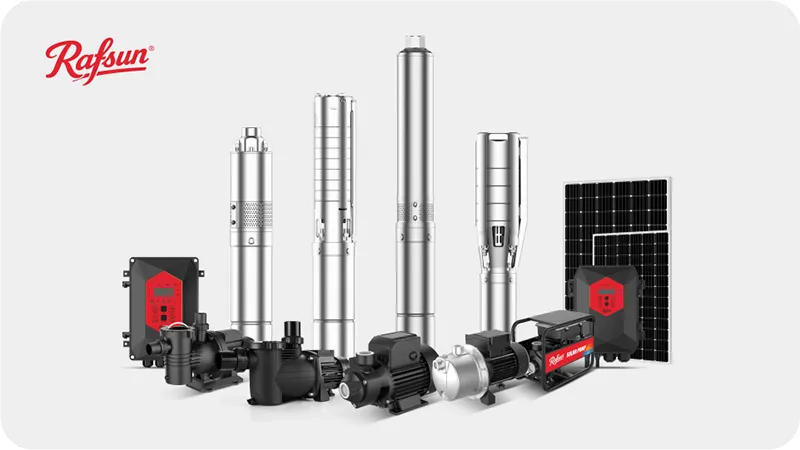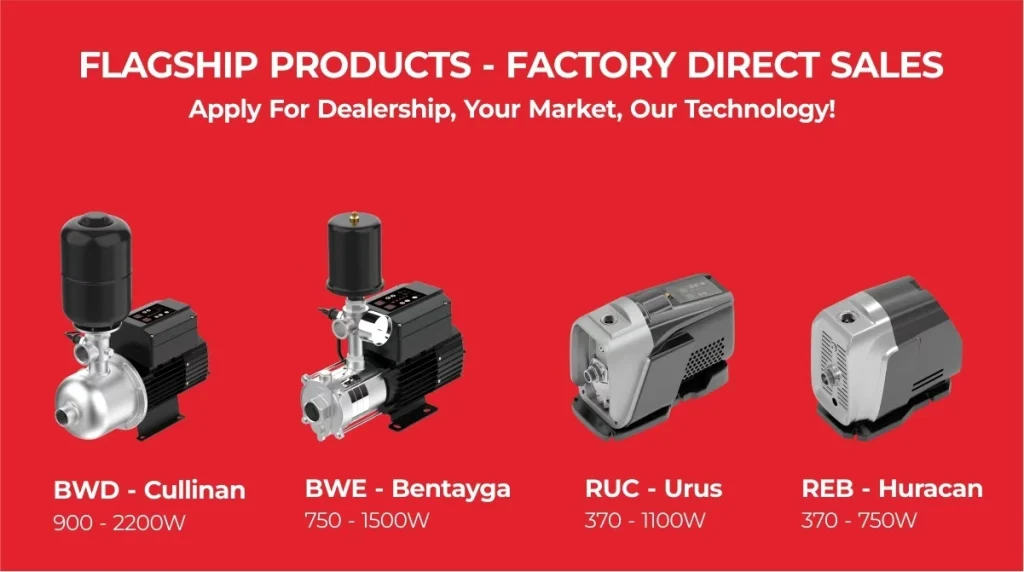
Struggling to identify the most prevalent water pump for your inventory?
This uncertainty can lead to missed market opportunities and stocking the wrong products for your customers’ needs.
The most commonly used water pump is the centrifugal pump. Its simple design, versatility, and cost-effectiveness make it the top choice for an overwhelming majority of applications, from residential water supply and irrigation to large-scale industrial processes, accounting for over 75% of pump installations worldwide.
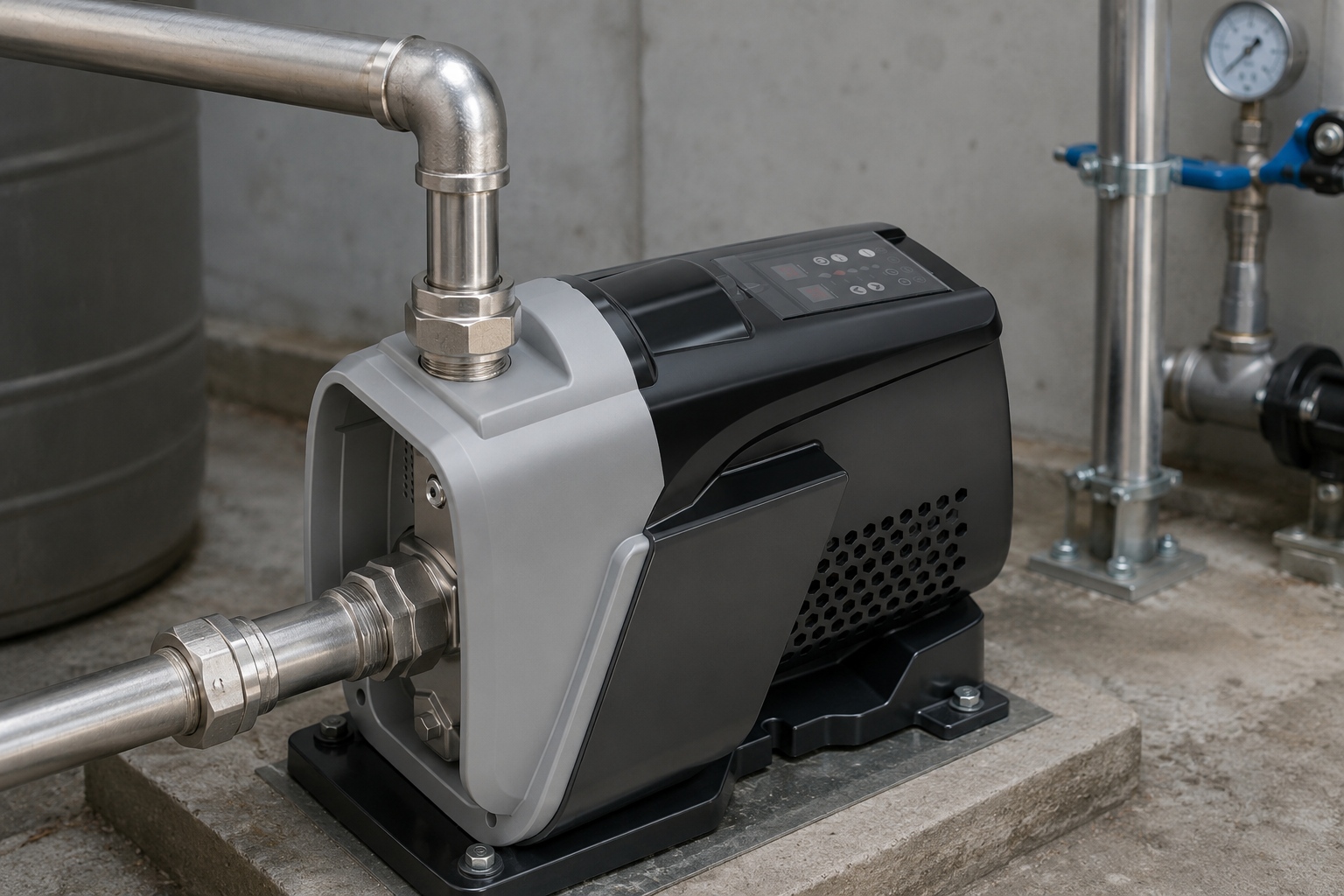
Understanding this dominance is key to making informed business decisions.
While centrifugal pumps lead the market, the world of water pumps is diverse and nuanced.
Different applications demand different technologies, and knowing the specific strengths of each type is crucial for importers and distributors aiming to meet the precise demands of their clients.
This guide will break down the most common pump types, their core functionalities, and their ideal applications to provide you with the clarity needed to succeed.
Let’s explore the technologies that keep the world’s water moving.
Understanding the Basics: Centrifugal vs. Positive Displacement Pumps
Choosing the wrong pump type can cause system failures.
This leads to inefficiency, increased maintenance costs, and unhappy clients.
Understanding the fundamental difference between pump categories is the first step toward success.
The two primary categories of water pumps are centrifugal and positive displacement. Centrifugal pumps use a spinning impeller to generate flow by accelerating fluid, while positive displacement pumps trap a fixed amount of fluid and force it into the discharge pipe, delivering a constant flow regardless of pressure.
To make the best choice for your inventory, it’s essential to dive deeper into how these two core technologies operate and where they excel.
This knowledge forms the foundation of all pump selection processes.
The distinction is not just academic; it has significant real-world implications for performance, efficiency, and lifespan.
The Mechanism of Action
Centrifugal pumps operate on a simple yet powerful principle.
Water enters the pump, typically near the center (the "eye") of a spinning component called an impeller.
The impeller’s vanes catch the water and accelerate it outward using centrifugal force.
This high-velocity water then moves into a casing, or volute, which is specially shaped to slow the water down.
As the water decelerates, its kinetic energy is converted into pressure, forcing it out of the pump’s discharge port.
In contrast, positive displacement (PD) pumps work by physically moving a set volume of fluid with each cycle.
They don’t create velocity to generate pressure; they directly apply force to the fluid.
Key Operational Differences
The most critical distinction lies in their flow characteristics.
A centrifugal pump’s flow rate varies significantly with changes in system pressure (or head).
If the pressure in the system increases, the flow from a centrifugal pump will decrease.
A PD pump, however, will deliver a nearly constant flow rate regardless of the system pressure it is working against.
This makes PD pumps ideal for applications requiring precise dosing or high-pressure, low-flow performance.
Viscosity and Efficiency
Fluid viscosity also plays a major role.
Centrifugal pumps are highly efficient with low-viscosity fluids like water.
However, their efficiency drops dramatically as fluid viscosity increases, as more energy is required to accelerate the thicker liquid.
PD pumps, on the other hand, handle viscous fluids with ease and often see an increase in efficiency as viscosity rises because the thicker fluid is less likely to slip past the internal clearances of the pump.
Below is a table summarizing the core differences:
| Feature | Centrifugal Pump | Positive Displacement Pump |
|---|---|---|
| Flow Rate | Variable with pressure | Constant regardless of pressure |
| Pressure Handling | Best for low to medium pressure | Ideal for high-pressure applications |
| Fluid Viscosity | Excellent for low viscosity (e.g., water) | Excellent for high viscosity fluids |
| Operating Principle | Converts velocity to pressure | Traps and forces a fixed volume |
| Common Cost | Generally lower initial cost | Generally higher initial cost |
| Maintenance | Simpler design, often lower maintenance | More complex, may require more service |
The Reigning Champion: Why Centrifugal Pumps Dominate the Market
Are you unsure which pump type represents the largest market share?
Focusing on niche pump types can limit your sales potential and fail to meet the broadest customer demand.
Stocking the most popular type ensures you cater to the majority of applications.
Centrifugal pumps dominate the market due to their unparalleled versatility, cost-effectiveness, and simple, robust design. They can efficiently handle a vast range of flow rates and pressures, making them the default choice for over 75% of residential, commercial, and industrial fluid-handling tasks globally.
The reasons behind this market dominance are multifaceted.
They extend beyond simple mechanics into the practical realities of cost, maintenance, and scalability.
For any distributor, understanding these advantages is critical to aligning your product offerings with market demand.
A deep dive into the factors driving their popularity reveals why they are the workhorse of the fluid-handling industry.
Cost-Effectiveness and Scalability
One of the primary drivers of the centrifugal pump’s popularity is its economic advantage.
The manufacturing process for centrifugal pumps is generally simpler and less expensive than for positive displacement pumps.
This results in a lower initial purchase price, a crucial factor for projects of all sizes.
Furthermore, these pumps are highly scalable.
They can be designed to handle flow rates from just a few gallons per minute in a household booster pump to hundreds of thousands in a municipal water system.
This scalability means the same basic technology can be adapted to an immense range of applications, creating economies of scale in manufacturing and R&D that further drive down costs.
Simplicity and Reliability
The design of a centrifugal pump is inherently simple.
It has few moving parts, with the impeller and shaft being the main components in motion.
This simplicity translates directly to higher reliability and lower maintenance requirements.
There are no tight-fitting valves, gears, or pistons that wear out quickly.
Routine maintenance often involves little more than checking bearings and seals, which are typically designed for long service life.
This operational reliability is a massive benefit in industrial settings, where downtime can cost thousands of dollars per hour, and in residential applications, where users expect a "set it and forget it" solution.
Performance Flexibility
Centrifugal pumps offer a wide performance envelope.
While a single pump is designed for a specific Best Efficiency Point (BEP), its performance can be easily modified.
- Trimming the Impeller: The diameter of the impeller can be machined down to permanently reduce the pump’s head and flow output to better match system requirements.
- Variable Speed Drives (VSD): Modern centrifugal pumps are often paired with VSDs. By adjusting the motor’s speed, the pump’s output can be precisely controlled in real-time to match system demand, which dramatically improves energy efficiency by up to 50% or more.
This flexibility allows a single pump model to serve various duty points, reducing the number of different models a distributor needs to stock.
Their ability to operate effectively across a broad spectrum of conditions solidifies their position as the go-to solution.
A Closer Look: Common Types of Centrifugal Pumps
Your customers need more than just a "centrifugal pump."
Offering a single, generic type won’t meet specific needs like lifting water from a deep well or boosting pressure in a multi-story building.
Knowing the subtypes allows you to provide targeted solutions.
Within the centrifugal family, common types include standard end-suction pumps for general transfer, submersible pumps for wells and drainage, multistage pumps for high-pressure applications, and vertical inline pumps for space-saving installations. Each is engineered for a specific set of operational demands.
The broad category of "centrifugal pump" contains a diverse range of specialized designs.
Each variant leverages the same fundamental principle of centrifugal force but applies it in a way that is optimized for a particular task.
For an importer or distributor, having a solid grasp of these key subtypes is essential for building a comprehensive and effective product catalog that addresses the real-world challenges your customers face.
Let’s break down the most prevalent designs.
End-Suction Pumps
This is the most common configuration of a centrifugal pump.
The name comes from its design, where the suction nozzle is on the end of the pump, and the discharge is typically on top.
They are usually single-stage, meaning they have only one impeller.
- Use Cases: Widely used for water transfer, circulation in HVAC systems, and as general-purpose industrial pumps.
- Advantages: Simple, cost-effective, and easy to maintain. Their widespread use means parts and service expertise are readily available.
- Limitations: Not ideal for very high-pressure applications without being configured in series.
Submersible Pumps
As the name implies, these pumps are designed to be fully submerged in the fluid they are pumping.
The motor is hermetically sealed and close-coupled to the pump body.
This design has a major advantage: it uses the pressure of the liquid surrounding it to push fluid into the pump, preventing the need for priming and avoiding pump cavitation, a major cause of wear.
- Use Cases: Deep well water extraction, borehole drilling, sump drainage, and sewage pumping.
- Advantages: Self-priming, quiet operation (as they are underwater), and cooled by the surrounding fluid.
Multistage Pumps
When a single impeller cannot generate enough pressure, multistage pumps are used.
These pumps have multiple impellers that are housed in a single casing and mounted on the same shaft.
Water flows from the discharge of one impeller into the suction of the next, with the pressure increasing at each stage.
- Use Cases: High-pressure applications like boiler feed water, reverse osmosis, pressure boosting in tall buildings, and high-pressure cleaning.
- Configuration: They can be either horizontal or vertical. Vertical multistage pumps are particularly popular for their small footprint.
Vertical Inline Pumps
These are single-stage pumps where the suction and discharge nozzles are in line with each other.
This design allows the pump to be installed directly into a pipeline, much like a valve.
They are extremely space-efficient, which is a significant benefit in crowded mechanical rooms.
- Use Cases: HVAC systems, domestic and industrial water pressure boosting.
- Advantages: Compact design saves valuable floor space, and simplifies piping layout.
| Pump Type | Primary Application | Key Feature |
|---|---|---|
| End-Suction | General Water Transfer | Most common, cost-effective design |
| Submersible | Wells, Boreholes, Sumps | Operates fully submerged, self-priming |
| Multistage | High-Pressure Boosting | Multiple impellers to build high head |
| Vertical Inline | HVAC, Boosting | Space-saving, fits directly in pipeline |
Beyond Centrifugal: Key Applications for Positive Displacement Pumps
Focusing only on centrifugal pumps leaves a gap in your offerings.
Certain critical applications, like handling viscous fluids or precise chemical dosing, will fail with a centrifugal pump.
You risk losing customers with these specialized, high-margin needs.
Positive displacement (PD) pumps are essential for high-pressure, low-flow scenarios and for pumping viscous or shear-sensitive fluids. They excel in applications like chemical injection, oil transfer, and food processing, where a constant, predictable flow is non-negotiable, a market segment representing about 20-25% of industrial applications.
While centrifugal pumps dominate in volume, positive displacement pumps are indispensable in their specific niches.
For a distributor, understanding and stocking the right PD pumps can open up access to valuable, specialized markets where performance is valued over price.
These pumps are not competitors to centrifugal pumps; they are problem-solvers for tasks that centrifugal pumps simply cannot perform effectively.
Let’s explore where these powerful and precise machines shine.
Handling High Viscosity Fluids
This is a primary area where PD pumps are unrivaled.
As fluid viscosity increases, the efficiency of a centrifugal pump plummets because it struggles to "fling" the thick fluid.
In contrast, a PD pump traps and pushes the fluid, and its volumetric efficiency often increases with viscosity because there is less internal slippage.
- Examples: Pumping honey, molasses, heavy oils, and polymers.
- Common PD Types: Gear pumps, lobe pumps, and progressing cavity pumps are frequently used for these tasks.
High-Pressure, Low-Flow Applications
PD pumps are champions of high pressure.
Because they move a fixed volume with each rotation, they can generate very high pressures, often in excess of several thousand PSI.
They do this without needing the high speeds of a centrifugal pump.
This makes them perfect for applications that need to overcome significant system resistance but don’t require high flow rates.
- Examples: Hydraulic systems, high-pressure cleaning (car washes), and reverse osmosis systems that require pressures above what multistage centrifugal pumps can efficiently provide.
- Common PD Types: Piston pumps and diaphragm pumps are workhorses in this category.
Dosing and Metering
When a precise, repeatable volume of liquid must be delivered, a PD pump is the only choice.
Their output is directly proportional to their speed and remains constant regardless of changes in system pressure.
This predictability is critical for chemical processing, water treatment, and pharmaceutical manufacturing.
A 1% change in pump speed results in a 1% change in flow, a level of control centrifugal pumps cannot match.
- Examples: Injecting chlorine into a water supply, adding catalysts in a chemical reactor, or metering ingredients in food production.
- Common PD Types: Metering pumps, which are often small diaphragm or piston pumps, are specifically designed for this purpose.
| PD Pump Application | Why It’s a Fit | Typical Pump Types |
|---|---|---|
| Viscous Fluids | Efficiency increases with viscosity; no "slinging" required. | Gear, Lobe, Progressing Cavity |
| High Pressure | Can generate very high head at low flow rates. | Piston, Plunger, Diaphragm |
| Metering/Dosing | Delivers a precise, constant flow regardless of pressure. | Metering Diaphragm, Peristaltic |
Matching the Pump to the Purpose: Application-Specific Pump Choices
Your customers are not buying a pump; they are buying a solution.
Simply listing pump specifications is not enough.
Failing to connect pump features to real-world applications makes it hard for buyers to choose, leading to lost sales and incorrect installations.
To succeed, you must match pump types to specific applications. A submersible pump is for a deep well, a multistage VSD pump is for boosting pressure in a high-rise, and a chemical-resistant diaphragm pump is for dosing. This application-first approach ensures customer satisfaction and system longevity.
The most effective way to guide a customer is to start with their problem, not your product.
What is the fluid?
Where is it coming from, and where does it need to go?
What are the pressure and flow requirements?
Answering these questions first will naturally lead to the correct pump selection.
For distributors, training your sales team to think like problem-solvers is paramount.
Let’s break down pump selection across three major sectors.
Residential and Domestic Applications
Homeowners have relatively straightforward needs, but the right pump is still crucial for comfort and safety.
- Water Supply from a Well:
- Shallow Wells (<25 feet/7.6 meters): A shallow well jet pump (a type of centrifugal pump) is often sufficient.
- Deep Wells (>25 feet/7.6 meters): A submersible pump is the standard and most reliable choice. It is placed down in the well and pushes water to the surface.
- Pressure Boosting:
- Whole House: If municipal water pressure is low, a centrifugal booster pump, often paired with a small pressure tank or a modern variable speed drive (VSD), is installed on the main water line to increase pressure. Vertical multistage VSD pumps are increasingly popular for their efficiency and quiet operation.
- Sump/Effluent Pumping:
- A submersible sump pump is placed in a basement sump pit to remove groundwater and prevent flooding.
Agricultural Applications
Farms rely heavily on pumps for irrigation, livestock watering, and general water transfer.
Reliability and efficiency are key to managing operational costs.
- Irrigation:
- Flood Irrigation: High-flow, low-head end-suction centrifugal pumps are commonly used to move large volumes of water from canals or ponds to fields.
- Sprinkler/Drip Irrigation: These systems require higher pressure. Multistage centrifugal pumps or vertical turbine pumps are often used to provide the necessary head to operate sprinklers effectively over large areas.
- Remote Water Sources: Solar-powered submersible pumps are a game-changer for agriculture, allowing for irrigation and livestock watering in locations far from the electrical grid. They represent one of the fastest-growing segments, with market growth projected at over 9% annually.
Industrial and Commercial Applications
The industrial sector has the most diverse range of needs, from simple water transfer to handling aggressive chemicals.
- HVAC Systems: Vertical inline centrifugal pumps are a staple in commercial buildings for circulating water in heating and cooling loops due to their space-saving design.
- Chemical Processing: This is a key domain for PD pumps. Corrosion-resistant diaphragm pumps are used for metering aggressive chemicals, while gear or lobe pumps handle the transfer of viscous polymers and resins.
- Boiler Feed: Supplying water to a boiler requires very high pressure to overcome the steam pressure inside. High-pressure, high-temperature multistage centrifugal pumps are specifically designed for this demanding task.
- Food and Beverage: Hygiene is paramount. Stainless steel centrifugal pumps with polished surfaces are used for transferring milk, juice, and other low-viscosity liquids. For thicker products like pastes, yogurts, or sauces, sanitary lobe pumps or progressing cavity pumps (types of PD pumps) are required.
The Future is Smart: The Rise of Variable Speed Drive (VSD) Pumps
Are your pump offerings stuck in the past?
Selling traditional, fixed-speed pumps means your customers are wasting energy and money, making your products less competitive.
This oversight can cost you clients who prioritize efficiency and long-term value.
Variable Speed Drive (VSD) pumps, also known as variable frequency drive (VFD) pumps, are the future. By automatically adjusting motor speed to match real-time demand, they can reduce energy consumption by 30-60%, significantly lower operating costs, and improve system longevity.
The shift towards intelligent pumping solutions is not a trend; it’s a fundamental evolution in the industry driven by rising energy costs and a global focus on sustainability.
A traditional pump always runs at 100% speed, even when only 50% of the flow is needed.
A VSD pump, however, operates more intelligently.
For distributors and importers, understanding and championing VSD technology is no longer optional—it’s a critical competitive advantage.
How VSD Technology Works
A VSD is an electronic controller that adjusts the frequency of the electrical power supplied to the pump’s motor.
The speed of an AC motor is directly proportional to the frequency.
By lowering the frequency, the VSD slows the motor down.
This has a profound impact on pump performance according to the Pump Affinity Laws:
- Flow is directly proportional to speed. (50% speed ≈ 50% flow)
- Pressure (Head) is proportional to the square of the speed. (50% speed ≈ 25% pressure)
- Power is proportional to the cube of the speed. (50% speed ≈ 12.5% power)
This cubic relationship between speed and power is the key to massive energy savings.
A small reduction in speed leads to a huge reduction in power consumption.
The Key Benefits of VSD Pumps
The advantages of adopting VSD technology are compelling and go far beyond just saving energy.
- Massive Energy Savings: As noted, reducing pump speed to match demand can cut energy use by half or more. For facilities where pumps run continuously, the return on investment (ROI) can be as short as 1-2 years.
- Improved Process Control: VSD pumps provide constant pressure, a feature highly desirable in residential boosting and many industrial processes. This eliminates the pressure fluctuations common with fixed-speed pumps cycling on and off.
- Reduced Mechanical Stress: The "soft start" capability of a VSD gently ramps up the motor speed, eliminating the electrical inrush current and the mechanical shock of a direct-on-line start. This reduces wear and tear on the pump, motor, couplings, and piping, extending the life of the entire system.
- Simplified Systems: In many cases, a VSD pump can eliminate the need for complex control valves, bypass lines, and large pressure tanks, simplifying system design and reducing potential points of failure.
Where VSD is Making the Biggest Impact
While applicable almost anywhere, VSD technology is a standard requirement in several key areas:
| Application Area | Why VSD is Essential | Estimated Energy Savings |
|---|---|---|
| Commercial HVAC | Building occupancy and weather conditions change constantly. | 30% – 70% |
| Municipal Water Boosting | Water demand fluctuates dramatically between day and night. | 25% – 50% |
| Industrial Process Cooling | Cooling needs vary with production load. | 30% – 60% |
| Residential Pressure Boosting | Provides constant pressure regardless of how many taps are open. | 40% – 60% |
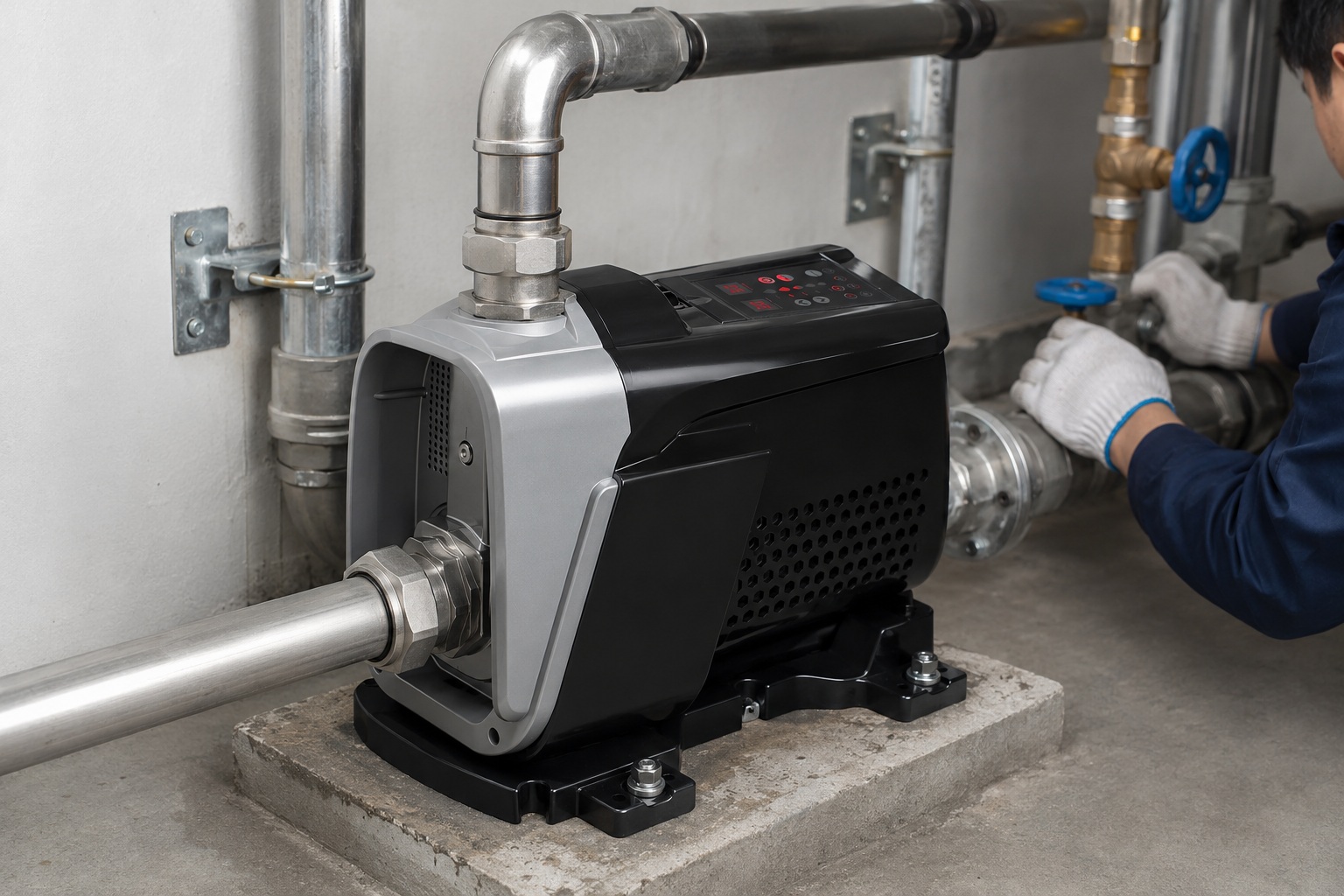
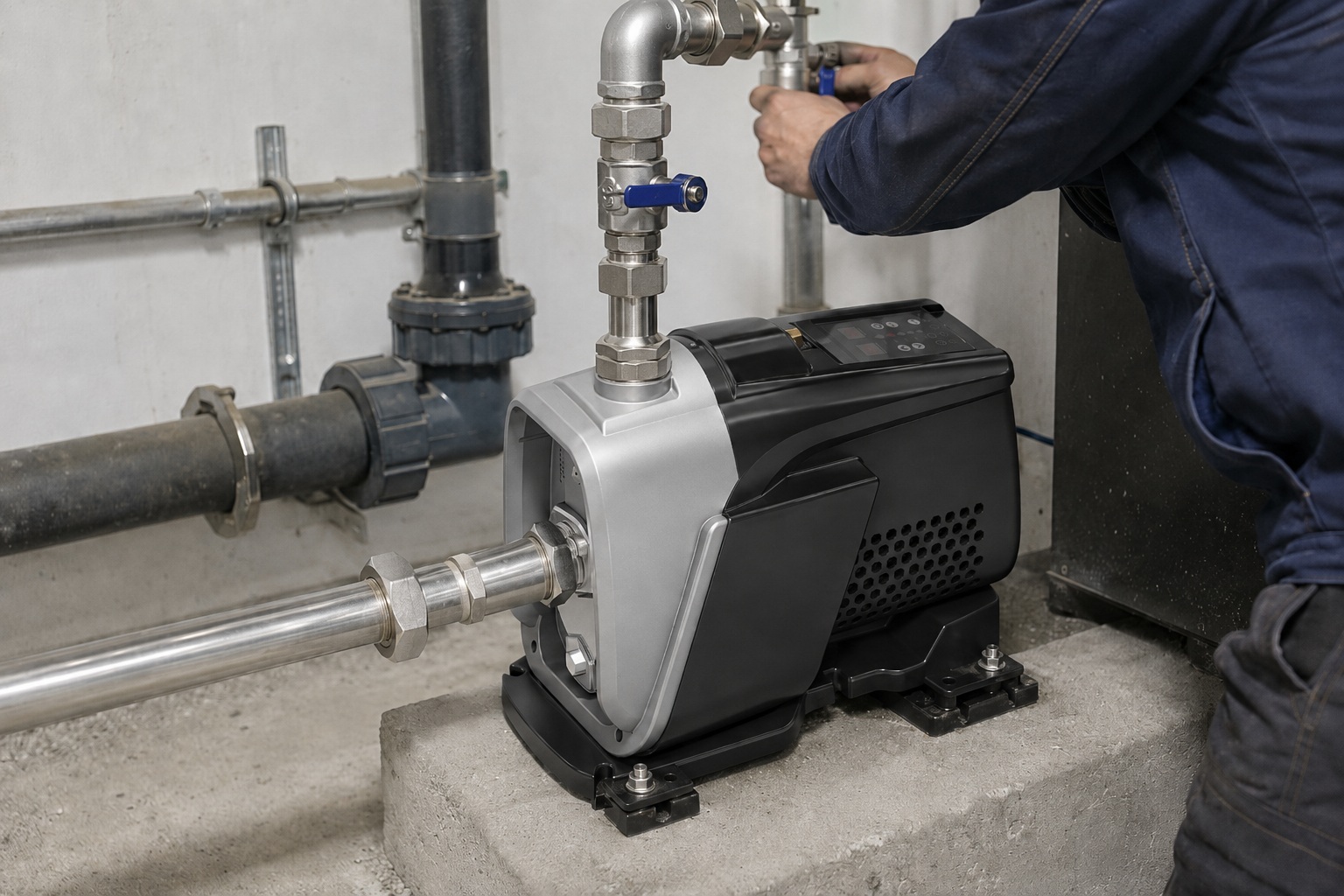
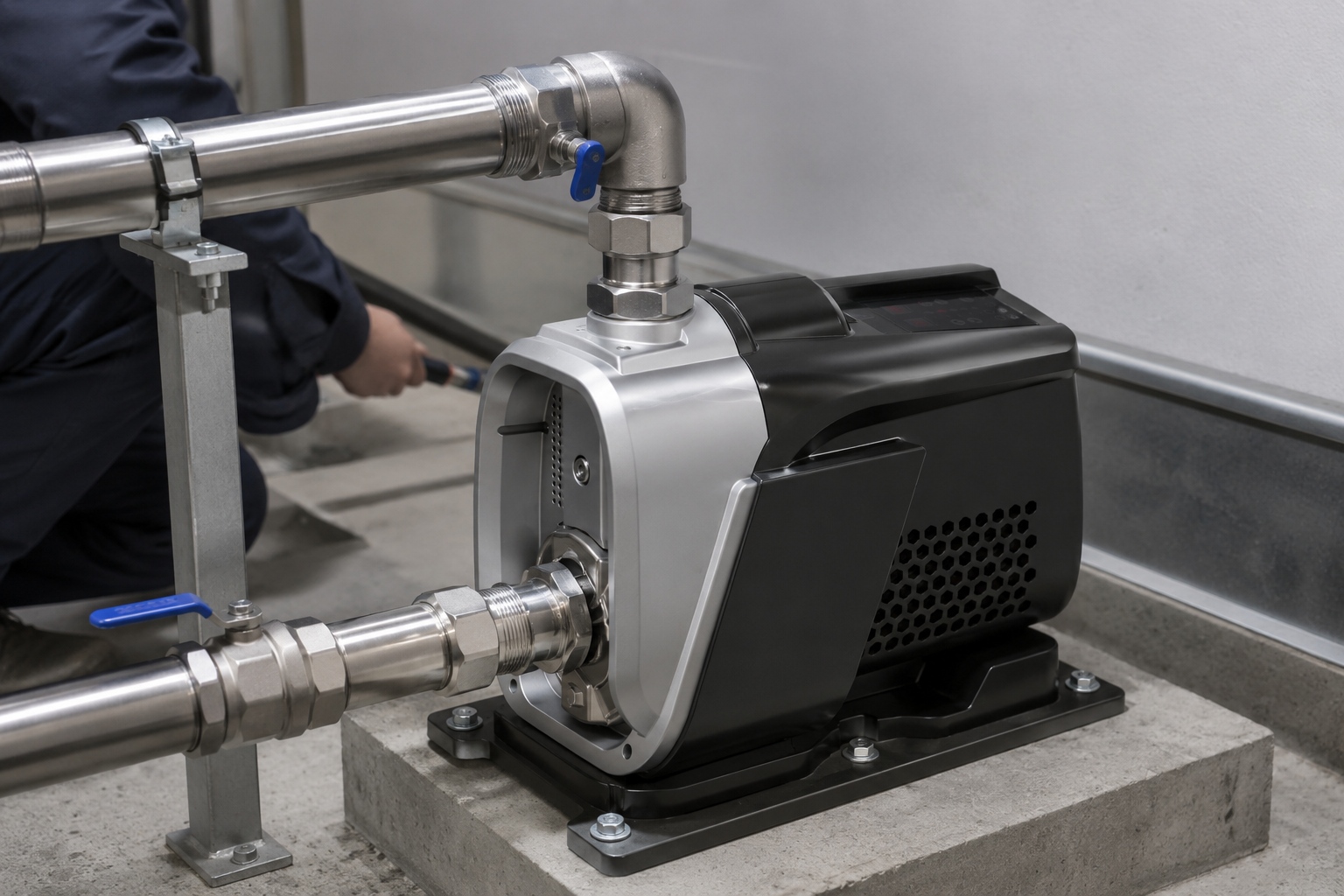
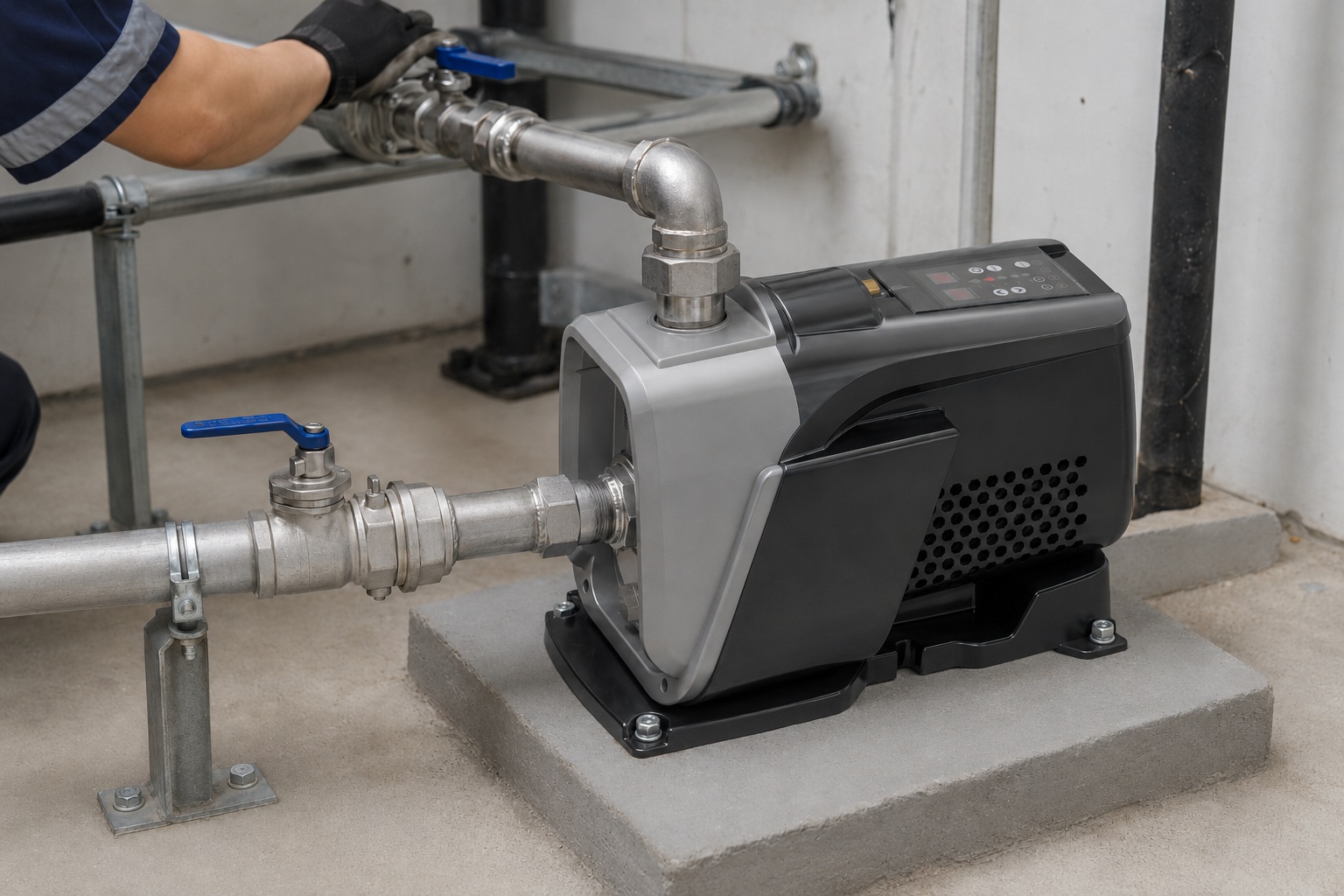
The adoption of intelligent permanent magnet variable frequency pump technology, which combines VSDs with highly efficient permanent magnet motors, represents the pinnacle of this evolution, pushing efficiencies even higher.
Conclusion
The centrifugal pump is the most used type globally due to its versatility and cost-effectiveness.
Understanding its variations and the niche roles of positive displacement pumps is crucial for success.
Frequently Asked Questions
What is the difference between a pump and a motor?
A motor converts electrical energy into mechanical energy (rotation). A pump is a machine that uses this rotation to move fluids. The motor drives the pump.
How do you choose a water pump for your home?
First, determine the application: well water, pressure boosting, or drainage. Then, consider the required flow rate and pressure. For wells, a submersible pump is common; for pressure, a booster pump.
What is the most efficient type of water pump?
Efficiency depends on the application. For moving water, a well-matched centrifugal pump at its Best Efficiency Point (BEP) is very efficient. Modern VSD pumps offer the highest system efficiency over time.
How long does a water pump last?
A well-maintained residential water pump can last 8 to 15 years. Industrial pumps have varied lifespans depending on use, but robust designs can operate for decades with proper maintenance.
Can I use a larger pump than I need?
Oversizing a pump is a common mistake. It leads to wasted energy, increased wear, and potential damage from operating far from its best efficiency point. Always size the pump for the system’s needs.
What is pump priming and why is it important?
Priming is the process of filling the pump casing with water before it starts. Centrifugal pumps cannot pump air, so priming is essential to create the suction needed to draw water.
What causes a pump to lose pressure?
Pressure loss can be caused by leaks in the system, a worn impeller in the pump, a clog in the suction line, or a drop in the water level of the source.
What is a self-priming pump?
A self-priming centrifugal pump has a design that allows it to retain water in its casing after the initial prime. This allows it to re-prime itself and purge air from the suction line automatically.