Struggling to choose the right pump?
The wrong choice can lead to inefficiency and high costs.
This guide simplifies the decision for you.
Neither pump is universally "better." Submersible pumps excel underwater for high-head applications like deep wells. Centrifugal pumps are versatile, surface-mounted units ideal for many general transfer and booster tasks. The best choice depends entirely on your specific application and specific project requirements.
Now that you have a basic idea, let's explore further.
Understanding the core mechanics, advantages, and limitations of each pump is crucial.
This knowledge empowers you to make the most cost-effective and efficient choice.
Making the right selection ensures optimal performance and long-term reliability for your project.
Understanding Submersible Pumps: The Deep Dive Expert
Need to move water from deep underground?
Surface pumps often can't handle the lift, leaving you with a dry project.
Submersible pumps are specifically designed for these challenging underwater tasks.
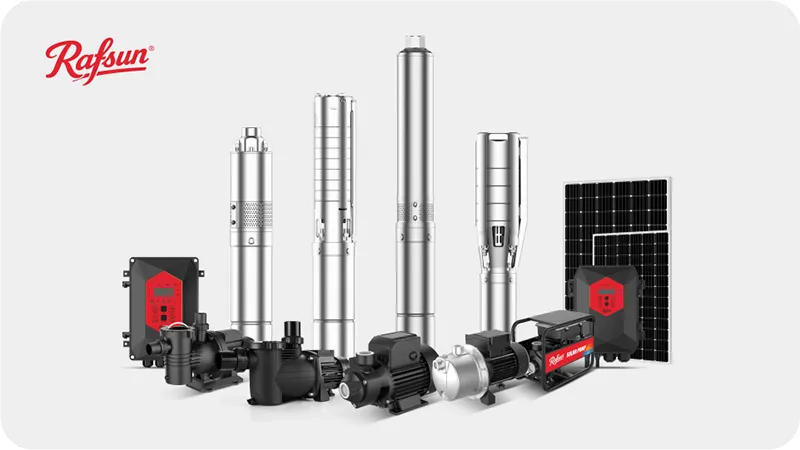
A submersible pump is a hermetically sealed unit with the pump and motor combined. It operates completely submerged in the fluid it is pumping. This design uses the surrounding liquid for cooling and pushes water to the surface, which handily avoids common priming issues.
A submersible pump is a remarkable piece of engineering.
It is designed to be fully immersed in the fluid it is meant to move.
This fundamental design choice dictates its primary functions and advantages.
The pump and motor are coupled together in a single, sealed unit.
This prevents any liquid from entering the motor housing and causing electrical shorts.
The pump works by pushing fluid, not by pulling it.
This is a key distinction from surface-mounted pumps.
Multistage impellers inside the pump spin rapidly.
These impellers increase the pressure of the water stage by stage.
This staged pressurization allows the pump to push water up from significant depths, often hundreds of feet below the surface.
Because it is submerged, the pump head is assisted by the pressure of the water above it, reducing the energy needed for lifting.
This direct-push method is far more efficient for deep applications than trying to create a vacuum to suck water from the surface.
How Submersible Pumps Excel
Submersible pumps offer several distinct advantages, primarily due to their underwater operation.
Their most significant benefit is their efficiency in deep well and borehole applications.
They can generate much higher pressure than a similarly sized centrifugal pump.
This allows them to push water from depths exceeding 100 meters with ease.
Another major benefit is self-priming.
Since the pump is already in the liquid, it does not need to be primed before operation.
This eliminates a common and often frustrating step required for many surface pumps.
They are also exceptionally quiet.
The surrounding water and earth effectively muffle any operational noise, making them ideal for residential or noise-sensitive environments.
Furthermore, being submerged helps with cooling.
The motor continuously transfers heat to the surrounding fluid, which prevents overheating and can extend the motor's lifespan, with some designs achieving over 90% motor efficiency in ideal conditions.
Potential Drawbacks and Considerations
Despite their advantages, submersible pumps are not without their challenges.
The most obvious drawback is maintenance and repair.
Accessing the pump requires pulling it from the well or tank, which can be a complex and costly operation.
This makes routine inspection and servicing much more difficult compared to a surface-mounted pump.
The hermetically sealed design, while necessary, also means that many repairs are not feasible in the field.
Often, a failed motor or seal necessitates a complete unit replacement.
Submersible pumps are also susceptible to damage from solids or abrasive materials in the fluid.
While some are designed to handle slurry, a standard water pump can suffer from rapid impeller wear or clogs, potentially leading to premature failure.
Finally, the initial cost of a submersible pump, especially for high-capacity or deep-well models, can be higher than a comparable centrifugal pump.
The installation costs, involving drilling, casing, and electrical work, also add to the total investment.
| Feature | Submersible Pump |
|---|---|
| Priming | Self-priming (always submerged) |
| Efficiency | Highly efficient, especially in deep applications |
| Noise Level | Very low (muffled by fluid and ground) |
| Maintenance | Difficult and costly access; repairs are complex |
| Cooling | Excellent; cooled by surrounding fluid |
| Vulnerability | Prone to cavitation if run dry; sensitive to abrasives |
| Typical Use | Deep wells, boreholes, sump drainage, sewage |
Understanding Centrifugal Pumps: The Versatile Workhorse
Need a reliable pump for a wide variety of surface-level tasks?
Using a specialized pump for a simple job is inefficient and costly.
Centrifugal pumps offer the flexibility and reliability you need for most fluid transfer applications.
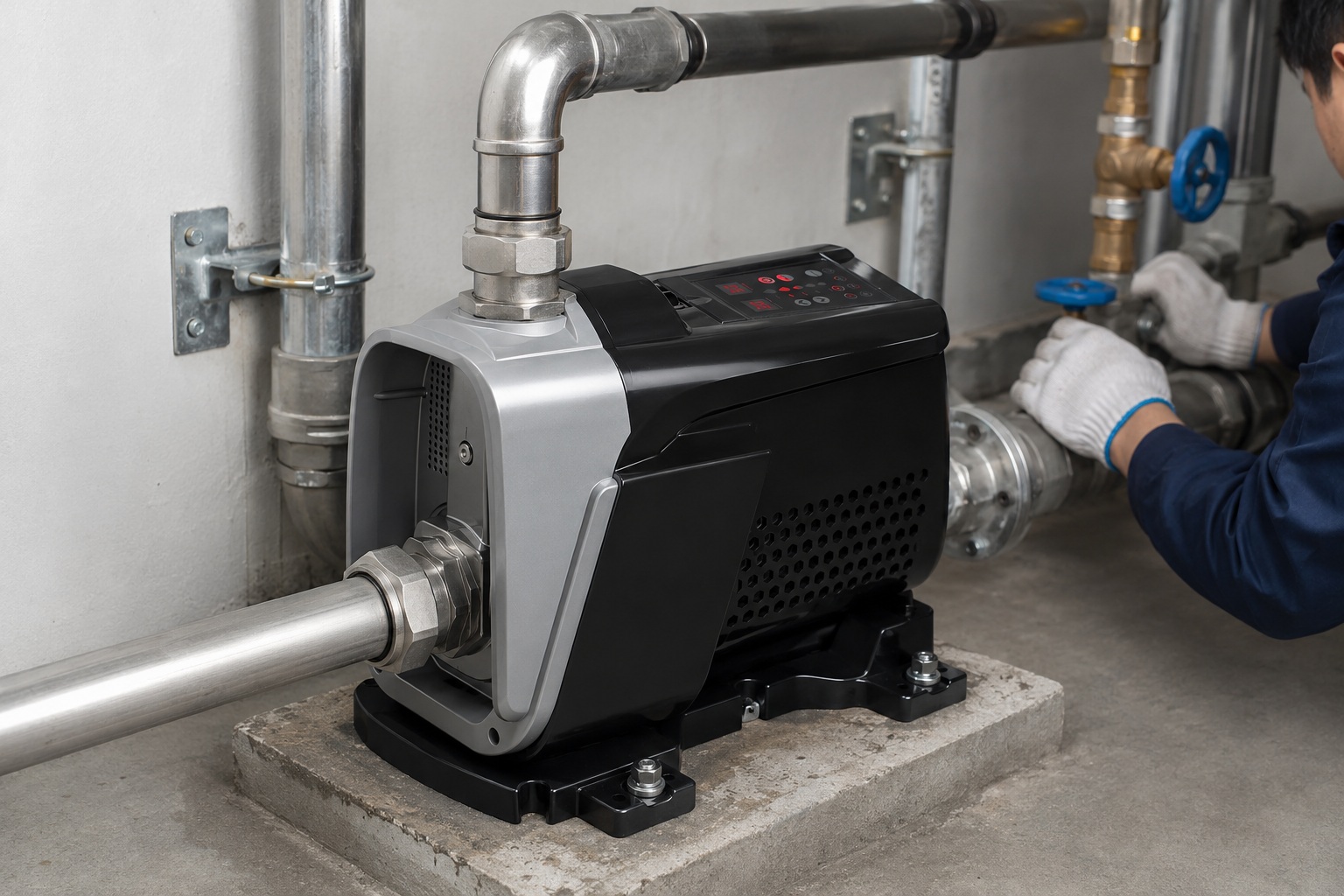
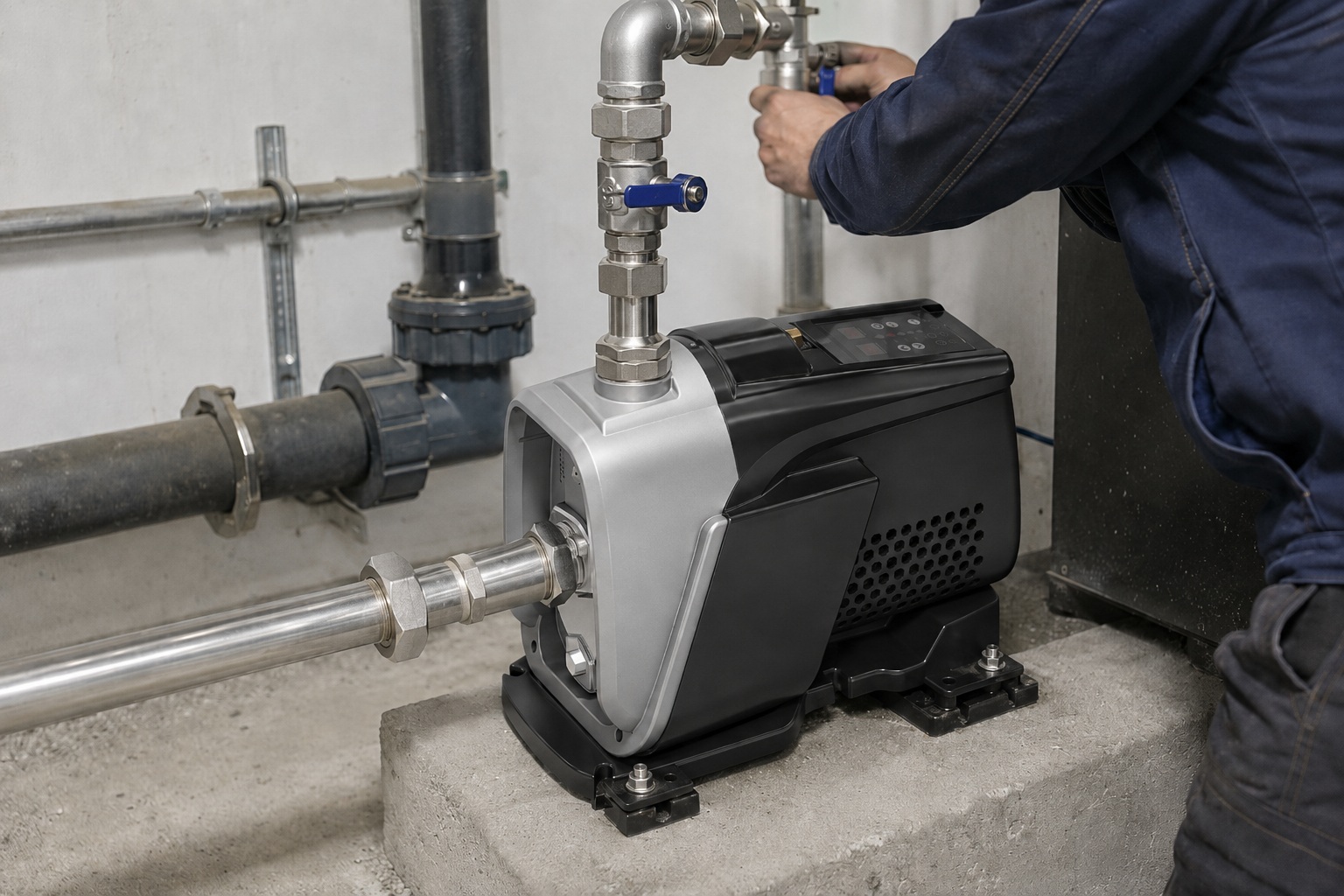
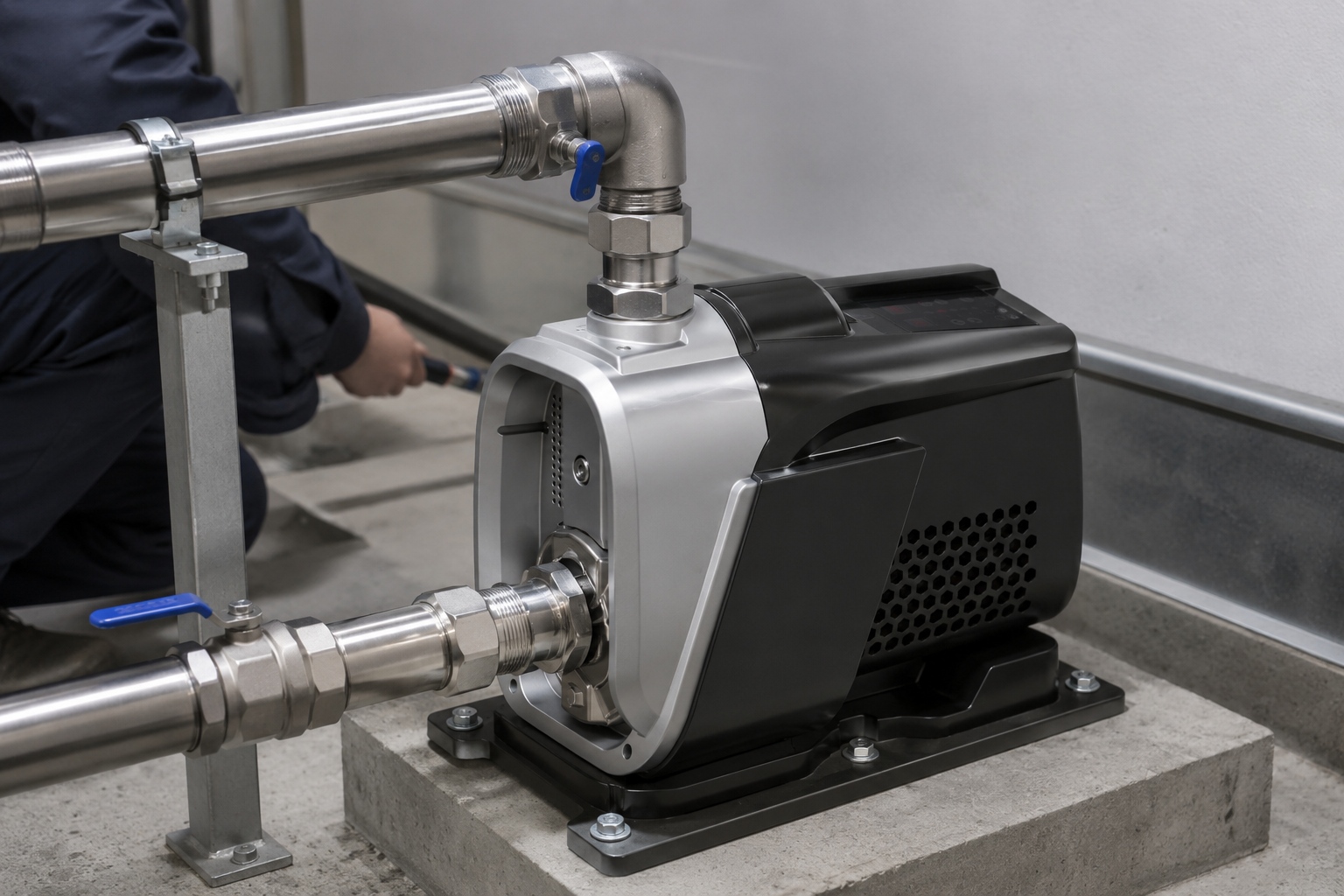
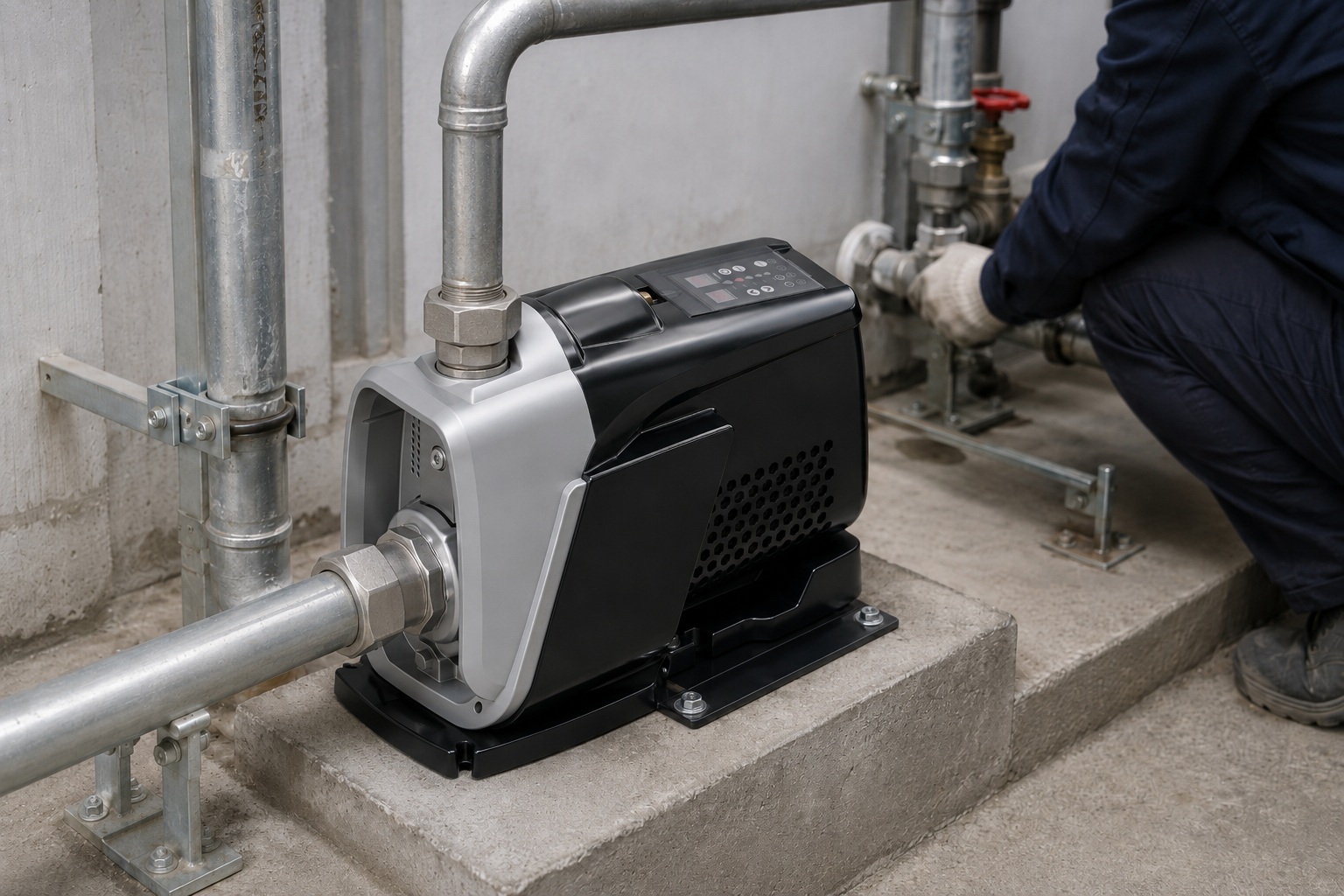
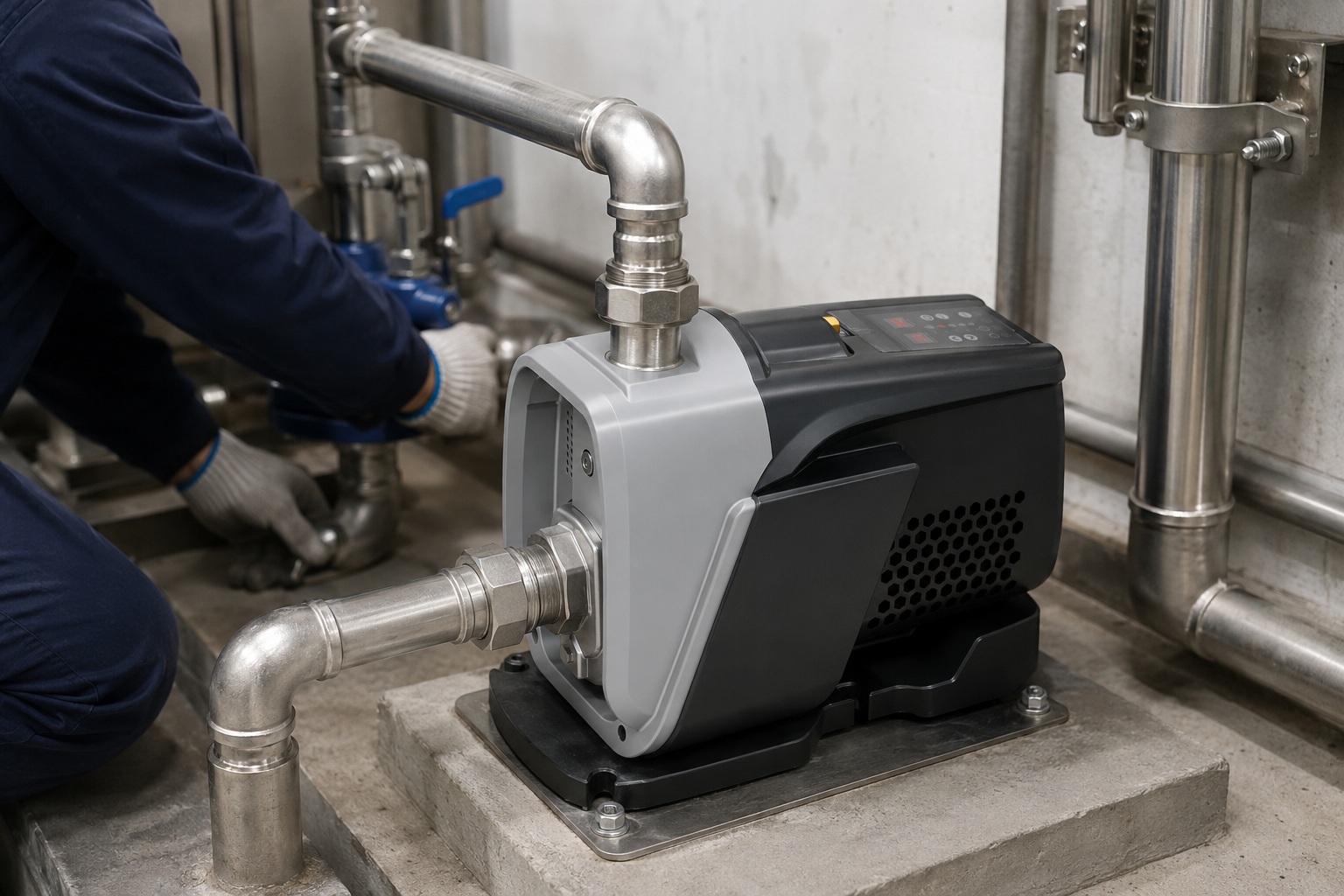
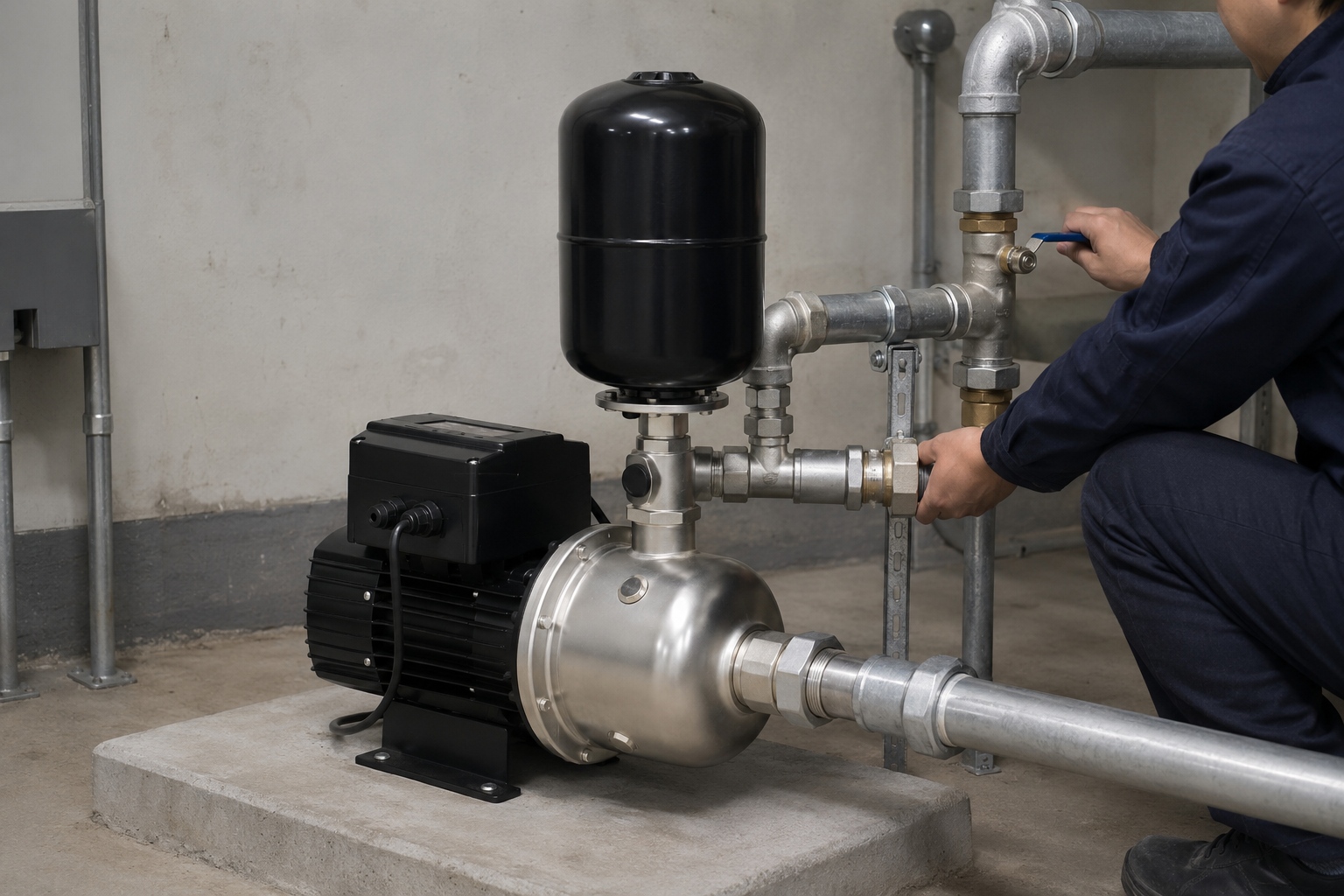
A centrifugal pump uses a rotating impeller to increase the velocity of a fluid. This kinetic energy is then converted into pressure as the fluid exits. These pumps are typically mounted on the surface and are the most common type used for fluid transfer.
Centrifugal pumps are the most widely used pumps in the world for good reason.
Their operation is based on a simple yet effective principle.
Fluid enters the pump through the suction nozzle, near the center of a rotating component called an impeller.
The impeller has vanes that catch the fluid and spin it rapidly.
This rapid rotation imparts kinetic energy to the fluid, throwing it outwards towards the pump casing.
The casing, known as a volute, is specially shaped.
It starts narrow and expands towards the discharge outlet.
As the fast-moving fluid enters the wider area of the volute, it slows down.
According to Bernoulli's principle, this decrease in velocity results in an increase in pressure.
This pressurized fluid is then forced out of the discharge nozzle.
This entire process allows the pump to move large volumes of fluid, making it a workhorse for countless applications.
Its simple design with few moving parts contributes to its reliability and low cost.
The Strengths of Centrifugals
The widespread adoption of centrifugal pumps stems from their numerous advantages.
Their primary strength is versatility.
They can be used for a vast range of applications, from domestic water pressure boosting to large-scale industrial processing.
Maintenance is another key benefit.
Because the pump and motor are located on the surface, they are easily accessible for inspection, routine maintenance, and repair.
This significantly reduces downtime and associated costs.
In terms of cost, centrifugal pumps are generally more economical to purchase than submersible pumps of a similar flow rate.
Their simple mechanical design with fewer critical components makes them cheaper to manufacture and repair.
They also offer a wide range of performance.
By changing the impeller size, motor speed, or pump configuration (e.g., multistage), their performance can be tailored to meet very specific flow and pressure requirements, with some models handling flow rates of over 50,000 gallons per minute.
Limitations to Keep in Mind
Centrifugal pumps are not suitable for every situation.
Their most significant limitation is their suction lift capability.
They are not effective at "pulling" water from deep sources.
Typically, a standard centrifugal pump can only lift water from a depth of about 7-8 meters (around 25 feet) due to atmospheric pressure limitations.
Priming is another critical consideration.
The pump casing and suction line must be filled with fluid before the pump can operate.
Running a centrifugal pump dry can cause severe damage from overheating and mechanical seal failure within minutes.
While self-priming models exist, they add complexity and cost.
They are also generally less efficient than submersible pumps when dealing with high-head (high pressure) and low-flow applications.
For pushing water vertically over long distances, a centrifugal pump must work much harder than a submersible pump already positioned at the bottom.
| Feature | Centrifugal Pump |
|---|---|
| Priming | Requires priming (must be filled with liquid) |
| Efficiency | Efficient for high volume, less so for high head |
| Noise Level | Moderate to high (motor and pump are exposed) |
| Maintenance | Easy access for inspection and repair |
| Cooling | Typically air-cooled by an external fan |
| Vulnerability | Cannot run dry; limited suction lift |
| Typical Use | Water supply, booster systems, circulation, general transfer |
Key Differences: A Head-to-Head Comparison
Choosing between the two can be confusing.
Making the wrong choice leads to poor performance and wasted energy.
This direct comparison highlights the key differences to guide your decision.
Submersible pumps push water from below, excel in deep applications, are self-priming, and quiet. Centrifugal pumps pull water from above, are ideal for surface transfer and boosting, offer easy maintenance, and are generally more cost-effective for general-purpose tasks.
The choice between a submersible and a centrifugal pump is not about which is superior overall.
It is about which is superior for your specific task.
The fundamental difference lies in their placement and method of moving fluid.
A submersible pump is submerged and pushes fluid.
A centrifugal pump is surface-mounted and pulls, then pushes, fluid.
This core difference creates a cascade of other distinctions in efficiency, application, and maintenance.
Understanding these distinctions is the key to selecting the right pump and ensuring the long-term success and efficiency of your fluid handling system.
Efficiency and Performance
When it comes to energy efficiency, the context is everything.
- Submersible Pumps: For deep well applications, submersible pumps are significantly more efficient. They use their energy to push the water column above them and don't fight against atmospheric pressure for suction. This can result in a 25-30% increase in efficiency over a surface pump in a deep well scenario.
- Centrifugal Pumps: For high-volume, low-pressure applications like transferring water between two tanks at the same elevation, a centrifugal pump is often the more efficient and cost-effective choice. They are designed for bulk movement over suction lift.
Installation and Maintenance
The accessibility of the pump is a major deciding factor for many users.
- Submersible Pumps: Installation can be complex, often requiring specialized equipment to lower the pump into a well or borehole. Maintenance is a significant undertaking, as the entire unit must be retrieved from the source.
- Centrifugal Pumps: Installation is generally straightforward on a flat, stable surface. The pump's location above ground makes all components easily accessible for routine checks, preventative maintenance, and rapid repairs, minimizing system downtime.
Cost Analysis: Initial vs. Lifetime
The total cost of ownership extends beyond the initial purchase price.
- Initial Cost: Centrifugal pumps typically have a lower upfront cost for the unit itself. However, the total cost for a submersible system might be higher due to drilling and specialized installation.
- Operating Cost: In the correct application (like a deep well), a more efficient submersible pump will consume less energy, leading to lower electricity bills over its lifetime.
- Maintenance Cost: Routine maintenance is cheaper for centrifugals. However, a major failure in a submersible pump often requires a full replacement, which can be more expensive than repairing a centrifugal pump. A recent industry survey indicated that unscheduled pump maintenance can cost up to 50% more than planned preventative maintenance.
| Decision Factor | Favors Submersible Pump | Favors Centrifugal Pump | Why it Matters |
|---|---|---|---|
| Water Source Depth | Deeper than 8 meters (26 ft) | Shallower than 8 meters (26 ft) | Centrifugals have limited suction lift. |
| Priming Concerns | Yes, if priming is a hassle | No, if priming is manageable | Submersibles are self-priming by design. |
| Noise Restrictions | Yes, in quiet environments | No, if noise is not an issue | Submersibles are virtually silent during operation. |
| Maintenance Access | No, if access is difficult | Yes, if frequent access is needed | Centrifugals are surface-mounted and easy to service. |
| Application | High-pressure, deep lift | High-volume, general transfer | Each is optimized for different performance curves. |
Application-Specific Recommendations
Are you unsure which pump your project needs?
Choosing incorrectly can lead to buying the wrong equipment.
Let's match the right pump to the most common applications.
For deep wells, boreholes, and sump pits, choose a submersible pump. For general water transfer, irrigation from a nearby source, or pressure boosting in a home, a centrifugal pump is the standard and most cost-effective choice.
The theoretical knowledge is valuable, but practical application is where the decision truly matters.
The best way to choose between a submersible and a centrifugal pump is to analyze the specific requirements of the job.
Factors like the source of the water, the distance and height it needs to be moved, the required flow rate, and the presence of solids will all point toward the ideal solution.
Making an application-based choice ensures you get the performance you expect without overspending on features you don't need or underspending and getting a pump that can't do the job.
Let's break down some of the most common scenarios.
Residential and Domestic Use
For homeowners, pump choice depends entirely on their water source.
- Homes with Deep Wells: A submersible pump is the only viable option. It is installed deep inside the well casing to push water up to the surface and into the home's pressure tank.
- Homes on Municipal Water: If the goal is to increase water pressure for showers and appliances, a centrifugal booster pump is the correct choice. This pump is installed on the main water line after the meter to increase the pressure of the existing supply.
- Garden Irrigation: For watering a garden from a rain barrel or a shallow pond, a small, portable centrifugal pump is perfect. Its ease of use and portability are key advantages.
Agricultural and Irrigation Projects
Farms have diverse water needs, often requiring both pump types.
- Deep Well Irrigation: For sourcing water from aquifers deep underground to feed large pivot irrigators or drip systems, high-capacity submersible pumps are essential. They can deliver the sustained pressure and flow needed over vast areas. Studies show that proper pump selection in agriculture can reduce energy consumption by up to 25%.
- Surface Water Transfer: When moving water from a canal, river, or holding pond to nearby fields, a large, engine-driven or electric centrifugal pump is the workhorse. These are designed for moving massive volumes of water over relatively flat terrain.
Industrial and Commercial Applications
The industrial sector uses pumps for a huge variety of processes.
- Dewatering Construction Sites: When a site needs to be excavated below the water table, submersible dewatering or trash pumps are used. They are dropped into sump pits to continuously pump out groundwater and rainwater, and they are built to handle the mud and solids common on such sites.
- HVAC and Building Services: Centrifugal pumps are the heart of most large commercial HVAC systems. They circulate hot or chilled water through the building to provide heating and cooling. Their easy-to-maintain design is critical in these 24/7 operational environments.
- Wastewater Treatment: Both pump types are used here. Submersible grinder pumps are used in lift stations to chop up solids and pump raw sewage to the treatment plant. At the plant, large centrifugal pumps are used to transfer massive volumes of partially treated water between various tanks and processes.
Conclusion
Choosing the right pump is essential.
Submersibles excel deep underground, while centrifugals are versatile surface workers.
Match the pump to your specific application for optimal results.
Frequently Asked Questions (FAQs)
What are the two main types of pumps?
The two broadest categories are positive displacement pumps and dynamic pumps. Submersible and centrifugal pumps are both types of dynamic pumps.
Can a centrifugal pump be used as a submersible pump?
No, a standard centrifugal pump cannot. Its motor is not waterproof and would be destroyed. Only specially designed submersible pumps can operate underwater.
Do submersible pumps use a lot of electricity?
In their correct application (like deep wells), submersible pumps are very energy-efficient. They use less electricity than a surface pump trying to do the same job.
How long do submersible pumps last?
A quality, properly installed submersible pump can last 10 to 15 years. Longevity depends on water quality, usage, and correct initial sizing.
How deep can a centrifugal pump pull water?
Due to atmospheric pressure, a centrifugal pump can only pull water from a maximum theoretical depth of about 10.3 meters (34 feet), but practically it's limited to around 7-8 meters (25 feet).
What happens if a centrifugal pump runs without water?
Running a centrifugal pump dry causes rapid overheating of the mechanical seal, leading to its failure. This can cause significant damage to the pump in just a few minutes.
Can I use a submersible pump horizontally?
Some submersible pumps are designed to operate horizontally, but not all. It is critical to check the manufacturer's specifications to prevent motor bearing damage.