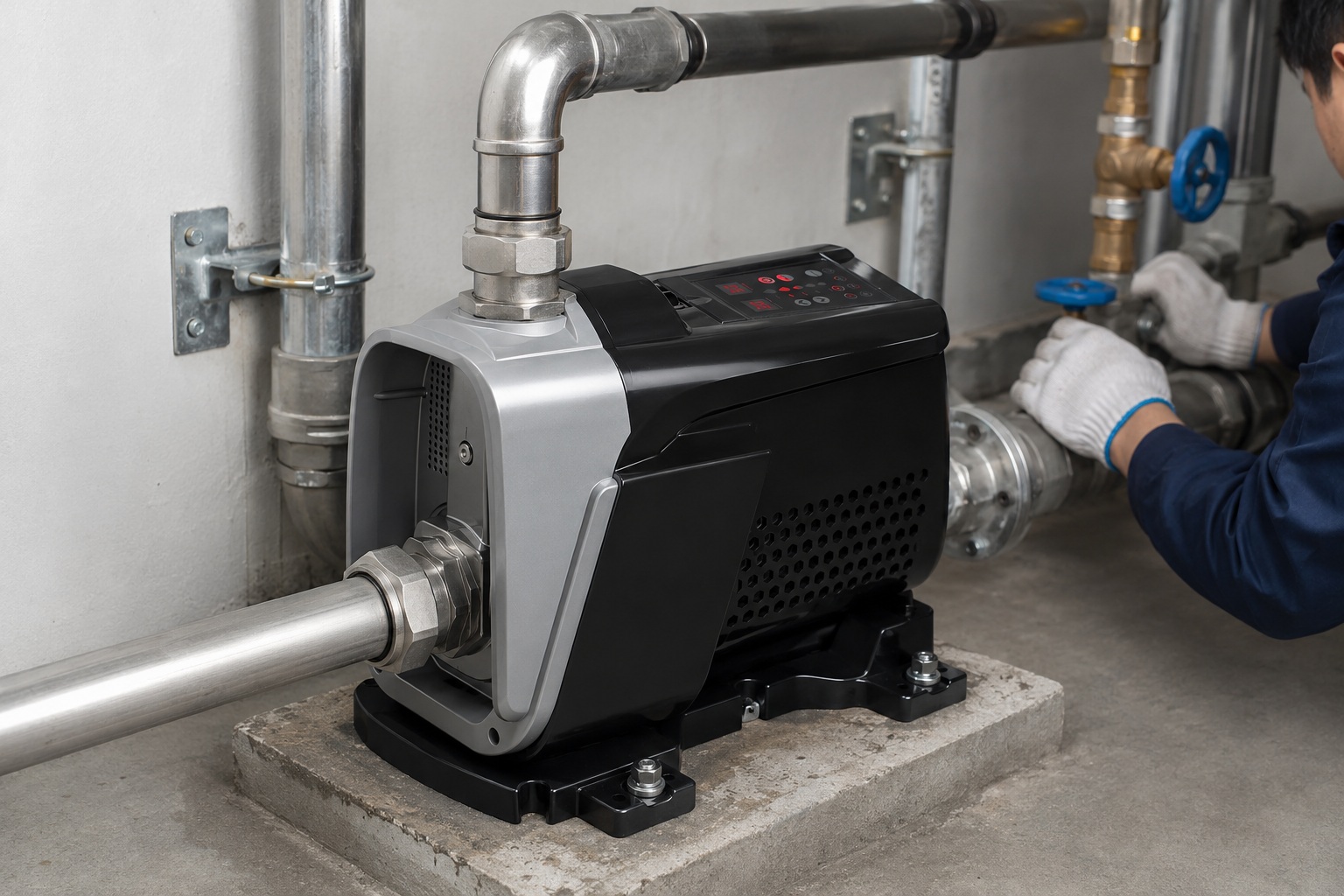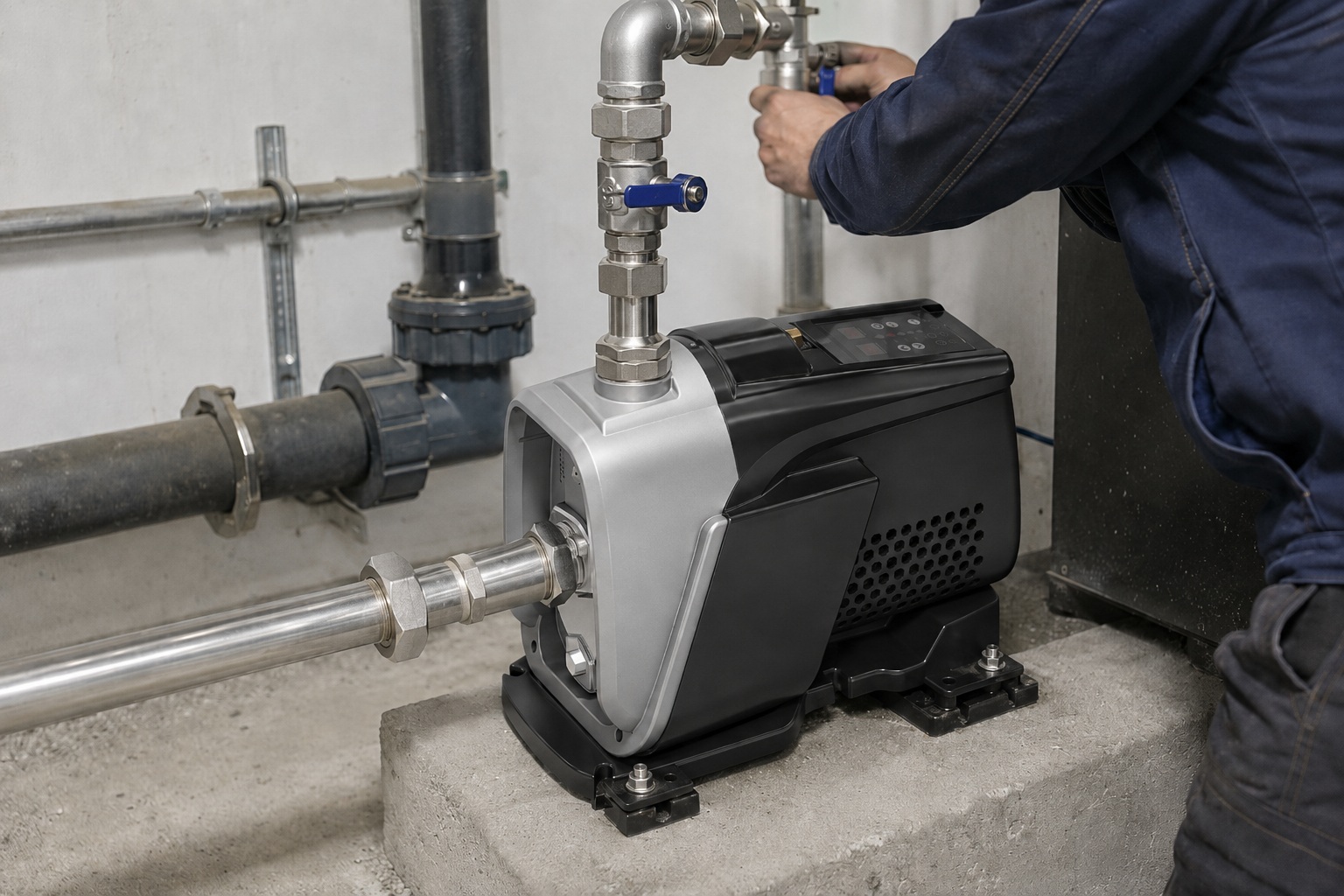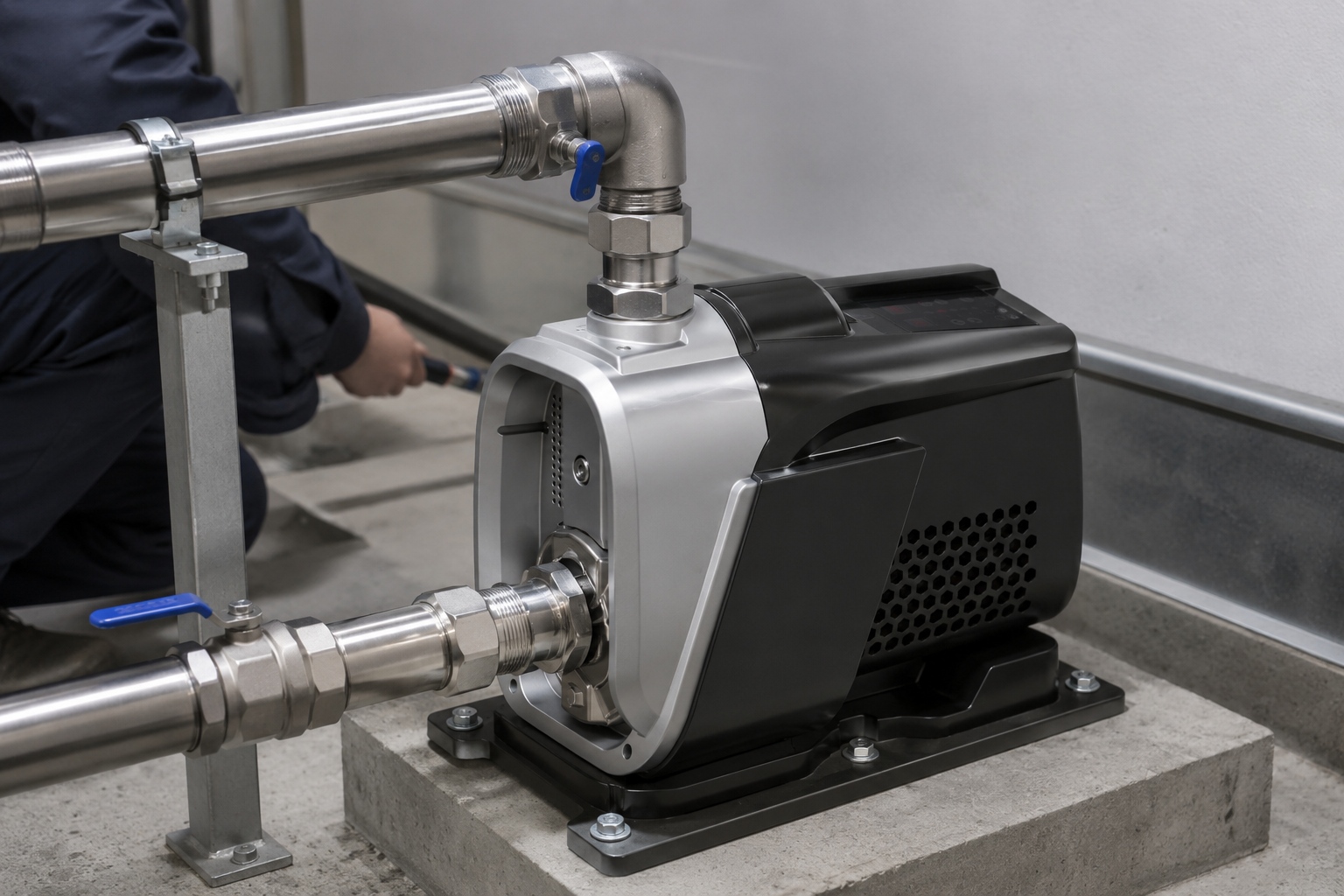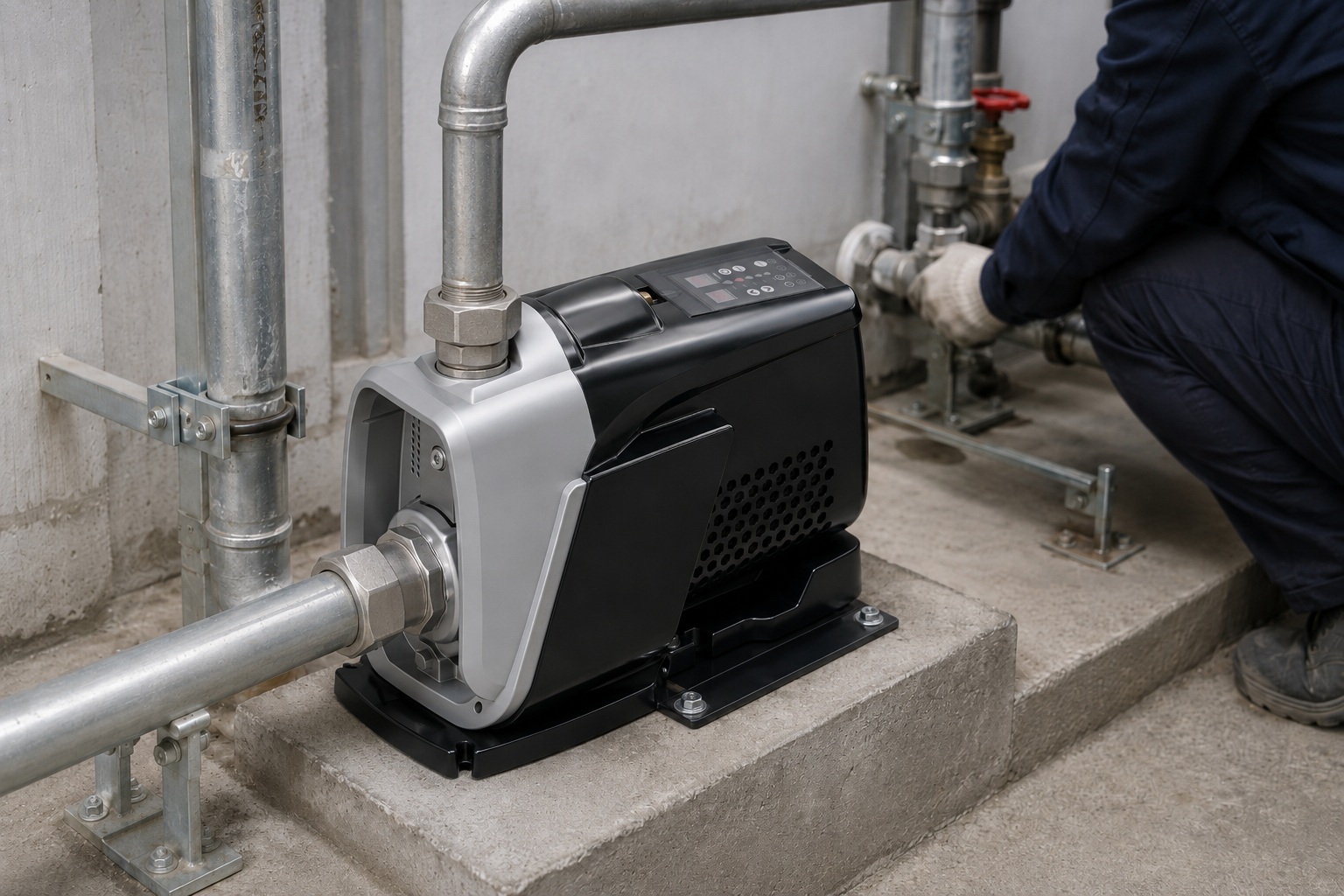
Choosing the right pump for your business can be overwhelming.
Making the wrong choice leads to inefficiency
and increased operational costs.
Understanding the core differences empowers you to select the perfect pump for your needs.
A centrifugal pump uses rotational energy from an impeller to move fluid, creating a continuous flow that varies with pressure.
In contrast, a "normal" or positive displacement pump traps a fixed volume of fluid and forces it out, delivering a constant flow regardless of pressure.
Understanding this fundamental mechanical difference is the first step.
It directly influences every aspect of a pump’s performance, from its flow rate and pressure capabilities to its ideal applications and maintenance requirements.
This knowledge is crucial for importers and distributors who need to provide the right solutions to their clients.
Let's explore these differences in more detail to ensure you can make an informed purchasing decision and advise your customers effectively.
The Core Mechanism: Kinetic Energy vs. Displacement
Struggling to visualize how different pumps work?
This confusion can lead to incorrect product recommendations and dissatisfied clients.
Let's clarify the fundamental actions that define these pump categories.
A centrifugal pump imparts velocity to a liquid through a spinning impeller, converting that velocity into pressure. In contrast, a positive displacement (PD) pump physically traps and moves a set volume of liquid with each cycle, ensuring a consistent output.
How a Centrifugal Pump Generates Flow
A centrifugal pump is a study in fluid dynamics.
Its operation hinges on a simple yet powerful principle: converting rotational energy into kinetic energy of the fluid.
The process begins as fluid enters the pump through the suction nozzle and flows into the center, or "eye," of a rotating component called the impeller.
The impeller, which is equipped with a series of curved vanes, spins at high speed.
This rotation flings the fluid outward using centrifugal force.
As the fluid is forced away from the impeller's eye, it creates a low-pressure zone, which in turn draws more fluid into the pump, establishing a continuous flow.
The fluid, now moving at a high velocity, exits the impeller and enters the pump casing, also known as the volute.
The volute is a specially designed chamber that gradually widens.
This increase in area forces the high-velocity fluid to slow down.
According to Bernoulli's principle, as the fluid's velocity decreases, its pressure increases.
This conversion process efficiently transforms the kinetic energy into the high-pressure flow that exits the pump's discharge nozzle.
Over 75% of industrial pumps sold globally are centrifugal types due to this efficient and simple design.
How a Positive Displacement Pump Generates Flow
Positive displacement pumps operate on an entirely different principle: mechanical displacement.
Instead of imparting velocity, they capture a specific, fixed volume of fluid in a chamber and then physically force it out through the discharge port.
This action is more like using a syringe to draw in and push out liquid.
There are two main types of positive displacement mechanisms:
- Reciprocating Pumps: These use a back-and-forth motion. Common examples include piston, plunger, and diaphragm pumps. In a piston pump, a piston moves back to create a vacuum, drawing fluid into a cylinder. The piston then moves forward, reducing the chamber volume and pushing the fluid out. Check valves ensure the fluid only moves in one direction.
- Rotary Pumps: These use rotating components to trap and move fluid. Examples include gear, lobe, and screw pumps. In a gear pump, two meshing gears rotate. As they un-mesh, they create a void that draws fluid in. The fluid is then trapped in the spaces between the gear teeth and the casing, carried around, and forced out as the gears mesh together again.
This method results in a pulsed but very consistent flow rate that is directly proportional to the pump's speed and almost entirely independent of the system's back-pressure or viscosity of the fluid.
Performance Curves: Variable Flow vs. Constant Flow
Does your application's flow demand change frequently?
Choosing a pump with the wrong performance curve leads to energy waste, system instability, and potential equipment damage.
Let's examine how each pump type responds to system changes.
Centrifugal pumps have a variable flow rate that is inversely related to pressure; as pressure (head) increases, flow decreases. Positive displacement pumps deliver a near-constant flow rate regardless of the system pressure, making them predictable but less flexible.
Understanding the Centrifugal Pump Curve
The performance curve of a centrifugal pump is its operational fingerprint.
It graphically represents the relationship between the flow rate (Q), typically on the x-axis, and the head (H), or pressure, it can generate, on the y-axis.
Crucially, this relationship is inverse: as you demand more flow from the pump, the head it can produce decreases.
Conversely, if the system resistance increases (e.g., a valve is partially closed), the head will rise, and the flow rate will fall.
This curve also shows the pump's efficiency, brake horsepower (BHP), and Net Positive Suction Head Required (NPSHR).
The Best Efficiency Point (BEP) is the point on the curve where the pump operates at its highest efficiency, converting the most motor energy into fluid energy.
Operating a pump at or near its BEP is critical for longevity and energy savings.
Running it too far to the left (low flow) or right (high flow) of the BEP can cause issues like recirculation, vibration, and cavitation, leading to premature wear and seal failure.
For a distributor, understanding how to read these curves is essential for correctly sizing a pump for a customer's specific system requirements, ensuring both performance and reliability.
A pump sized to operate at its BEP can be up to 15-20% more energy-efficient than one operating far from it.
The Positive Displacement Pump's "Curve"
A positive displacement (PD) pump's performance is much more straightforward.
Its "curve" is often represented as a nearly vertical line on a flow-vs-head chart.
This indicates that the pump will deliver a specific volume of fluid for each rotation or stroke, regardless of the discharge pressure it is working against.
The flow rate is primarily determined by the pump's speed (RPM).
If you double the speed, you nearly double the flow.
This makes PD pumps highly predictable and excellent for applications requiring precise dosing or metering.
However, this characteristic also presents a significant safety consideration.
If the discharge line of a PD pump becomes blocked (a "dead-head" condition), the pump will continue trying to force fluid into the blocked pipe.
Pressure will build almost instantaneously to a level that can rupture the piping, destroy the pump, or cause a catastrophic system failure.
For this reason, positive displacement pump systems must include a pressure relief valve installed on the discharge side to protect the system from over-pressurization.
This non-negotiable safety feature is a key differentiator in system design compared to centrifugal pumps, which can typically be dead-headed for short periods without damage as the flow simply drops to zero.
Application Suitability: High Volume vs. High Pressure & Viscosity
Are you pumping thin liquids over a large area or thick fluids through a restrictive system?
Misapplying a pump type results in poor performance, high energy bills, and costly downtime for your clients.
Let's match the right pump to the right job.
Centrifugal pumps are ideal for transferring large volumes of low-viscosity fluids like water at moderate pressures. Positive displacement pumps excel in applications involving high pressures, precise flow control (metering), and handling viscous or shear-sensitive liquids.
Ideal Scenarios for Centrifugal Pumps
Centrifugal pumps are the workhorses of the fluid transfer world, largely due to their suitability for a wide range of common applications.
Their design makes them exceptionally good at moving large quantities of thin, clean liquids efficiently.
Think of tasks where volume is more critical than exact pressure.
Here are some primary applications where centrifugal pumps shine:
- Water Supply & Boosting: From municipal water distribution systems to household pressure booster pumps and multi-story building water supply, their ability to generate adequate pressure over a range of flows is perfect. For example, our VSD booster pumps adjust their speed to maintain constant pressure despite changing household demand.
- Irrigation: Agricultural and large-scale landscape irrigation requires moving massive volumes of water from a source (like a river or well) to fields. Centrifugal pumps deliver the high flow rates needed, often at pressures between 40-60 PSI.
- HVAC & Circulation: In heating, ventilation, and air conditioning systems, these pumps continuously circulate water or coolant through chillers, boilers, and heat exchangers.
- General Industrial Transfer: Transferring cooling water, process water, and low-viscosity chemicals within a plant is a common task perfectly suited for the cost-effective and reliable operation of centrifugal pumps.
It's important to note their limitations.
Centrifugal pump performance degrades significantly as fluid viscosity increases.
A pump that delivers 100 GPM of water might only deliver 70 GPM of a fluid with a viscosity of 500 SSU, and its efficiency will drop by over 25%.
They are also not self-priming (unless specifically designed as such), meaning they must be filled with liquid before they can operate.
Where Positive Displacement Pumps Dominate
Positive displacement pumps find their niche where centrifugal pumps falter.
Their ability to handle high pressures and viscous fluids, and to deliver precise, repeatable flow, makes them indispensable in certain industries.
If the application involves anything thick, sticky, or requiring exact measurement, a PD pump is likely the answer.
Key applications include:
- High-Viscosity Fluids: Pumping oils, syrups, resins, sludges, and creams is a primary use case. The mechanical action of a PD pump is not significantly affected by the fluid's thickness.
- High-Pressure Applications: Tasks like hydraulic systems, high-pressure cleaning (pressure washers), and oil and gas extraction require pressures that are often beyond the practical range of single-stage centrifugal pumps. PD pumps can generate pressures exceeding 10,000 PSI.
- Metering and Dosing: Chemical injection is a classic example. PD pumps can deliver a precise, non-pulsating flow of chemicals for water treatment, manufacturing processes, or food production, ensuring accuracy and consistency.
- Shear-Sensitive Liquids: Some fluids, like emulsions, latex, and certain food products (e.g., yogurt with fruit), can be damaged by the high-speed shearing action of a centrifugal impeller. The gentle, low-shear action of a lobe or diaphragm pump preserves the fluid's integrity.
- Self-Priming Needs: Because they create a strong vacuum, most PD pumps are inherently self-priming and can lift fluid from a level below the pump, a task most standard centrifugal pumps cannot perform without assistance.
Below is a comparison table to help you advise clients:
| Feature | Centrifugal Pump | Positive Displacement Pump |
|---|---|---|
| Best For | High-volume, low-viscosity fluid transfer | High-pressure, high-viscosity, and metering applications |
| Example Fluids | Water, thin fuels, solvents, low-viscosity chemicals | Oils, slurries, soap, food products, thick chemicals |
| Flow Rate vs. Pressure | Flow varies with pressure | Flow is nearly constant regardless of pressure |
| Viscosity Handling | Poor (Efficiency drops >10% with even slight increases) | Excellent (Can handle fluids over 1,000,000 SSU) |
| Self-Priming | No (Requires a flooded suction or priming) | Yes (Most types are self-priming) |
| System Protection | Can run against a closed valve (briefly) | Requires a pressure relief valve for over-pressurization |
| Mechanical Complexity | Simple, few moving parts | More complex, with tighter clearances and more wear parts |
Maintenance and Total Cost of Ownership
Is your client focused solely on the initial purchase price?
Ignoring long-term maintenance and energy costs can turn a cheap pump into a very expensive problem over its lifespan.
Let's analyze the true cost of owning each pump type.
Centrifugal pumps generally have a lower initial cost and simpler maintenance due to fewer wear parts. However, positive displacement pumps, while more expensive upfront and complex to service, can be more energy-efficient in high-pressure or high-viscosity applications, affecting long-term costs.
The Cost Profile of a Centrifugal Pump
The total cost of ownership (TCO) for a pump is a critical metric for any business.
It extends far beyond the initial purchase price.
For centrifugal pumps, the cost profile is heavily weighted towards energy consumption.
Energy costs can account for up to 85% of the total lifetime cost of a pump.
Initial Cost: Generally, centrifugal pumps offer a lower acquisition cost compared to PD pumps for a similar flow rate.
Their simple design, with just a few key components (impeller, casing, shaft, seals), allows for more cost-effective manufacturing.
This makes them an attractive option for budget-conscious projects.
Maintenance & Repairs: Maintenance is also relatively straightforward.
The primary wear components are the mechanical seals and bearings.
These parts are often standardized and readily available.
Because there are no tight-fitting, sliding, or rubbing parts in the fluid path, they are tolerant of some solids and have fewer components that require precise alignment or replacement.
A routine maintenance schedule might involve monitoring for leaks, checking bearing lubrication, and vibration analysis.
The mean time between failures (MTBF) for a well-maintained centrifugal pump in a suitable application can be very high.
Energy Consumption: This is the most significant long-term cost.
The efficiency of a centrifugal pump is highest at its Best Efficiency Point (BEP).
If the pump is oversized, or if the system conditions change, efficiency plummets and energy costs soar.
This is where technologies like Variable Speed Drives (VSDs) become invaluable.
A VSD allows the pump to adjust its speed to match the system's demand precisely, keeping it operating near its BEP.
This can reduce energy consumption by as much as 50% in variable demand systems.
The Cost Profile of a Positive Displacement Pump
The financial picture for a positive displacement pump is quite different.
The initial investment is typically higher, and maintenance can be more involved, but its efficiency in specific applications can lead to long-term savings.
Initial Cost: For a given flow capacity, a PD pump is often 1.5 to 3 times more expensive than a centrifugal pump.
This is due to their more complex designs, the need for tighter manufacturing tolerances, and often more expensive materials to handle abrasive or corrosive fluids.
The mandatory inclusion of a pressure relief valve and potentially a pulsation dampener also adds to the upfront system cost.
Maintenance & Repairs: PD pumps have more moving parts and wear components.
In a gear pump, the gears and bearings wear.
In a diaphragm pump, the diaphragms and check valves are consumable parts.
In a piston pump, the pistons, seals, and valves will eventually require replacement.
These repairs often require more skilled labor and can lead to more frequent downtime if not properly monitored.
Clearances are critical, and any wear can significantly impact the pump's performance.
Energy Consumption: This is where PD pumps can offer a TCO advantage.
Their efficiency is less sensitive to system pressure changes.
In high-pressure applications, a PD pump will almost always be more energy-efficient than a centrifugal pump struggling to generate the required head.
Similarly, when pumping viscous fluids, a PD pump maintains high efficiency, whereas a centrifugal pump's efficiency would drop dramatically, wasting significant energy.
For example, in an application requiring 50 GPM at 500 PSI, a PD pump might operate at 85% efficiency, while a multi-stage centrifugal pump might only achieve 60% efficiency, representing a significant difference in power draw over thousands of operating hours.
Conclusion
Understanding the difference between centrifugal and positive displacement pumps is key.
Centrifugal pumps are for high-volume, low-viscosity tasks, while PD pumps excel at high-pressure, high-viscosity, and precision applications.
FAQs
What happens if a centrifugal pump runs dry?
Running a centrifugal pump dry can cause the mechanical seal to overheat and fail within minutes due to lack of lubrication and cooling, leading to significant damage.
Can a centrifugal pump handle solids?
Standard centrifugal pumps have limited solids handling. However, specialized designs like vortex or chopper pumps are available to effectively pump slurries and wastewater with solids.
Why is a VSD important for a centrifugal pump?
A Variable Speed Drive (VSD) allows the pump to adjust its speed to match demand. This saves significant energy (up to 50%) and reduces wear by keeping the pump at its best efficiency point.
What is the main advantage of a diaphragm pump?
Diaphragm pumps are ideal for metering hazardous or abrasive chemicals because their sealless design prevents leaks. They can also run dry for extended periods without damage.
How do I choose between a gear pump and a lobe pump?
Gear pumps are great for clean, high-pressure oils. Lobe pumps are better for shear-sensitive fluids or those with soft solids, like food products, due to their gentler pumping action.
Is a centrifugal pump self-priming?
No, most standard centrifugal pumps are not self-priming. They need to be located below the fluid source or have a flooded suction line to operate correctly.
What is cavitation and why is it bad?
Cavitation is the formation and collapse of vapor bubbles inside a pump. It sounds like pumping rocks and can quickly destroy an impeller and other internal components.
Can you use a positive displacement pump for water?
Yes, but it's often inefficient and expensive for simple water transfer. A centrifugal pump is almost always the more cost-effective choice for moving water.