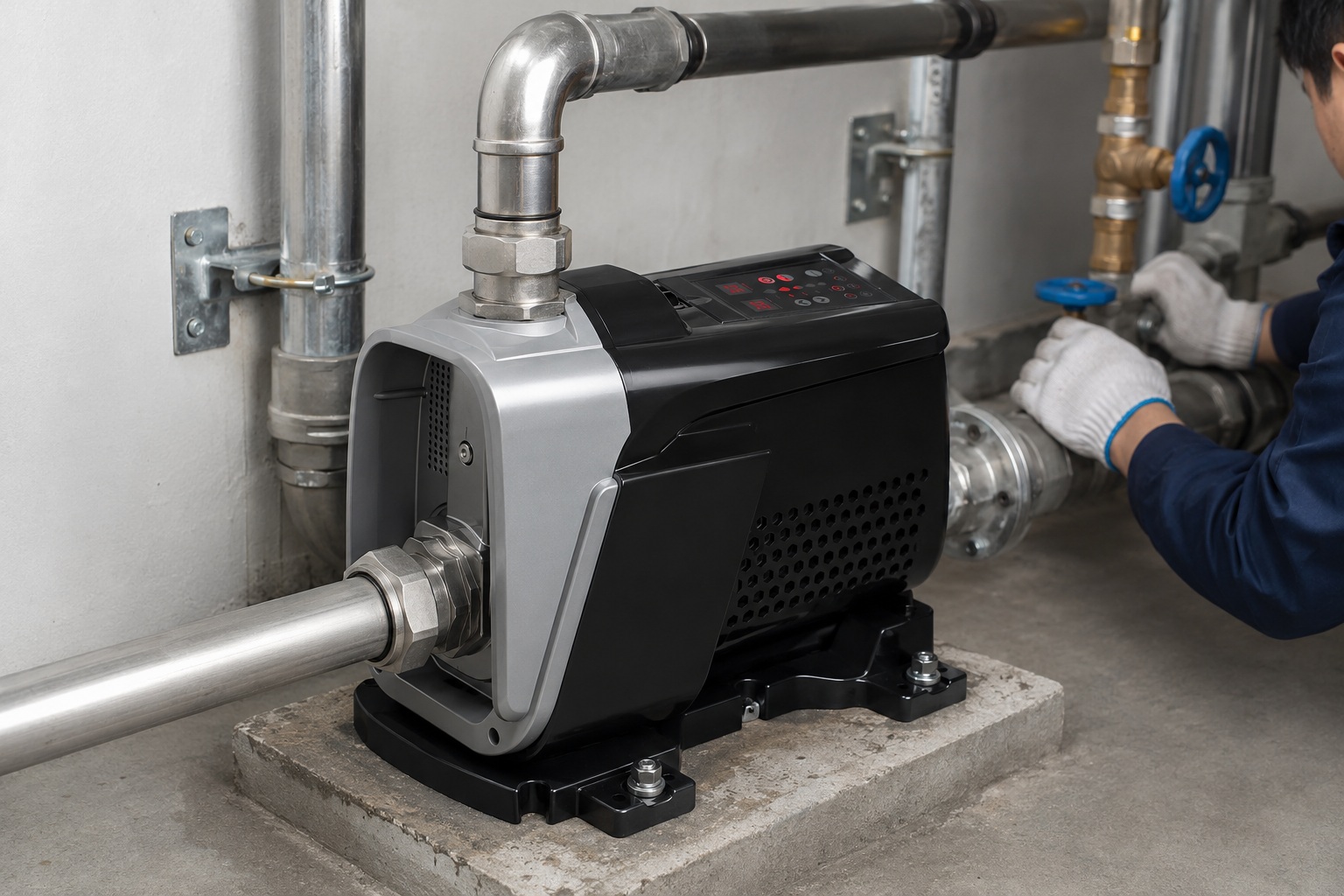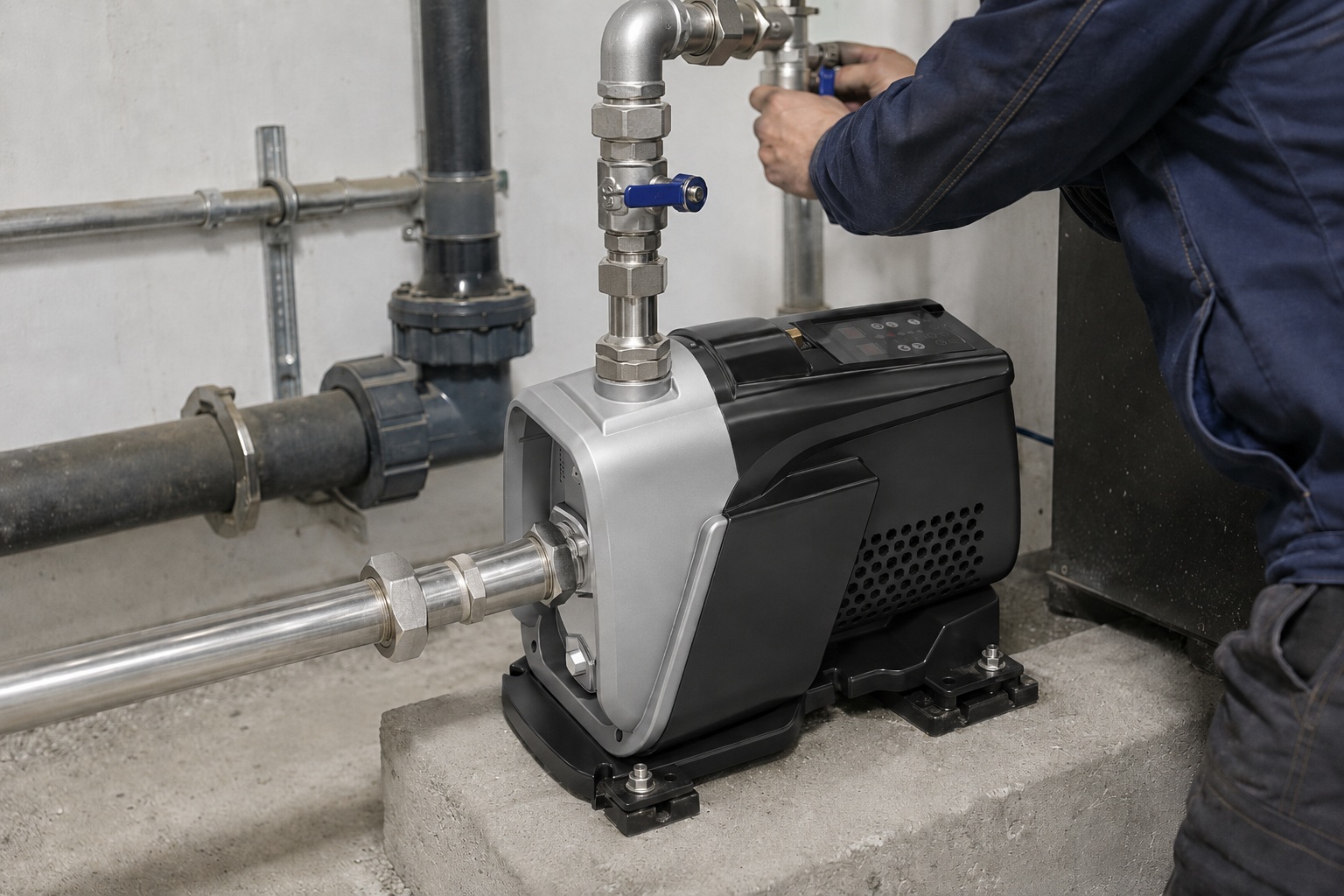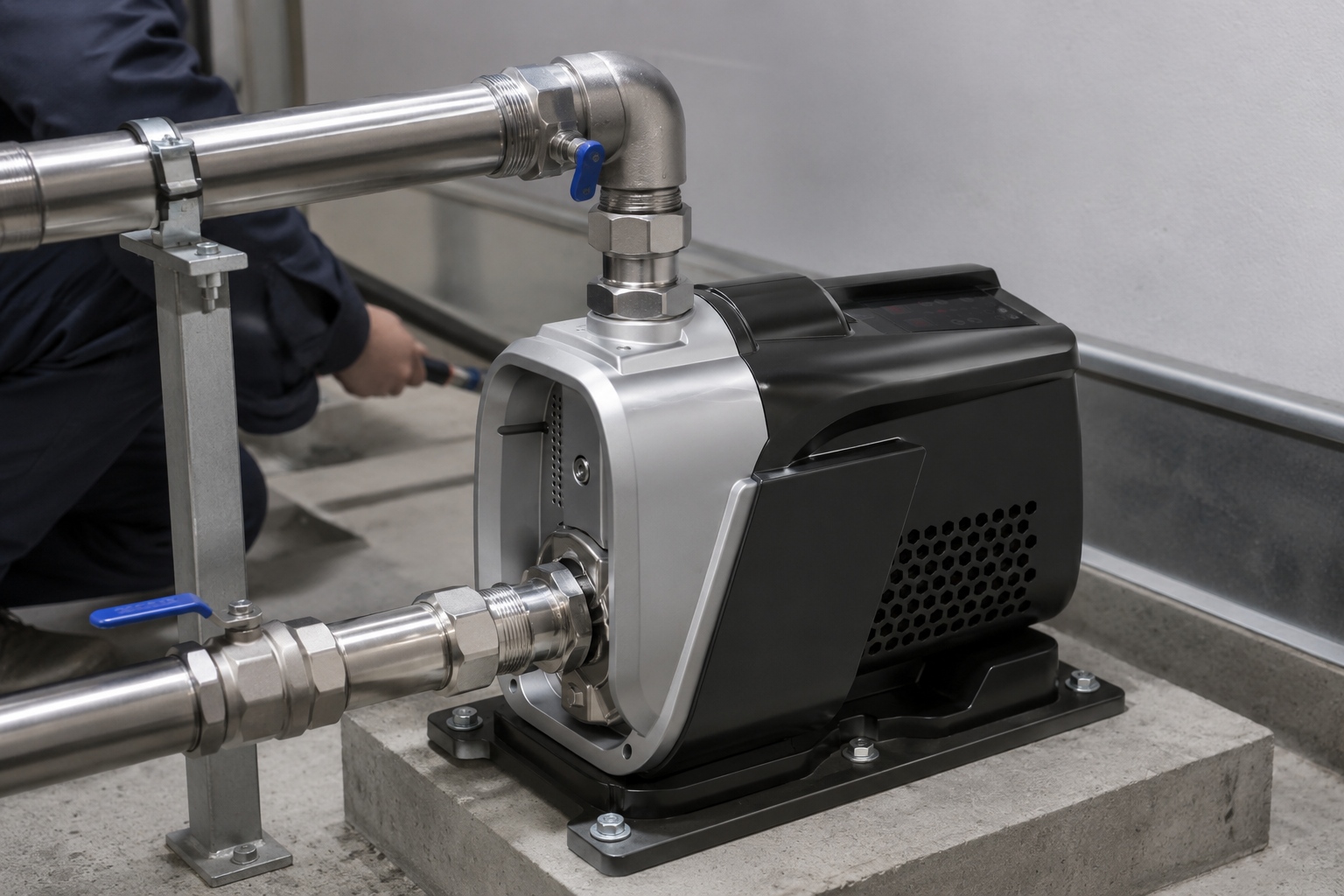
A pump’s usable lifting height is the head it can deliver at your required flow, less any head needed for outlet pressure and pipe losses. A catalogue maximum of 40 m does not promise useful delivery to an outlet 40 m above the source.
What does maximum head mean?
On a typical centrifugal pump curve, maximum or shutoff head occurs at zero flow. Start with the flow you need on the horizontal axis, move up to the model curve, then read the available head on the vertical axis. Use the manufacturer’s recommended operating range when comparing models.
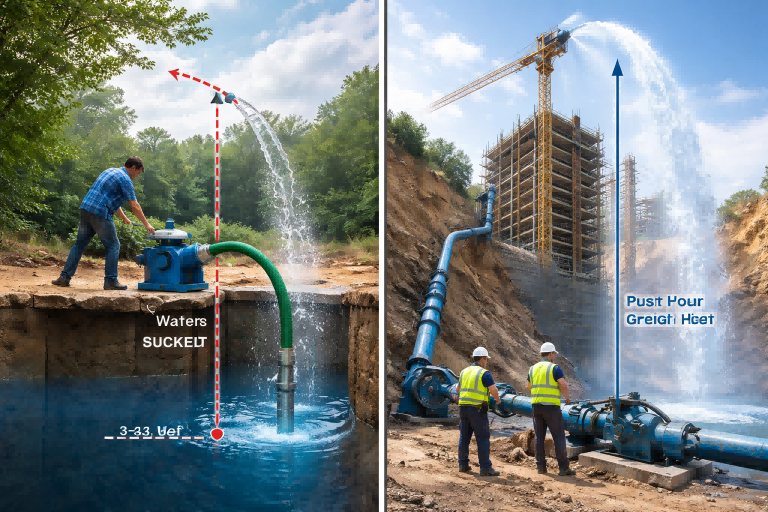
Suction lift and delivery height are different
For a surface pump above an open source, measure suction lift from the lowest running water level to the pump inlet. The theoretical atmospheric water column near sea level is about 10.3 m. Actual permissible suction lift is lower and depends on temperature, altitude, suction losses and the pump’s inlet requirements. For a borehole, use the pumping water level after drawdown. A submerged pump avoids lifting water up a suction pipe, but it still has to supply the discharge head.
Worked example: delivering 3 m³/h uphill
Imagine an open supply tank with a delivery point 18 m above its running water level. The outlet needs 1 bar while flowing (about 10.2 m of water head). At 3 m³/h, the calculated pipe and fitting losses are 5 m. The required duty is 3 m³/h at approximately 33.2 m head (18 + 10.2 + 5). If the same pipe instead discharges freely into an open tank at the same elevation, the outlet-pressure term drops out and the duty becomes about 23 m at that flow.
What to send for pump selection
Provide the source type, lowest pumping level, outlet elevation, required flow and pressure, and pipe length and inside diameter. For longer horizontal routes, see how pipe friction changes the reach of a 1 HP pump. For boreholes without grid power, compare DC solar well pumps against your duty point, or send RAFSUN the installation details for a curve check.