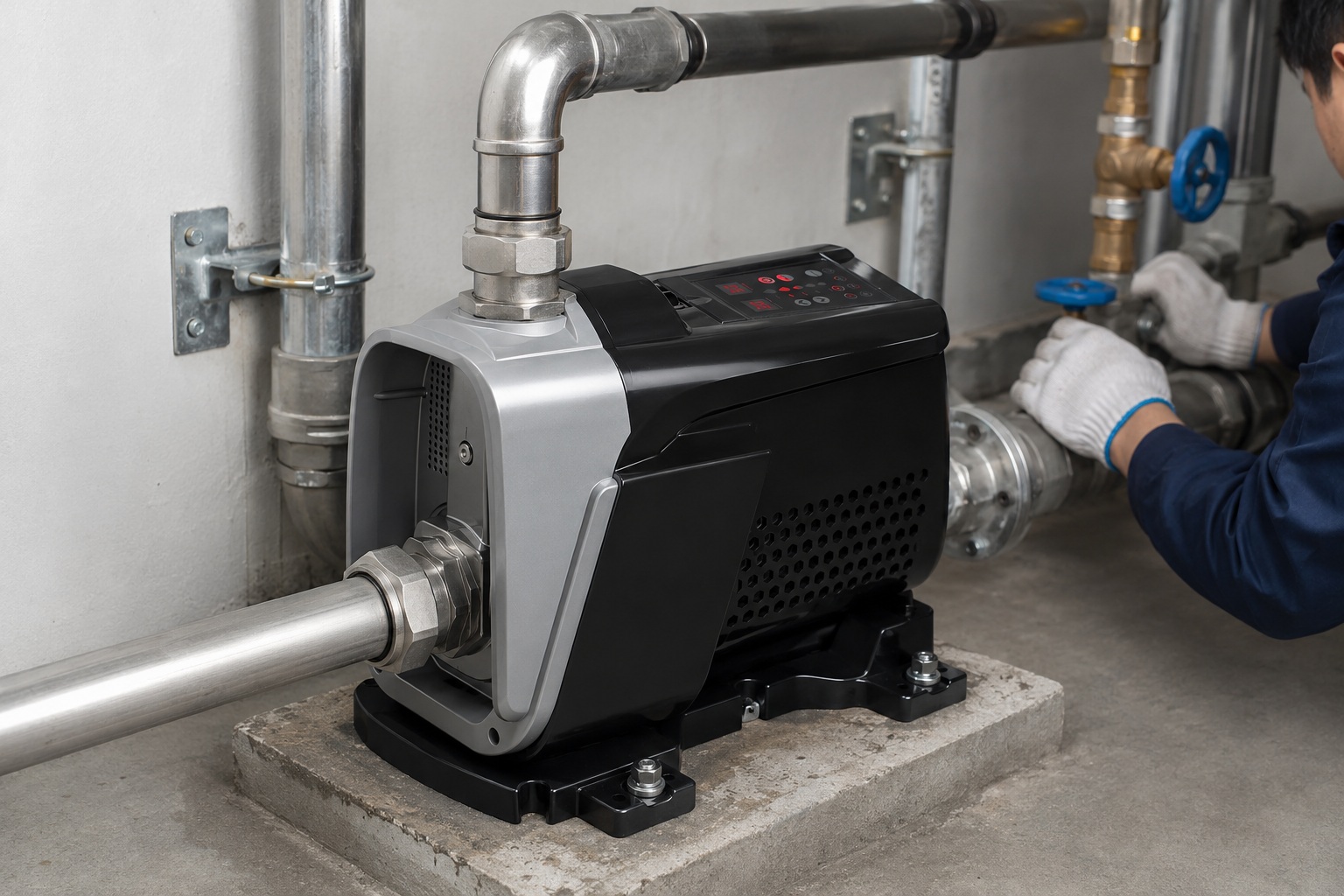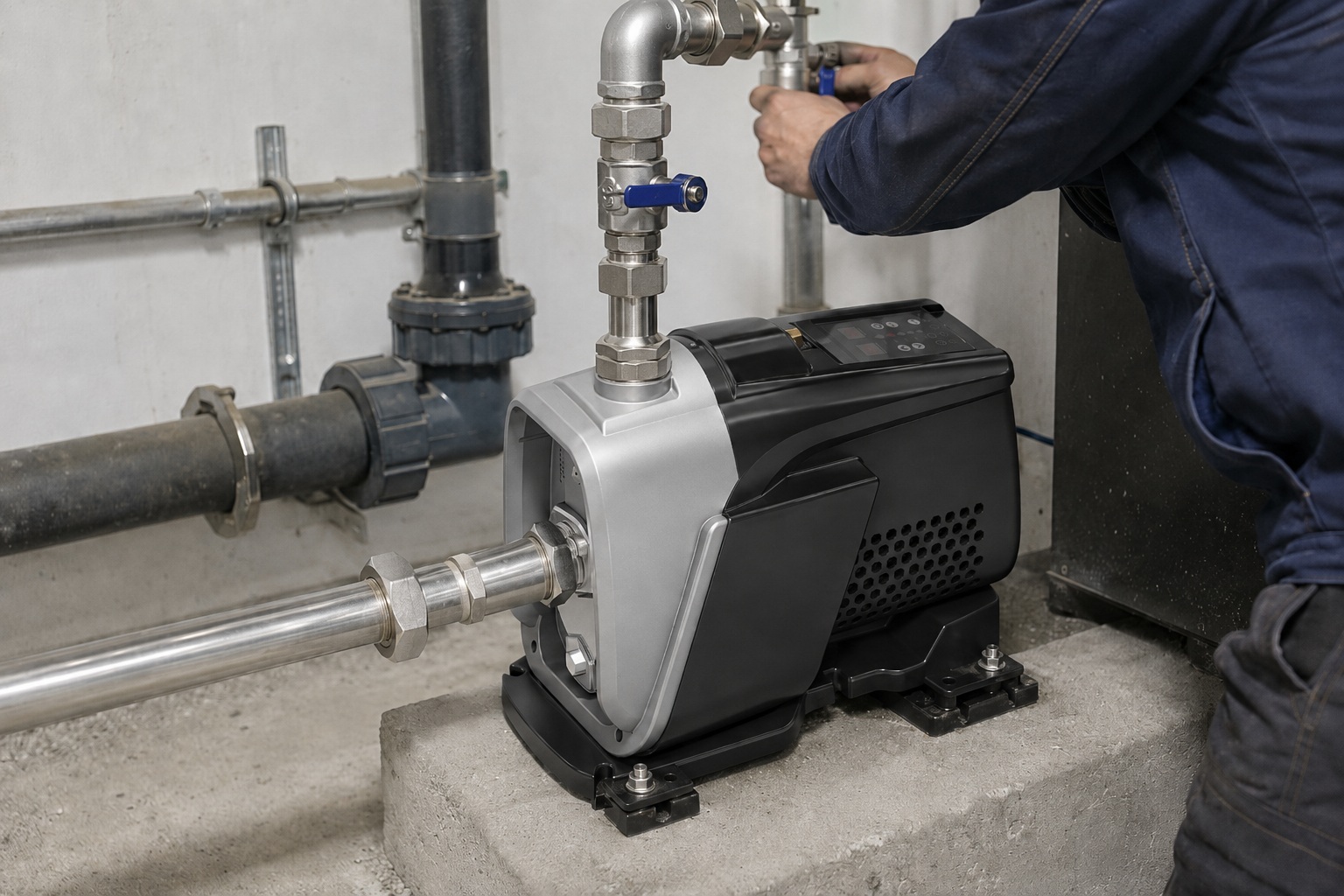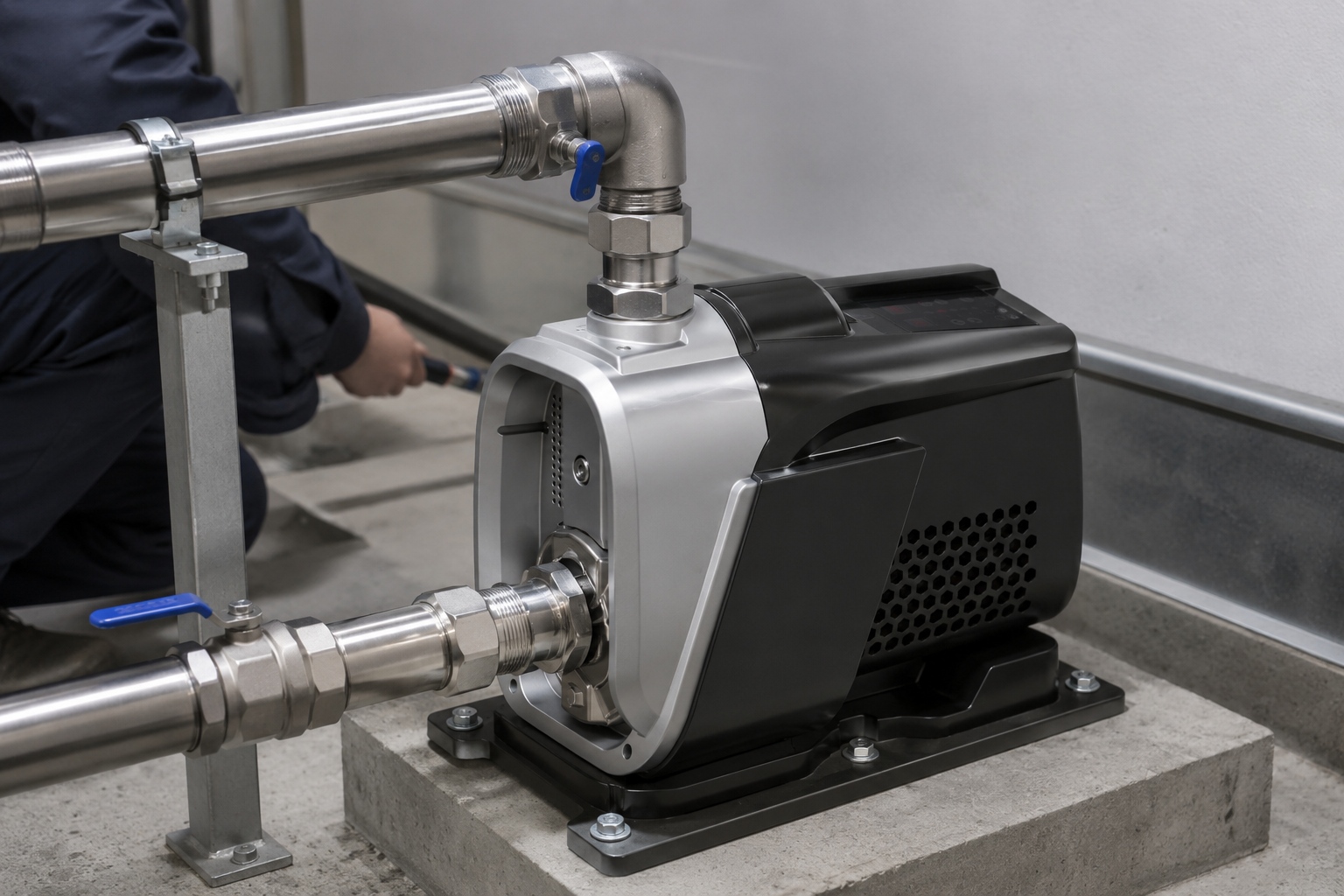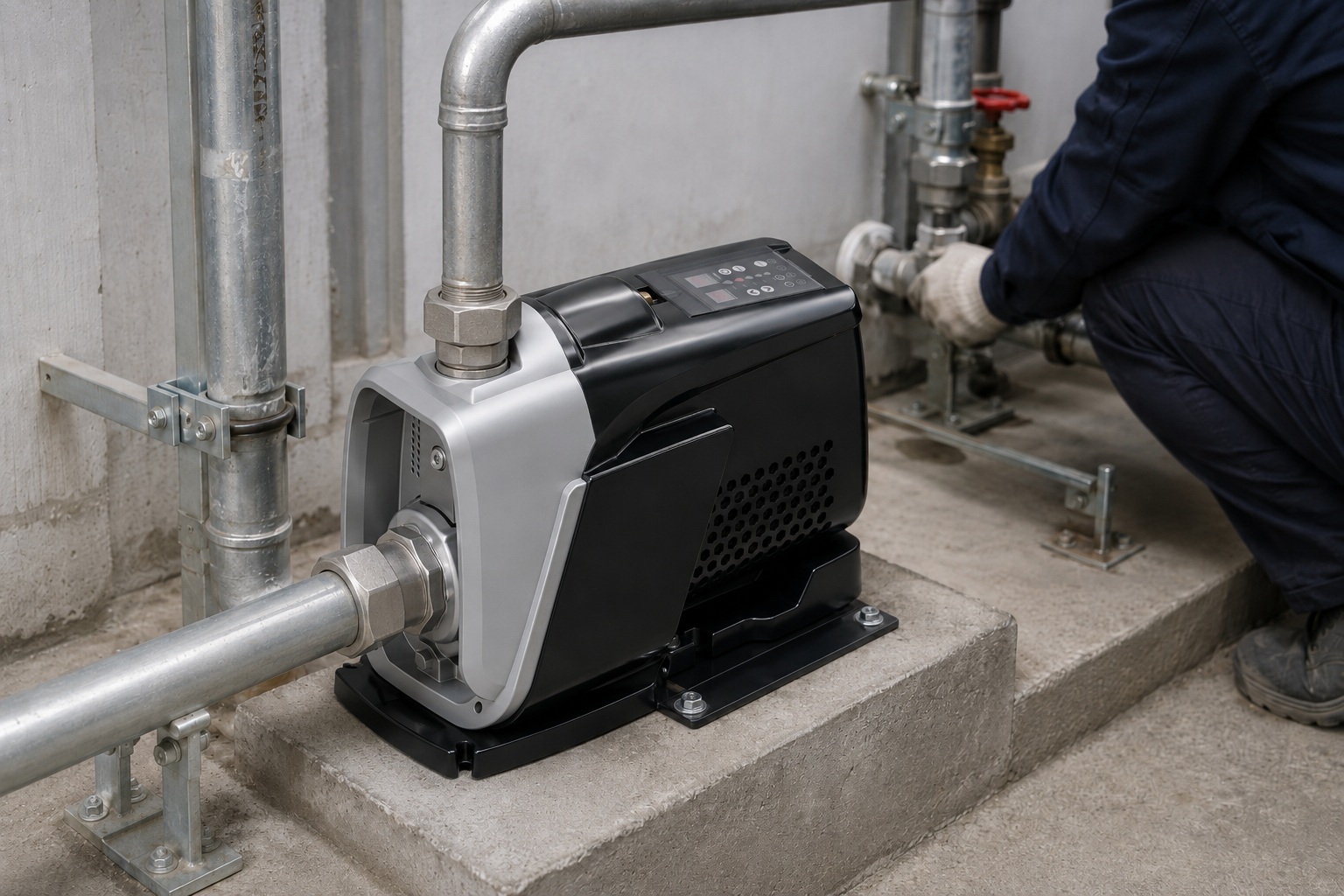
Struggling with inefficient fluid transfer?
This inefficiency costs businesses significant time and money.
A well-designed pumping system is your solution for optimal performance and savings.
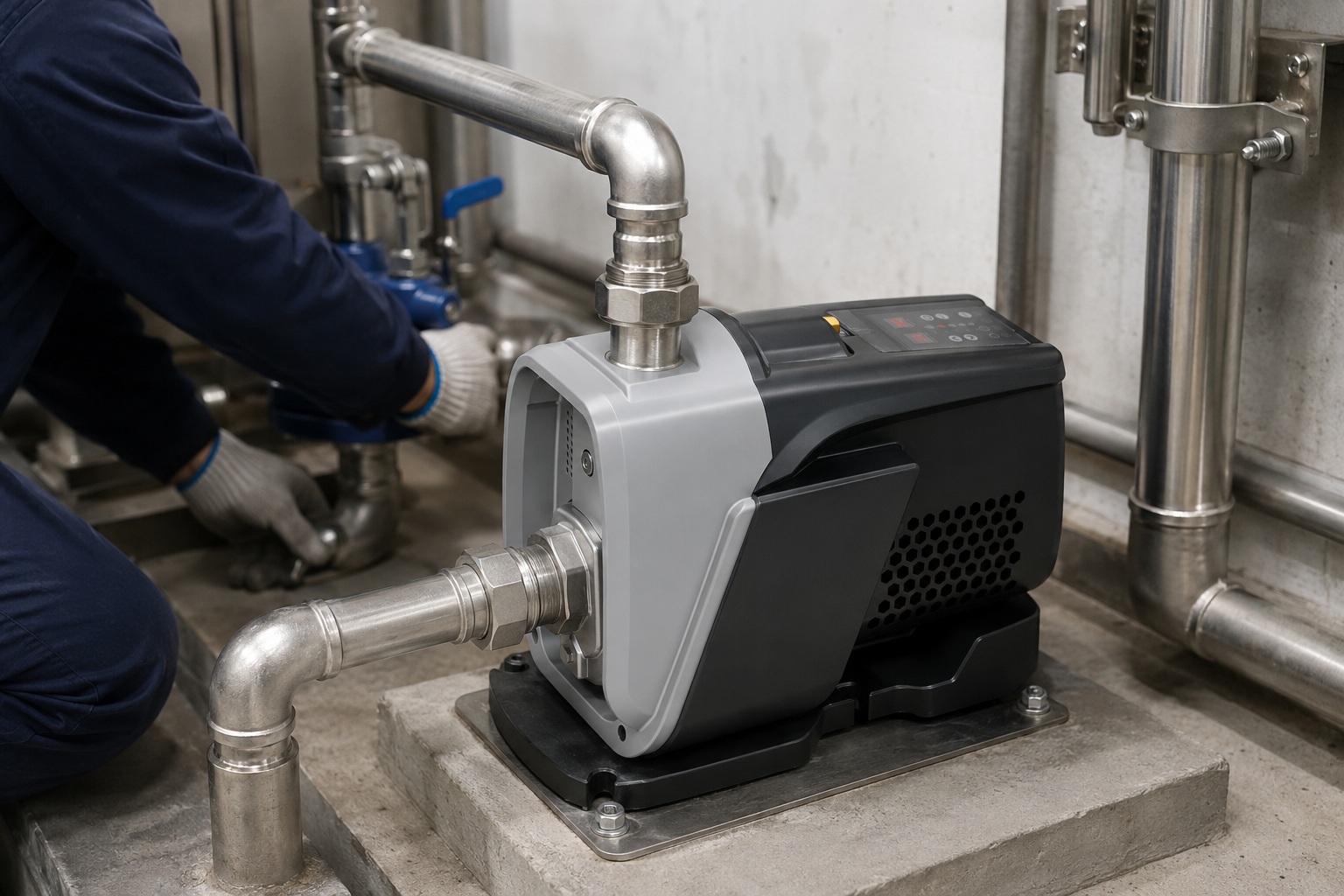
A pumping system is a complete assembly of equipment designed to move fluids, like water, from a source to a destination. It consists of a pump, a motor, pipes, valves, and controls working together to add energy to the liquid, creating the necessary pressure and flow.
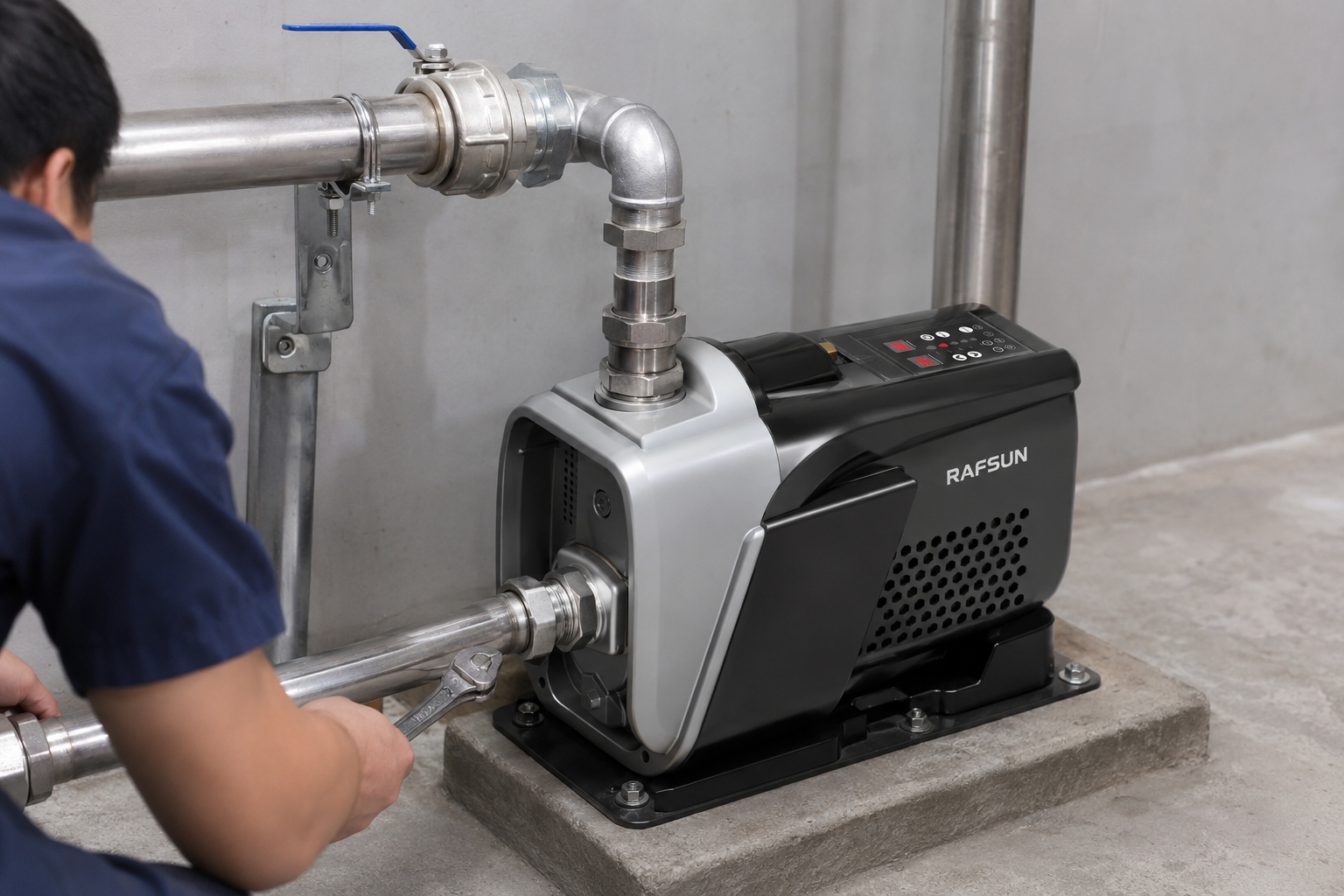
But a pumping system is far more than just the pump itself.
To truly master fluid handling and offer the best solutions to your clients, you need to understand how each part works in harmony.
Let's break down the entire system, piece by piece, to see how everything connects for maximum efficiency and reliability.
The Core Components of a Pumping System
Is a system failure causing costly downtime in your operations?
Guessing which component failed leads to longer delays and higher repair costs.
Knowing each part's function is the key to rapid troubleshooting and effective maintenance.
The core components of a pumping system include the pump, prime mover (motor), piping, valves, and control systems. Essential accessories like tanks, fittings, and instrumentation for monitoring pressure and flow are also integral parts that ensure the system operates correctly and efficiently.
A pumping system is like a team where each player has a specific job.
If one part fails, the whole system suffers.
By understanding the role of each component, you can diagnose problems faster and build more reliable systems for your customers.
Let's dive deeper into these essential parts.
The Pump: The System's Heart
The pump is the central component.
It converts mechanical energy from a motor into hydraulic energy.
This energy is what moves the fluid.
There are two main categories of pumps.
- Centrifugal Pumps: These are the most common type, accounting for over 75% of pumps installed worldwide.
- They use a spinning impeller to create a vacuum and draw fluid in, then accelerate it outward to create flow.
- Positive Displacement (PD) Pumps: These pumps trap a fixed amount of fluid and force it into the discharge pipe.
- They are ideal for high-pressure or high-viscosity applications.
The Prime Mover: The System's Muscle
The prime mover provides the power to turn the pump.
In most modern systems, this is an electric motor.
Motor efficiency is a critical factor in the overall system's energy consumption.
High-efficiency motors, like those rated IE3 or IE4, can reduce electricity costs by 2-8% compared to standard motors.
For B2B distributors, offering systems with high-efficiency motors provides a significant value-add for end-users concerned with long-term operating costs.
Piping, Valves, and Fittings: The System's Skeleton
Piping transports the fluid from the source (suction side) to the destination (discharge side).
Valves are used to control the system.
They can start or stop flow, regulate pressure, and prevent backflow (check valves).
Fittings, such as elbows and tees, connect the pipes and change the direction of flow.
Poor pipe design with too many bends can increase friction losses by up to 30%, forcing the pump to work harder and consume more energy.
| Component | Primary Function | Impact on Efficiency |
|---|---|---|
| Piping | Transports the fluid | Incorrect sizing increases friction and energy use. |
| Valves | Control flow, pressure, and direction | Throttling flow with valves is highly inefficient. |
| Fittings | Connect pipes and change flow direction | Each fitting adds to the total friction loss. |
| Controls | Manage pump operation (e.g., VFDs) | VFDs can reduce energy consumption by up to 50%. |
Control Systems: The System's Brain
Controls manage how and when the pump operates.
Simple systems might use a pressure switch.
Advanced systems use Variable Frequency Drives (VFDs).
A VFD adjusts the motor's speed to precisely match the system's demand.
This is far more efficient than running the pump at full speed and using a valve to restrict flow.
VFD-controlled systems offer the highest levels of efficiency and control.
How Pumping Systems Work: The Basic Principle
Are you unsure about the physics behind fluid movement?
This lack of understanding can lead to selecting the wrong pump for the job.
Grasping the core principle of energy transfer empowers you to design effective systems.
A pumping system works by transferring energy to a fluid. The pump's motor-driven impeller or piston creates a low-pressure zone at the inlet, drawing fluid in. It then imparts velocity and pressure to the fluid, pushing it out through the discharge piping toward its destination.
The magic of a pumping system lies in its ability to overcome two fundamental forces: gravity and friction.
It's a constant battle to lift fluid and push it through the constraints of a piping network.
Understanding how the system achieves this is essential for any professional in the field.
Let's explore the science behind it.
Creating Flow: Pressure Differentials
A pump does not create pressure out of thin air.
Instead, it creates a pressure differential.
This is a difference in pressure between two points.
Fluid naturally flows from an area of higher pressure to an area of lower pressure.
The pump's action creates a low-pressure area at its suction inlet.
Atmospheric pressure (or pressure from a tank) then pushes the fluid into the pump.
Inside the pump, the rotating impeller slings the fluid outward, increasing its velocity.
This high-velocity fluid then enters the pump casing (volute), where the expanding area slows the fluid down.
This slowing action converts the fluid's velocity energy into pressure energy, according to Bernoulli's principle.
This newly pressurized fluid is then forced out of the discharge outlet and through the system.
Overcoming System Resistance: Head
The work a pump has to do is measured in "head."
Head is the height to which a pump can raise a column of fluid. It is expressed in units of length (like meters or feet).
There are two main types of head the system must overcome.
- Static Head: This is the vertical distance the fluid needs to be lifted. It's the physical height difference between the source fluid level and the destination point. This value is constant regardless of flow rate.
- Friction Head (or Dynamic Head): This is the energy lost due to friction as the fluid moves through pipes, valves, and fittings. This loss increases as the flow rate increases or as the pipe length and complexity grow.
The Total Dynamic Head (TDH) is the sum of the static head and the friction head.
A pump must be selected to provide enough energy to overcome the system's specific TDH at the desired flow rate.
A system with long, narrow pipes and many bends will have a high friction head, requiring a more powerful pump than a system with short, wide, and straight pipes, even if the static head is the same.
For example, doubling the flow rate in a pipe can quadruple the friction losses.
This non-linear relationship is why accurate system curve calculations are vital.
Types of Pumping Systems
Facing a unique fluid handling challenge?
Using a generic system often results in poor performance and high energy bills.
Choosing the right type of system ensures it is perfectly matched to your application's demands.
Pumping systems are categorized by their function and design. Common types include booster systems for pressure, submersible systems for wells, circulation systems for HVAC, solar-powered systems for off-grid use, and fire suppression systems for safety, each designed for a specific task.
Not all pumping systems are created equal.
Each type is engineered with a specific purpose in mind, from lifting water out of a deep well to precisely circulating chemicals in an industrial process.
Matching the system type to the job is the first step toward efficiency and reliability.
Let's examine some of the most common system types and their specialized applications.
Booster Systems
These systems are designed to increase the pressure of a fluid that is already flowing in a pipeline.
They are common in municipal water distribution and in large buildings where pressure at the top floors is insufficient.
A typical booster system includes a pump, a motor, a pressure tank, and a pressure switch or VFD.
Modern intelligent VSD booster systems can maintain constant pressure regardless of demand, saving up to 60% in energy costs compared to fixed-speed systems.
Submersible and Deep Well Systems
When the water source is located deep underground, a submersible system is required.
The entire pump and motor assembly is sealed in a waterproof housing and lowered into the well.
This design has a major advantage: it pushes water to the surface rather than pulling it.
This is much more efficient and avoids the suction lift limitations (around 7.6 meters at sea level) that surface pumps face.
These systems are the backbone of rural water supply, agriculture, and mining dewatering.
Circulation Systems
Circulation systems are closed-loop systems designed to move a fluid around a circuit.
The primary goal is not to lift the fluid to a new location, but to circulate it for heat transfer.
Common applications include:
- Hot water heating systems (hydronics)
- Chilled water for air conditioning (HVAC)
- Solar thermal water heating
Because these are closed loops, the static head is often zero, meaning the pump only needs to overcome the friction head of the piping and components.
Specialized Systems
Beyond these common types, many systems are designed for highly specific tasks.
| System Type | Primary Application | Key Feature |
|---|---|---|
| Solar Water Systems | Off-grid water supply for agriculture/homes | Powered by photovoltaic (PV) panels, no grid needed. |
| Dosing/Metering Systems | Chemical injection for water treatment | Delivers precise, small volumes of fluid. |
| Fire Suppression Systems | Emergency water for sprinklers and hydrants | Designed for high reliability and immediate start-up. |
| Wastewater/Sump Systems | Pumping sewage and drainage water | Can handle solids and fibrous materials. |
Choosing the right system requires a clear understanding of the fluid being pumped, the required flow and pressure, and the operating environment.
For B2B distributors, having a diverse portfolio covering these system types is crucial to meeting varied customer demands.
Key Performance Metrics for Pumping Systems
How do you truly measure a pumping system's performance?
Focusing only on flow rate can lead to inefficient and oversized systems.
Understanding a few key metrics allows you to evaluate and compare systems like a pro.
Key performance metrics include flow rate (volume over time), total dynamic head (the pressure the pump must overcome), efficiency (how well it converts energy to fluid movement), and Net Positive Suction Head (NPSH) to prevent cavitation and ensure pump longevity.
Numbers don't lie.
When it comes to pumping systems, performance metrics are the language of efficiency, reliability, and cost-effectiveness.
They provide an objective way to design a new system or audit an existing one.
Let's break down the most important metrics you need to know.
Flow Rate (Q)
This is the most basic metric.
It measures the volume of fluid a system moves in a given amount of time.
It is typically expressed in units like:
- Gallons per minute (GPM)
- Cubic meters per hour (m³/h)
- Liters per second (L/s)
The required flow rate is determined entirely by the application's demand.
Total Dynamic Head (TDH)
As discussed earlier, TDH is the total resistance the pump must overcome.
It is the sum of the vertical lift (static head) and all friction losses (friction head).
TDH is a critical value for correctly sizing a pump.
Underestimating TDH results in a pump that can't deliver the required flow.
Overestimating TDH leads to an oversized, inefficient pump that wastes energy and is prone to premature wear.
Calculating TDH accurately is one of the most important steps in system design.
Pump Efficiency and Best Efficiency Point (BEP)
Pump efficiency is the ratio of the power delivered to the fluid (water horsepower) to the power supplied to the pump shaft (brake horsepower).
It's expressed as a percentage (%).
No pump is 100% efficient; energy is always lost to heat and friction.
A pump's efficiency varies with its flow rate and head.
Every pump has a Best Efficiency Point (BEP).
This is the point on its performance curve where it operates most efficiently.
Operating a pump at or near its BEP (typically within 70-120% of the BEP flow rate) is crucial for:
- Minimizing energy consumption
- Maximizing the pump's lifespan
- Reducing vibration and noise
- Lowering maintenance costs
Choosing a pump whose BEP aligns with your system's required duty point is the hallmark of excellent system design.
Net Positive Suction Head (NPSH)
NPSH is a critical metric for preventing a damaging phenomenon called cavitation.
There are two NPSH values:
- NPSH Available (NPSHa): The absolute pressure at the suction port of the pump. This is a characteristic of your system's design (pipe layout, fluid temperature, etc.).
- NPSH Required (NPSHr): The minimum pressure required at the suction port to prevent the pump from cavitating. This is a characteristic of the pump itself.
The rule is simple but absolute: NPSHa must always be greater than NPSHr.
A good rule of thumb is to have an NPSHa safety margin of at least 1 meter (or 3 feet) above the NPSHr.
If NPSHa is too low, the liquid can vaporize inside the pump, creating vapor bubbles that collapse violently.
This cavitation sounds like gravel is passing through the pump and can rapidly destroy the impeller.
Applications of Pumping Systems Across Industries
Ever wondered where pumping systems are used?
It’s easy to overlook their importance in our daily lives and industries.
In reality, these systems are the unsung heroes of modern infrastructure and manufacturing.
Pumping systems are vital across countless sectors. They are used in municipal water supply for cities, irrigation for agriculture, building services for HVAC and plumbing, power generation for cooling, oil and gas for extraction, and nearly every form of manufacturing.
From the water in your tap to the fuel in your car, a pumping system was involved.
Their applications are incredibly diverse, forming the backbone of essential services and industrial processes worldwide.
This widespread use makes the pump market a stable and massive global industry.
Let's explore their impact on a few key sectors.
Municipal and Residential Water Supply
This is one of the largest applications.
Large-scale pumping systems draw raw water from rivers, lakes, or reservoirs.
They move it through water treatment plants.
Then, high-pressure distribution systems pump the clean water to homes and businesses.
Within buildings, booster pump systems ensure adequate pressure on every floor.
Up to 40% of a municipality's electricity budget can be consumed by water and wastewater pumping systems.
Agriculture and Irrigation
Agriculture accounts for approximately 70% of global freshwater withdrawals.
Pumping systems are essential for moving this water from its source to the fields.
This includes:
- Deep well submersible pumps for accessing groundwater.
- Surface-mounted centrifugal pumps for drawing water from canals and rivers.
- Booster pumps for pressurizing large-scale drip and sprinkler irrigation networks.
Solar-powered pumping systems are revolutionizing agriculture in remote, off-grid areas, enabling food production and economic development.
Industrial and Manufacturing
Virtually every manufacturing process relies on pumping systems.
They are used for transferring raw materials, managing coolants, circulating process fluids, and handling wastewater.
| Industry | Common Pumping Application | Fluid Type Handled |
|---|---|---|
| Chemical | Transferring acids, solvents, polymers | Corrosive, viscous, volatile liquids |
| Food & Bev | Moving ingredients, cleaning-in-place (CIP) | Hygienic, shear-sensitive fluids |
| Mining | Dewatering mines, slurry transport | Abrasive slurries, acidic water |
| Power Gen | Boiler feedwater, cooling tower water | High-temperature, high-pressure water |
| Oil & Gas | Crude oil transport, injection, refining | Viscous hydrocarbons, multi-phase fluids |
The reliability of these systems is paramount, as a single pump failure can shut down an entire production line, costing millions in lost revenue.
For distributors, specializing in pumps for a specific industry can be a powerful business strategy, as it allows for deep expertise and tailored solutions.
Optimizing Pumping System Efficiency
Are high energy bills cutting into your profits?
Many facilities accept high pumping costs as a necessary evil.
However, a significant portion of that energy is often wasted by inefficient systems.
Optimizing a pumping system involves a holistic approach. It includes right-sizing the pump, using high-efficiency motors, minimizing pipe friction, and employing smart controls like VFDs. Regular maintenance and system audits can uncover savings opportunities of 20-50%.
Energy is not a fixed cost.
It is a variable cost that can be managed and reduced.
Pumping systems represent one of the biggest opportunities for energy savings in any industrial or commercial facility.
Let's explore the key strategies for unlocking this potential.
The Systems Approach
The biggest mistake is focusing only on the pump's component efficiency.
True optimization requires a "systems approach."
This means looking at how all the components—the pump, motor, pipes, and controls—work together.
A high-efficiency pump in a poorly designed system will still perform poorly and waste energy.
The U.S. Department of Energy estimates that a systems approach can lead to energy savings of 20% or more.
Key Optimization Strategies
Here are the most effective ways to boost efficiency.
1. Right-Sizing Pumps
This is the most critical step.
Many systems use pumps that are oversized for the task, often as a "safety margin."
An oversized pump runs far from its Best Efficiency Point (BEP).
It often forces operators to use a throttle valve to reduce flow, which is like driving your car with the accelerator pressed to the floor and controlling your speed with the brake.
Replacing an oversized pump with a correctly sized one can save 15-25% in energy.
2. Installing Variable Frequency Drives (VFDs)
If the system's demand for flow or pressure varies, a VFD is the best solution.
A VFD adjusts the pump's speed to match the demand precisely.
According to pump affinity laws, a 20% reduction in pump speed can lead to a nearly 50% reduction in energy consumption.
VFDs offer the single largest opportunity for energy savings in variable-demand systems.
3. Improving Piping and Layout
High friction losses force the pump to work harder.
You can reduce friction by:
- Using larger diameter pipes.
- Minimizing the number of elbows and bends.
- Using smoother piping material.
- Replacing old, corroded pipes which have a rougher internal surface.
A system audit can identify high-friction areas that can be redesigned for significant energy savings.
4. Performing Regular Maintenance
A well-maintained system is an efficient system.
Simple maintenance tasks have a big impact:
- Inspect and repair leaks: A single small leak can waste thousands of gallons and significant energy over a year.
- Check impeller clearance: As a pump wears, the clearance between the impeller and casing increases, reducing efficiency.
- Align the pump and motor: Misalignment increases friction and vibration, wasting energy and causing premature bearing failure.
By implementing these strategies, you can transform a pumping system from a major energy expense into a highly optimized, cost-effective asset.
Conclusion
A pumping system is an interconnected network designed to move fluid.
Understanding its components, principles, and performance metrics is crucial for efficiency, reliability, and cost savings in any application.
FAQs
What are the 3 main types of pumps?
The three main categories are centrifugal pumps, positive displacement pumps, and special-effect pumps (like eductors). Centrifugal pumps are the most common for high-flow applications.
What is pump head vs pressure?
Head is the height a pump can lift a fluid, measured in meters or feet. Pressure is the force per unit area, measured in psi or bar. They are related but not the same.
What is a pump system curve?
A system curve is a graph showing the head a pump must overcome to move fluid through a specific piping system at various flow rates. It helps in selecting the right pump.
Why is pump efficiency important?
Higher pump efficiency means more of the motor's energy is converted into useful fluid movement. This directly translates to lower electricity costs and a smaller carbon footprint.
How do you select a pump for a system?
You select a pump by matching its performance curve to the system's required duty point (a specific flow rate at a specific total dynamic head) and ensuring it operates near its Best Efficiency Point.
What causes a pump to lose pressure?
A pump can lose pressure due to leaks in the system, a worn impeller, air entering the suction line, a clogged strainer, or running in reverse.
Can you run a pump without water?
No, you should never run most pumps, especially centrifugal pumps, without water. This "dry running" causes rapid overheating and can destroy the pump's mechanical seal and internal components in seconds.