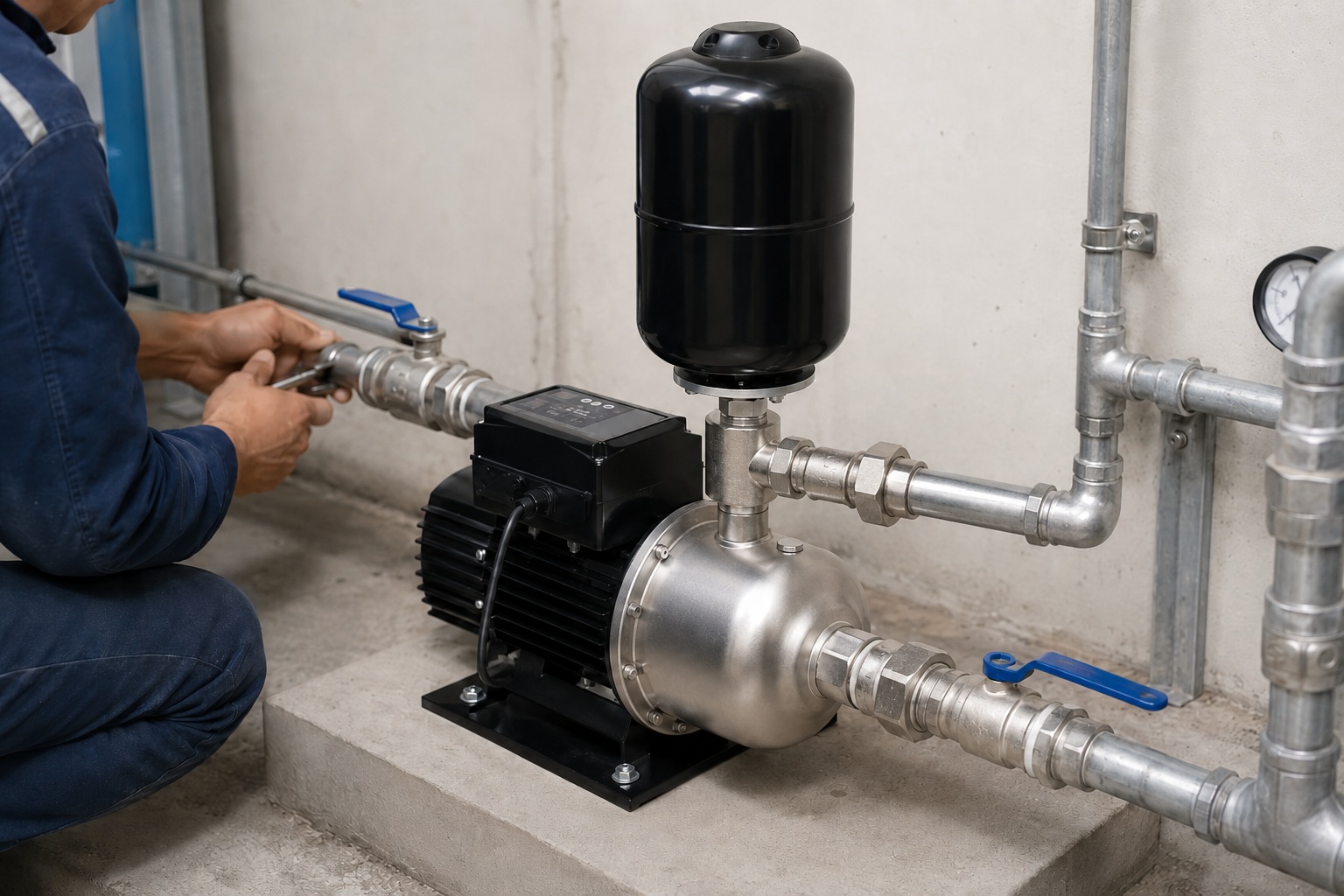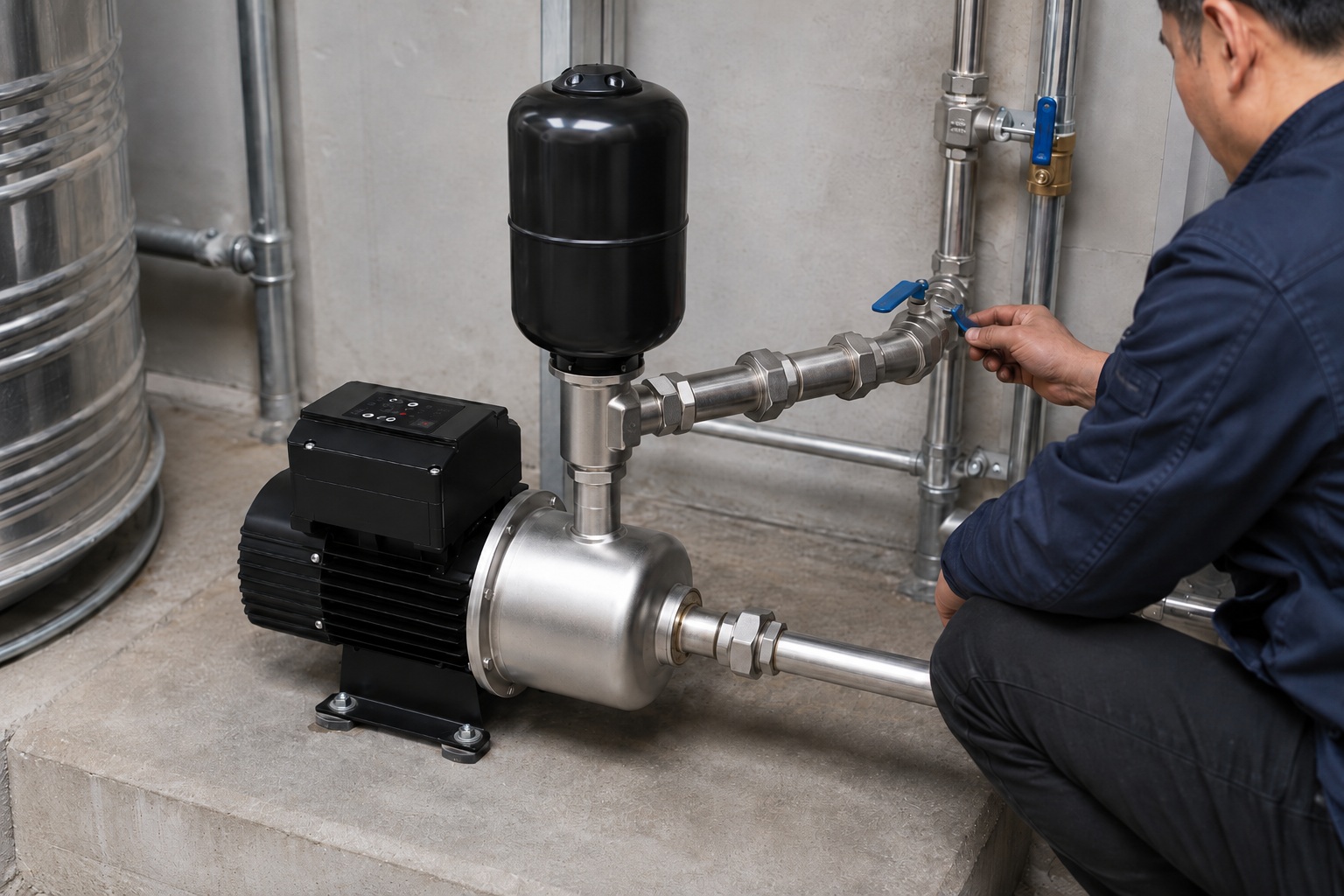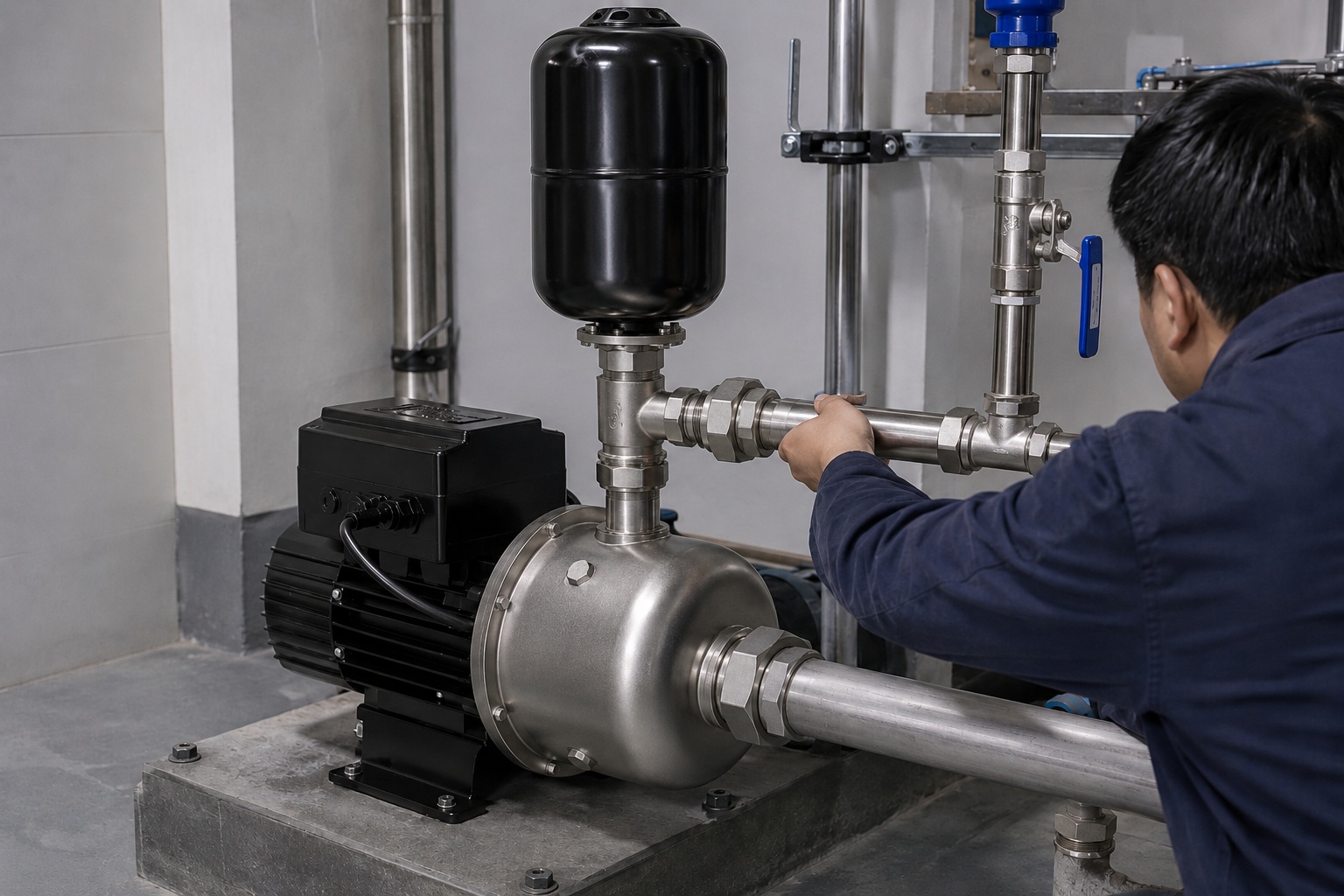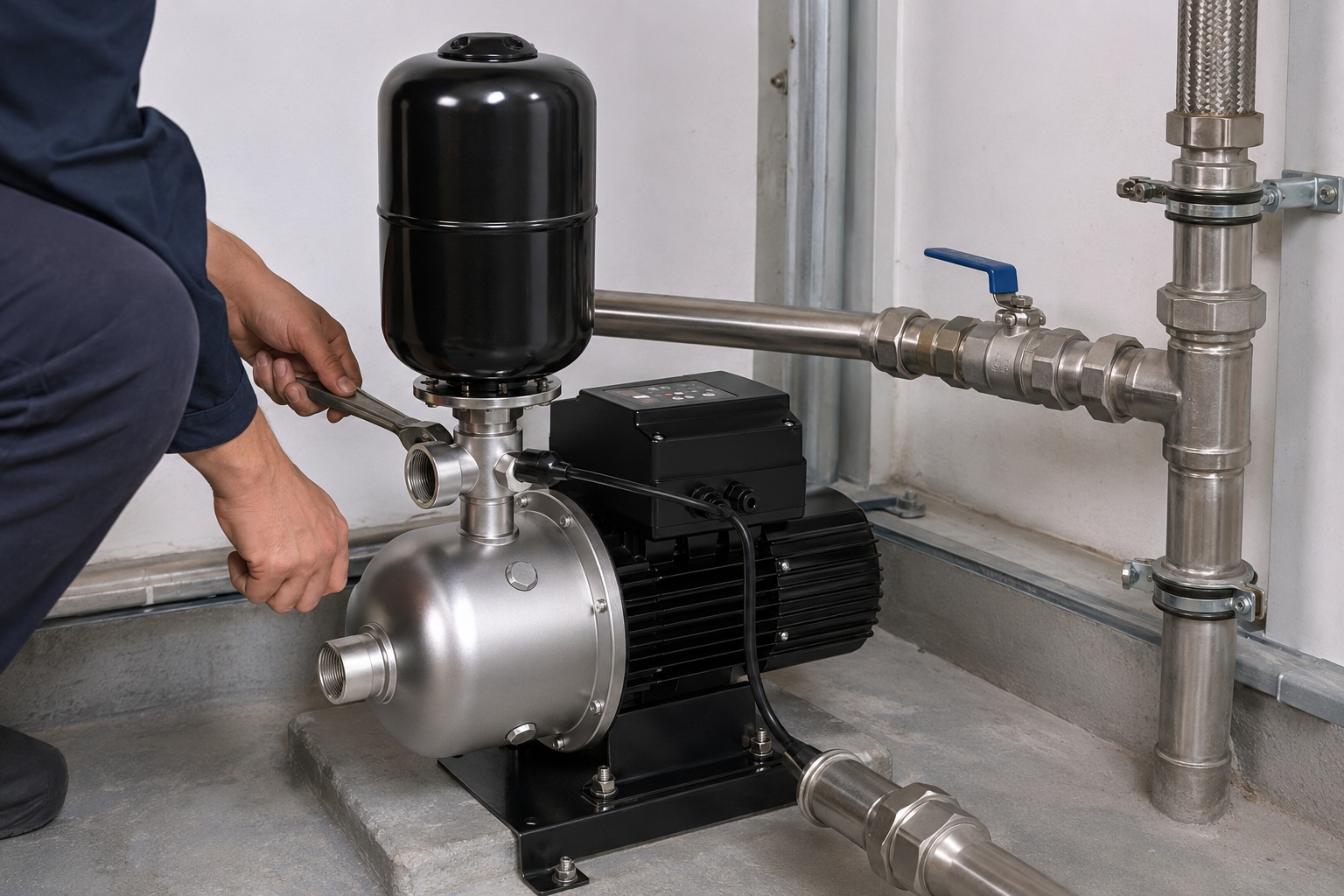
Struggling with inefficient water transfer?
Manual methods are time-consuming and labor-intensive, slowing down operations.
An electric water pump provides a powerful, automated solution for moving water effectively.
An electric water pump is a device that uses an electric motor to power a pump mechanism.
This mechanism creates pressure to move water or other fluids from one location to another.
They are essential for residential, commercial, industrial, and agricultural applications, providing reliable water circulation.
Electric water pumps are foundational to modern infrastructure.
They solve countless challenges related to fluid management.
Understanding how these devices work is the first step toward leveraging their full potential for your business or project.
This guide will break down everything you need to know, from their inner workings to selecting the perfect model for your specific needs.
Let's explore the components and principles that make these machines so indispensable.
The Working Principle of an Electric Water Pump
Need to understand how pumps work before you invest?
A lack of knowledge can lead to poor purchasing decisions and operational issues.
Grasping the basic principle ensures you choose the right technology for your application.
The core principle involves converting electrical energy into mechanical energy.
An electric motor spins an impeller, a rotor with blades.
This rotation creates a low-pressure area at the inlet, drawing water in, and high pressure at the outlet, forcing the water out with significant force.
The function of an electric water pump is beautifully simple yet powerful.
It all starts with electricity.
The electric motor is the heart of the operation.
When activated, it receives electrical power and converts it into rotational motion.
This motion is transferred to a key component called the impeller via a shaft.
The primary goal is to create a pressure differential.
This difference in pressure is what drives the fluid movement.
How an Impeller Creates Flow
The impeller is a marvel of fluid dynamics.
It typically looks like a disc with curved vanes or blades.
As the motor spins the impeller at high speeds, usually over 3,000 RPM, the fluid near the center is thrown outward by centrifugal force.
This causes two distinct zones to form inside the pump housing, also known as the volute.
- The Inlet (Suction Zone): As fluid is pushed away from the center, a low-pressure area or partial vacuum is created at the very center of the impeller, known as the 'eye'. This suction pulls more fluid into the pump through the inlet port.
- The Outlet (Discharge Zone): The fluid, now moving at high velocity, is forced into the pump casing or volute. The volute is a specially designed chamber that gradually widens. This increase in area causes the fluid's velocity to decrease, and according to Bernoulli's principle, this conversion of kinetic energy into potential energy results in a significant increase in pressure.
This high-pressure fluid is then expelled through the outlet or discharge port.
The process is continuous as long as the motor is running, ensuring a steady and powerful flow of water.
Higher motor speeds and larger impeller diameters generally result in higher flow rates and pressure.
Key Components of an Electric Water Pump
Are you unsure what makes a water pump reliable?
Ignoring key components can result in frequent breakdowns and costly repairs.
Knowing the parts helps you evaluate quality and predict long-term performance.
The essential components of an electric water pump are the motor, impeller, volute (casing), shaft, and seals.
The motor provides power, the impeller moves the water, the volute directs flow and builds pressure, the shaft connects the motor to the impeller, and seals prevent leaks.
A water pump is an assembly of several critical parts working in harmony.
Each component plays a specific role in the pump's overall efficiency, durability, and performance.
Understanding these parts is essential for anyone looking to purchase, operate, or maintain this equipment.
A high-quality pump uses superior materials and engineering for each of these components, directly impacting its service life and reliability.
Let's break down the most important parts.
The Motor: The Powerhouse
The electric motor is the engine of the pump.
It converts electrical energy into the mechanical rotation needed to drive the impeller.
Motors can be AC (alternating current) or DC (direct current), depending on the power source and application.
Key considerations for the motor include its power rating (in kilowatts or horsepower), efficiency, and ingress protection (IP) rating, which indicates its resistance to dust and water.
For instance, a motor with a high efficiency rating of over 90% can significantly reduce long-term energy costs.
The Impeller and Volute: The Heart of Fluid Movement
The impeller and volute are where the magic happens.
The impeller, as discussed, imparts velocity to the water.
They come in different designs:
- Open Impellers: Vanes are attached to a central hub without a shroud. They handle solids well but are less efficient.
- Semi-Open Impellers: Have a back wall (shroud) that adds mechanical strength. They are a balance between efficiency and solids-handling.
- Closed Impellers: Have shrouds on both sides of the vanes, offering the highest efficiency (up to 85-90%) but are best for clear liquids.
The volute is the snail-shaped casing that surrounds the impeller.
Its job is to collect the water from the impeller and guide it to the discharge nozzle, converting the water's velocity into pressure.
Shaft and Seals: Ensuring Integrity
The shaft is the connecting rod between the motor and the impeller.
It must be strong enough to transmit torque without bending or breaking.
Shaft material, often stainless steel, is crucial for preventing corrosion.
Seals are perhaps the most critical components for preventing leaks.
They form a barrier where the rotating shaft enters the pump housing.
Mechanical seals are common, consisting of two extremely flat surfaces (one stationary, one rotating) pressed together to prevent fluid from escaping.
Material choice for seals, such as ceramic or carbon, dictates their longevity and resistance to wear, with high-quality seals lasting thousands of operational hours.
| Component | Function | Key Quality Indicators |
|---|---|---|
| Motor | Converts electrical energy to mechanical rotation. | High energy efficiency (%), IP rating, quality of windings. |
| Impeller | Creates fluid velocity using centrifugal force. | Material (stainless steel, bronze), design type (open, closed), balance. |
| Volute (Casing) | Converts velocity to pressure, directs flow. | Material (cast iron, stainless steel), wall thickness, hydraulic design. |
| Shaft | Transmits torque from motor to impeller. | Material (e.g., 304/316 stainless steel), straightness, diameter. |
| Seals | Prevent leakage along the rotating shaft. | Material (ceramic, carbon, silicon carbide), design type, temperature rating. |
Types of Electric Water Pumps
Overwhelmed by the different types of water pumps available?
Choosing the wrong type leads to poor performance and wasted money.
Understanding the main categories helps you match the right pump to the job.
Electric water pumps are broadly categorized into two main types: centrifugal pumps and positive displacement pumps.
Centrifugal pumps use a rotating impeller to generate flow, while positive displacement pumps trap and move fixed amounts of fluid.
Each type has distinct sub-categories for specific tasks.
Not all electric water pumps are created equal.
They are designed and engineered for different purposes, fluids, and operating conditions.
The most significant distinction lies in their fundamental mechanism of moving fluid.
The choice between these types depends entirely on the application's requirements, such as the required flow rate, pressure, and the nature of the fluid being pumped.
Let's explore these categories and their common sub-types in more detail to clarify their best-use cases.
Centrifugal Pumps
Centrifugal pumps are the most common type of water pump used worldwide, accounting for over 75% of pump installations.
They are preferred for their simple design, high efficiency when operating at their best efficiency point (BEP), and ability to produce high flow rates.
They are ideal for moving low-viscosity fluids like water.
However, their performance is highly dependent on the system's conditions; a change in pressure (head) directly affects the flow rate.
Common Sub-Types of Centrifugal Pumps:
- Standard Surface Pumps: Used for general water transfer, irrigation, and boosting pressure in residential and commercial buildings.
- Submersible Pumps: Designed to be fully submerged in fluid. Commonly used for deep well water extraction, drainage, and sewage applications.
- Vertical Multi-Stage Pumps: Use multiple impellers stacked in series to generate very high pressures, making them ideal for boiler feed, reverse osmosis, and high-rise building water supply.
Positive Displacement (PD) Pumps
Positive displacement pumps work by trapping a fixed volume of fluid in a chamber and then forcing (displacing) it out the discharge pipe.
Unlike centrifugal pumps, the flow rate of a PD pump is directly proportional to its speed and is not significantly affected by the discharge pressure.
This makes them excellent for applications requiring a constant flow regardless of pressure changes.
They are also well-suited for handling high-viscosity fluids and applications that require a combination of low flow and high pressure.
Common Sub-Types of Positive Displacement Pumps:
- Diaphragm Pumps: Use a flexible membrane that moves back and forth to pump fluid. They can run dry without damage and are great for handling chemicals and abrasive fluids.
- Gear Pumps: Use interlocking gears to trap and move fluid. They are simple, and compact, and used for pumping high-viscosity oils and chemicals.
- Piston Pumps: Use a reciprocating piston in a cylinder to move fluid. They can generate extremely high pressures, making them suitable for high-pressure cleaning and hydraulic systems.
| Pump Category | Operating Principle | Best For | Common Applications |
|---|---|---|---|
| Centrifugal | Uses a spinning impeller to create velocity and pressure. | High flow, low to medium pressure, low viscosity fluids. | Water supply, irrigation, HVAC, drainage. |
| Positive Displacement | Traps and moves a fixed volume of fluid per rotation. | Constant flow, high pressure, high viscosity fluids. | Dosing, metering, oil transfer, high-pressure cleaning. |
Applications of Electric Water Pumps
Do you know where electric pumps can improve your operations?
Missing opportunities to apply pump technology can limit efficiency and growth.
Recognizing the vast range of applications reveals new ways to automate and enhance fluid handling.
Electric water pumps are used in countless applications across residential, commercial, industrial, and agricultural sectors.
This includes water supply for homes and cities, irrigation for farms, circulation in HVAC systems, fire suppression, and wastewater management.
Electric water pumps are unsung heroes in nearly every aspect of modern life and industry.
Their ability to move water reliably and efficiently makes them indispensable.
From the moment you wake up and turn on a tap to the large-scale industrial processes that create everyday products, a pump is likely working behind the scenes.
The versatility of pump designs allows them to be tailored for a huge variety of tasks, from gentle circulation to high-pressure jetting.
Let's examine some of the most critical application areas.
Residential and Commercial Applications
In buildings, water pumps are fundamental.
- Water Supply: Booster pumps increase water pressure in homes and high-rise buildings, ensuring a strong, consistent flow from taps and showers.
- HVAC Systems: Circulator pumps are the heart of heating, ventilation, and air conditioning systems, moving hot or chilled water through pipes to regulate building temperature.
- Wastewater Removal: Submersible grinder or effluent pumps are used in basements and low-lying areas to transfer sewage and greywater to the main sewer line.
- Pool and Spa: Pumps circulate water through filters to maintain clarity and hygiene.
Industrial Applications
Industries rely heavily on pumps for their processes, with some plants using thousands of them.
- Process Water: Pumps are used for cooling, washing, and as a component in manufacturing. For example, in a power plant, massive pumps circulate cooling water to prevent overheating.
- Chemical Processing: Specialized pumps made from corrosion-resistant materials are used to move aggressive or volatile chemicals safely. Positive displacement pumps are often used here for precise dosing.
- Dewatering: In construction and mining, large submersible pumps are used to remove unwanted water from excavation sites, tunnels, and mines.
- Fire Suppression: High-pressure fire pumps are a critical life-safety component, designed to provide a massive volume of water to sprinkler systems and hydrants during an emergency. These pumps must meet stringent reliability standards.
Agricultural Applications
Farming and agriculture would be nearly impossible on a commercial scale without water pumps.
Agriculture accounts for approximately 70% of global freshwater withdrawals, much of it moved by pumps.
- Irrigation: Pumps draw water from wells, rivers, or lakes to supply sprinkler systems, drip irrigation, or flood irrigation for crops. Solar-powered pumps are becoming increasingly popular in this sector for off-grid locations.
- Livestock Watering: Pumps ensure a constant supply of fresh water for animals.
- Aquaculture: Pumps are used to aerate and circulate water in fish farms to maintain a healthy environment.
How to Choose the Right Electric Water Pump
Are you feeling lost when trying to select a water pump?
A wrong choice can mean underperformance, high energy bills, or premature failure.
A systematic approach to selection ensures you get a pump that is efficient, reliable, and cost-effective.
To choose the right pump, you must first define your application's requirements.
Key factors include the required flow rate (GPM or m³/h), total dynamic head (pressure), fluid properties (viscosity, temperature), and the available power source.
Matching these to a pump's performance curve is crucial.
Selecting the perfect electric water pump is a technical decision that should not be rushed.
It requires a clear understanding of the job you need the pump to do.
A pump that is too small will not deliver the required performance.
A pump that is oversized will not only be more expensive to purchase but will also operate inefficiently, leading to higher energy consumption and a shorter lifespan due to operating away from its Best Efficiency Point (BEP).
Following a structured process will guide you to the optimal choice.
Step 1: Determine Flow Rate and Head
This is the most critical step.
- Flow Rate (Q): How much water do you need to move in a given amount of time? This is measured in gallons per minute (GPM), liters per minute (LPM), or cubic meters per hour (m³/h). Define the peak flow your system will require.
- Total Dynamic Head (TDH): This is the total pressure the pump must overcome to move the water. It is the sum of three components:
- Static Head: The vertical distance you are lifting the water.
- Friction Head: The pressure lost due to friction as water flows through pipes and fittings. Longer, narrower pipes with more bends create higher friction loss.
- Pressure Head: The pressure required at the discharge point (e.g., the operating pressure of a sprinkler).
Head is typically measured in feet, meters, or pounds per square inch (PSI).
Step 2: Analyze Fluid Characteristics
What are you pumping?
While often it's clean water, this isn't always the case.
Consider:
- Temperature: High temperatures can affect pump seals and performance.
- Viscosity: Thicker fluids (like oil) require more power to pump and are better suited for positive displacement pumps.
- Solids Content: If the fluid contains sand, debris, or solids, you will need a pump designed to handle them, such as one with a grinder or a vortex impeller.
Step 3: Use the Pump Performance Curve
Once you have your required flow rate and head (your "duty point"), you can consult a pump performance curve.
This chart, provided by the manufacturer, shows how a specific pump performs.
You will find your required flow on the horizontal axis and the head on the vertical axis.
Locate the intersection of your requirements on the curve.
The ideal pump is one where your duty point falls on or very close to the pump's Best Efficiency Point (BEP).
Operating at the BEP ensures the lowest energy consumption and longest life for the pump. Selecting a pump where the duty point is on the far left or right of the curve will lead to inefficiency and potential damage.
Step 4: Consider Materials and Motor
Finally, ensure the pump's construction is suitable for the environment and fluid.
For corrosive fluids or outdoor installations, stainless steel components offer better longevity than cast iron.
Check that the motor's voltage and phase match your available power supply.
For applications demanding energy savings and precise control, a pump with a Variable Frequency Drive (VFD) is an excellent choice, as it can adjust motor speed to match demand perfectly, often yielding energy savings of 30-50%.
Maintenance and Troubleshooting for Electric Water Pumps
Want to keep your water pump running for years?
Neglecting maintenance leads to unexpected failures, costly downtime, and emergency replacements.
A simple, regular maintenance schedule is the key to maximizing reliability and lifespan.
Regular maintenance includes monitoring pump pressure and flow, checking for leaks, and listening for unusual noises or vibrations.
Common issues like low pressure or failure to start are often caused by clogs, air leaks on the suction side, or electrical problems.
An electric water pump is a durable piece of machinery, but it is not immune to wear and tear.
Proactive maintenance is far more cost-effective than reactive repair.
By establishing a routine inspection and maintenance plan, you can identify and address small issues before they escalate into major failures.
For most commercial and industrial operators, pump reliability is directly linked to operational continuity and profitability.
Knowing the basic troubleshooting steps can also help you quickly diagnose and potentially fix common problems, minimizing downtime.
Preventative Maintenance Schedule
A simple but effective maintenance routine can dramatically extend a pump's life.
- Daily/Weekly:
- Listen: Pay attention to the sound of the pump. Any new grinding, rattling, or high-pitched whining noises suggest a problem, often with the bearings or impeller.
- Look: Visually inspect the pump for any leaks from the seals or pipe connections. A leaking seal is a common failure point and should be replaced promptly.
- Feel: Carefully check the motor and bearing housing for excessive heat or vibration. Overheating can indicate electrical issues or failing bearings.
- Monthly/Quarterly:
- Check Performance: Note the pressure and flow rate readings on gauges. A gradual drop in performance could indicate a clog or impeller wear.
- Verify Electrical Connections: Ensure all electrical connections are tight and free of corrosion.
- Lubricate Bearings: For pumps with greaseable bearings, follow the manufacturer's lubrication schedule. Over-greasing can be just as damaging as under-greasing.
Common Troubleshooting Steps
When a pump isn't working correctly, a logical approach can quickly identify the cause.
| Problem | Potential Cause | Solution |
|---|---|---|
| Pump Will Not Start | No power; tripped breaker; faulty motor. | Check power supply and circuit breaker. Test motor windings for continuity. |
| Pump Runs, but No Water | Pump is not primed; suction lift too high; clogged suction line. | Prime the pump casing. Check for and seal any air leaks in the suction pipe. Inspect suction line for blockages. |
| Low Flow or Pressure | Clogged impeller; worn impeller; leak in the system; pump running in reverse (3-phase motor). | Disassemble and clean the impeller. Replace worn parts. Inspect all piping for leaks. Reverse two leads on a 3-phase motor. |
| Excessive Noise/Vibration | Cavitation (insufficient suction pressure); worn bearings; debris in the pump. | Increase suction pipe diameter or lower the pump. Replace bearings. Disassemble and clean the pump. |
By being proactive, you can ensure your electric water pump provides reliable service for its full expected lifespan, which for a well-maintained industrial pump can be 15-20 years or more.
Conclusion
An electric water pump is a vital device for moving water.
Understanding its principles, types, and proper selection ensures efficiency and reliability for any application you have.
FAQs
What are the two main types of water pumps?
The two main types are centrifugal pumps, which use an impeller for high flow, and positive displacement pumps, which move fixed fluid volumes for constant flow.
How many years does an electric water pump last?
A well-maintained residential pump can last 8-15 years.
An industrial-grade pump, with proper care, can often exceed 15-20 years of service life.
What is the most common cause of water pump failure?
The most common failures are worn-out mechanical seals leading to leaks and bearing failure from contamination or lack of lubrication, causing noise and seizure.
Can an electric water pump run without water?
Most centrifugal pumps cannot.
Running dry will quickly overheat and destroy the mechanical seal.
Some pumps, like diaphragm pumps, can safely run dry.
What size water pump do I need?
The size depends on your required flow rate and total dynamic head (pressure).
You must calculate these values to select a pump from its performance curve.
What is pump head vs pressure?
Head is the height a pump can lift water, measured in feet or meters.
Pressure is the force exerted, measured in PSI or bar.
They are directly related.
Why is my electric pump losing pressure?
Pressure loss is often caused by a clog in the impeller or pipes, an air leak in the suction line, or a worn-out impeller that needs replacement.
How much electricity does a water pump use?
Electricity usage depends on the motor's power rating and runtime.
A 1 HP pump running for one hour uses about 0.75 kWh of electricity.