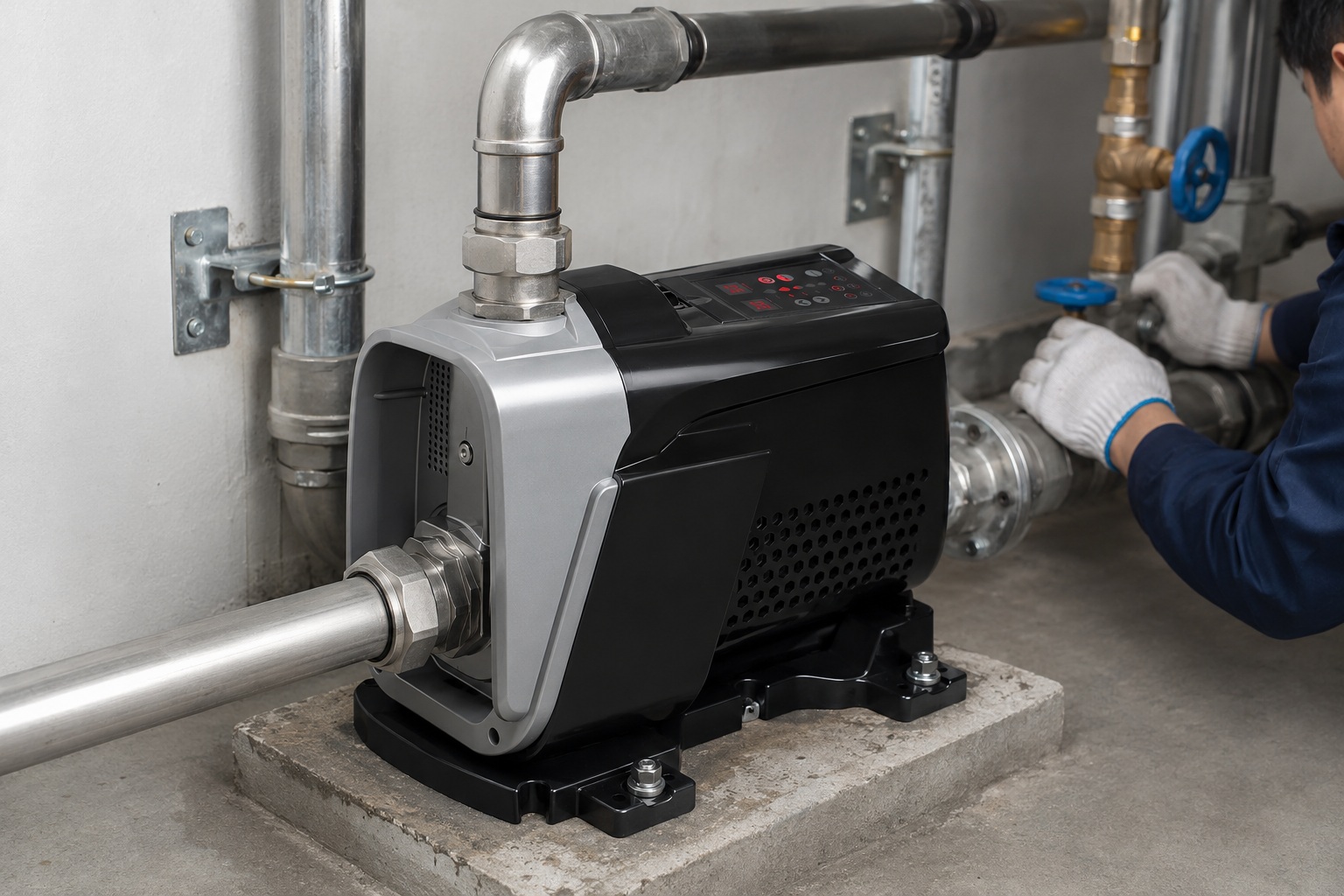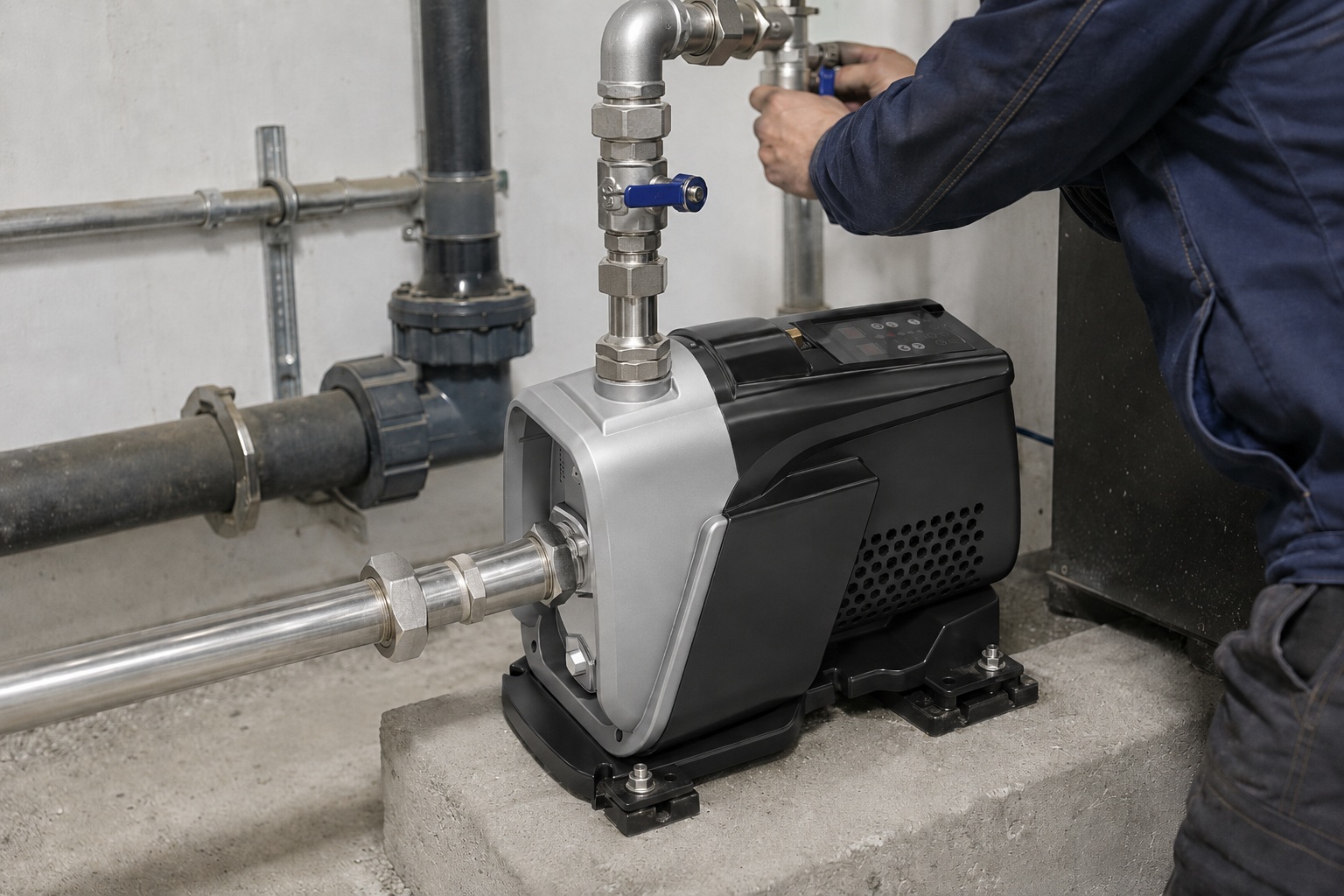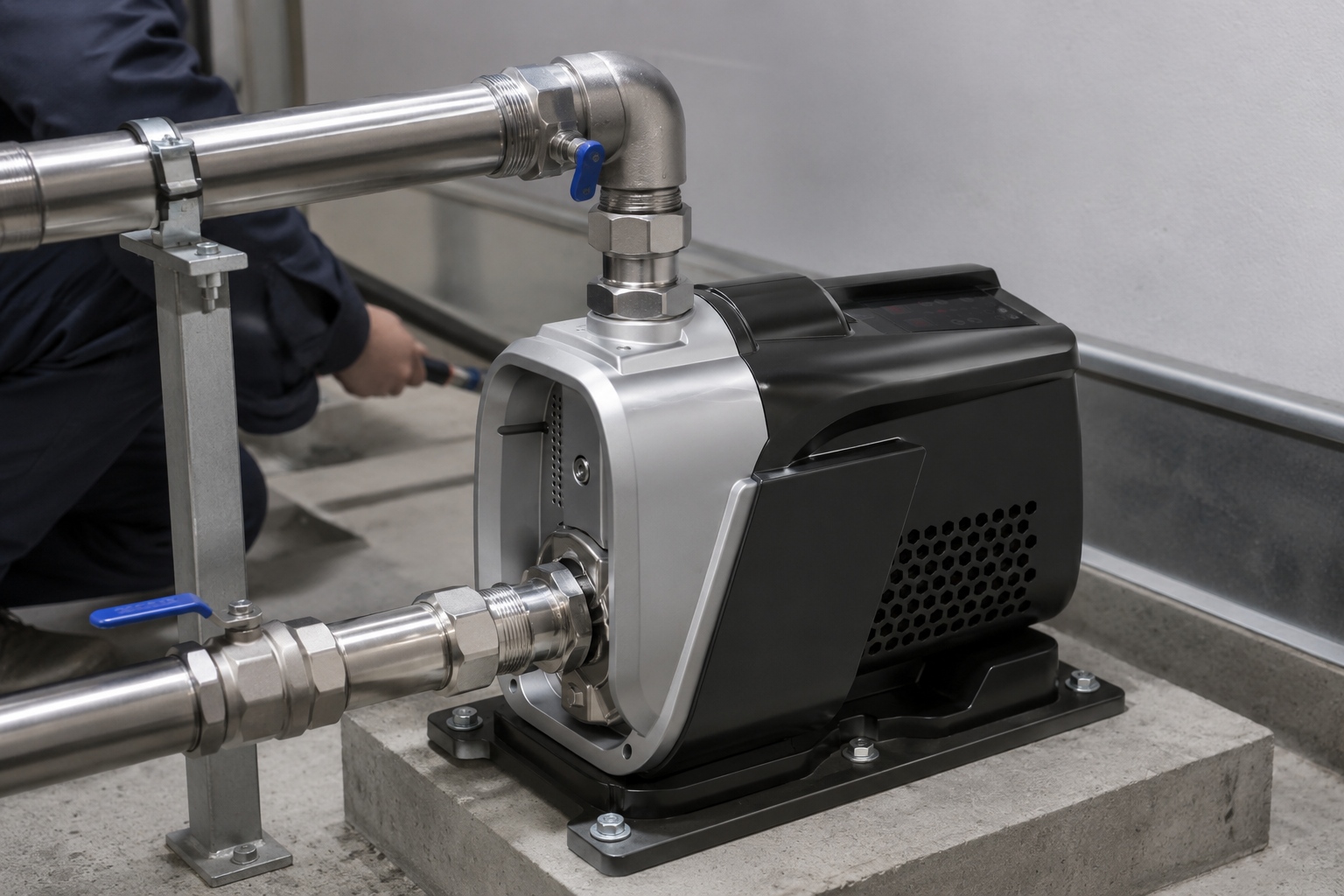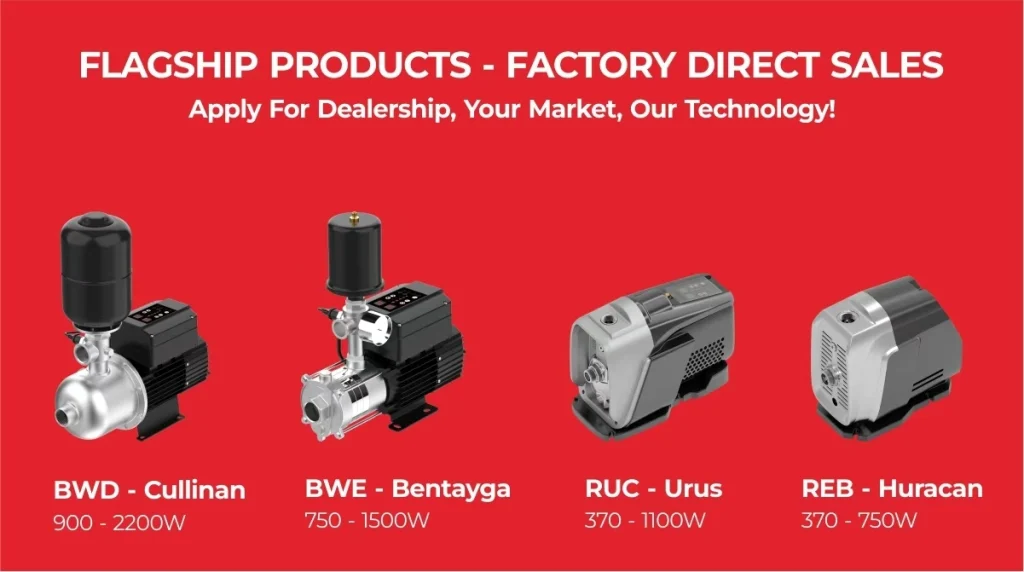
A booster pump can also be a domestic pump. “Domestic” describes use in a household water system; “booster” describes the duty of increasing water pressure. The terms overlap, so they are not two mutually exclusive pump categories.
The practical question is which pump and control arrangement can deliver the required water flow and pressure from your available source.
What do the terms actually mean?
| Term | Meaning | What else you need to know |
|---|---|---|
| Domestic pump | A pump used for household water needs. | Whether it supplies from a well, transfers water or boosts distribution pressure. |
| Booster pump | A pump used to increase supply pressure. | The required flow and head, inlet conditions and permitted liquid. |
| Transfer pump | A pump used to move water between locations, such as two tanks. | The elevation, pipe losses, filling rate and control requirements. |
| Variable-speed pump | A pump whose operating speed can be adjusted. | The sensor, control method and available performance range. |
All water pumps must develop enough head to move water through the system. Flow and pressure are linked through the pump curve and system resistance. It is inaccurate to say a domestic pump produces only flow while a booster produces only pressure.
How does a domestic booster system work?
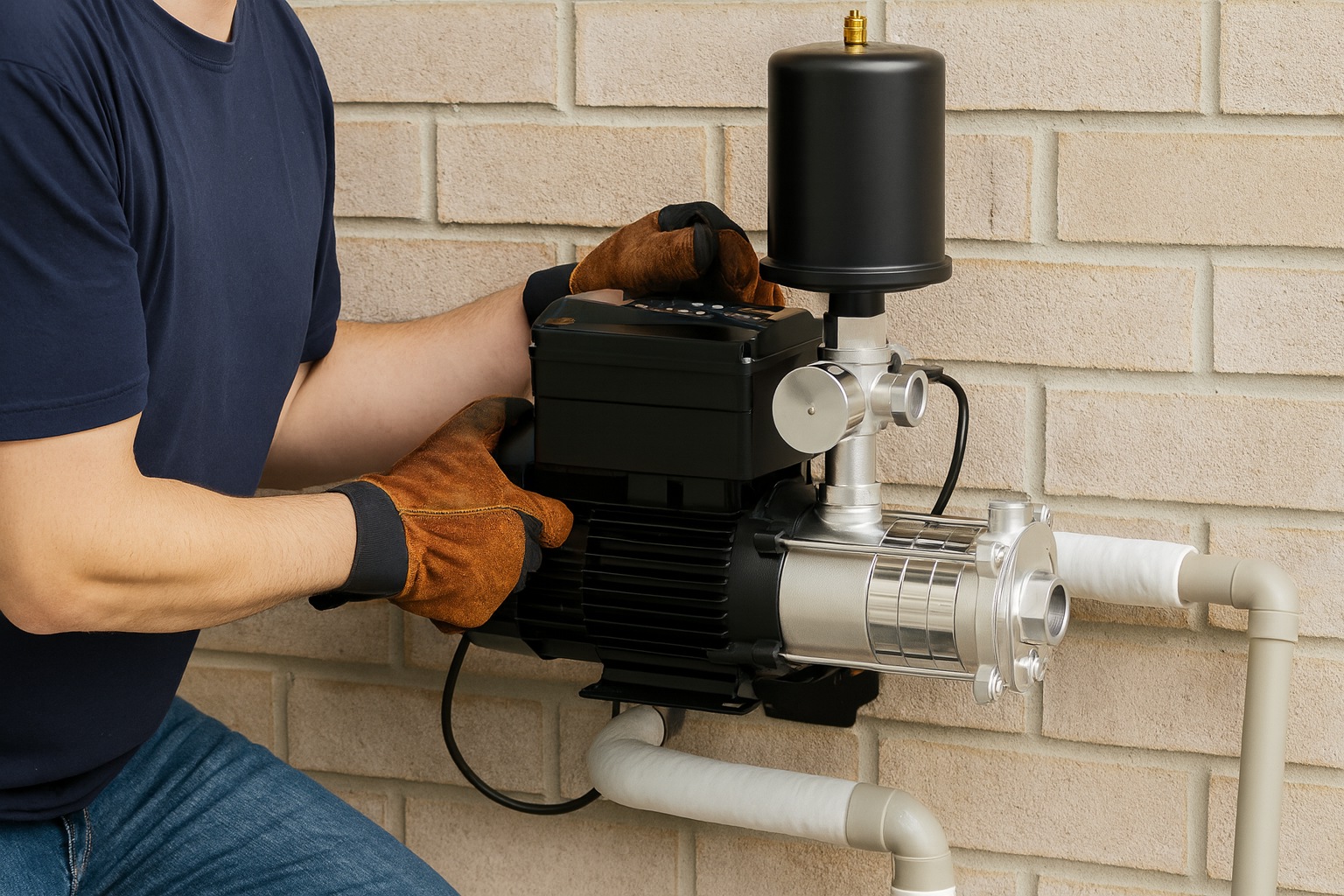
The pump adds energy to water from an adequate source. In a centrifugal booster, the impeller performs this work; a pressure tank stores pressurised water but does not generate the pumping pressure.
The controls determine when and how the motor runs. A fixed-speed booster can operate with a pressure switch and tank. A variable-speed booster uses sensor feedback to adjust motor speed toward a target pressure. A booster does not have to be a variable-speed pump.
RAFSUN’s smart booster range uses PMSM motor technology with variable-frequency control. The display and protection functions support operation, while the selected model’s curve and manual determine its capabilities.
Which arrangement suits your application?
| Requirement | Possible arrangement | Checks before selection |
|---|---|---|
| Fill a storage tank | A suitable transfer pump with level control. | Filling rate, total head and protection against an empty source or overflowing tank. |
| Supply household outlets from storage | A suitable domestic booster system. | Minimum tank level, suction conditions and simultaneous demand. |
| Improve an existing supply pressure | A booster selected for that supply. | Minimum inlet pressure, local connection requirements and pressure limits. |
| Lift water from a deep well | An appropriately selected well-pump system. | Dynamic water level, borehole dimensions and required surface pressure. |
| Supply garden irrigation | A pump sized for the irrigation duty. | Zone flow, required nozzle pressure, elevation and pipe losses. |
Weak flow does not automatically mean you need a larger pump. First check the available supply, filters, valves, leaks and pipe restrictions. A booster cannot create water when the source is insufficient.
How do you select the right flow and head?
- Flow: estimate the outlets that will run at the same time, using m³/h, L/min or US gpm. State whether gallons are US or Imperial.
- Head: account for the required outlet pressure, vertical lift and pipe losses, then allow for available inlet pressure.
- Suction: check minimum water level, suction-pipe losses and the model’s permitted inlet conditions.
- Performance curve: confirm that the required flow and head occur together at a suitable operating point.
For illustration, 3.0 bar is approximately 43.5 psi. A vertical rise of 10 m (32.8 ft) consumes approximately 0.98 bar (14.2 psi) of pressure head for water, before pipe losses. The same pump discharge pressure therefore does not give equal pressure on every floor.
Maximum flow and maximum head are separate limits. Do not select a pump by combining the maximum values or by comparing motor wattage alone.
Fixed speed or variable speed?
A fixed-speed arrangement may be suitable for a relatively steady duty, such as filling a tank. Variable-speed control can be useful when household demand changes and more consistent pressure is desired.
Energy use depends on the complete installation and operating pattern. Variable speed can improve part-load operation, but a universal saving, a fixed wattage per tap or a guaranteed payback cannot be inferred from the control type alone.
Pressure tanks remain relevant in both arrangements. Their volume, precharge and commissioning requirements should follow the equipment instructions. A VFD does not automatically make a pressure tank unnecessary.
Installation details to confirm before ordering
- Electrical supply: voltage, phase, frequency and the exact nameplate variant.
- Connections: pipe size, thread standard and suction layout.
- Liquid: water quality, temperature and any drinking-water approval required for the destination market.
- Environment: drainage, ventilation, access and protection from moisture and freezing.
- Controls: local operation, app functions or a compatible linked-pump arrangement.
Fill the pump body with clean water before initial operation where required by the manual. A self-priming designation does not permit dry starting. Electrical work and commissioning should follow the supplied instructions and applicable installation requirements.
Frequently asked questions
Can a domestic pump be used for pressure boosting?
Yes, if its curve, pressure limits, suction capability, liquid compatibility and controls suit the duty. “Domestic” alone is not a sufficient technical specification.
Can a booster draw water from a well?
Some self-priming surface boosters can supply from a shallow source within their documented suction limits. Deeper dynamic water levels generally need an appropriate well-pump solution. Confirm conditions rather than assuming every booster has the same capability.
Can I connect a booster directly to the mains?
This depends on local water-supplier and installation requirements. Direct boosting may be restricted or require additional measures; some installations use a break tank. Confirm the permitted arrangement before selection.
How long will the pump last?
Service life depends on duty, water quality, operating conditions, installation and maintenance. Use the stated warranty and model-specific evidence rather than a universal lifespan promise.
Which RAFSUN range should I compare?
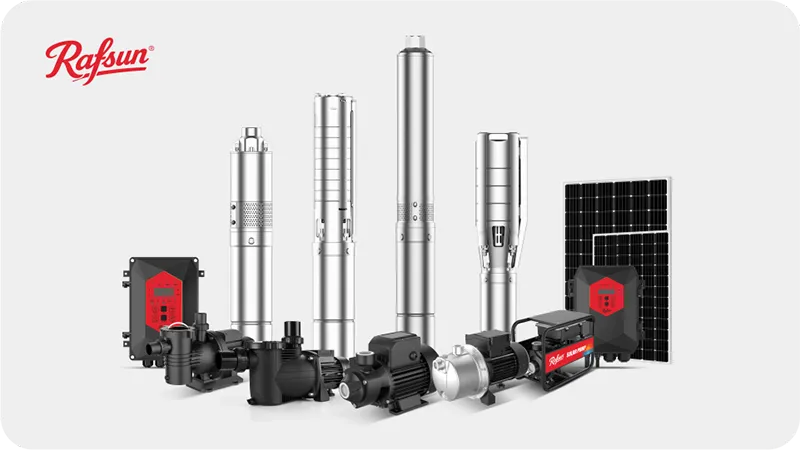
Start with the smart VSD booster overview and the relevant RUC, BWD or HMS page. The final choice depends on your required duty and installation, not simply whether the building is a house or a villa.
Need a recommendation? Send RAFSUN your country, water source, supply voltage, required flow and head, and quantity. Include any thread, control or destination-market approval requirements.